


























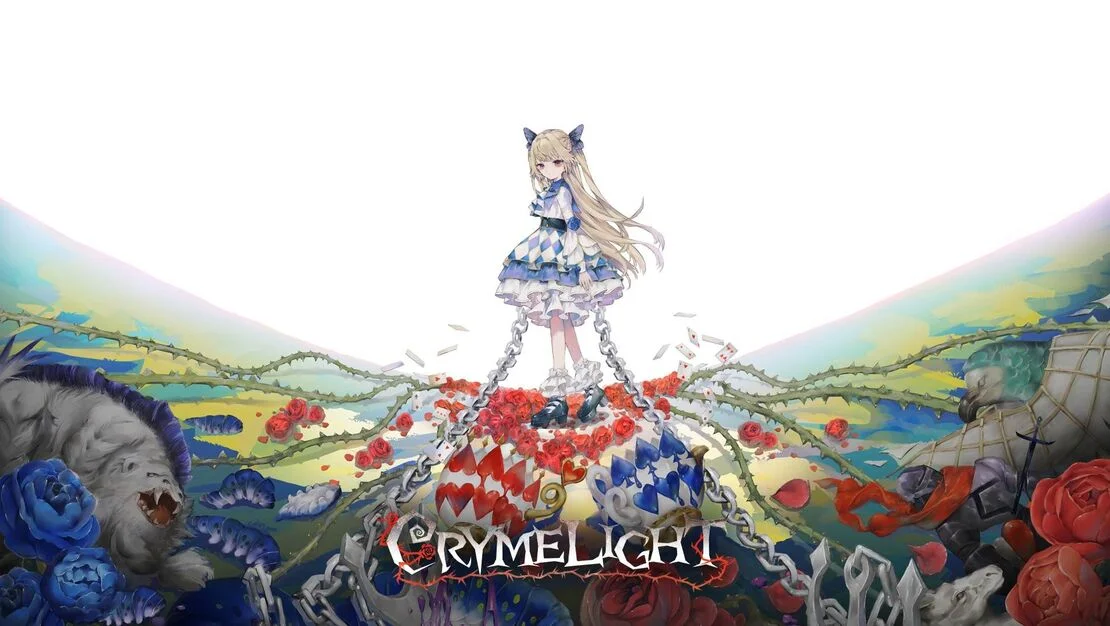

The White Rabbit gives an amnesiac girl the name Alice, then keeps reminding her companion Mary that she is a “Plus One.” Carroll’s English Wonderland supplies a vocabulary for deciding who belongs. Transplanted into FuRyu’s Japanese CRY series, its familiar names become provisional identities for departed souls whose lives are gradually disclosed. Alice has forgotten hers, an unusual condition among the challengers assembled here. They have been offered freedom if they kill the Queen of Hearts, with considerably less clarity about what that freedom entails.
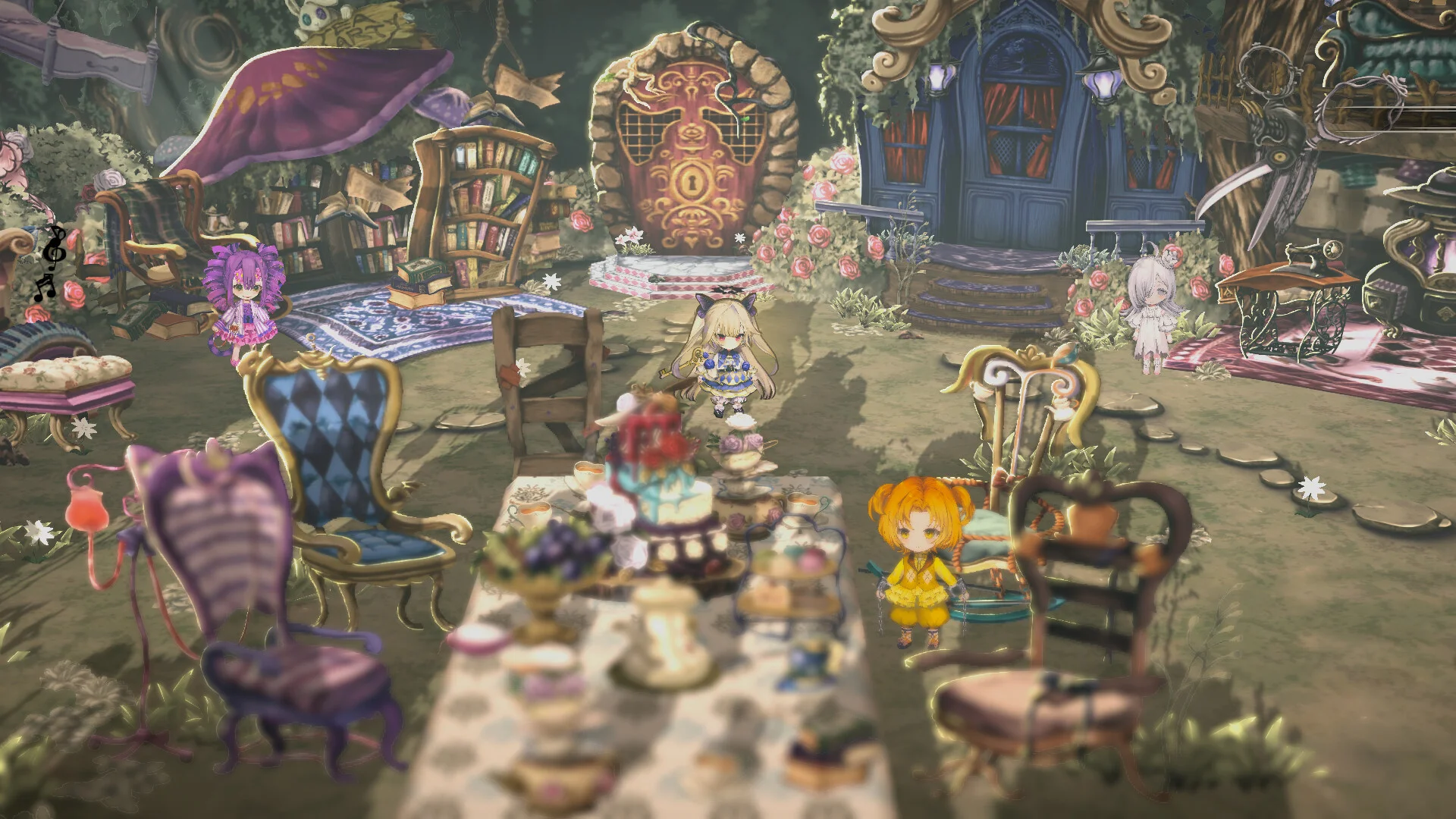
Tea complicates the arrangement. Competitors gather socially between attempts to escape, preserving a familiar ritual inside an afterlife organized around punishment. Mad and Cheshire want to defeat the Queen and reclaim their lives; March seems comfortable hosting the gatherings.
These differences give the borrowed literary roles personal motives without requiring everyone to behave like a ruthless contestant. Alice and Mary question the White Rabbit’s explanations, while his dismissive treatment of Mary makes belonging an immediate concern. Alice’s attachment to someone outside the official competition gives her reasons to distrust its terms.
CRYMELIGHT develops those concerns through visual-novel conversations and recovered memories. The histories behind the supposed sins introduce abuse, childhood trauma, grief, and guilt, gradually making the classification of these girls less comfortable.
The literary names provide quick recognition; the personal histories require that recognition to be reconsidered. Alice’s bluntness helps preserve friction within the group, even as her loyalty to Mary supplies emotional continuity. Keeping company at the Tea Party does not erase differences in what its guests want from the next attempt.
Playing cards undergo an equally useful translation. Their suits and ranks become the basis of a build system in which an individually attractive reward can conflict with the hand taking shape. Cryme Cards grant effects that improve Alice’s abilities, while poker combinations raise card levels and strengthen those benefits.
An immediate attack enhancement can be tempting when survival looks doubtful, but another selection might complete a valuable combination. The decorative vocabulary of Wonderland becomes something the player must calculate, with short-term need competing against the possibility of a stronger collection.
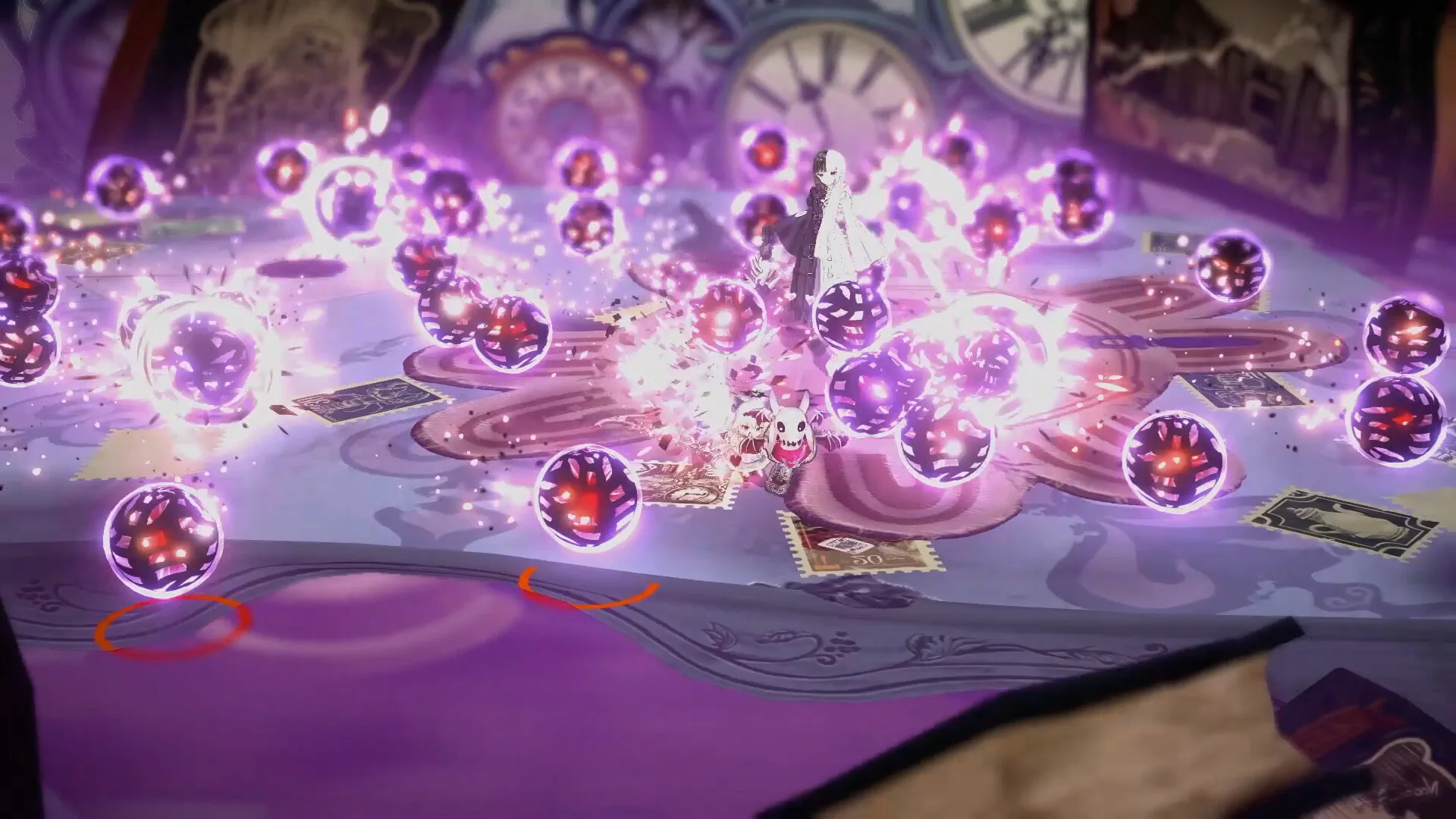
Five cards complete a hand, after which a new hand begins without removing the effects already accumulated during that run. That distinction gives the system room to grow rather than continually replacing a tiny loadout. Its bonuses also attach to actions with distinct uses. Basic attacks lead into heavier blows, and throwing an enemy into a gathered group turns positioning into damage. The pleasure comes from handling bodies and space, with card effects capable of strengthening particular habits rather than simply enlarging every number at once.
Crymeride makes that relationship especially visible. Alice rides her weapon through the arena, trading reduced defense for mobility and access to attacks that can deflect incoming fire with suitable timing. A build that improves riding encourages different commitments from one supporting grabs.
The spreading Wonder Dimension adds combat advantages and helps sustain pressure, while charged attacks offer a slower alternative to constant movement. There is enough physical variety here to make individual rooms enjoyable, particularly when movement, throws, and a favorable card selection work together against a crowd.
Death returns Alice to the Tea Party and gives the religious imagery a practical role. Temporary cards disappear, but retained sins and resources purchase lasting improvements. Tears purify regrets; confession helps supply the means to increase health or improve equipment.
Within this Japanese reinterpretation of an English fantasy, repentance becomes a form of progression whose moral language need not resolve into a single religious doctrine. The uncomfortable detail is the transaction itself: suffering receives patient narrative attention, then becomes useful purchasing power. Remembering and growing stronger share a structure, without necessarily meaning the same thing.
That structure also gives returning to Wonderland a narrative purpose. Further attempts disclose memories, and the first victory over the Queen leaves substantial story still to uncover. Yet a reason for repeating an activity cannot guarantee its continued interest.
Small arenas recur with modest rearrangements, and permanent statistical gains can make familiar encounters easier without substantially changing their demands. The “Skip All Read” option sensibly removes familiar dialogue automatically. It cannot shorten stretches of recycled fighting that stand between the player and the next disclosure about a character.
Bosses expose a related pacing problem. Crowds permit broad, forceful play, while guardians demand closer attention to patterns, dodges, and reflection timing. These encounters can give Alice’s abilities a welcome test. They can also impose a sharp increase in punishment after rooms that have offered limited preparation for it. Story mode still expects pattern learning, so its presence does not remove this pressure. A failed attempt can send the player back through encounters already understood before allowing another chance to practice the specific fight causing trouble.
The illustrated presentation sustains interest across those returns, even when encounter design struggles to do so. Gardens around the Tea Party, castle grounds, and a wild sweets shop give the 2D environments distinct decorative identities.
Detailed clothes and anime character designs make Carroll’s figures recognizable within the CRY series’ visual language. Painful memories use a rougher, sketch-like treatment, interrupting the polish of the shared fantasy with a visibly different register. The contrast gives recollection a texture separate from the spaces where these girls perform their assigned roles.
The music similarly leaves something unsettled beneath its calming surface, with unease becoming stronger near the Queen’s castle. Repeated exposure can wear down particular tracks without undoing their fit with these inviting, suspicious surroundings.
During combat, however, the presentation sometimes works against the player. Dense effects can conceal incoming attacks at precisely the point when riding, dodging, and reflection require clear timing. The elaborate illustrated world remains attractive, but a crowded arena asks the eye to distinguish threats from visual decoration very quickly.
Technical reliability needs qualification across builds and hardware. Stable PC performance has been reported, alongside Steam-build freezes and a boss surviving after its health reaches zero. Steam Deck OLED testing has also encountered Special Skill lockups that leave Alice and an enemy standing inactive.
Another enemy’s hit can sometimes release them; a solitary boss offers fewer possibilities. Returning to the title can preserve progress to the beginning of the current map, allowing a reload without forfeiting the entire build. Even with that workaround, the player may have to repeat part of a run because an encounter has stopped responding.
The Review
CRYMELIGHT
CRYMELIGHT gives Carroll’s Wonderland a persuasive new purpose within the Japanese CRY tradition: familiar names conceal wounded lives, playing cards shape combat, and confession funds another attempt at escape. Its character histories and illustrated world reward attention, while card combinations and Crymeride supply satisfying decisions. Recycled encounters and abrupt boss demands slow the discovery, and reported lockups add interruptions the narrative cannot justify. The cultural reworking has substance, even when the action struggles to sustain it.
PROS
- Literary identities gain weight through personal histories.
- Poker combinations create meaningful card choices.
- Crymeride and throws give combat physical variety.
- Illustrated environments contrast effectively with rougher memories.
CONS
- Recycled encounters delay new story disclosures.
- Boss difficulty rises sharply after simpler crowds.
- Dense effects can obscure incoming attacks.
- Reported Steam and Steam Deck bugs interrupt runs.