




























The Sentinel’s ability to fire in any direction gives BALL x PIT: Risen Ballbylon a useful point of comparison with the base game. Shooting bouncing projectiles through approaching enemies remains the task, but aiming around yourself opens different positions from which to attempt it. An ability that sounds modest on a character screen changes how aggressively you can occupy the battlefield. For an expansion built around extending familiar systems, this is a persuasive place to spend its effort: give experienced players a new relationship with the space they already understand.
The Conduit takes that approach further by concentrating area effects on himself. Pair him with the Carouser, who also benefits from nearby enemies, and proximity becomes something the build actively rewards. Character pairing already supplied the original with opportunities to combine abilities; this addition makes the connection between that preparation and your position during combat particularly clear. Choosing two compatible characters establishes a reason to move closer, with the attacks gathered around the Conduit giving that decision a visible, practical payoff.
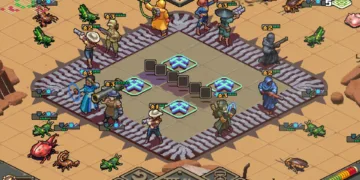
Those abilities accompany four stages set in the corrupted floating city of Ballbylon, reached after completing the base game. The change from descending into the pit to ascending into the city supplies a fresh setting, with roguish enemies fitting its shadowy alleys. More consequential are the diagonal surfaces on new enemy shapes. These alter the ricochet routes available between targets, giving the expanded roster something useful to work against. The visual variety has a mechanical contribution: an unfamiliar angle can suggest a different shot through an otherwise familiar wave of enemies.
The eight new characters share the expansion with 24 new balls, and the strongest case for that enlarged selection comes from following a combination through its successive transformations. Water and Earthquake produce a tsunami; fusing that evolved attack with a Cell ball can put four tsunamis into play. The initial discovery supplies an effective attack, while the next fusion changes how extensively it occupies the battlefield.
Returning players will recognize the appeal immediately. Learning a recipe still leaves room to discover what happens when its product becomes an ingredient in something else. Area damage, beams, debuffs, and projectile volume support different approaches, while random offers and limited inventory space prevent a preferred combination from becoming a guaranteed routine.
The excess can also obstruct the action. Waterfall-heavy builds can cover enough of the battlefield to make enemies difficult to see, putting the visual reward for a successful combination in competition with the information needed to keep playing. There is an obvious satisfaction in producing that much destructive activity, but losing sight of targets remains a cost. This does not make every elaborate build unreadable. It does mean the expansion’s appetite for larger effects can outrun the clarity of the battlefield carrying them.

The older interruptions survive alongside the new spectacle. Level-ups and fusion decisions repeatedly pause the flow of firing and collecting gems, returning attention to choices about the build. With this many possible interactions, those decisions have substance, and removing them would remove much of the attraction. Their frequency still gives combat a stop-start rhythm that the expansion does little to soften. The new selection deepens what happens during those pauses without resolving the friction of repeatedly being pulled out of active play.
Progression places a different demand on those combinations. Each new stage requires clears with eight characters, which means at least four successful runs when using the building that permits two-character teams. That requirement makes roster experimentation part of moving forward, giving players a reason to leave a comfortable pairing behind. It also asks four locations to sustain repeated visits. Different abilities can change how a stage plays, but a new build does not supply a new location. The requirement is heavy enough that discovering another combination can begin to feel like fulfilling an obligation.
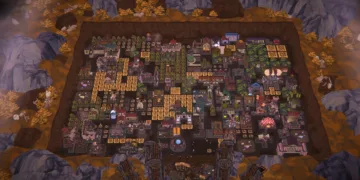
The immediate difficulty increase reinforces the importance of the settlement built during the original game. Existing upgrades raise character statistics, and insufficient damage makes it difficult to keep pace with the new enemies. The access requirement therefore has a practical foundation: the expansion expects the accumulated strength of a completed base game. Yet the tougher stages also make settlement development harder to treat as an optional diversion. A player primarily interested in the brick-breaking action still has to attend to the structures supporting it.

Crystals extend that connection between combat and construction. They fund new buildings and homes for the added characters, while cultivated deposits grow slowly and disappear after a single harvest. Bringing the new resource into the settlement creates further reasons to undertake runs between building projects. The resource loop remains recognizable, but another material with restricted cultivation adds pressure to the time spent repeating stages. Its appeal depends partly on how much satisfaction the player already takes from turning combat rewards into a stronger town.
The buildings offer tangible reasons to engage with that work. The Floating Fortress and Armory increase base damage, while other structures let balls exceed the previous level cap of three. That higher ceiling matters within an expansion devoted to extending combinations: familiar attacks gain further room to grow alongside the new arrivals. The roster can also return to the original pit, letting those additions work against enemies and stages the player already knows. After the city’s required clears, the Sentinel’s firing freedom and the Conduit’s concentrated effects remain available for experiments elsewhere.
The Review
BALL x PIT Risen Ballbylon
Risen Ballbylon earns its place by giving familiar systems productive new interactions. The Sentinel and Conduit change positioning, while evolved balls remain ingredients for further experimentation. Its demands grow too: repeated clears and crystal accumulation stretch progression, selection screens interrupt combat, and extravagant effects can hide enemies. Returning players get substantial room to rethink their builds, provided they retain an appetite for the settlement work and repetition supporting them.
PROS
- New character abilities change positioning and pairing strategies.
- Diagonal enemy surfaces create fresh ricochet opportunities.
- Ball evolutions and fusions reward experimentation.
- New buildings raise damage and extend ball levels.
CONS
- Required repeat clears and crystal collection stretch progression.
- Frequent selection pauses interrupt combat momentum.
- Heavy visual effects can conceal enemies.