




























Marlee Matlin spends roughly five minutes addressing the camera before Irene Taylor’s documentary settles into Shelley Beattie’s life. During that extended address, our initial point of contact is someone other than the subject. Matlin explains the connection she feels to Beattie, a fellow deaf woman whose experiences of abuse, substance misuse, and growing up in a hearing family overlap with her own. A framing narrator gives us a position from which to approach a story; here, Taylor lets us see that position being established. Matlin’s investment is personal, and the film makes room for us to understand it before asking us to share it.
Then Beattie’s recorded presence begins to complicate the introduction. Home videos and televised appearances let us watch someone who can no longer answer the questions being asked about her. Matlin and Beattie never met, so their connection has to be made across these materials and the memories of others.
In Siren: The Voices of Shelley Beattie, Matlin becomes an interviewer and an interested listener alongside her work as narrator. Her recognition of familiar difficulties gives the conversations emotional direction, while the recordings allow Beattie’s behavior and pleasure to exist outside that recognition. Taylor has several ways of bringing her subject into the room.
The life story itself proceeds along a fairly familiar chronological path. Childhood hearing difficulties go unrecognized, an injury redirects an athletic young woman from track and field to weight training, and bodybuilding eventually leads to national visibility as Siren on American Gladiators.
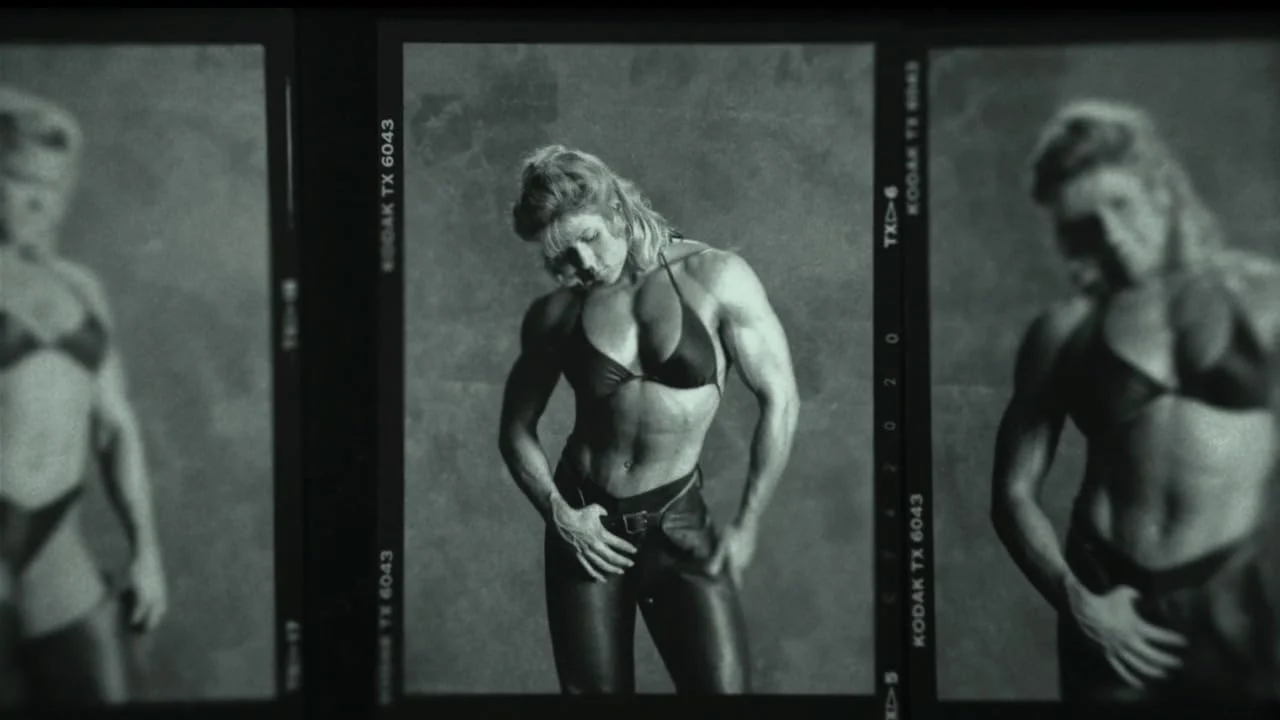
Taylor gives the athletic years enough attention for effort and performance to become pleasures in themselves. Beattie’s fluid posing routines are especially useful here. Feeling the bass offers her a physical relationship with music, and her movements give us something precise to appreciate: timing, control, the enjoyment of presenting a body she has worked to develop.
I appreciated the space those performances receive because knowledge of Beattie’s death could so easily swallow everything that precedes it. She died by suicide in 2008, aged 40, and the interviews describe bipolar disorder, addiction, and severe distress. The competitive footage preserves experiences that deserve attention on their own. Her mother’s disapproval of women developing such muscular physiques makes those images culturally revealing, too. The body that troubled a parent became the basis of a television identity audiences embraced. Approval changed with the setting, while Beattie’s commitment to building and performing with that body remained her own.
Taylor’s liveliest formal choice is to animate Beattie’s drawings. Animation here means introducing movement into images the subject created, allowing her visual expression to occupy some of the time otherwise given to people explaining her. The drawings carry pain that athletic footage cannot make available in the same way. Their movement belongs to the filmmakers’ interpretation, of course, and should be understood on that basis. Still, this is an expressive use of personal material. Beattie gets to contribute through something she made, alongside the recordings of what she did and the accounts of how others remember her.
Signing, spoken narration, and written language also share the screen, with changes in subtitle font and scale making text an active part of the presentation. Subtitles turn communication into something viewers read; their visible design can influence emphasis and rhythm. Alongside the drawings and dance, they give the film several forms of expression without disrupting the clarity of the biography. Taylor uses a conventional life-story structure to hold these different materials together. The creative energy comes from the means of communication within that structure, rather than from rearranging events into an elaborate puzzle.

The interviews supply another kind of variety. Siblings, parents, friends, former partners, and athletic colleagues remember different Beatties, with affection sometimes sitting beside frustration or incomplete understanding. John Romano, her former partner and trainer, offers sustained explanations of her determination and vulnerability.
His closeness makes those recollections valuable, though they remain one person’s understanding of someone else. Taylor is often effective at preserving that distinction across the interview ensemble. A family member’s discomfort and a partner’s tenderness can both tell us something without either becoming the definitive account.
That breadth becomes uneven when the film addresses allegations that Beattie sexually assaulted women and lost her position on a sailing team. One contributor describes rape. Including such testimony in an affectionate portrait matters, yet the treatment concentrates on Beattie’s response: her remorse, her crying, and the discovery of suicide notes in her locker.
The women reportedly harmed do not speak directly. Interview selection determines whose experience we spend time understanding, and here the consequences for Beattie receive the emotional attention. Her suffering is made legible while theirs remains largely outside the account. The film’s candor about an admired subject does not resolve that imbalance.
There is a related problem with attribution. An animated handwritten statement links the sailing-team departure to sexual assault, without making its authorship clear. Some passages spoken by Matlin also leave the origin of the words uncertain. Journals are among the film’s materials, so this concern applies to particular passages, rather than the entire narration. The distinction matters because handwriting can feel like immediate access to a person’s own words. When the source is unclear, an expressive device carries an authority the viewer cannot properly assess. Identifying the speaker or writer would help us understand precisely what kind of evidence we are receiving.
The later account of Beattie’s attempts to obtain care gives the film’s attention to communication a painful practical meaning. Interpreter provision failed her at vulnerable moments, including in mental health care. Earlier accounts of childhood behavior being misunderstood make those failures especially distressing, without establishing a single explanation for her death.
Learning American Sign Language and meeting other Deaf people had expanded her opportunities for connection. In the care setting, being able to speak could not ensure that she could understand others or communicate everything she needed. The interpreter was part of the help she was seeking. Without that access, the work of making herself understood still fell on the person who had asked for support.
Siren: The Voices of Shelley Beattie premiered on HBO and began streaming on Max on September 22, 2026. Directed by Irene Taylor, the documentary chronicles the extraordinary life, athletic achievements, and mental health struggles of pioneering deaf bodybuilder and American Gladiators star Shelley Beattie.
Where to Watch Siren: The Voices of Shelley Beattie (2026) Online


Full Credits
Title: Siren: The Voices of Shelley Beattie
Distributor: HBO / Max
Release date: September 22, 2026
Running time: 1 hour 42 minutes (102 minutes)
Director: Irene Taylor
Producers and Executive Producers: Irene Taylor, Marlee Matlin, Lauren Mueller, Stacy Lorts, Nancy Abraham, Tina Nguyen, Sydney Rafter
Cast: Marlee Matlin, Shelley Beattie
The Review
Siren The Voices of Shelley Beattie
Watching Beattie dance and perform helps this documentary preserve pleasures that a tragic biography can easily overlook. Taylor’s combination of recordings, animated drawings, signing, and Matlin’s participation makes the portrait accessible and affecting. Its generosity becomes uneven around the sexual assault allegations, where Beattie’s distress receives attention denied to the women reportedly harmed. Unclear attribution also weakens some personal material. There is much to value here, alongside serious gaps in whose experiences the film lets us understand.
PROS
- Athletic footage preserves Beattie’s pleasure and agency.
- Animated drawings give her artwork an expressive role.
- Matlin’s personal connection lends direction to interviews.
- Different forms of communication enrich a clear biography.
CONS
- Sexual assault allegations receive an uneven, Beattie-centered treatment.
- Some narration and handwritten material lack clear attribution.