

























Rage games usually teach you to repeat a route until every obstacle becomes familiar. Trees Hate You has a different lesson: learn the route, and the forest might change it on your next attempt. Where Super Meat Boy builds its difficulty around executing increasingly demanding movements, this small, deliberately ridiculous game puts most of the pressure on figuring out what the scenery plans to do to you.
Developed by Tykenn, Trees Hate You gives a customizable picnicker one straightforward objective: get home through a forest whose trees have turned murderous. There is little story to distract from that task, and the controls are appropriately simple. Movement feels responsive, with a controller offering particularly useful precision when slipping diagonally between threats. Anyone familiar with QWOP, a game that makes controlling your own body the challenge, will immediately see the reversal. Here, your character does what you ask. It is the trees that cannot be trusted.
That approach makes Trees Hate You easy to recommend if you enjoy playful punishment but have little appetite for demanding controls. Frequent checkpoints encourage another attempt, though seasoned players hoping for Super Meat Boy’s exacting challenge may find this forest mechanically modest.
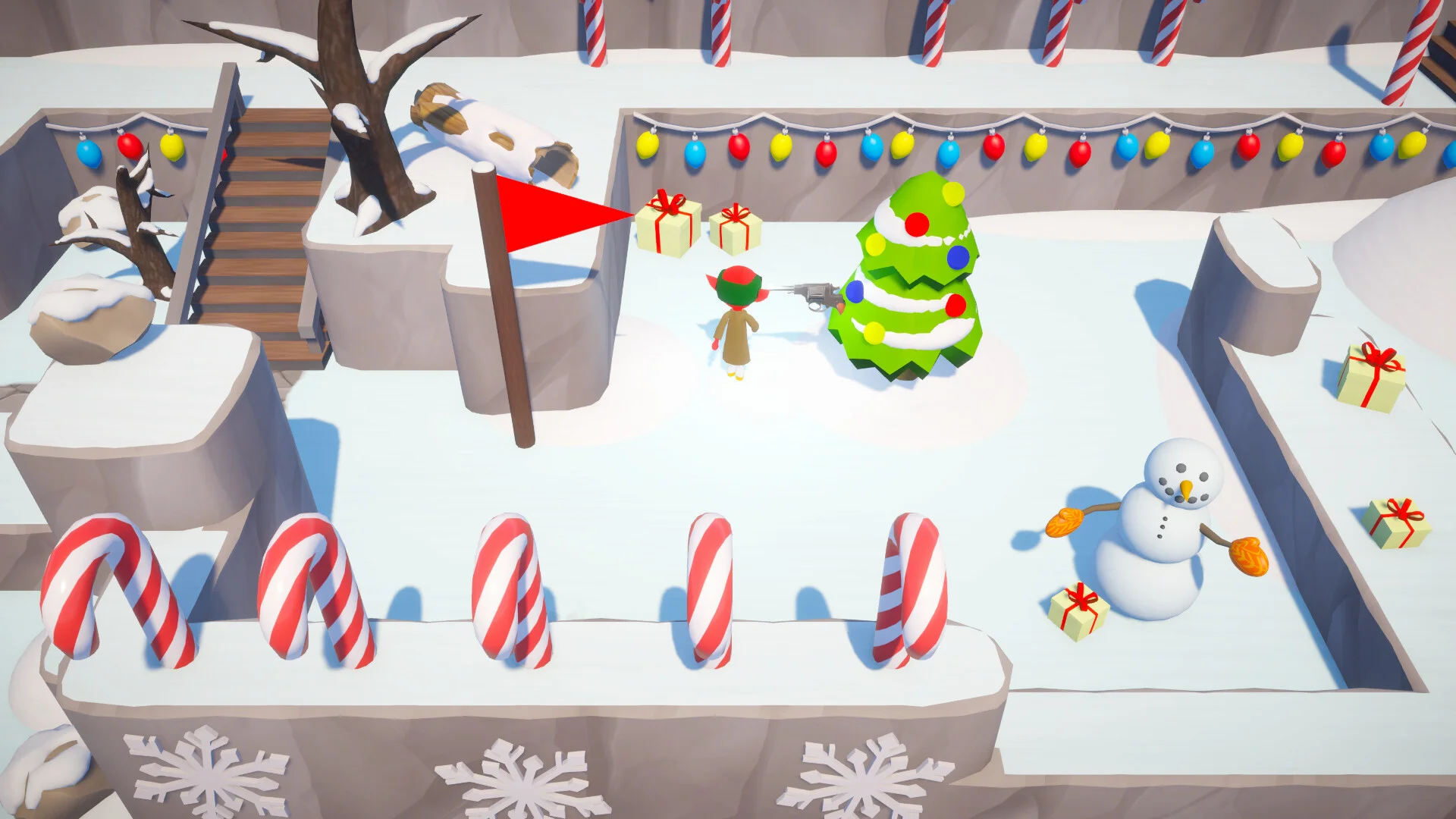
The variety of its attacks goes a long way toward sustaining the joke. Trees can grow abruptly from the ground, move across a path, drop from above, or produce guns and mortars with the apparent confidence of a trained military unit. One recurring tree bends at absurd angles to stop you going where you want, then returns later to interfere from overhead. Its persistence gives the gag a recognizable culprit, so spotting that familiar shape becomes an invitation to anticipate its next trick.
The axe episode is even better. Finding a tool to chop down a tree looks like a rare chance to retaliate. The first axe breaks. So does the second. A third attempt ends when another tree falls from the sky and kills the player. Each failed attempt changes the expectation slightly, until the forest gets the final say.
Even the smaller jokes target familiar gaming habits. A warning sign or an innocent-looking minigame can lead directly into a trap, and the pause menu includes an option to summon a tree to kill you. Menus are supposed to provide a moment of safety. Apparently nobody told the trees.
Of course, a good trick can become irritating when you cannot see how to avoid it. Some hazards are designed to be learned. Gun-carrying trees fire along a predictable line, so you can provoke a shot, wait for it, then cross safely. Falling trees have trigger points that become recognizable after a failed attempt.

Those encounters offer a satisfying sequence of discovery and execution: the tree gets you once, and you have a reasonable answer ready next time. The fixed camera complicates matters by sometimes hiding an armed tree just beyond the visible area, making the first bullet feel less like a challenge than an ambush. Learning still helps, but the player may have to pay for information the screen refuses to provide.
Later sections complicate that process further. Certain tree positions, traps, and even paths can change following a death. That unpredictability gives the game a little of the freshness associated with roguelikes, although its campaign remains a sequence of authored areas rather than a sprawling procedural adventure. It also means that successfully memorizing one arrangement may accomplish very little when the next attempt begins.
A moving threat can produce a fresh puzzle; an unseen falling tree can simply demand another restart. The game has examples of both, and the second kind weakens the pleasure of finally getting a difficult stretch right. The issue becomes especially noticeable after surviving several traps in succession, only to encounter a new hazard in a position that looked safe before.
The checkpoints keep the irritation manageable, sending most deaths back to nearby ground rather than the start of a long run. So how does it compare with its rage-game peers? It offers less of Super Meat Boy’s hard-won physical mastery and none of QWOP’s intentionally awkward control struggle, exchanging both for a quicker succession of surprises. Returning genre fans should adjust their expectations accordingly.
There are four main levels, three broken into smaller sections, with changing environments and fresh threats along the way. The campaign is compact enough to finish in a single extended sitting, although a run can take several hours depending on how quickly you recognize the traps. Coins and hats add small collecting goals rather than dramatically changing the play. More useful is the challenge mode, which increases the hazards but keeps layouts fixed between deaths.

That gives players who prefer mastering a known course a welcome alternative to the campaign’s shifting arrangements. The adjustment is revealing: the game can support traditional trial-and-error play when it chooses to. Its limited length still matters, since the supply of new tricks is finite and the collecting incentives do little to extend the experience once the main obstacle courses are familiar.
The presentation understands the assignment. Simple cartoon models keep the action clear, and exaggerated tree movements sell attacks that would look ridiculous in a realistic forest. Autumn and winter areas change the scenery; recognizable gunshots and crashing-tree effects help identify threats. Light, melodic music offers a cheerful counterpoint to the hostility on-screen. The elaborate tree behavior, rather than texture detail, supplies the personality.
The technical rough edges are harder to laugh away. Performance is smooth on PC and Steam Deck, but a skill-related visual element can linger after its chapter, and some checkpoint glitches may force replaying an earlier stretch. The Brazilian Portuguese menu text contains awkward phrasing, too.
Most worrying is an autosave inconsistency that can make substantial progress appear lost until the game is restarted. A deliberate trap gives you something to solve on the next attempt; an unreliable save screen offers no such satisfaction. The save may reappear intact after relaunching, yet the death counter can reset, leaving the record of all those failed attempts inexplicably blank.
The Review
Trees Hate You
Trees Hate You finds its place among rage games by favoring mischievous surprises over demanding controls. Its murderous trees, inventive traps, and cartoon humor make repeated failure surprisingly entertaining, and generous checkpoints keep the punishment manageable. Changing layouts provide variety, although unpredictable deaths sometimes replace satisfying mastery with blind luck. The short campaign and occasional technical problems, particularly unreliable save information, hold it back. Still, its creativity and accessible design make it an easy recommendation for players who enjoy a good laugh at their own expense.
PROS
- Inventive traps and genuinely funny surprises
- Responsive, accessible movement controls
- Generous checkpoints encourage experimentation
- Challenge mode offers a different test of skill
- Charming cartoon presentation
CONS
- Randomized hazards sometimes feel unfair
- Short campaign with limited replay incentives
- Autosave and checkpoint inconsistencies
- Occasional localization and visual glitches