




























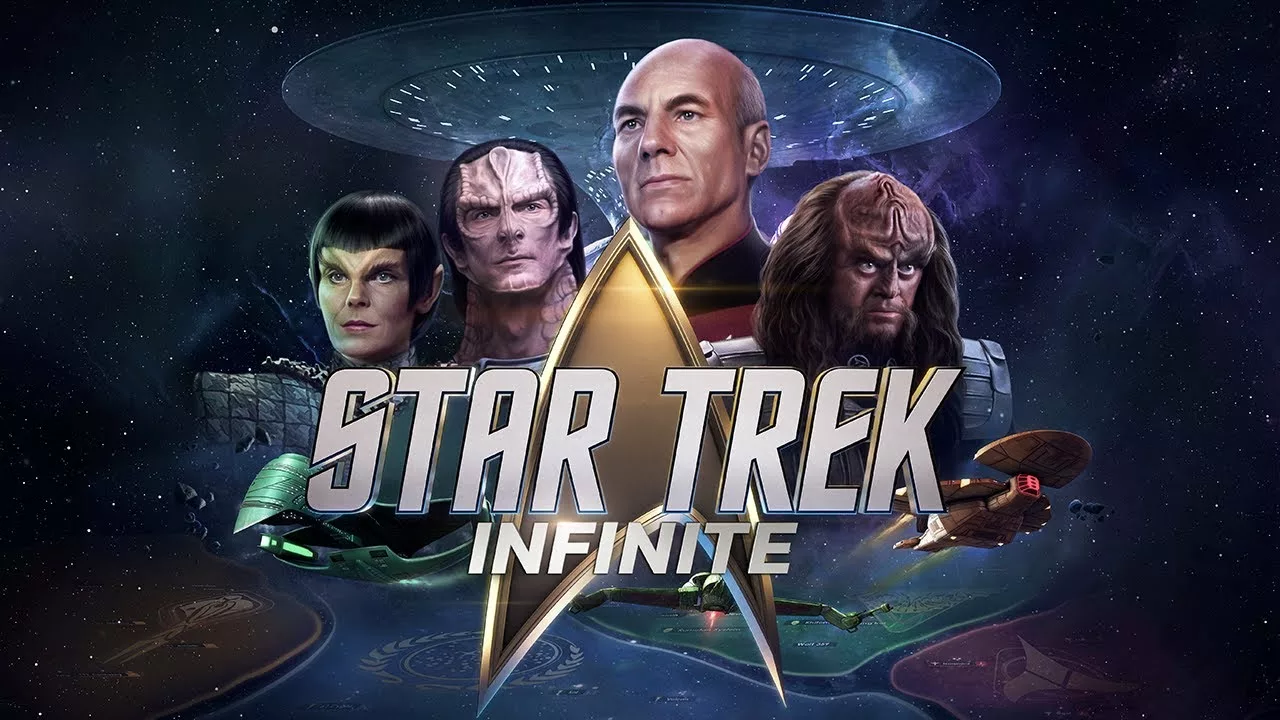

Star Trek: Infinite aims to deliver the definitive Star Trek video game experience that fans have long been waiting for. As a 4X strategy game based on Paradox Interactive’s acclaimed Stellaris, it provides players command of the United Federation of Planets, Klingon Empire, Romulan Star Empire or Cardassian Union during the iconic Next Generation era of the franchise.
Your mission is to expand your civilization’s influence across the galaxy through exploration, diplomacy, technological advancement and when necessary, war. Along the way, you’ll encounter familiar characters and locales from the TV series while dealing with invading Borg cubes, exploding stars, and political intrigue.
But does Star Trek: Infinite boldly go where no Star Trek game has gone before or does it fall short of its lofty potential? In this comprehensive review, we will examine every aspect of the game from its complex strategy systems to immersive Star Trek flavor. Graphics, gameplay, narrative and technical performance will all be weighed as we determine if Infinite is a triumphant new frontier for digital Trekkies or a bug-ridden voyage you’re better off avoiding.
There is certainly promise in adapting a sprawling 4X strategy experience like Stellaris to properly capture the appeal of commanding a starship and civilization. However, based on critical analysis of the gameplay and attention to Trek canon, Infinite may only engage the most patient and determined fans willing to endure its flaws. For those less familiar with complex space operas, this trip may feel like a tedious chore rather than a rewarding journey of discovery across the cosmos.
Exploring the Final Frontier
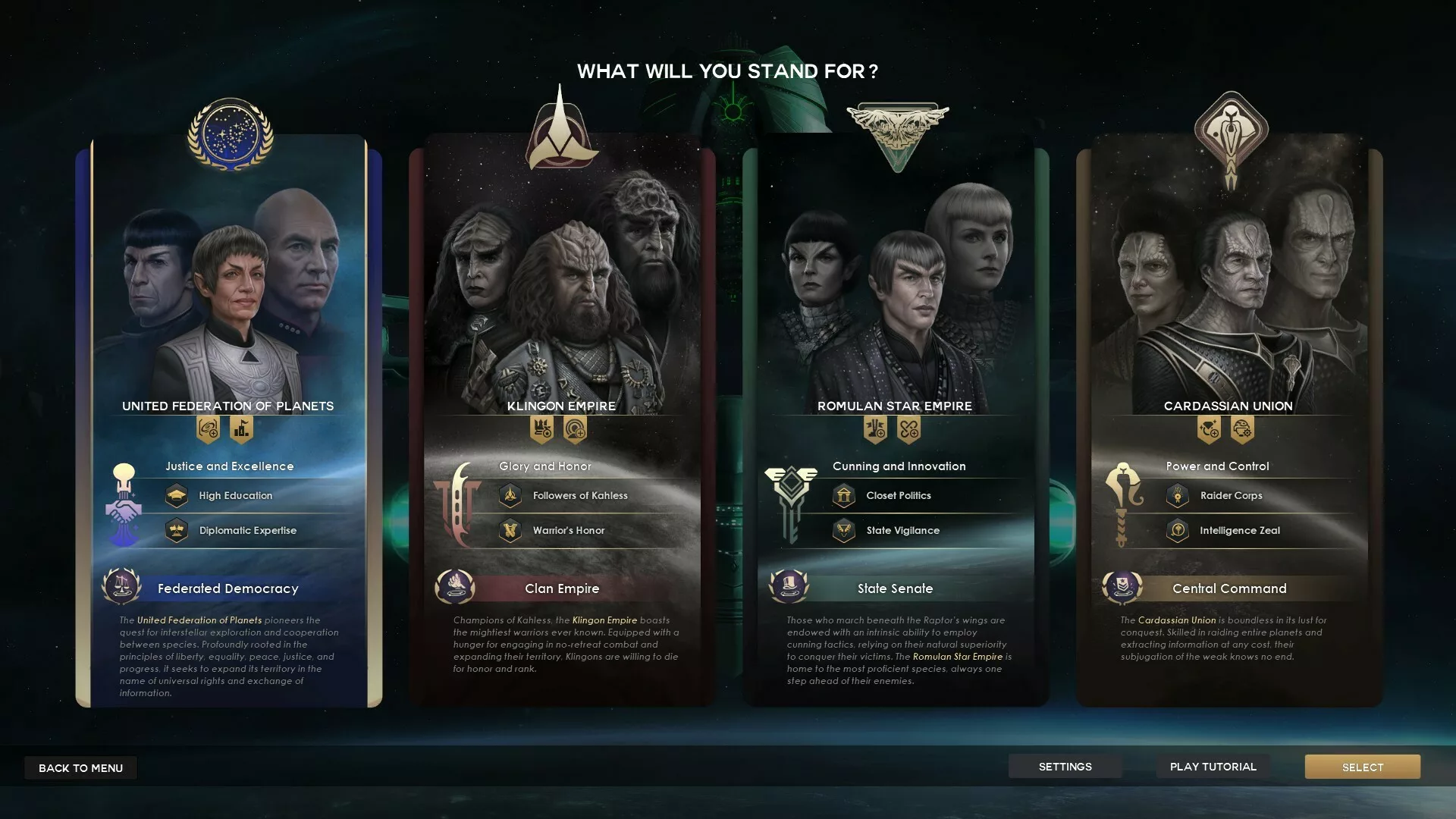
At its core, Star Trek: Infinite utilizes the same strategic 4X formula that Stellaris perfected. Players start by choosing one of four playable factions, each with their own distinct playstyle and advantages. The United Federation of Planets relies on science, diplomacy and assimilation to expand its peaceful utopian empire. The Klingon Empire favors military might, conquest and honor in battle to subjugate enemy worlds. The Romulan Star Empire uses subterfuge, espionage and secretive control of other races to exert dominance. And the Cardassian Union leverages oppression, slavery and ruthless totalitarian policies to keep its subjects in line.
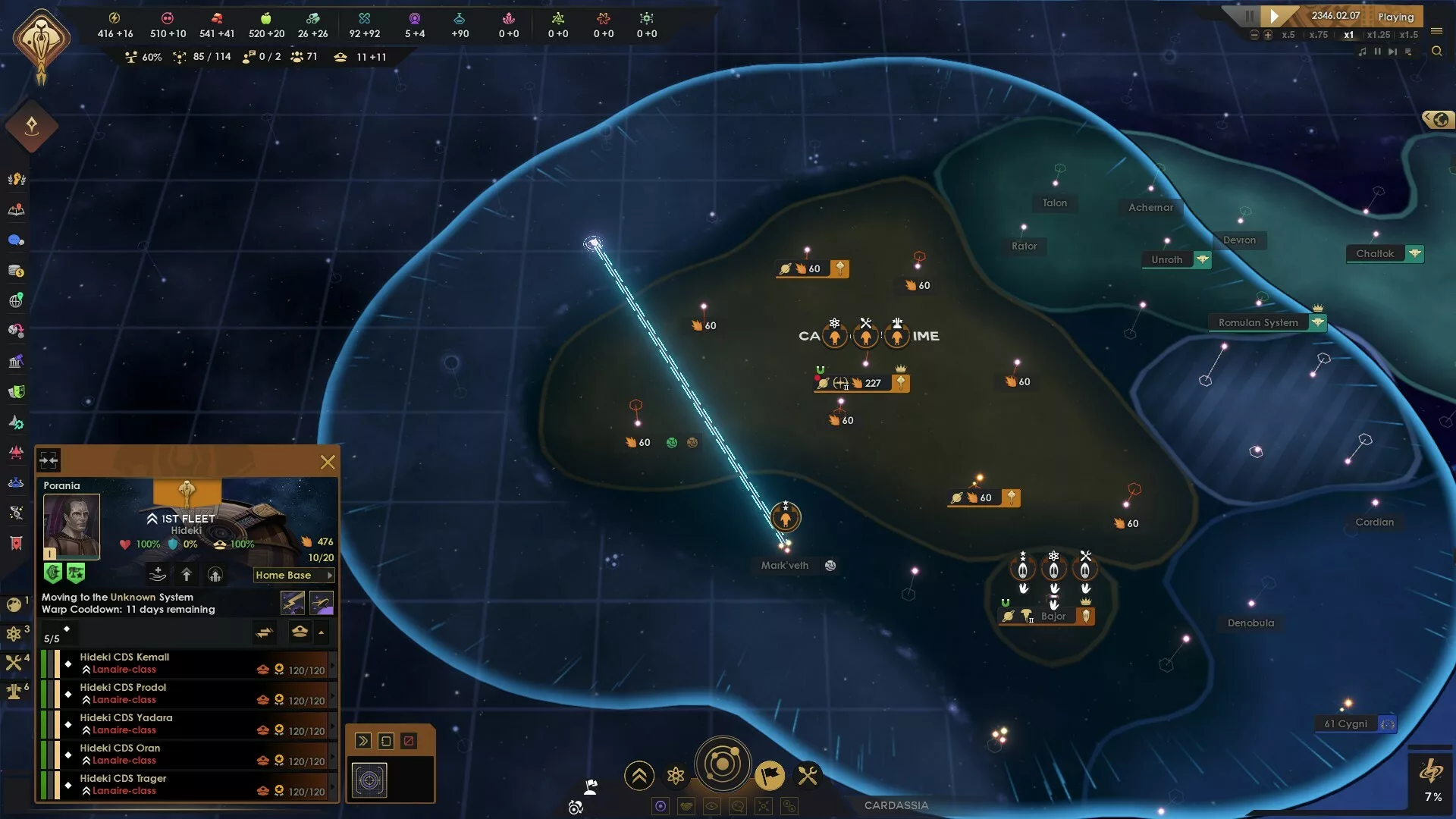
Gameplay revolves around managing your faction’s planets, resources, technologies, policies, ships and relations with other empires. The main view is a gorgeous 3D galactic map where you oversee your civilization’s progress. You’ll dispatch science vessels to survey unexplored systems, construct mining stations to gather valuable resources, colonize new habitable planets, design varied ship classes and starbases, and negotiate alliances and trade deals with other factions. Each empire functions as an autonomous opponent working towards their own victory conditions. Diplomacy is possible but conflict often breaks out, requiring tactful management of fleet movements and wartime strategies.
Progress follows a classic 4X formula. Explore unknown reaches of the galaxy to uncover anomalies and minor civilizations to assimilate. Expand by establishing new colonies and absorbing additional populations. Exploit resources to advance your technologies and economy. Exterminate hostile threats through war, sabotage and manipulation. It’s a complex, detailed and admittedly intimidating system to grasp for beginners. The tutorial provides sufficient guidance but mastering late-game strategies could require hours of trial and error. Veterans of Stellaris and other Paradox titles will adapt quicker thanks to shared DNA. But persistent captains willing to boldly invest time into learning the intricacies will discover one of the most rewarding space strategy simulations around.
Infinite improves upon Stellaris’ formula in several key areas. Each faction plays distinctly with unique traits, technologies, ship designs and playstyles that align with their lore. The Cardassians in particular are diabolical manipulators focused on domination and slavery, while the Federation takes a more idealistic path of passive growth and assimilation. There are also well-crafted Mission Trees for each faction that function as guided story-chains to simulate pivotal moments from the TV series. Constructing your first Starfleet Academy or defending Romulus from Borg invasion are impactful narrative beats for fans. And the feeling of discovering the Enterprise, crewmembers like Picard or Data, along with familiar alien races like the Vulcans or Klingons through exploration is simply delightful.
The complex web of systems mesh together seamlessly to create a compelling Trek experience. Whether you prefer administrating your empire directly or automating certain functions, Infinite accommodates both playstyles well. Micromanagers can pore over planetary decisions, leader assignments, ship configurations and tactical battle plans. But clever quality-of-life features like rally points, autonomous sector governors, robust trade policies and streamlined research trees ensure you always have access to meaningful strategic decisions without getting lost in minutiae. Compared to other sci-fi 4X options like Endless Space 2 or even Stellaris, Infinite stands apart with its compelling Star Trek fantasy realized.
“Dive into a chilling new adventure with our Ghostbusters: Frozen Empire review. Join the iconic team as they battle a frosty foe threatening New York City, blending classic humor with new spectral challenges in this thrilling sequel.”
Navigating the Intricate Universe of Infinite
Right from the opening text crawl, Infinite immerses you in the beloved Star Trek setting that has captivated fans for decades. The year is 2346, just before the era of Picard and The Next Generation. The United Federation of Planets stands as a progressive alliance of races like humans, Vulcans and Betazoids committed to equality, scientific advancement and exploration. But surrounding powers like the Klingon Empire, Romulan Star Empire and Cardassian Union have more nefarious goals of conquest, assimilation and authoritarian control over their corner of the galaxy.
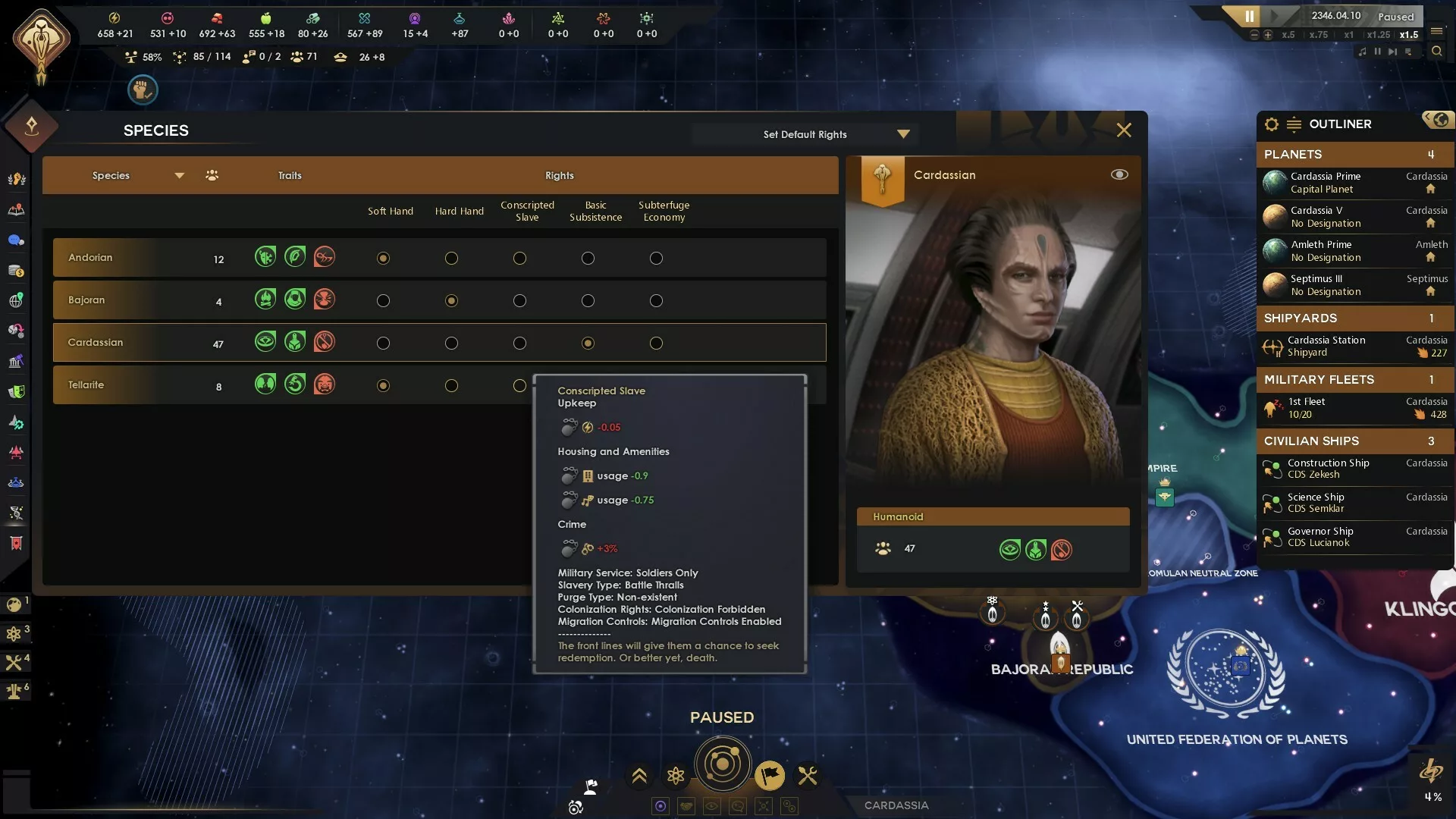
You are put in command of one of these vying factions, charged with furthering their interests across the Alpha and Beta quadrants. This creates an excellent foundation ripe for playing out pivotal conflicts like the Klingon Civil War or the Cardassian occupation of Bajor. The setting sticks closely to established Trek canon, allowing you to participate in major events from the shows, like making first contact with the Borg, dealing with internal threats from the Maquis resistance movement, or even preventing the destruction of Romulus.
The Mission Trees for each faction provide guided story-chains to simulate these major plot points in surprising detail. As the Federation, you can gradually construct Deep Space Nine, recruit famous officers like Riker or Troi, and unlock the Enterprise to explore strange new worlds. The Klingons must navigate their empire’s political infighting, eventually elevating Worf and Martok. Romulans plot reunification with Vulcan and contend with Shinzon’s coup. And Cardassians oppress the Bajorans while growing increasingly under Dominion influence.
These narrative branches allow you to meaningfully shape your civilization’s destiny in keeping with the shows’ lore. The events unfold dynamically based on your decisions, leading to new emergent stories. You may ally the Klingons with the Federation, spurring your Romulan rivals to partner with the Cardassians in response. Or the Borg surprise invasion could cripple your empire’s growth for decades. It’s a clever strategy to satisfy hardcore Trekkies through environmental storytelling. Discovering Excelsior-class ships warping in to assist against a Borg cube assault is a crowning achievement for any Starfleet admiral.
Yet there are missed opportunities too. Ground combat is entirely automated, devoid of any away team options. Alien encounters feel limited to passive dialogue checks rather than ethical dilemmas. And the lack of a proper character creator restricts roleplaying possibilities compared to Stellaris. Still, Infinite does an admirable job of simulating beloved Trek scenarios within the framework of a strategic space opera. Established lore is faithfully represented but your actions can also forge a new divergent legacy. For any fan who grew up on decades of Star Trek history, finally getting to steer these civilizations towards peace or ruin is an absolute triumph.
Charting the Stars: A Visual Odyssey in Infinite
Visually, Infinite succeeds at evoking the stylish look and feel of the TV shows. The galactic map presents a glittering starfield view of the Milky Way with colorful nebula backdrops. Solar systems sport high-resolution planets, moons, asteroid belts and other celestial bodies. Faction borders are denoted with translucent overlays true to their empire’s color schemes. It lacks Stellaris’ billions of procedurally generated worlds but the handcrafted detail is appreciable. Zooming into inhabited planets reveals regional maps with Starbases, shipyards, mines and settlements represented appropriately. And the UI features slick consoles and LCARS-inspired design elements sure to delight Trek fans.
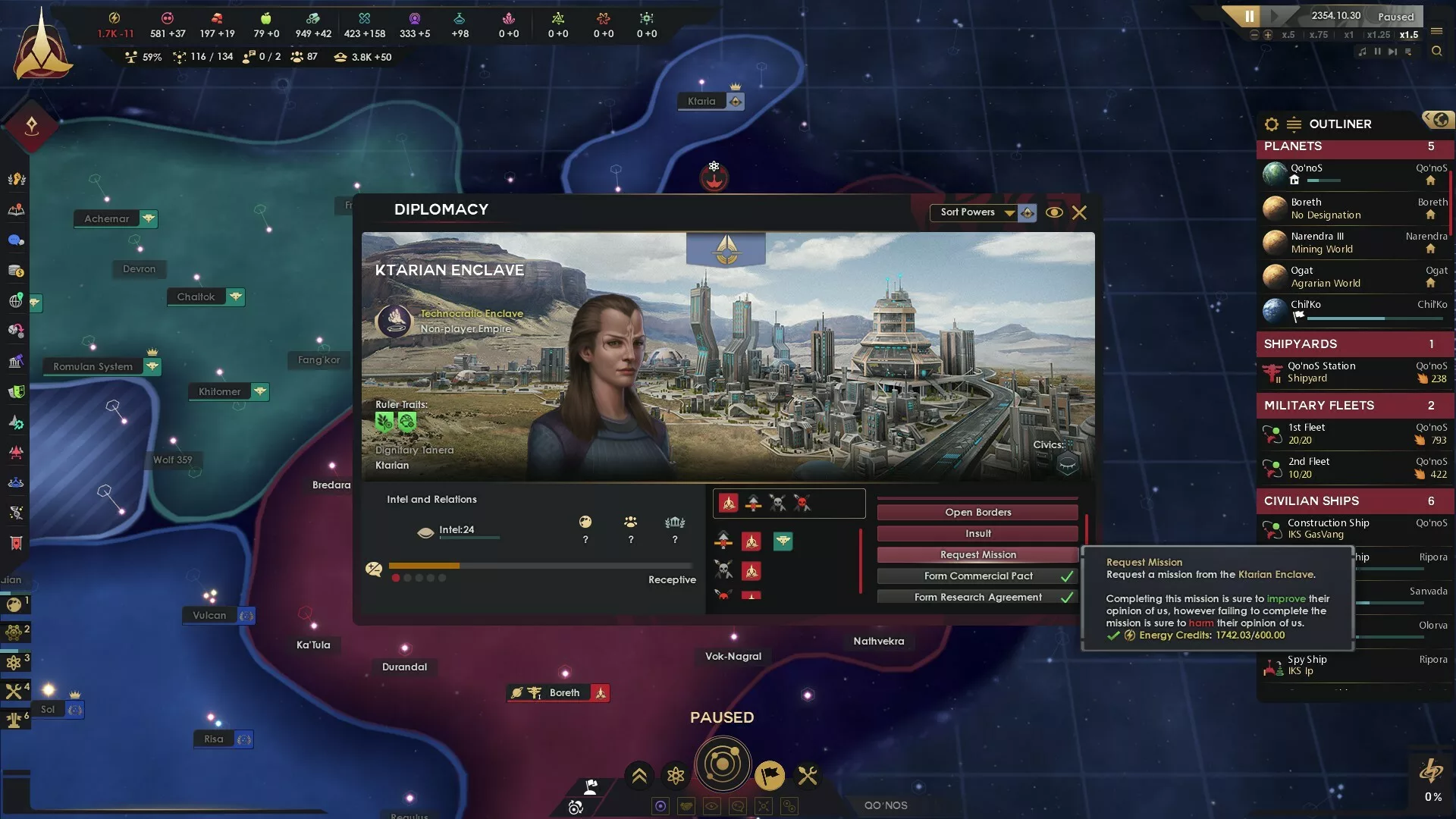
The level of polish falters slightly in other areas though. Ship models are impressively varied but their designs aren’t always consistent with canon. Combat visuals get repetitive quickly with minimal flair to battles. Ground invasions occur entirely off-screen. Explosions and spatial phenomena could use more pizzazz. Yet it’s still captivating to watch your Federation task force phase into action unleashing swarms of phasers and torpedoes on enemy Cardassian cruisers. The breathtaking scope of maneuvering armadas across a distant galaxy is accurately conveyed.
On the technical side, Infinite ran smoothly during our testing with no stability issues. Loading times are snappy, gameplay is responsive, and the UI works as intended. There were occasional broken tooltip text and weird animation glitches but nothing game-breaking. However, other early player reports cite more severe bugs, like broken victory conditions, unclear notifications, and progression stopping mission failures. Future patches will hopefully address these problems soon.
The excellent audio design deserves special praise. Epic militaristic anthems complement the Klingons. Investigative scientific themes back Federation exploration. Ominous chorales suit the Romulans. And discordant martial music fits the Cardassians. Familiar sound effects for phasers, transporters, red alerts and warp speed add nostalgic flavor. And the user interface chimes are instantly recognizable Trek staples. The voice acting convincingly captures alien dialects and regional affectations too. This polished soundscape completes an immersive trip into the final frontier.
Supplemental Space Adventures
Beyond the engrossing single-player campaign, Infinite incorporates a few other beneficial features. Multiplayer allows cooperative and competitive gameplay between up to 16 players. You can join forces with friends controlling different factions or square off in a massive intergalactic struggle. There are also basic modding tools to customize game rules, technologies, policies, ship components and more. Steam Workshop integration lets you easily download fan-made mods, though the selection is currently limited.
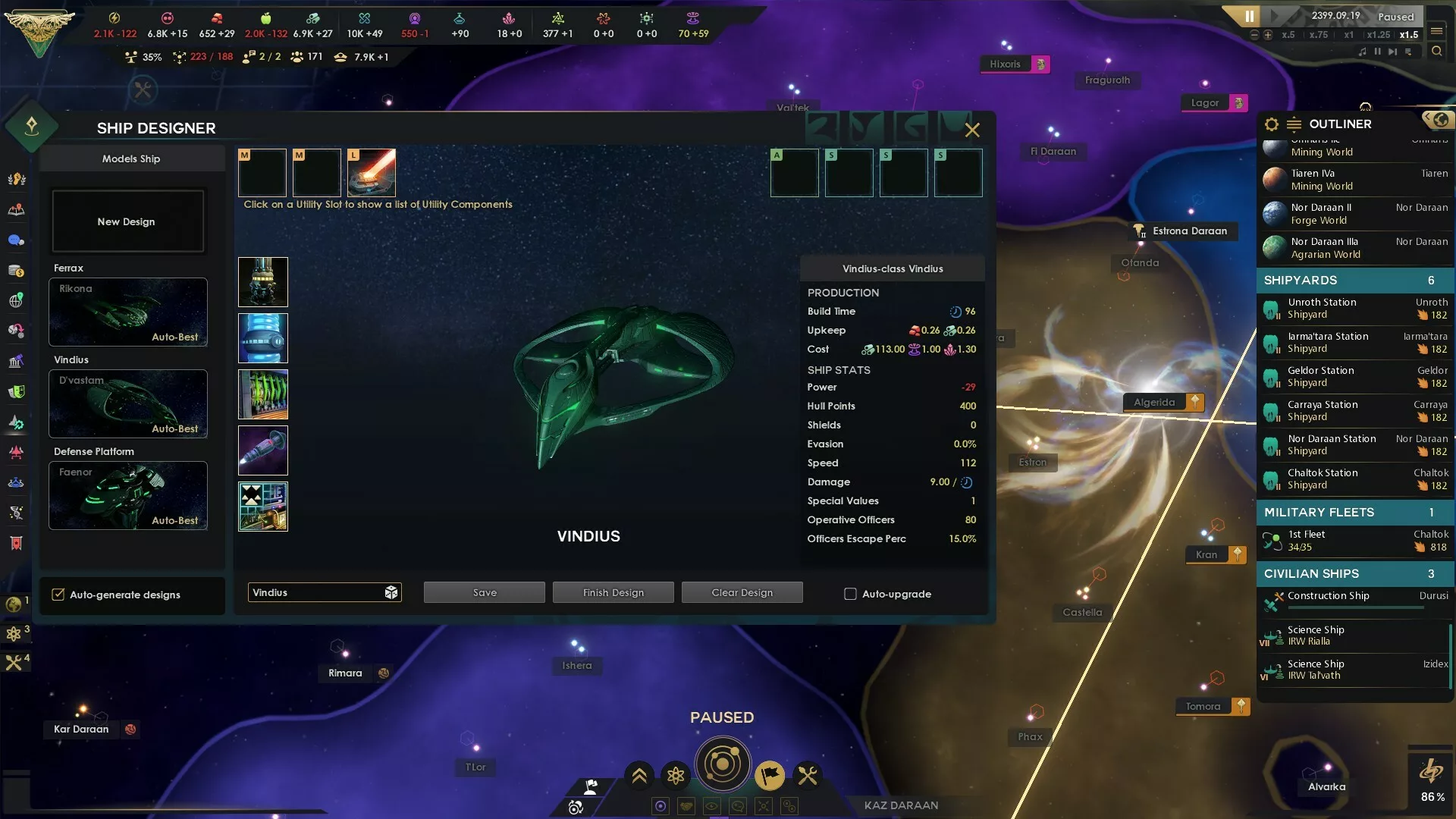
In terms of progression, each faction follows branching technology trees to unlock upgrades over time. Special projects can grant access to unique Stratagems which confer powerful temporary bonuses. Leveling up your main leaders through experience gains them new beneficial traits and perks. And most in-game actions feed into increasing your overall faction score – the primary victory benchmark. There isn’t much lateral progression via equipment, customization or colonizing rare planetary anomalies though.
An admirable amount of menu settings allow tweaking the experience. You can modify game length, pace, difficulty, victory conditions, galaxy size, AI behavior and more. Combined with the ability to automate functions like trade, exploration or planet management, both novice and veteran players have options to tailor everything to their preference. Ironman mode provides added challenge for achievement hunters. But a full-fledged scenario or mission editor would further elevate replayability.
Post-launch support plans include releasing additional DLC expansions over time that add new content. Presumably this will involve introducing more alien races, technologies, narrative events and maybe even entirely new galactic regions. Deeper integrations for Discovery, Lower Decks or Picard eras could happen. And DLC to play as Ferengi, Gorn or other minor factions seems likely. But so far, no concrete details have emerged yet about Infinite’s future space roadmap.
For now, the available modes provide enjoyable avenues for further adventures. The multiplayer in particular stands out for letting you collaborate on an epic journey across the stars with friends. And an already lively mod scene points to a thriving community remixing the game in creative ways. There’s plenty here to engage devoted Starfleet admirals beyond the main single-player campaign. To boldly keep exploring space, the final frontier.
A Buggy Voyage
Unfortunately, Infinite’s biggest weakness is its plethora of stability issues and game-breaking bugs. During our testing, we encountered recurring problems that severely impacted the experience. Certain notifications like planetary rebellions or leader deaths seemed to trigger randomly with no cause. Tooltips were often filled with placeholder text rather than actual descriptions. Ship reinforcement behaved erratically, forming new fleets instead of merging with existing ones. And the diplomacy system would get permanently stuck, preventing any further assimilation or progress on the mission tree.
The most damaging bug prevented the assimilation system from working properly after a certain point. Our diplomatic envoys would get assigned to minor civilizations but then remain indefinitely with no resolution occurring. This made expanding our empire nearly impossible for the rest of the playthrough, essentially breaking core progression. No amount of reloading, reassigning leaders or restarting fixed the issue.
Other players have reported similarly game-breaking bugs related to broken victory conditions, technologies not unlocking properly, crash loops in certain systems, and events like the Borg invasion or Romulan supernova mysteriously never triggering. It seems like almost every core system in the game is subject to potential ruinous bugs. some of these may get addressed in future patches, but as of launch, the pervasiveness of deal-breaking issues is unacceptable.
We also encountered smaller one-off glitches like duplicate leaders, broken audio dialogue triggers, and ships getting stuck in combat stances. Menus wouldlag occasionally when navigating crowded star systems. Diplomatic messages referring to outdated systems and gameplay mechanics suggest lingering vestiges of unoptimized code. While none of these smaller bugs were critical, together they did detract from the overall polish.
Infinite seems to have shipped in an unfortunately unfinished state compared to Stellaris. Fans eager to immerse themselves in their favorite Trek universe may be willing to tolerate bugs just to enjoy the fantasy. But for most players, the myriad of technical and stability problems make an otherwise promising game difficult to recommend. If you aren’t prepared to lose hours of progress from unexpected critical errors, it may be prudent to avoid this star voyage until considerable patches arrive.
Boldly Going Forward
Ultimately, Star Trek: Infinite shows great promise but fails to fully deliver a definitive Trek experience yet. As an adaption of Stellaris, the complex 4X strategy systems allow for an unparalleled level of control over your galactic civilization. Key gameplay improvements like distinct factions, mission trees and greater accessibility streamline the experience for Trek fans new to the genre. And the setting, characters, music and environmental storytelling admirably capture the essence of Star Trek’s beloved lore.
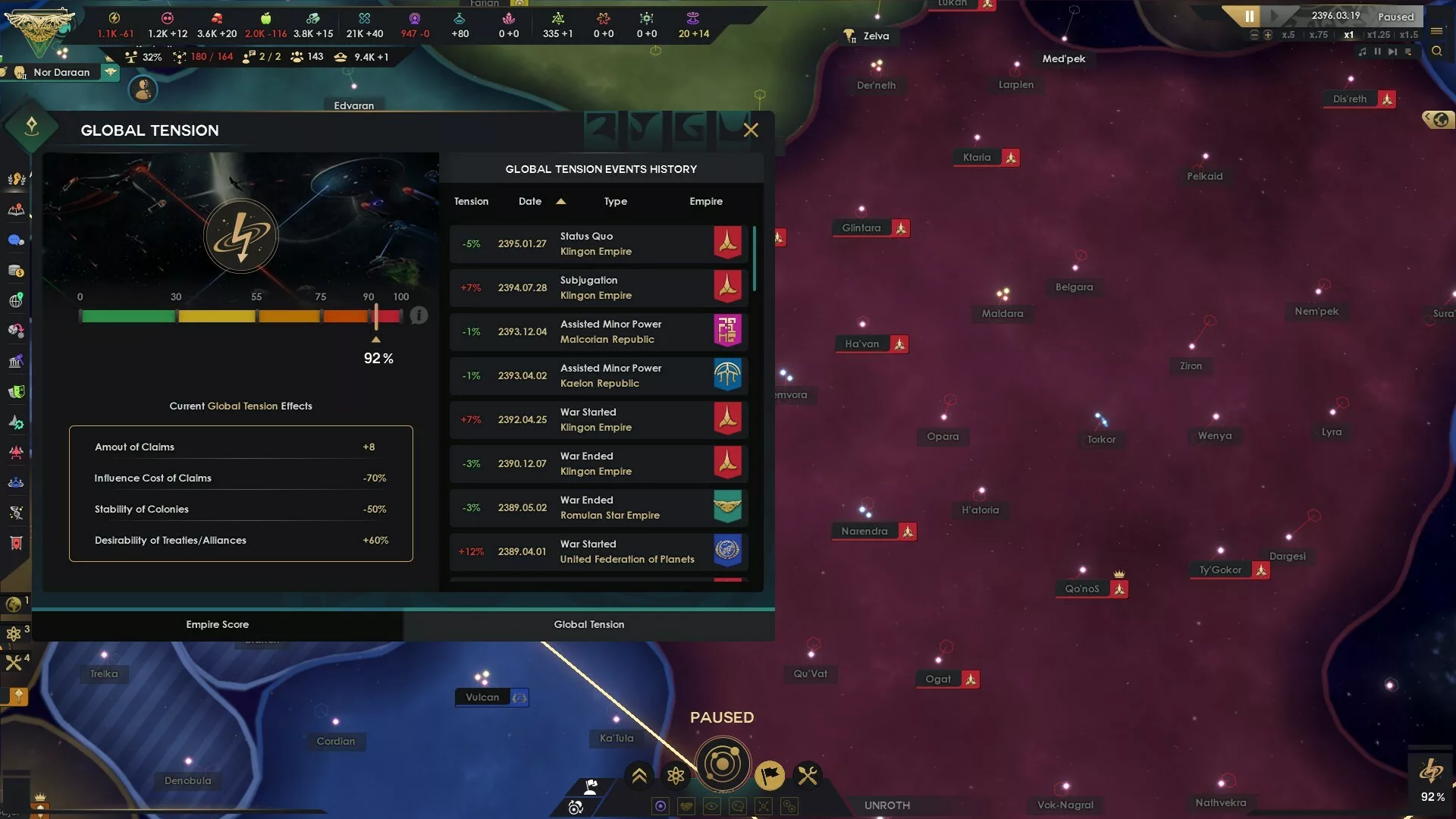
However, this maiden voyage is held back by an alarming amount of stability issues, game-breaking bugs and overall lack of polish. It’s clear that Infinite needed more time in spacedock before launch. When core progression systems randomly fail, it’s difficult to fully invest dozens of hours required for a satisfying playthrough. Only the most patient and dedicated admirals will be able to see their mission through to the end.
Yet the solid foundations built atop Stellaris hint at the great potential still to come. It may just take several more rounds of patching and tweaking before Infinite can confidently steer towards that vision. Until then, all but the biggest Trek devotees may want to cautiously observe from the Starbase rather than directly boarding this precarious ship. With a bit more work though, Star Trek: Infinite could confidently go down in history as one of the most immersive and engaging strategic social simulations set in the final frontier. It isn’t quite ready to engage warp speed yet but the matter/antimatter reaction core shows promising signs of a bright future ahead.
The Review
Star Trek: Infinite
Star Trek: Infinite shows flashes of brilliance as an immersive strategy game adaptation of the beloved sci-fi franchise. But its potential is undermined by a myriad of stability issues, game-breaking bugs, and lack of polish. Only the most dedicated Trekkies will likely have the patience to navigate through the glitches to find the compelling experience hidden beneath. More patient captains may want to wait for substantial patching before embarking on this precarious maiden voyage.
PROS
- Immersive Star Trek setting and lore
- Distinct playable factions like Federation, Klingons, etc.
- Complex 4X strategy systems from Stellaris
- Mission trees guide narrative arcs for each faction
- Classic characters and story beats from the shows
- Stylish visuals and UI capture Trek aesthetic
- Excellent thematic soundtrack and sound design
CONS
- Myriad of game-breaking bugs and glitches
- Overall lack of polish and stability
- Progression systems frequently break
- Victory conditions can fail to trigger
- Steep learning curve for genre newcomers
- Missed narrative opportunities for more dilemmas
- Multiplayer and mod support limited at launch
- Can feel like a reskinned Stellaris rather than stand-alone







