





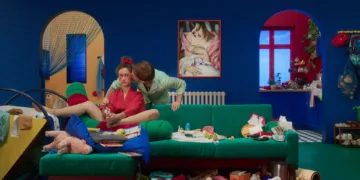










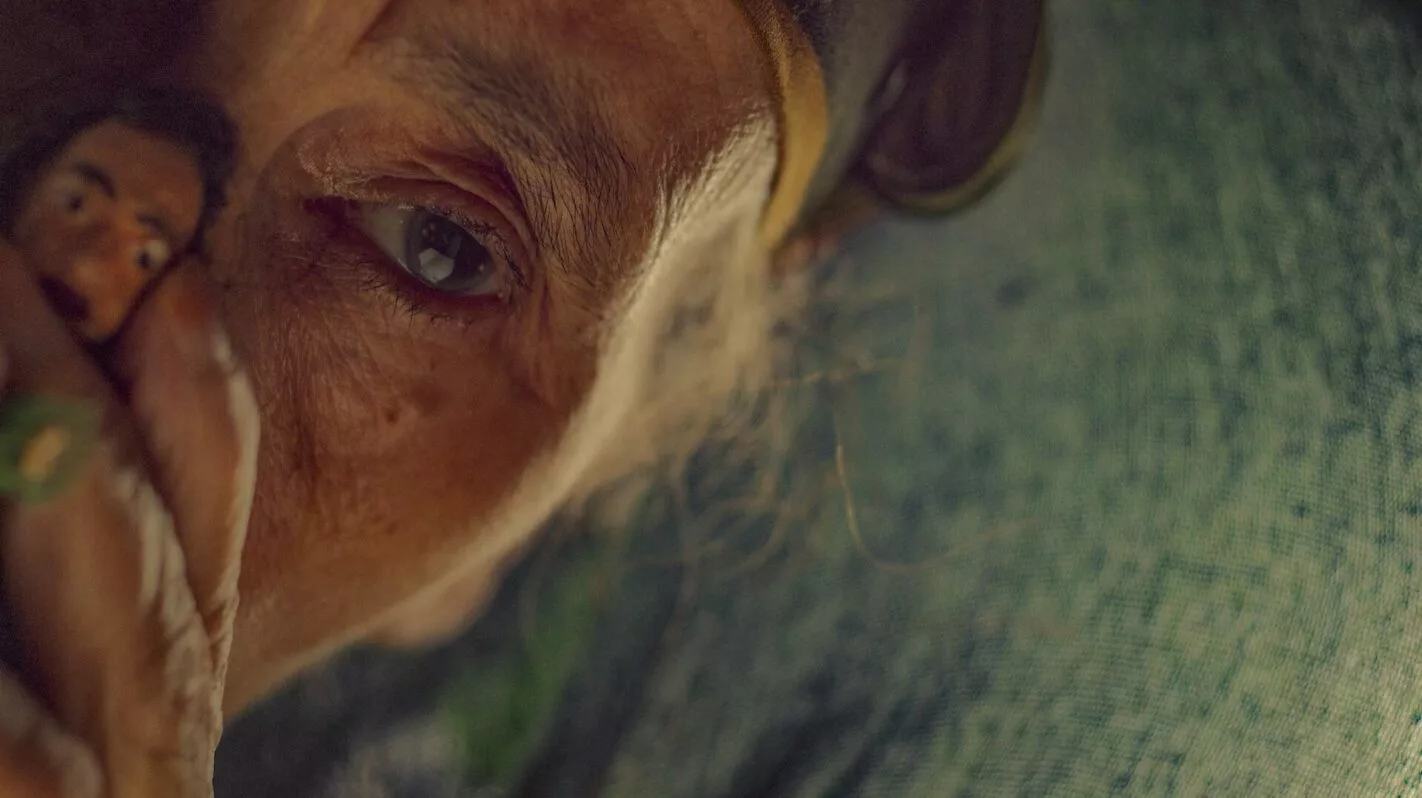

Asmae El Moudir’s award-winning documentary The Mother of All Lies tells a poignant story of family and community using an inventive method. Made in 2019, the film follows El Moudir as she works to understand her own mysterious past. Growing up in Casablanca, Morocco, she found that few photos existed of her childhood, forbidden by her domineering grandmother Zahra. El Moudir sets out to change that, recruiting her father to build miniature replicas of their old neighborhood. Populated with doll-sized figures representing friends and relatives, the replica becomes a stage where long-hidden memories can freely emerge.
El Moudir peels back the layers of her family’s history, guided by those nimble figurines. We learn of Zahra’s “iron fist” rule over not just her household but the entire district. More distressing is the trauma etched into all who lived there during the “Years of Lead” under King Hassan II, when a 1981 bread protest left many dead at the hands of soldiers. By revisiting this painful era through dramatizations with the figurines, old wounds are reopened. But a sense of catharsis also arises as those who endured come to new understandings of themselves and each other.
Through creativity and compassion, El Moudir fashions a space where the past may be reclaimed and its wounds addressed. Her inventive documentary proves that, with empathy and artistry, even the most difficult histories can be navigated. Personal stories rise to represent broader currents, making The Mother of All Lies a moving meditation on memory, trauma, and how communities can begin to heal.
Recreating the Past at a Miniature Scale
Filmmaker Asmae El Moudir sets out to investigate an odd absence from her childhood—a lack of any photos capturing her youth. With just one picture showing her as a young girl, she feels disconnected from her past. So she devises an inventive way to recreate those missing memories: having her father build miniature versions of their old Casablanca neighborhood.
Populating the mini-world with small figurines representing his family, neighbors, and everyone else, El Moudir brings them to her family’s home. There, she conducts moving interviews, guiding discussions that dig deep. With such a tangible setting made completely by hand, difficult conversations start to flow more freely. People open up about long-buried emotions, like a friend opening their heart after making something with care.
El Moudir proves a thoughtful director. She treats her interview subjects, including harsh relatives, with empathy. Respecting privacy where needed, she avoids exploitation. Though navigating sensitive grounds, El Moudir finds the right balance. By focusing attention on her figurine-filled models, the filmmaker redirects hard feelings away from each other and onto understanding what they endured.
Through it all, El Moudir leads with quiet skill, never forcing, yet drawing out pain and perspectives with compassion. With just the right questions at the right time and allowing tears where they come, she earns her family’s trust. The dark truths of a community’s trauma gradually come to light through their dedicated work. By the film’s end, greater peace seems to have emerged from revisiting this painful chapter on a miniature scale.
El Moudir’s direction makes all the difference. She finds just the right humanizing approach, and through it, she reconnects long-divided people with their shared past. Her gentle guidance is what makes The Mother of All Lies so moving and memorable.
Characters Illuminated Through Trauma
This film presents a fascinating cast of characters, led by filmmaker Asmae El Moudir on her journey to uncover truth. Her mother plays a role, being more easygoing yet still bearing scars from their past. And what a past was had under the iron fist of Asmae’s grandmother, the household’s undisputed ruler known to all as Zahra.

Zahra forged her family in the ways she saw fit, banning photos and rigidly controlling expression. Her reasons stem from protecting her family, yet one can’t help but notice scars of her own doing—a steely demeanor belying hidden pain. Asmae shows flashes of empathy in how she captures Zahra, though none is returned—only disdain for introspection remains. Still, her brand of “tough love” shaped this family forever, for better or worse.
Asmae herself spent a childhood in this environment and wished to know more. Seeking identity, she takes a gentle approach different from Zahra’s. Persuading loved ones to open wounds, she supplies figurines that distance pain just enough, yet bring it into focus. With comfort and care, she draws out the truth her grandmother’s way never could.
Even Asmae’s mother, caught between the two women, shows layers. Though following Zahra’s lead often, moments of raw emotion shine through—a window into private wounds never healed. Asmae captures familial dynamics with nuance, respecting each while guiding their story with compassion.
Trauma, it’s clear, impacted this family in differing ways. Through it all, Asmae emerged determined to understand, not judge. Her direction treats even the film’s fearsome matriarch not as a villain but as a product of life’s difficulties, unlike all others who suffered during that dark time. In illuminating characters so vividly, Asmae lets viewers share her journey of knowledge and, perhaps, a touch of healing.
Revisiting a Tragedy Through Living Memory
The Mother of All Lies tells a story long buried. At its core lie the Bread Riots of 1981, when public anger towards rising food prices boiled over in protests across Morocco. In the streets of Casablanca, peaceful demonstrations exploded into a tragedy that would forever change a community.

Facing rising costs, the people took to the streets to voice their frustrations. But no mercy was shown; the new regime met the crowds with bullets. Many innocent lives were lost that day, cut down without reason or justice. Afterwards, bodies were hidden, and healing never came. An open wound was left to fester in secret, the trauma of it poisoning the land in its shadow.
For generations since, an unspoken rule has kept those painful memories at bay. No words or pictures dared disturb what was better left forgotten. But filmmaker Asmae wished to see beyond the silence. Returning to that fated place through living memory and handcrafted artifacts, she gives shape to the formless ghosts of the past.
Piece by piece, the miniature world reveals long-buried truths. As survivors walk those miniature streets once more, revisiting that day through figurines lends a safe distance to dredge up details long denied. We witness raw emotion and learn a history that revisionist regimes could not rewrite.
The tragedy is brought to light again, not to open old hatreds, but so its lessons are not lost. By facing what happened, perhaps the healing suppressed for so long can now begin. Asmae’s film ensures those lost will not be nameless, confining that terror to history’s dusty shelves. Its testimony ensures the living may find solace, and from tragedy’s lessons, build a more just future.
Shaping Living Memory Through Miniatures
Asmae El Moudir faces a challenge: how to tell her family’s story when photographs are forbidden and memories cloud in time. Yet in The Mother of All Lies, she finds an ingenious solution through miniature sets and figurines. These become more than crafts, fashioning a space where the past might walk again.

Through handmade models of homes and alleys, El Moudir rebuilds the neighborhood that was a vital part of all their lives. Within this recreated world, figures take the form of those who lived and witnessed what happened. As people interact with doppelgangers of themselves and loved ones, a strange alchemy occurs—the inanimate gaining life.
It’s in one such scene that this magic truly transports. A man, holding his figurine double, recounts the trauma of that terrible night long ago. Piece by piece, the reenactment flows from him, a doll standing in for friends lost and horrors endured. As he acts out each moment, the line blurs between representation and reality. His shaking increases till raw emotion finds release, the miniature conduit for catharsis searing to witness.
Through this inventive technique, El Moudir gives people space to confront locked-away pain in a detached way. Interacting with these figures becomes like glimpsing the past from a distance, safety removed even as truth surfaces. The tangible past embraces intangible memory, bridging what was with what is. Her camera watches, caring but uncensoring, as healing begins where wounding began so long ago.
In El Moudir’s hands, miniatures morph from crafted playthings to portals transporting across the chasm of decades. Through them, the past lives again, so its lessons can be shared and its scars see light once more. A nightmare returns, but this time audiences stand witness, and victims find solace in a catharsis that was theirs by right.
Shining Light on Shadows of the Past
The Mother of All Lies delves into some truly profound themes. At its core, it grapples with how memory shapes individuals and communities, especially in the wake of shared trauma. In 1981, dark events scarred the lives of many in Asmae El Moudir’s neighborhood. In the decades since, recollections of that night have faded for some yet remain painfully vivid for others.

Official accounts are also twisting the truth to serve political ends, obscuring much of what truly happened. Faced with such “politics of silence,” El Moudir set out to fill gaps and honor silenced voices. Her insightful film reveals how different generations processed these sorrows in their own ways too.
For El Moudir’s grandmother, Zahra, fiercely guarding the family from further pain meant walling off the past. No photos served as a barrier against dangerous memories. Yet for those who suffered most intensely that night, complete forgetting was impossible. Their miniature reenactments brought recollections surging back with unprompted emotion.
The film also hints at how younger people increasingly wish to establish their own relationship with history. While respecting cultural norms, El Moudir pursued answers denied to her. She created a space where truth could be spoken through creative, gentle means. In doing so, El Moudir reunited fractured family links and allowed old pains to take their rightful place in the light of present understanding.
The Mother of All Lies illuminates how collective memory shapes cultures and politics. It considers how new generations might carry the experiences of their elders while walking their own path. Above all, it stands as a powerful example of how art can nurture healing by facing darkness rather than denying its existence. Some wounds may never fully heal, but in sharing its insights, El Moudir’s seminal film has surely allowed some small measure of balm to find its way to places long left to fester in shadow.
Revealing Shared Stories Through Art
The Mother of All Lies takes on a tall task: bringing light to a dark period that many wish to keep hidden. Through intimate conversations and creative reenactments, it sheds light on traumatic events that shaped an entire community.

What starts as a personal quest to uncover her own past becomes something more meaningful—an unveiling of varied viewpoints on a significant moment in Morocco’s history. By crafting miniature worlds and coaxing recollections from those affected, Asmae El Moudir breathes life into a silenced slice of the national narrative.
Yet the film balances personal and political realms deftly. It underscores individual trauma without losing sight of the larger oppression that bred such suffering. And through artful storytelling, El Moudir forges links between generations divided by how they process lingering pains.
Most remarkably, The Mother of All Lies takes a sensitive—even therapeutic—approach to its heavy subject. By reducing towering truths to small, handcrafted toys, it makes reconciliation possible. After decades of imposed amnesia, these moving portraits offer both catharsis and much-needed recognition.
In the end, this innovative documentary proves just how powerful shared stories can be. It demonstrates art’s ability to dig beneath surface silence, unearthing the complicated textures of memory and community healing in the process. Through creativity and compassion, difficult histories can find a place in the light of present understanding.
The Review
The Mother of All Lies
The Mother of All Lies offers a profound yet gentle glimpse into personal and collective trauma. Through imaginative storytelling, it sheds needed light on an obscured chapter in Morocco's past. Asmae El Moudir navigates deeply emotional territories with sensitivity and care, proving the ability of art to foster reconciliation. This inventive documentary stayed with me long after viewing it, powerfully demonstrating how shared truths can help heal lingering wounds.
PROS
- A powerful examination of memory and intergenerational trauma
- Sensitive approach to heavy subject material
- Inventive storytelling methods using scale models and reenactment
- Sheds light on an obscured period of history in Morocco
- Facilitates important discussions around collective pain and its impacts
- Demonstrates the healing potential of sharing one's experiences
CONS
- Heavy subject matter may be difficult for some viewers
- Abstract storytelling using dolls takes some adjustment
- Limited photographic evidence leaves some gaps
- Fails to delve deeper into specific political contexts
- Overly domineering family members cause some discomfort