






















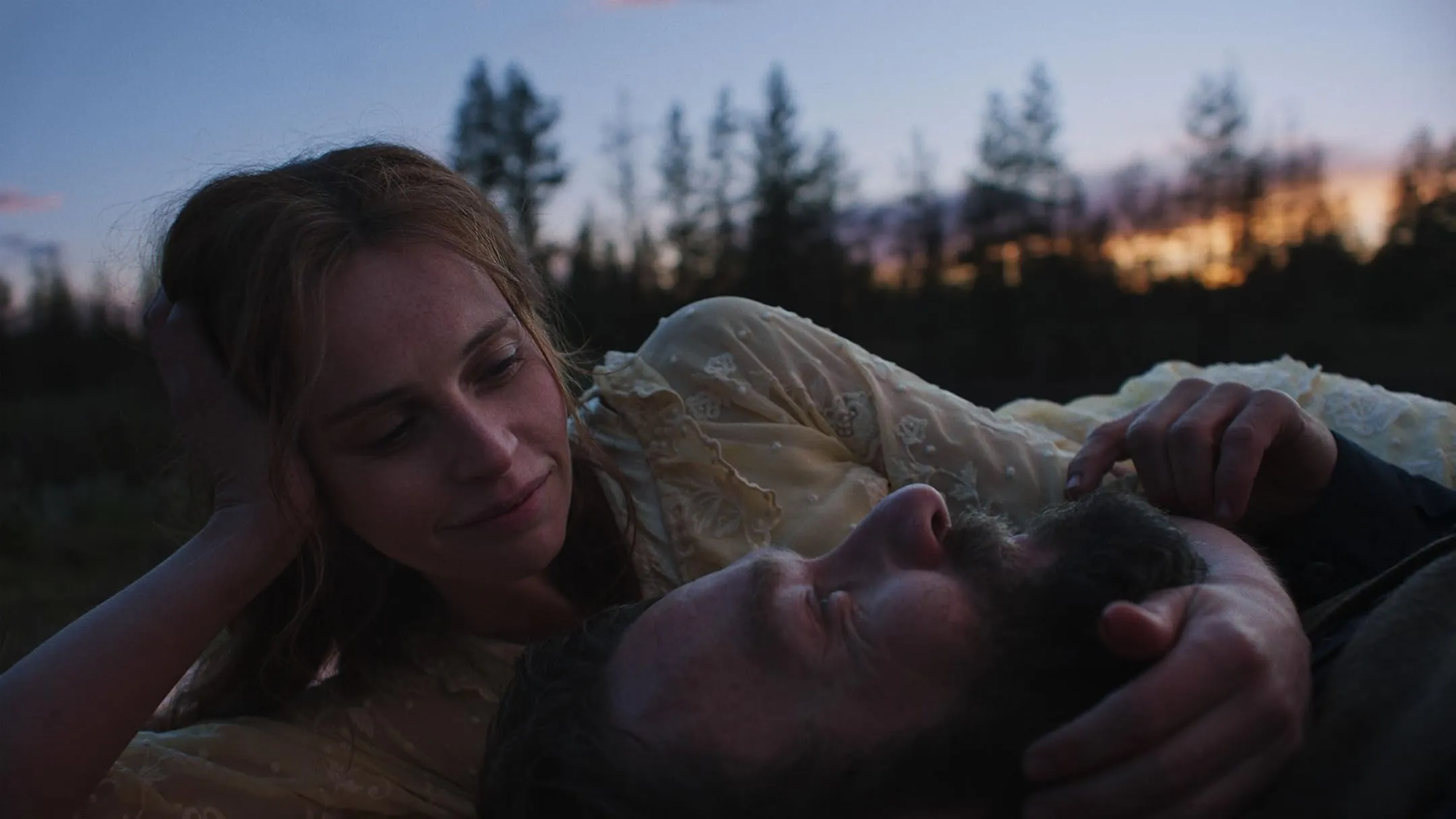

In Clint Bentley’s “Train Dreams,” viewers explore the raw landscapes of early 20th century Pacific Northwest, where chainsaws cut through ancient forests. The film follows Robert Grainier (Joel Edgerton), a logger molded by a stark environment of harsh beauty. Adapted from Denis Johnson’s novella, the narrative reveals life’s complex emotional terrain during an era when logging defined national growth.
Grainier, orphaned early, navigates labor’s brutal challenges while searching for moments of human connection. His relationship with Gladys (Felicity Jones) briefly illuminates the logging world with tender warmth. Tragedy strikes swiftly, with loss and grief mirroring nature’s unpredictable force. A disturbing scene depicting a Chinese laborer violently ejected from a bridge exposes the period’s deeply entrenched racial violence.
The film explores human resilience against a backdrop of societal transformation. Robert’s path reflects a deeper story of personal struggle and cultural reckoning, where each fallen tree represents more than economic progress—it symbolizes human cost and silent suffering.
The Tangled Roots of Isolation: Themes and Symbolism in “Train Dreams”
“Train Dreams” explores isolation through Robert Grainier’s life as a logger. His experiences reveal the complex relationship between humans and wilderness, presenting a stark portrayal of solitude and connection. The narrative follows Robert through dense forests, where moments of warmth with Gladys quickly dissolve into profound loneliness.
Grief emerges as a critical element shaping Robert’s journey. His experiences reflect deeper questions about human resilience and vulnerability. The violence and loss he encounters create a raw emotional landscape that challenges traditional narratives of survival.
The forest becomes more than a physical space—it transforms into a metaphorical character. Trees represent more than resources; they embody historical weight and human fragility. Each felled tree symbolizes personal and collective loss, suggesting an intricate dialogue between human existence and natural world.
Bentley crafts a sensory experience that blurs boundaries between individual experience and environmental context. Robert’s interactions with the landscape reveal subtle tensions between survival, destruction, and interconnectedness. His story becomes a meditation on human vulnerability against the backdrop of an indifferent yet powerful natural environment.
Through Robert’s journey, the text explores profound questions about belonging, survival, and the intricate ways humans negotiate their place within broader ecological systems. The narrative invites readers to consider the delicate threads connecting personal experience with larger environmental and existential narratives.
The Anatomy of Isolation: Character Analysis in “Train Dreams”
Robert Grainier emerges as a solitary figure, deeply entrenched in the wilderness of his own emotions. Joel Edgerton portrays him with a nuanced restraint, capturing the essence of a man existing on society’s margins. His world pulses with an unspoken longing for connection, balanced precariously between survival and solitude.
The logging camps become more than mere workplaces—they transform into psychological landscapes where Robert wrestles with his internal demons. Forests serve as silent witnesses to his struggles, each tree a potential metaphor for his stunted emotional growth. His experiences echo the raw complexity of human resilience, presenting a character who navigates grief with quiet determination.
Gladys enters his world like a fleeting ray of sunlight. Her presence disrupts Robert’s established solitude, offering a momentary glimpse of potential transformation. Their relationship unfolds with delicate complexity, hinting at the fragile nature of human connections and the persistent shadows of personal trauma.
Arn Peeples provides philosophical counterpoint to Robert’s introspective journey. With pointed observations about humanity’s relationship to nature, he articulates deeper truths: “When something is taken from nature, then nature will take something back.” Such statements resonate beyond mere dialogue, suggesting profound interconnectedness between human experiences and environmental rhythms.
Bentley crafts a narrative that explores the intricate dance between isolation and yearning. Each character surrounding Robert reveals different dimensions of his internal landscape—some sparking hope, others reflecting profound melancholy. Through these interactions, the story transcends individual experience, speaking to universal human struggles of finding meaning within life’s unpredictable wilderness.
Nature as a Character: Cinematography and Artistic Style in “Train Dreams”
In “Train Dreams,” cinematographer Adolpho Veloso crafts a visual experience that transforms the Pacific Northwest into a living entity. The imagery captures both the softness and severity of the landscape, drawing viewers into sprawling forests and rugged terrain while revealing nature’s true character. Each frame reflects precise composition, similar to the careful work of Robert Grainier.
The film’s rhythm guides audience engagement through a contemplative approach. Bentley allows scenes to unfold slowly, mirroring the gradual passage of time in Robert’s life. This deliberate pacing creates a deeper connection with the protagonist’s solitude. Long shots become windows into introspection, prompting viewers to explore their connections with wilderness and generational experiences.
Artistic choices extend beyond visuals. The 3:2 aspect ratio creates a balance between intimacy and expansiveness. Scenes depict Robert’s solitary figure against massive trees, highlighting human vulnerability within natural environments. This visual strategy questions our relationship with the wilderness—are we observers or participants?
Framing techniques accentuate emotional distance. Medium and long shots isolate Robert within the landscape, emphasizing his separation from surrounding beauty. The visual language speaks to experiences of loneliness and disconnection.
“Train Dreams” explores environmental and cultural themes through its visual storytelling. It provokes reflection on human interaction with natural spaces, challenging viewers to consider our impact and relationship with the world around us.
The Weight of Silence: Performance and Direction in “Train Dreams”
Joel Edgerton’s portrayal of Robert Grainier reveals a deep emotional landscape, blending raw human experience with intricate inner turmoil. Edgerton delivers a nuanced performance where restraint speaks louder than dramatic gestures. His subdued approach creates a powerful representation of a man wrestling with profound personal pain. Each subtle movement—a quiet breath, a slight gesture—communicates the character’s complex emotional terrain.
The character walks with a weighted presence, suggesting unspoken stories and accumulated grief. His physical movements telegraph an internal struggle, presenting a man who carries invisible scars through a world that continues regardless of his personal trauma.
Clent Bentley’s directional strategy creates a contemplative cinematic experience. The storytelling prioritizes emotional texture over traditional narrative progression. Scenes unfold with deliberate pacing, inviting viewers into a reflective space that mirrors the protagonist’s internal rhythm.
Bentley’s approach crafts a visual language that speaks through silence and subtle environmental interactions. Each frame feels carefully constructed to reveal character depth without relying on explicit exposition. The film’s visual strategy transforms simple moments into profound statements about human endurance and emotional resilience.
The Sonic Fabric of “Train Dreams”: Sound Design and Score
Bryce Dessner’s score for “Train Dreams” weaves a haunting musical narrative that captures the film’s emotional terrain. Strings, banjo, and delicate undertones create melodies that reflect the wilderness Robert experiences. The music becomes a sonic companion to Robert’s inner world, capturing moments of quiet sorrow and fleeting joy.
Will Patton’s narration adds depth to the auditory landscape, guiding audiences through Robert’s internal experience. His voice moves with a gentle rhythm, offering glimpses into a life marked by solitude. The narration feels intimate, like a whispered story shared around a distant campfire.
The musical and narrative elements intertwine, revealing the subtle textures of human experience—grief, connection, and the silent conversations between a person and their environment. Each sound becomes a brushstroke painting Robert’s complex emotional journey.
The Quiet Aftermath: Reflections on “Train Dreams”
In “Train Dreams,” Clint Bentley creates a deeply emotional narrative that explores silence and unspoken desires. The film delves into how trauma weaves through human experiences against a backdrop of raw natural landscapes. With compelling cinematography and nuanced performances, the story transcends traditional historical storytelling, revealing intimate moments of human struggle and resilience.
The film captures Robert’s journey through a transformative period, presenting a stark portrayal of individual experience within a changing world. Bentley’s work invites viewers to consider personal connections to environment and memory, offering a raw and unfiltered glimpse into human vulnerability.
The Review
Train Dreams
"Train Dreams" offers a contemplative journey through personal connections and the raw wilderness of human existence. Clint Bentley crafts a cinematic experience where silence communicates more than dialogue, with Joel Edgerton delivering a performance that captures subtle emotional landscapes. The visual narrative and musical composition intertwine to create a rich, textured story that resonates with quiet intensity. The film invites viewers into a meditative exploration of individual struggles against the backdrop of an untamed environment, drawing complex parallels between personal journeys and natural landscapes.
PROS
- Beautifully captures the Pacific Northwest’s landscapes, lending a sense of grandeur and intimacy to the story.
- Joel Edgerton delivers a deeply emotive portrayal of Robert Grainier, while supporting roles add rich texture to the narrative.
- Explores profound themes of isolation, grief, and humanity’s connection to nature, resonating on multiple levels.
- Bryce Dessner’s score and Will Patton’s narration enhance the emotional depth and atmosphere of the film.
CONS
- Some viewers may find the slow tempo frustrating or lacking in action.
- The lack of traditional exposition may leave some plot points underexplored for audiences seeking a clear storyline.
- Some supporting characters may feel underdeveloped, serving primarily to reflect on Robert’s journey.