




























Set against the turbulent backdrop of early 2001 Argentina—a period marked by an economic slide, street-level unrest, and shifting cultural markers—the film presents an arresting tableau of a nation in disarray. At its center is Natalia, a 19-year-old whose experiences encapsulate the raw intensity of youth mixed with a ghostly unease. She drifts between the throes of adolescent longing and an eerie environment that questions conventional reality (a scenario that might remind one of a history lesson gone rogue).
The narrative situates her personal diary of desires and disappointments amid the clamor of a society reeling from systemic dislocation, where even the most personal yearnings acquire a spectral weight. There is a subtle irony at work—the very quest for intimacy in a parched social landscape becomes a mirror reflecting the endemic decay around her (imagine seeking comfort in a storm of discontent).
The film operates as a canvas where the rites of becoming are painted with hints of the inexplicable, mingling gritty realism with flashes of the supernatural. Its tone, restrained yet acerbic, invites a contemplation of youth entwined with the eerie whispers of history.
Dual Tracks of Disruption: Plot, Structure, and Rhythm
The film functions on two narrative planes. One follows Natalia’s personal chronicle—a series of experiences marked by intensifying interpersonal conflicts and shifting affections. The other unfolds against Argentina’s turbulent milieu of financial collapse and civic dissent, where every quiet street corner seems ready to erupt in discontent. (It’s as if the nation itself shares in the protagonist’s internal strife.)
The beginning establishes an atmospheric stage: visual cues like worn posters and the ambient buzz of early 2000s tech set the scene. Small details, such as ambient chatter punctuating silent moments and the visual rhythm imposed by recurring symbolic images, reinforce a palpable mood of unrest. A mysterious shopping cart that lingers almost as an urban specter interlaces with the narrative, marking the intersection of destiny and decay (a detail that might provoke a chuckle from those who appreciate cinematic oddities).
As the plot unfolds, the tension mounts with a noticeable shift. A series of romantic entanglements—each evolving with unexpected complications—serve as a microcosm of societal instability. Natalia’s struggle with envy and inner turmoil is mirrored in moments of breathtaking isolation, where personal longing clutters with the weight of collective disillusionment. In a scene that morphs from the intimate to the surreal, accumulated frustrations detonate in an explosion of raw anger, blurring the lines between the real and the uncanny.
The film’s pacing is deliberate: moments of introspection create quiet pauses before abrupt, unsettling bursts of dramatic action remind the viewer of the omnipresent volatility. There is a rhythm defined by its unpredictable stops and starts (much like catching one’s breath in a dimly lit alley). Such careful modulation invites contemplation on how individual lives reflect, in miniature, an era on the brink of profound upheaval.
Character Evolution Amidst Chaos
Natalia starts as a fragile soul weighed down by self-doubt, only to morph into a force defined by raw intensity. Her progression feels like a quiet uprising (a kind of psycho-cultural metamorphosis) that captures both the everyday struggles of youth and an undercurrent of surreal power. Every look and hesitation acts as a silent manifesto against a backdrop of national disorder, where personal frustrations mirror the disarray outside.
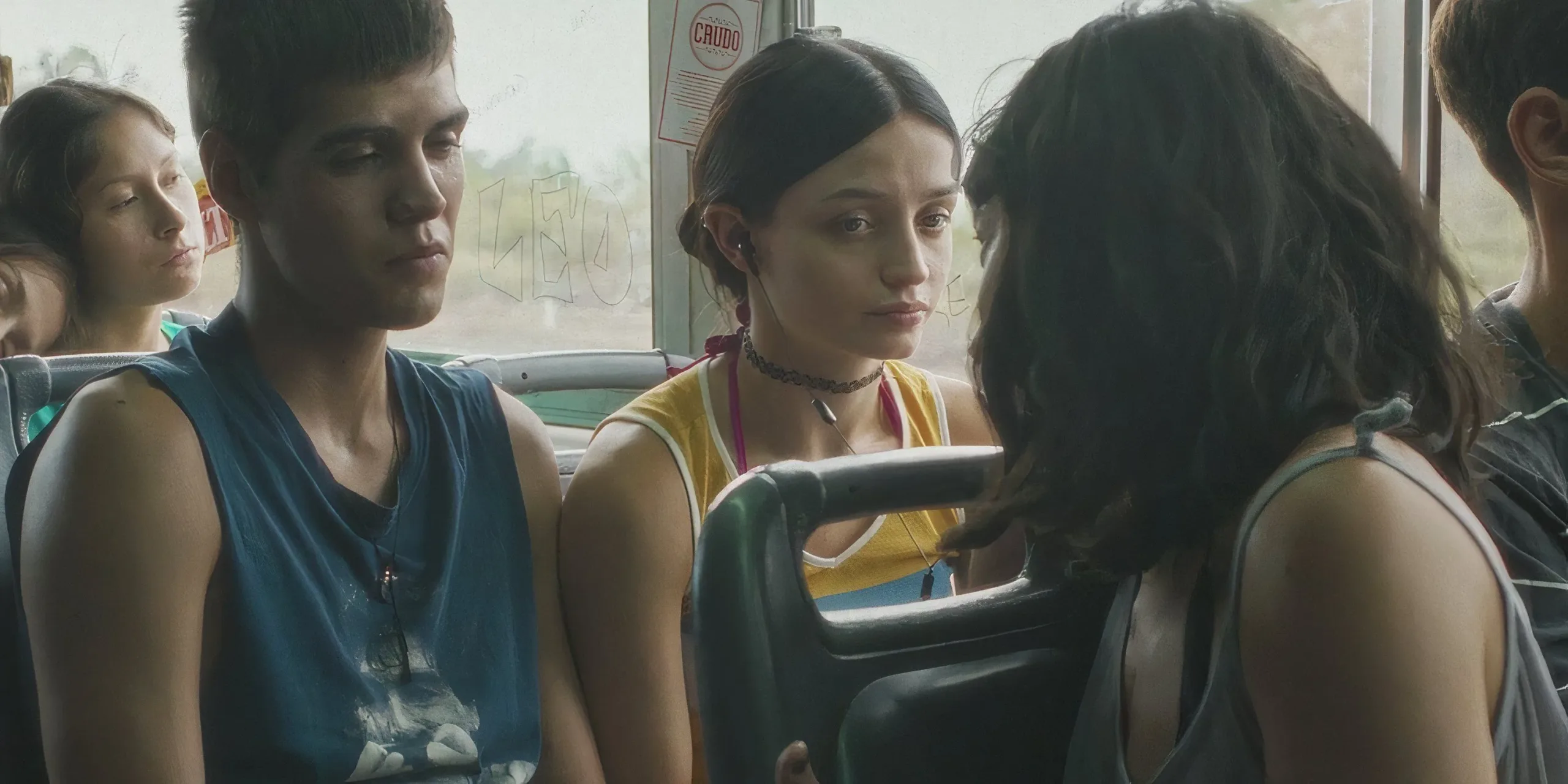
Diego figures as a magnet of desire and mixed messages. His fickle interest, shifting between Natalia and Silvia, stokes internal fires and stirs latent insecurities. Silvia, in her seasoned presence, stands as a countervailing force—a mature rival whose poise and subtle seduction unsettle Natalia’s already fragile stance. Their interactions provoke a series of moments that echo the spirit of social shifts compressed into everyday exchanges (if one were to coin the term, these are “micro-revolutions of sentiment”).
Supporting characters—Josefina, Mariela, Rita, and Kechu—offer a patchwork of perspectives that heighten the loneliness and fragmentation of Natalia’s world. They function as vital contrasts, their brief, hard-hitting dialogues underscoring what might otherwise be a singular narrative of isolation.
The lead actress delivers a performance marked by quiet intensity, her nuanced expressions and brief silences speaking volumes about internal storms. Meanwhile, the supporting cast contributes with discrete but effective turns that lend texture and a sense of verisimilitude.
Metaphors of Transition and Turbulence
Natalia’s experience unfolds as a study in transformation—her personal shifts mirror the decay in society. The film presents her sexual awakening as a contest between the innocence of youth and the creeping force of decay in her surroundings. In a narrative that insists on asking uncomfortable questions, her internal conflicts (often as volatile as the political unrest outside) challenge the viewer to reconsider the meaning of growing up.
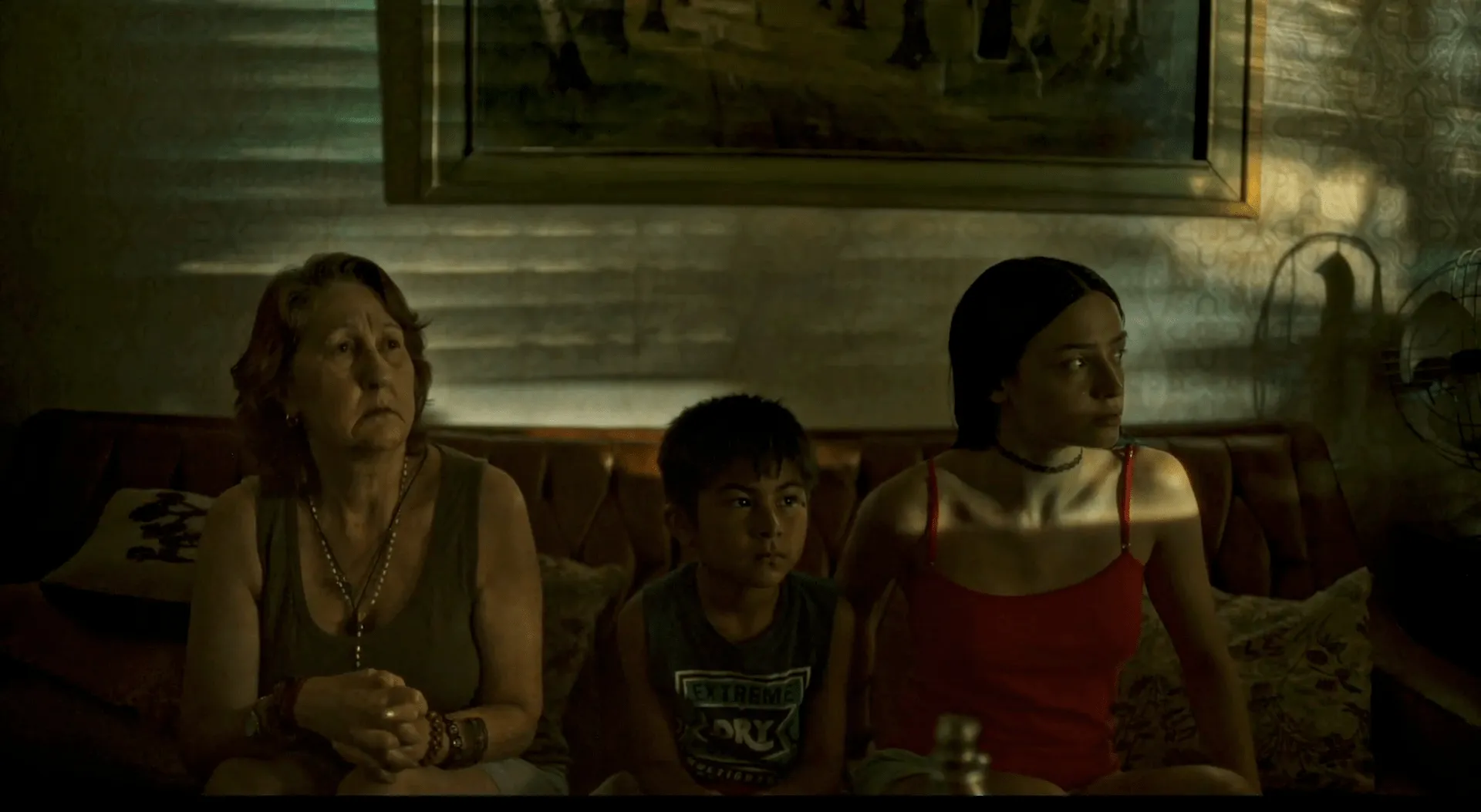
Isolation appears as a palpable presence—a character in its own right. The director paints scenes of solitude that seem almost sculpted out of the country’s collective despair. Economic hardships and societal dysfunction spill over into her life, magnifying feelings of abandonment and self-reproach. It is as if the individual’s burden becomes inseparable from the communal anguish; each personal secret carries an echo of societal frailty.
A persistent image is that of a shopping cart left in neglect—a silent specter of rot and unfulfilled promises. It reappears throughout the film as a stark reminder of what is forgotten. Equally, natural imagery plays a significant role; the lake offers a setting both soothing and ominous. Its reflective waters serve as the stage for moments of ritual-like self-realization, while weather—the oppressive summer heat and hints of looming storms—mirrors the characters’ inner turbulence.
There is a curious fusion within the film: a mixture of uncanny realism with strokes of the mystical. Supernatural whispers permeate everyday scenes, creating an unusual hybrid that is unmistakably unsettling. The movie combines elements of horror, teenage drama, and fantastical absurdity in a way that redefines conventional storytelling, sometimes leaving the audience in a state of bemused admiration (or mild exasperation at the sheer audacity of it all). Such a melding of styles invites reflection on the complexities of personal and cultural rupture in times of crisis.
Visual and Sonic Realities: The Film’s Aesthetic Pulse
The film’s visual narrative is a study in nuanced contrasts. Its lighting and color schemes oscillate between somber shadows and vibrant hues, crafting a visual lexicon that speaks to both Natalia’s intimate turmoil and the raw, unvarnished energy of a society in distress.
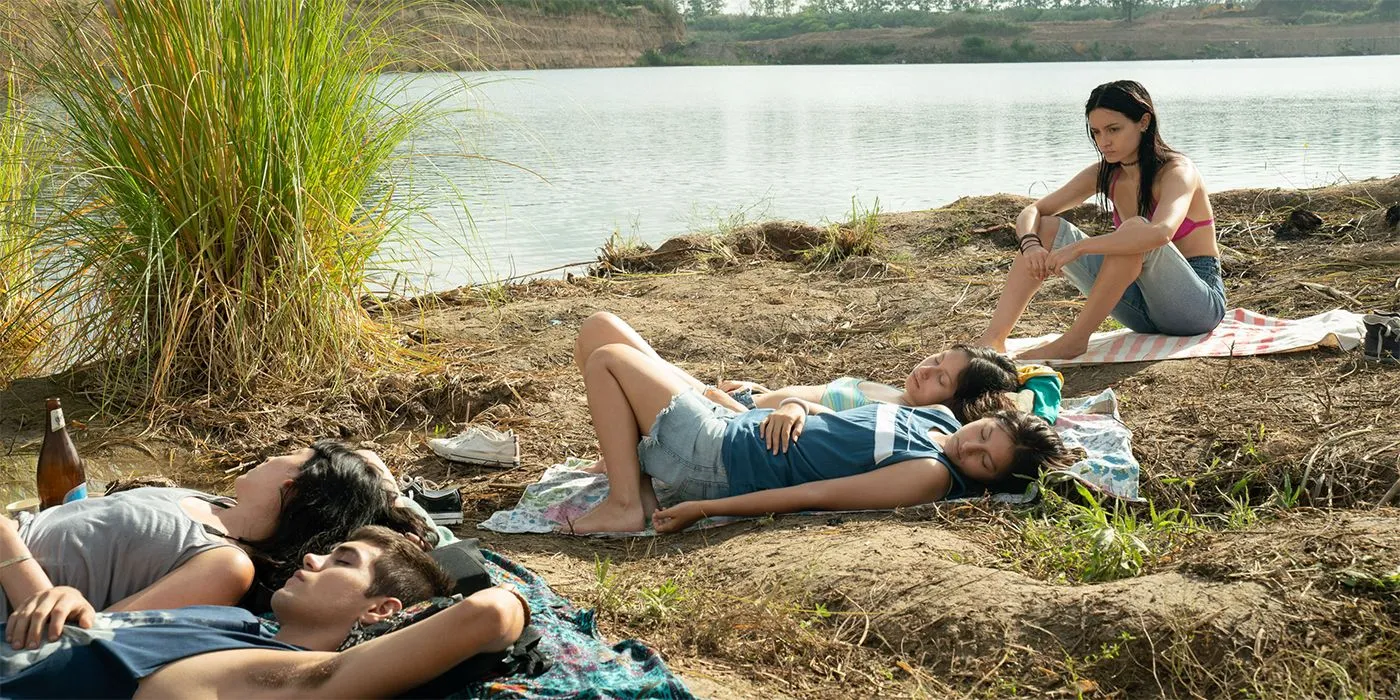
The framing techniques often confine characters within tight, claustrophobic spaces, then abruptly widen the lens to reveal sweeping urban decay (consider the forlorn shopping cart, a silent witness to neglect). In one particularly arresting scene, the lake appears almost otherworldly—a reflective void that serves as a stage for both solace and transformation.
Sound weaves an equally intricate tapestry. The soundtrack, characterized by languid jazzy strains and brisk, pulsating beats, operates as an auditory mirror to the tension simmering beneath the film’s surface. There are moments when the subtle layering of ambient street noise—the clamor of footsteps, muffled city chatter, even the static of a power outage—transforms the viewing experience into an immersion into Natalia’s fraught inner world. This sonic palette functions as a kind of psychoacoustic mapping of the era, drawing clear parallels to historical periods marked by both chaos and cultural ferment (a curious nod to times when a city’s heartbeat was as erratic as its public sentiment).
Set design is meticulously rendered with relics of early-2000s aesthetics: choker necklaces, nostalgic digital interfaces, and ubiquitous posters craft a palpable period feel. Props and locations are selected with deliberate precision, underscoring motifs of decay, transformation, and the tension between the tangible and the spectral. The art direction, winking at gritty realism while flirting with surreal overtones, invites viewers to question if what they observe is purely material or a reflection of deeper, almost mythic distortions.
Directorial Vision and Narrative Influence
Laura Casabé exhibits a steady hand in marrying multiple genres into a cohesive cinematic experience. Her method of visually parsing the film creates a palpable tension that reflects both personal turmoil and public unrest. The director’s focus on a distinct female perspective infuses the portrayal of youth with an unexpected depth—a mode that renders each emotional exchange as a subtle act of resistance (a kind of understated power play).

The script, adapted by Benjamin Naishtat from Mariana Enriquez’s tales, manages to steer its narrative threads without succumbing to excess. Dialogue and poignant exchanges function as micro-studies in human frailty, punctuating mundane moments with flashes of the surreal. A few standout lines anchor the film firmly in its historic milieu, drawing sly comparisons to eras marked by stark societal shifts—history meets individual angst in a curious, modern parable.
Casabé’s approach extracts sincere emotion through meticulous framing and deliberate pacing. Her narrative technique often seems to wink at the audience, leaving room for a touch of dry humor when the weight of the moment is almost too much to bear. The impact of this work lies in its ability to reflect the strains of personal and collective unrest, leaving viewers to ponder the ripples of change echoing across both the screen and society.
Full Credits
Director: Laura Casabé
Writers: Laura Casabé, Iván Fund
Cast: Dady Brieva, Fernanda Echevarría, Luisa Merelas, Dolores Oliverio, Agustín Sosa
The Review
The Virgin of the Quarry Lake
A fierce display of youth amidst societal tumult, this film impressively marries personal strife with a nation’s unrest. Its narrative tension and bold visual style capture a moment of volatile transformation, while raw performances convey an honest portrayal of inner turmoil. The film offers moments that spark reflection and invite debate, even if some narrative choices flirt with excess.
PROS
- Powerful lead performance
- Striking visual style
- Layered narrative with societal resonance
- Provocative blend of genres
CONS
- Occasionally uneven pacing
- Narrative threads can feel overextended
- Some tonal shifts may disorient viewers