












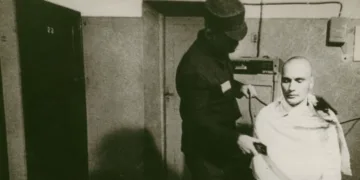









Enzo follows a sixteen-year-old who trades high-school corridors for a masonry apprenticeship—a curious swap of chalkboards for brick dust (call it adoles-cement). His world is La Ciotat in the peak of summer: sun-baked walls, shimmering Mediterranean haze, afternoons that feel eternal.
The film opens with an arresting credit—“A film by Laurent Cantet”—before Robin Campillo’s name appears. Cantet’s influence permeates every frame, even as Campillo steps in to steer the project after his collaborator’s passing. That dual authorship hovers over the narrative like unfinished scaffolding.
Mood-wise, Enzo is spare and tactile. You can almost feel the mortar under your nails, hear the echo of hammers off stone. There’s a quiet hum of class tension underneath: the son of a maths professor and engineer choosing manual labor (an apparently reckless act of teenage contrariness—or perhaps a quest for authenticity).
Yet this is no simple adolescent rebellion story. The film’s texture feels philosophical at its core: each brick laid becomes a question about agency versus inheritance. Can privilege be dismantled like old masonry, only to be rebuilt on one’s own terms? A single shot of Enzo standing against a half-finished wall holds more subtext than a classroom debate ever could.
In these first moments, Campillo and Cantet set the stage for a meditation on desire, history, and self-fashioning. The real question: which path will Enzo choose when the dust settles?
Blueprints of Vision
Cantet’s humanism and Campillo’s crystalline precision converge here like two architectural plans overlaid on the same blueprint. (Imagine a drafting table where one sheet depicts communal empathy, the other queer desire sketched in clean lines.) Cantet’s legacy of tender character studies—recall The Class’s immersive schoolroom microcosm—meets Campillo’s unflinching gaze on marginalized bodies, forging a cine-texture that feels both expansive and intimate.
The film breathes at the pace of a languid Provençal afternoon, yet it snaps to attention whenever tension bubbles beneath the sunbaked veneer. Long, languorous takes of Enzo mixing mortar suddenly give way to terse, almost brusque cuts when family authority intrudes. These narrative beats—sunlit worksite, hushed parental showdown, quiet, almost clandestine exchanges—mimic the rhythm of societal upheaval, reminiscent of post-May ’68 France’s push-and-pull between tradition and revolution.
Visually, the movie is a masterclass in heat and geometry. Lapoirie’s lens renders modernist villas and half-built walls in shimmering chiaroscuro: the sleek lines of glass and concrete contrast with the rough, hand-worn bricks. Bodies become living architecture—muscles flexing against stone, sweat tracing the curves of adolescent flesh. One could call it ‘brickography,’ a portrait of labor as both metaphor and material.
Editing favors character arcs over plot propulsion. Campillo lets a gaze hold for a beat too long, a hand linger on a trowel handle. These moments—tactile close-ups of calloused palms—refuse to let you look away. There’s dry humor, too: a cut from Enzo’s earnest frown to a ruined brick wall, as if the mortar itself sighs in exasperation.
In these choices, the film stakes its claim as more than a coming-of-age piece—it becomes a study of how vision is built, dismantled, and rebuilt, brick by fragile brick.
Foundations of Conflict
Enzo’s deliberate tumble from bourgeois comfort into brick-and-mortar grit feels less like rebellion and more like a seismic class quake. One moment, he lounges by a sculptural pool in his parents’ modernist villa; the next, he’s face-first in mortar, a walking emblem of what I’ll call the “bourgeois brickwall” (a barrier between inherited ease and earned struggle).
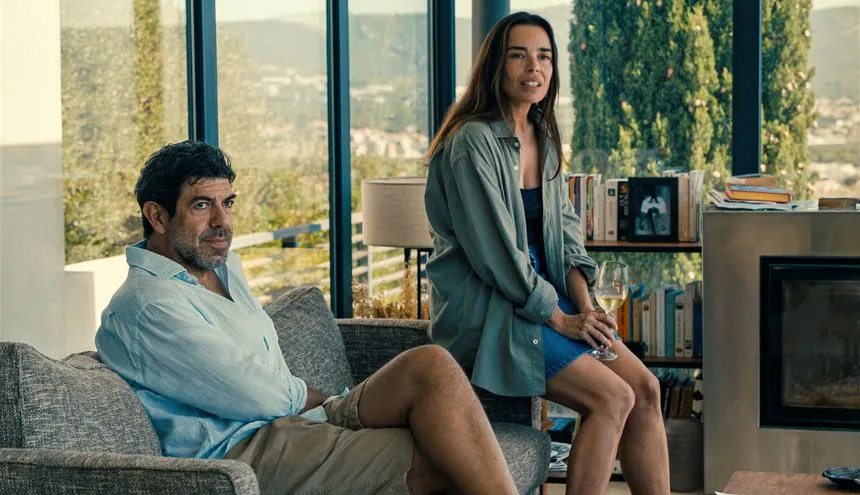
His father, Paolo the mathematician, represents the axioms of social expectation: formulaic, precise, unforgiving of deviation. Meanwhile, Enzo’s older brother strides toward university as predictably as gravity pulls stones downhill. And yet, the younger son opts for manual labor—a choice that both defies and underscores his family’s pedigree.
At its heart, the film is a dialectic of identity versus rebellion. Enzo sketches graceful drawings on his bedroom walls, latent artistry denied by his own stubbornness. He claims to have “no skills,” even as every frame betrays a painter’s eye in the way he observes sunlit façades. There’s tension between self-denial and dormant talent—an adolescent paradox that feels universal and deeply personal.
Then there’s desire. Enzo’s fixation on Vlad carries a weight heavier than teenage crush—it’s homoeroticism as social commentary, a silent critique of power dynamics (and laws that forbid minor consent). The camera lingers on Vlad’s hands, strong and sure, while Enzo’s gaze trembles with yearning. That dynamic—minor versus major, privilege versus peril—mirrors broader debates around agency and protection.
Overlaying it all is the war in Ukraine: a collective trauma refracted through individual lives. The Ukrainian workers debate returning home to fight, embodying choice versus duty. Their conversations become historical echoes, from conscription debates in 20th-century Europe to today’s refugee crises.
In the final sequence, history and personal will converge—brick by brick, decision by decision. It’s uncertain whether Enzo will build his own destiny or remain mortared into expectation (an ambiguity that feels both frustrating and hopeful). Small wonder the film asks us to question: are we masters of our fate, or merely cogs in an ever-turning historical machine?
Embodied Identities
Eloy Pohu’s Enzo is less a character than a kinetic study in adolescent restlessness: awkward gait, sunburned skin, knuckles blistered from a day’s work (call it the apprenticeship of discomfort). His physicality registers as performance art—each hesitant brick laid feels like a protest against inherited ease. Emotionally, he shifts from glazed detachment to a flicker of self-awareness—most potently captured in the quiet of his drawing-lined bedroom, where pencil strokes morph into existential graffiti.
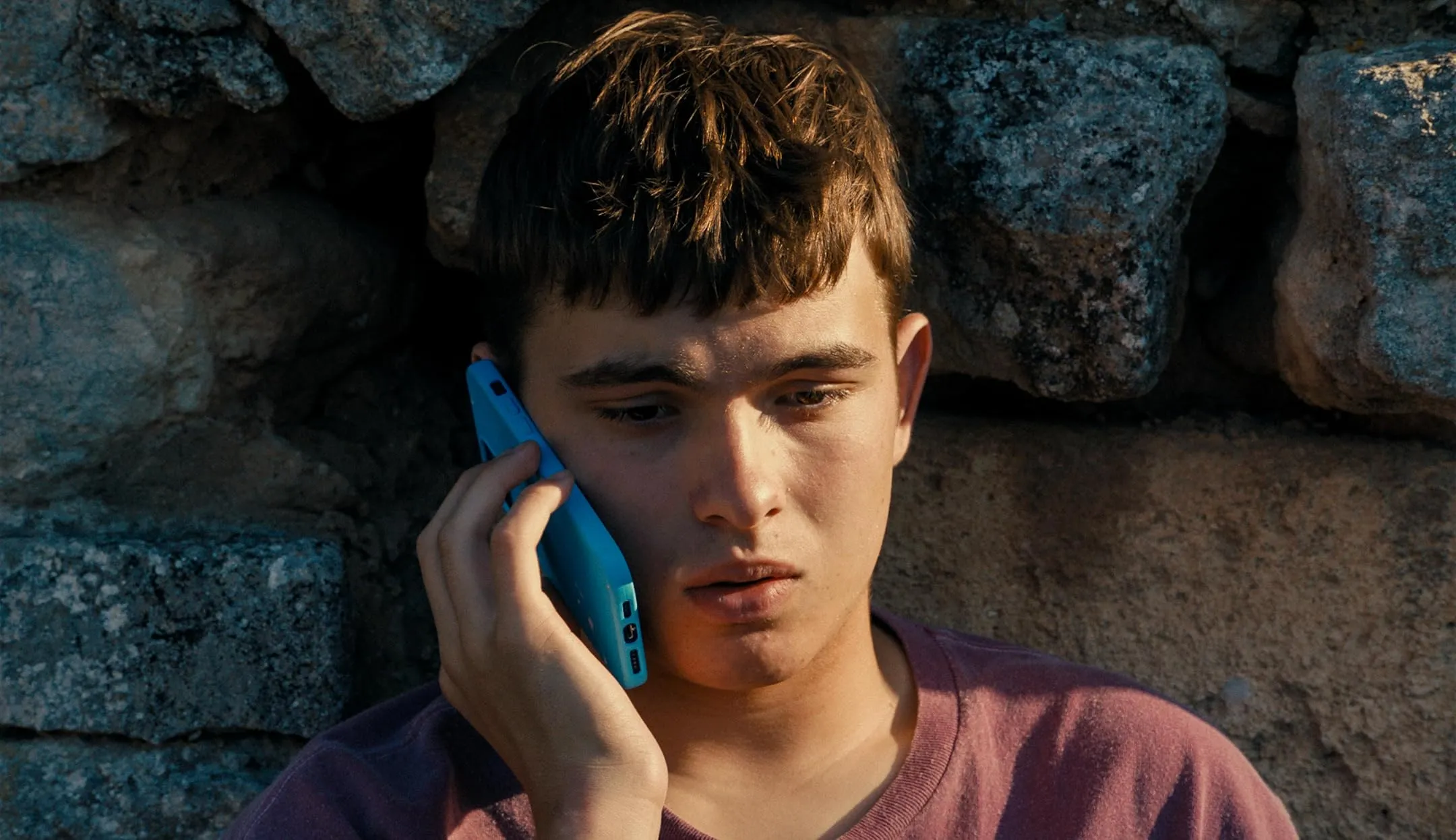
On the construction site, Pohu’s first day unspools like a slapstick routine gone existential: bricks tumble, tools clatter, and his foreman’s exasperation becomes almost Shakespearean. Yet one phone call near the end—a trembling inquiry about fate—reveals Pohu’s capacity for emotional gravitas. It’s as if he’s finally read the blueprint of his own soul.
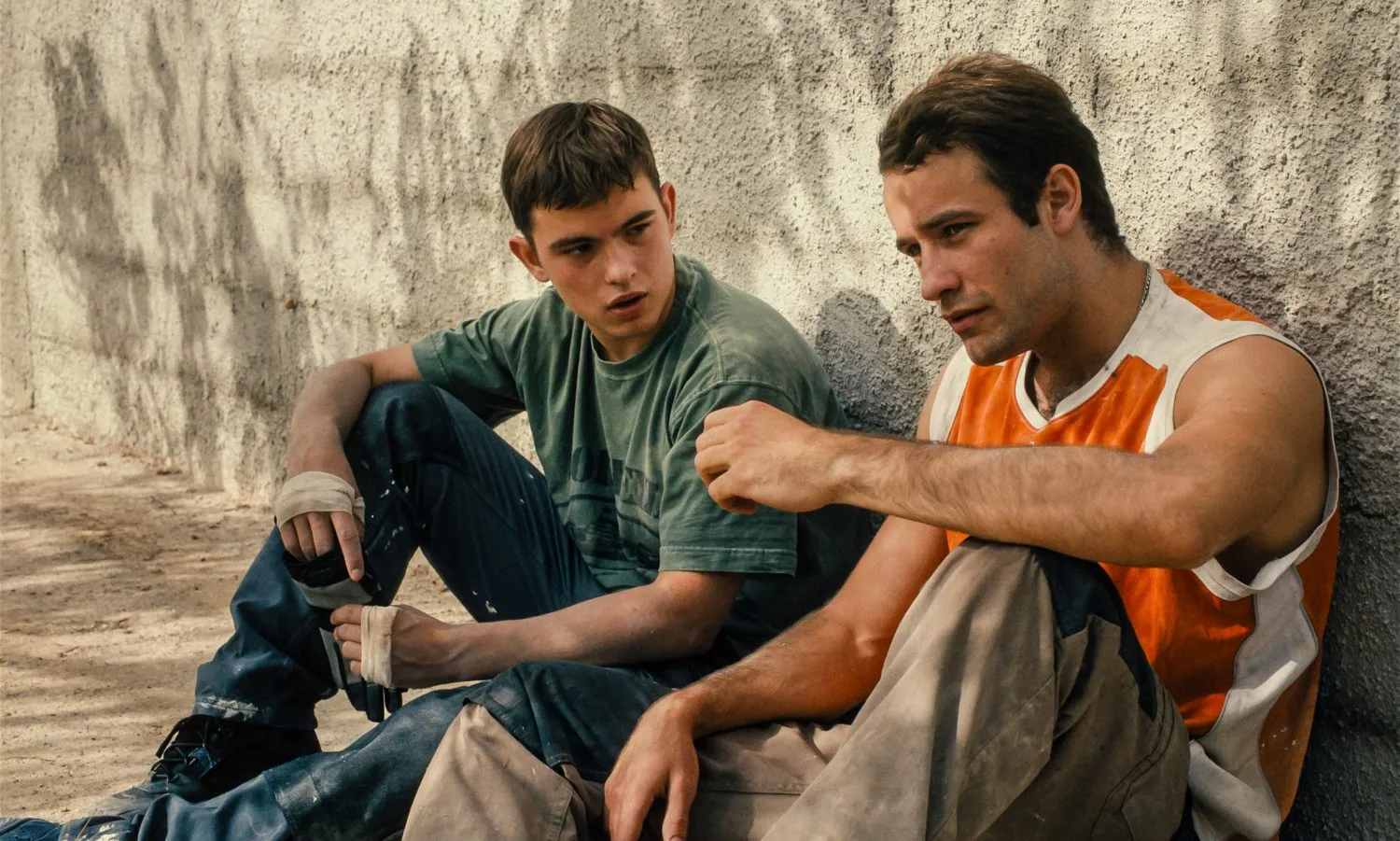
Maksym Slivinskyi’s Vlad enters as both mentor and mirage. With a Belmondo-ish nonchalance, he embodies manual labor’s dignity while carrying the weight of a soldier’s potential return to Ukraine. Slivinskyi negotiates that duality—blue-collar camaraderie and geopolitical urgency—with an agile subtlety, making every glance at his phone feel freighted with history. He becomes a symbol of exile’s limbo, where personal longing collides with collective duty.
Pierfrancesco Favino and Élodie Bouchez anchor the film’s familial axis. Favino’s Paolo alternates between indulgent scholar and stern patriarch, his math-professor precision clashing delightfully with Enzo’s messy defiance. Bouchez’s Marion offers tenderness tempered by quiet frustration: a parent who loves fiercely yet lacks the vocabulary to untangle her son’s contradictions. Their poolside dinner scene plays out like a microcosm of modern parenting—bourgeois comfort teetering on the edge of generational panic.
Among supporting players, Malou Khebizi’s Amina cracks Enzo’s shell with breezy confidence, suggesting another kind of awakening, while Philippe Petit’s foreman bridges worlds with pragmatic wisdom (“You’re the sloppiest apprentice by far”—and yet he drives Enzo home). Even Nathan Japy’s fleeting appearance as the conformist brother speaks volumes: a reminder that the safest path can feel as confining as the hardest labor.
Sonic Architecture of Labor
Jeanne Lapoirie’s lens bathes every frame in the raw luminosity of Provence—sunlight so saturated it feels almost tactile, like a heat wave you could trace with your fingertips. Modernist villas gleam against the rugged scaffold of half-built walls, creating a visual dialectic between privilege and toil.
Production design doubles as social commentary. Inside the villa, sleek surfaces and mid‑century furnishings speak of inherited taste; outside, dusty trowels and chipped bricks form a “labor lexicon” (tools as text). Costume choices—the scuffed work boots, the scuffed denim, Enzo’s ill‑fitting apprentice uniform—underscore authenticity while marking each character as worker, outsider, or heir.
The soundscape is its own kind of “sounditecture.” The clack of hammers, the distant roar of cement mixers, and the hollow echo of vaulted walls become a chorus of construction—an audible metaphor for rebuilding identity. In one key scene, a radiohead-esque teen anthem drifts through the din, a momentary bridge between private yearnings and public labor. The minimal score elsewhere lets ambient noise reign, forcing the viewer to inhabit every creak and cough of the site.
Editing stitches together domestic quiet and industrial clamor with surgical precision: a lullaby of parental concern cut abruptly by the roar of machinery. These sonic juxtapositions mirror broader societal fractures—comfort violently interrupted by the demands of work, wealth confronted with the realities of earning it.
Legacy in the Mortar
Enzo arrives as the cine-coda to Laurent Cantet’s explorations of youthful disquiet—from The Class’s insular lycée to The Workshop’s creative crucible. Here, Cantet’s concern for the quiet revolutions of adolescence finds its final iteration in a bricklayer’s tunic rather than a classroom desk.
Robin Campillo’s hand, meanwhile, threads through each scene with a queer sensibility that recalls Eastern Boys and the activist pulse of BPM. His ongoing engagement with politics—be it the AIDS crisis or, now, the war in Ukraine—imbues the film with a “solidarity scaffold” that erects empathy from ideology.
In 2025 France, class fractures have never felt sharper. Enzo’s choice of manual labor over bourgeois privilege mirrors a broader youth restlessness—from Yellow Vest disenchantment to climate strikers demanding systemic overhaul. The film becomes a cultural mirror, reflecting how today’s young people build—or dismantle—the structures that define them.
Selected as the Directors’ Fortnight opener at Cannes, Enzo stands as both tribute and testament. It’s a public nod to Cantet’s legacy and a spotlight on Campillo’s evolving vision. In that festival context, the film asserts itself not merely as a debuting sophomore director’s work, but as a generational statement—brick by philosophical brick.
The Last Brick
Authenticity anchors Enzo’s strengths: Pohu’s blistered earnestness, Slivinskyi’s worldly calm and the palpable texture of every setting give the film a lived-in resonance. The thematic interplay—class rebellion meets queer awakening—rings true without ever feeling forced. (At times, it even flirts with late-night philosophy: can a single stone upend an entire foundation?)
Yet the narrative can drift into vagueness. Some supporting players barely register beyond their archetypes, and certain plot points—like Enzo’s brother’s role—feel sketched rather than fully built. There are moments when the film seems content to hover in ambiguity, which can frustrate viewers who crave a firmer storyline.
Compared to Call Me by Your Name’s sunlit aching, Enzo trades lush romance for tactile realism. Where Guadagnino luxuriates in peach symbolism and languid longing, Cantet and Campillo deliver mortar-scented intimacy and terse glances that carry entire monologues.
The final scene emerges as a powerful farewell: a joining of Cantet’s humanism and Campillo’s precise gaze, a closing testimonial etched in mortar and memory. It’s the kind of cinematic handshake that lingers—warm, perhaps a bit dusty, but undeniably sincere.
For anyone invested in character-driven coming-of-age tales with a dose of socio-political reflection, Enzo offers a rich, if occasionally uneven, tapestry of youth seeking form amid forces both personal and historical.
Full Credits
Director: Robin Campillo
Writers: Laurent Cantet, Robin Campillo, Gilles Marchand
Producers: Marie-Ange Luciani, Philippe Logie
Cast: Eloy Pohu (Enzo), Pierfrancesco Favino (Paolo), Élodie Bouchez (Marion), Maksym Slivinskyi (Vlad), Nathan Japy (Victor), Vladyslav Holyk (Miroslav), Malou Khebizi (Amina), Philippe Petit (Corelli)
Director of Photography (Cinematographer): Jeanne Lapoirie
Editor: Robin Campillo
The Review
Enzo
Enzo is a tactile, introspective coming-of-age drama that marries Cantet’s humanistic warmth with Campillo’s precise gaze. Its strength lies in authentic performances and thematic depth—class, desire, fate—though occasional narrative haze blurs supporting arcs. As a philosophical summer fable grounded in reality, it lingers long after the credits.
PROS
- Authentic, textured performances
- Rich thematic layers (class, desire, agency)
- Evocative Provençal cinematography
- Subtle queer undercurrents
- Minimalist soundscape that lets ambient detail shine
CONS
- Occasional narrative vagueness
- Underdeveloped supporting characters
- Pacing can feel uneven
- Some thematic threads left hanging
- Emotional payoff may not satisfy all viewers