






















![Kingdom Hearts Collection [I-III] Review](https://gazettely.com/wp-content/uploads/2026/10/Kingdom-Hearts-Collection-I-III-1-360x180.webp "Kingdom Hearts Collection [I-III] Review: KHII Holds Steady as Newer Entries Fluctuate 37")




To watch Endless Cookie is to plug your brain directly into a maelstrom of memory, sound, and unrestrained laughter. It’s less a movie and more a raw, unfiltered transmission from the lives of its creators, animator Seth Scriver and his Indigenous half-brother, Peter.
The film begins with a simple premise: Seth travels from Toronto to the remote Shamattawa First Nations community in northern Canada to document the incredible stories of Peter, a man he calls one of the greatest storytellers he knows. What unfolds is a psychedelic family scrapbook, a startlingly personal animated documentary where one brother’s wildly inventive visuals give form to the other’s life experiences.
The result is a hilarious, rambling, and unexpectedly weighty portrait of family, place, and the stories that hold them together. It’s a journey that feels both deeply intimate and culturally significant, a home movie with the ambition of an epic poem.
The Chaos is the Point
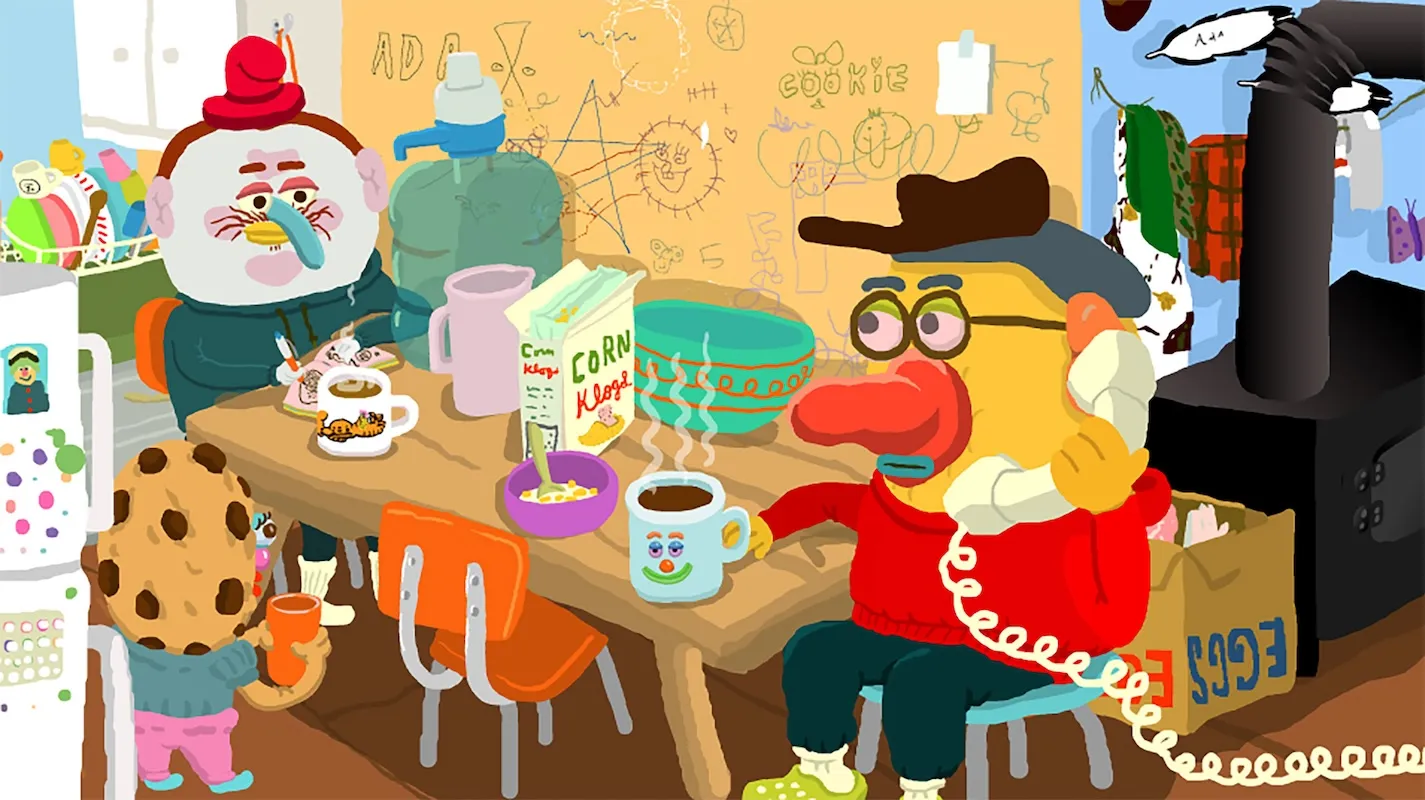
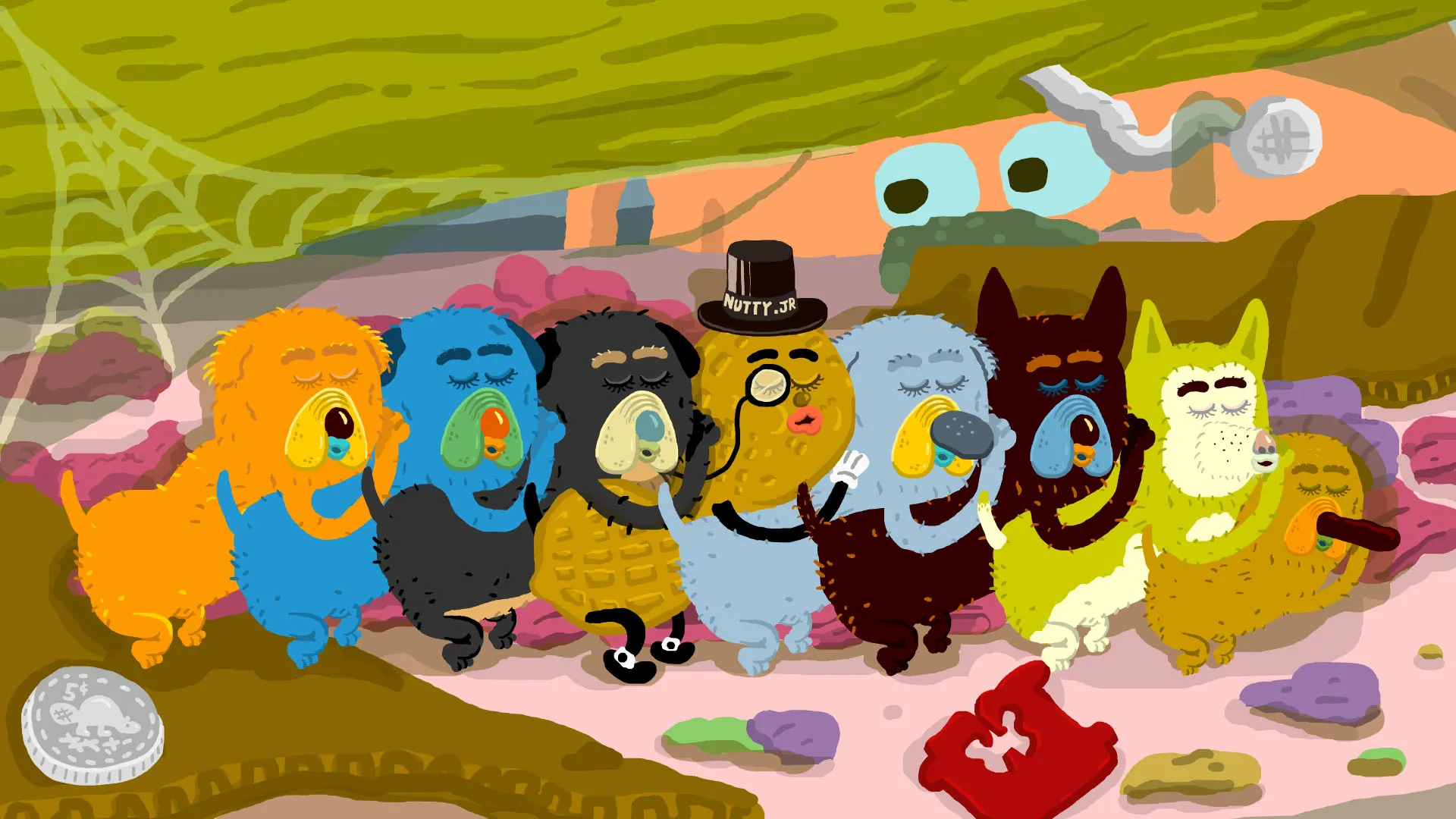
The animation in Endless Cookie looks like something beamed from a parallel dimension’s late-night television block, a style that feels both homespun and completely unhinged. I was instantly reminded of the anarchic energy of shows like Superjail!
or the surreal, non-sequitur humor of Aqua Teen Hunger Force. This is not the clean, polished work of a major studio; it’s gritty, scrappy, and vibrates with a manic DIY energy. Characters are rendered as bizarre, symbolic avatars: Peter’s daughter, Cookie, is a literal walking chocolate chip cookie; others have elongated pickle-noses or appear as colorful, featureless blobs.
This isn’t just aesthetic quirk. The film’s visual language is its narrative engine. By rejecting a realistic style, the film finds a more truthful way to represent the subjectivity of memory. The choice feels both artistic and political, a subversion of the often-sanitized lens through which Indigenous stories are told.
Peter’s stories are told in a stream-of-consciousness style, full of digressions and interruptions from the lively, crowded house where they are recorded. The animation mirrors this perfectly. When dogs bark or kids play with a noisy electronic toy, the visuals don’t ignore it—they absorb it, turning the chaos of real life into the film’s texture.
This meta-commentary on its own creation is a key part of its charm. The movie documents its messy, nine-year journey from a government grant to a finished piece, breaking the fourth wall to show Seth pleading for extensions. This radical transparency forges a deep connection, making the viewer a complicit partner in the film’s chaotic birth. The scrappy, surreal visuals are the only way to honestly capture the beautiful, disjointed nature of remembering.
A Hangout Movie Fueled by Laughter
Beyond the psychedelic visuals, the film’s anchor is the palpable warmth between the two brothers. Their easy, infectious laughter is the real soundtrack, a constant presence that makes the viewer feel less like an audience and more like a welcome guest invited to listen in.
This is the ultimate “hangout movie,” a spiritual cousin to the works of Richard Linklater, where narrative tidiness is happily sacrificed for genuine connection and authentic conversation. The film’s structure mirrors the natural rhythm of oral storytelling.
There is no clear beginning, middle, or end to many of the tales. Instead, the film drifts. Peter’s voice, not polished but loaded with the gravel of experience, guides us through his personal history. Seth’s role is that of a loving instigator, his prompts and laughter encouraging Peter to spin another yarn.
The anecdotes themselves form a rich tapestry of a life lived. We hear tales of youthful misadventures in Toronto, of scheming for free pizza, and of encounters with local characters. Woven throughout is the recurring story of Peter getting his hand caught in an animal trap, a narrative fragment that the film returns to repeatedly, never quite finishing it until the end.
This acts as a fractured framing device, a testament to how trauma and memory can surface in pieces. By choosing to present these stories in their raw, unedited form, the film becomes a powerful act of cultural preservation. It captures a tradition of oral history on screen, honoring the way stories are truly told—not in a neat three-act structure, but in a messy, loving, and profoundly human tangle.
Comedy as a Trojan Horse for Truth
For all its crude jokes and visual gags, Endless Cookie uses its lo-fi absurdity as a Trojan horse for some serious truths. This is where the film’s genius truly lies. Beneath the surface-level silliness is a sharp and vital examination of the Indigenous experience in Canada.
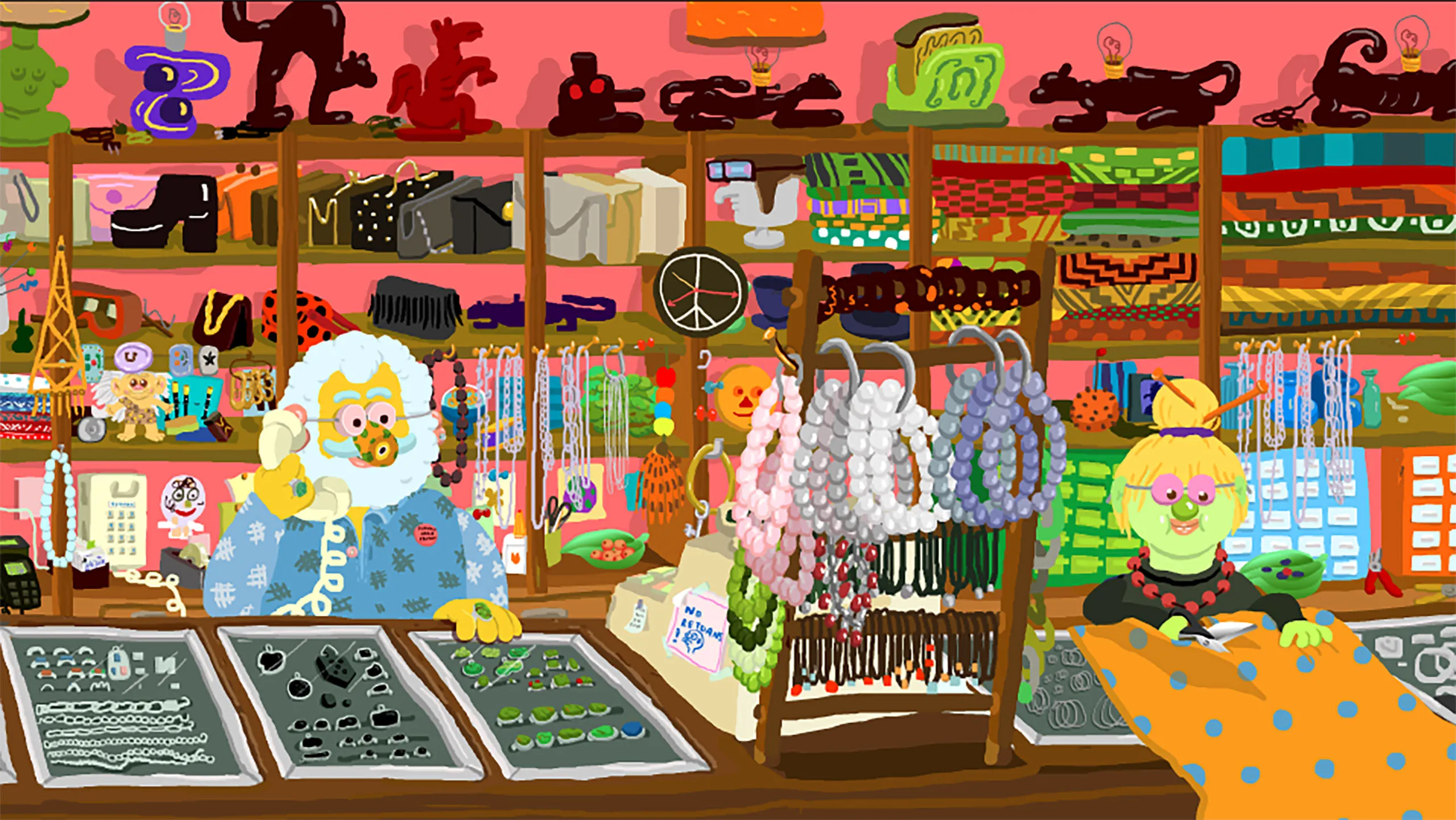
The film never stops to lecture; instead, it deftly weaves its commentary directly into Peter’s personal stories, making the political profoundly personal. Difficult subjects—the devastating legacy of residential schools, the disproportionate incarceration rates, disputes over land, and the lack of clean drinking water—are not presented as statistics but as lived realities. A seemingly simple sequence about the high cost of groceries at the town’s single store becomes a poignant look at economic disparity and food scarcity in remote communities.
This commentary is delivered through dark humor or strange, allegorical vignettes, such as a sentient, rifle-toting trophy that wordlessly communicates a deep sense of grief. This method is disarming and incredibly effective, challenging the conventions of the typical “social issue documentary.” It rejects a somber, didactic tone in favor of something more complex and human.
The film understands that humor is often a tool for survival and a powerful form of resistance. The film’s lasting impact comes from this very blend. By grounding its critique in authentic memory and wrapping it in a wildly creative package, Endless Cookie honors a difficult reality and celebrates the remarkable resilience of family and storytelling.
Endless Cookie Premiered at Sundance on January 25, 2025.
Full Credits
Directors: Seth Scriver, Peter Scriver
Writers: Seth Scriver, Peter Scriver
Producers and Executive Producers: Daniel Bekerman, Alex Ordanis, Jason Ryle, Seth Scriver, Chris Yurkovich; Executive Producers: Jordan Hart, Neil Mathieson
Cast (Featured): Seth Scriver, Peter Scriver, Kristin “Cookie” Scriver, Dezray “Dez” Scriver, Ada Scriver, Simone “Simmy” Scriver
Editor: Sydney Cowper
The Review
Endless Cookie
Endless Cookie is a rare and brilliant achievement. It’s a hilarious, heartfelt, and formally inventive documentary that uses its chaotic, homespun animation to tell a profound story about family, memory, and cultural resilience. Rejecting polished convention for raw authenticity, the film is a deeply personal portrait of a brotherhood that doubles as a vital piece of social commentary. It’s a chaotic, beautiful mess that is as funny as it is important, and one of the most memorable films of the year.
PROS
- Wildly inventive and purposeful animation style.
- Authentic, non-linear storytelling that captures the spirit of oral tradition.
- A powerful and warm emotional core centered on the two brothers.
- Deftly blends lowbrow humor with sharp social commentary.
CONS
- The rambling, unconventional structure may feel aimless to some.
- Its crude humor and visual style could be alienating.
- A meandering pace that might test the patience of viewers seeking a traditional narrative.