

























![Kingdom Hearts Collection [I-III] Review](https://gazettely.com/wp-content/uploads/2026/10/Kingdom-Hearts-Collection-I-III-1-360x180.webp "Kingdom Hearts Collection [I-III] Review: KHII Holds Steady as Newer Entries Fluctuate 37")





What happens when reality TV stars have to face, well, reality? That’s the central experiment of Love Island: Beyond the Villa, a spin-off that yanks the ridiculously attractive cast of Love Island USA’s sixth season out of their sun-drenched Fijian paradise and drops them into the wilds of Los Angeles.
A year has passed, the tans have maybe faded a shade, and the game has changed entirely. The show trades the parent series’ competitive dating format for a docuseries approach, asking a surprisingly compelling question: Can relationships forged in a high-stakes, camera-filled crucible actually survive contact with morning traffic and grocery bills?
The series sets out to track the interpersonal dynamics of a group of people famous simply for being on television, exploring whether their friendships, romances, and rivalries have any substance beyond the screen.
Trading Bikinis for Invoices
The whiplash from the format change is immediate and intentional. Gone are the relentless, forward-moving plot mechanics of the parent show—the daily challenges, the bombshell arrivals, the tense coupling ceremonies that gave Love Island its addictive rhythm. In their place is a looser, almost meandering observational style.
The suffocating intimacy of the villa is traded for the sprawling, isolating landscape of Los Angeles, where drama is expected to bloom organically in sterile high-rise apartments and during awkward party arguments. The camera follows the cast through a new reality where the biggest challenge is no longer winning a cash prize but monetizing a personal brand.
The confessional chair remains, a familiar comfort for returning viewers, but its function has shifted. It’s less about immediate reaction and more about retroactive narrative framing, allowing cast members to offer color commentary on their own chaotic lives. This is where the show finds its most modern and potent theme: the crushing weight of sudden fame.
The unseen contestant in every scene is the cast’s collective social media following, an invisible audience dictating moods and behaviors. We watch Kaylor Martin break down in a moment of startling vulnerability over online hate, the editing lingering on her tears.
We see Serena Page articulate the immense strain of maintaining a perfect public-facing relationship, knowing that every candid photo is also content. The series captures the strange purgatory of post-reality TV life, where one’s existence becomes a full-time performance.
Yet, for every moment of apparent authenticity, there’s a scene, like the explosive fight between Kaylor and Liv Walker, that feels as if it were meticulously storyboarded in a production meeting, complete with dramatic musical cues and perfectly timed interruptions. This tonal inconsistency is the show’s biggest hurdle, leaving the viewer to constantly question what is real and what is for the cameras.
All-Stars and Broken Alliances
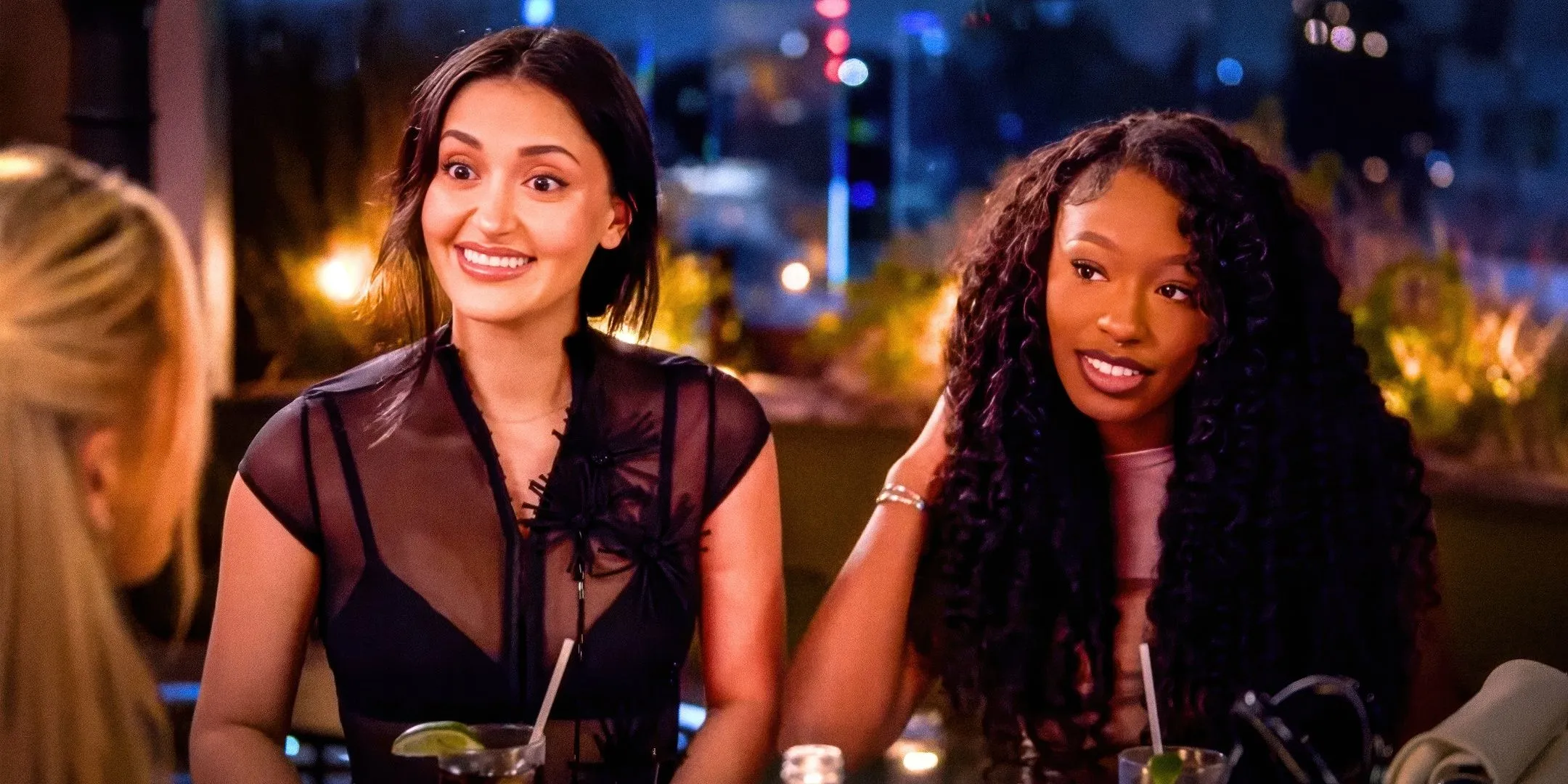
In a show that can often feel directionless, its stability comes from the unshakeable bond of the “PPG” trio. The friendship between JaNa Craig, Serena Page, and Leah Kateb is the series’ emotional bedrock, a portrait of genuine support that provides a necessary counterweight to the cattiness brewing elsewhere. Their dynamic feels lived-in and real; they are a chosen family forged in the bizarre crucible of their shared television past.
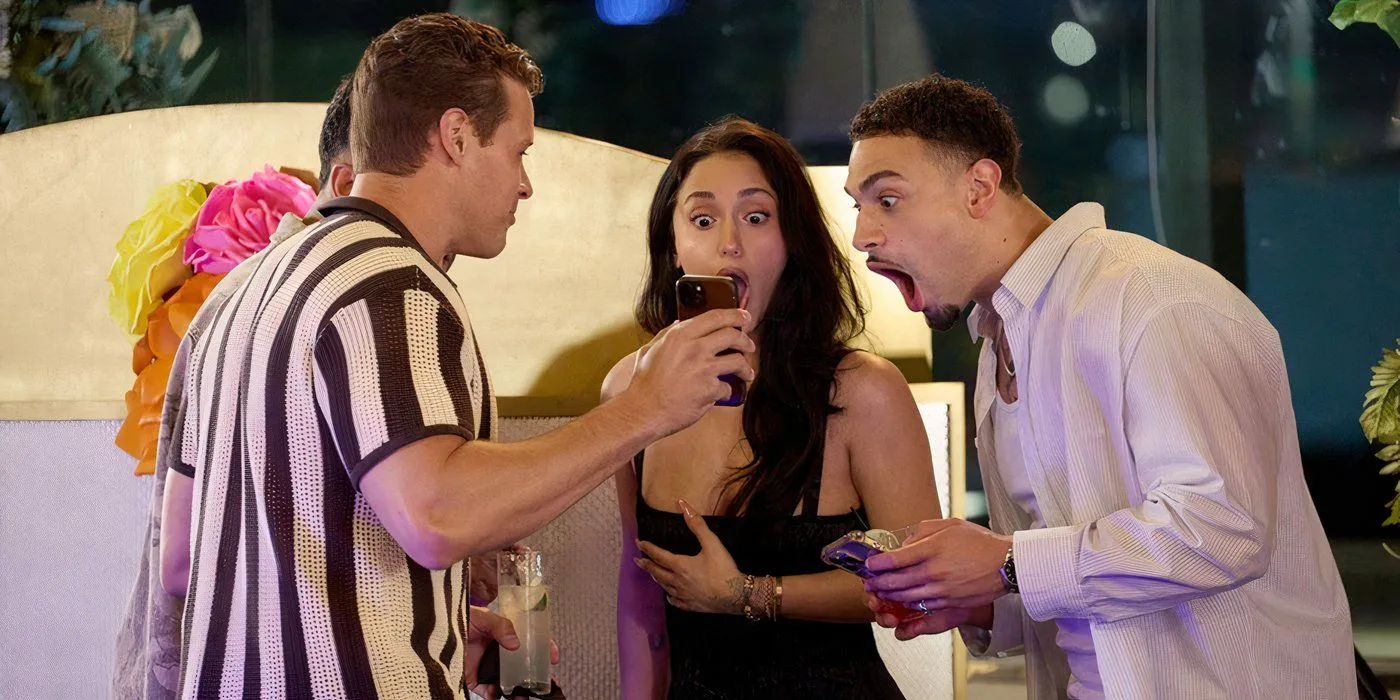
Their scenes together—celebrating Leah’s pregnancy, dissecting relationship drama, or simply laughing in a way that feels unforced—provide the show with its most authentic moments. Their alliance is the foundation from which we watch their individual lives unfold, offering a compelling look at female friendship navigating a world designed to pit women against each other.
But if the PPG is the anchor, JaNa Craig is the engine. She is a charisma supernova in a sky of twinkling stars, armed with an infectious, full-bodied laugh and a cutting wit that elevates every scene she’s in. In a cast of people perpetually aware of being filmed, JaNa possesses a rare quality of seeming completely, authentically herself.
She single-handedly rescues the premiere from its occasional lulls, her comedic timing in confessionals turning mundane observations into laugh-out-loud commentary. Her deft handling of a lingering dramatic storyline with an ex-match, Connor Newsum, is a masterclass in narrative control. She diffuses tension with humor and directness, refusing to be cast as a victim in a manufactured plot.
In stark contrast is the slow-motion demolition of Kaylor and Liv’s friendship. Once close allies in the villa, their relationship has curdled under the heat lamp of public scrutiny and unresolved jealousies. Their confrontations are tense, uncomfortable, and deeply human, a fascinating case study in how fame can poison even the strongest bonds.
The direction in these scenes is claustrophobic, using tight close-ups to trap the viewer in the emotional crossfire. It’s a compelling, if sometimes messy, look at how alliances fracture when personal history collides with public perception.
Love in a Colder Climate
The show’s most compelling material comes from checking in on the villa’s surviving romances, which have been transplanted from a tropical paradise to the more challenging ecosystem of Southern California. The results are a mixed bag of domestic bliss and emotional excavation, providing direct answers to the series’ central question.
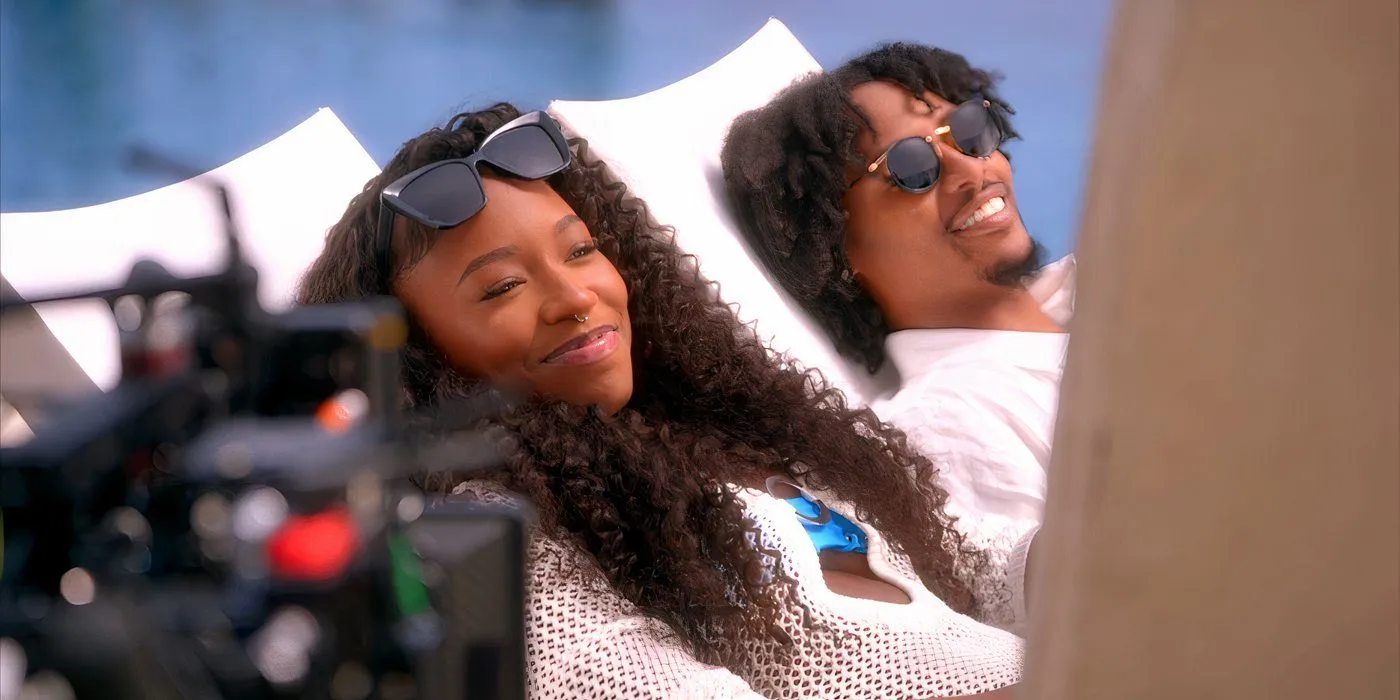
Leah Kateb and Miguel Harichi provide the season’s most grounded and aspirational storyline as they prepare for parenthood. Their arc is a welcome dose of sincerity, filmed with a softer, warmer visual palette that separates it from the harsher tones of the show’s conflicts.
Miguel’s evolution from a thoughtful islander to a deeply committed partner is a portrait of modern masculinity, marked by vulnerability and vocal support. His heartfelt marriage proposal is not just a plot point; it’s the thematic culmination of their journey, a definitive statement that a “showmance” can, against all odds, become real.
Elsewhere, JaNa and Kenny Rodriguez are navigating a much more common, and therefore more relatable, hurdle: deciding whether to move in together. Their conversations are a test of whether their televised passion can translate into practical, real-world companionship.
The editing in their scenes is clever, often leaving in the awkward silences and hesitant glances that communicate the uncertainty of a relationship’s next step. Theirs is the most direct exploration of the post-honeymoon phase, where the fantasy of the villa collides with the reality of merging two independent lives.
But the show’s most emotionally charged moments belong to Kaylor and Aaron Evans, who revisit their explosive and toxic breakup from the original season. Their scenes are raw and unsettling, playing out like a televised therapy session where past manipulations and lingering feelings are laid bare.
The dialogue is unflinching, as they dissect regret and accountability with a frankness rarely seen on television. It’s a rare and mature examination of a failed relationship, showcasing a willingness to sit with uncomfortable truths rather than manufacturing a simple resolution. These conversations are where the show feels most like a true documentary, capturing the difficult work of personal growth.
A Promising Spinoff With Noticeable Blind Spots
For all its ambition, the series suffers from a glaring narrative imbalance that undermines its claims to authenticity. The tight, almost exclusive focus on a few key players means several prominent cast members, like Kendall Washington and Connor Newsum, are reduced to glorified extras in their own lives. They drift in and out of scenes, their own stories left frustratingly unexplored.
This selective editing makes the show feel calculated, suggesting producers pre-determined the season’s stars and sidelined anyone who didn’t fit into a pre-approved dramatic arc. It’s a frustrating flaw that prevents the show from being a true ensemble piece.
Yet, the series deserves credit for reaching for something more than its predecessor. It attempts to tackle genuine issues with a surprising degree of seriousness, weaving in discussions about mental health, the toxicity of online culture, body image, and the anxieties of starting a family.
These moments of substance suggest a desire to evolve the reality genre beyond pure escapism and into something more reflective of the world we live in. Beyond the Villa offers a blueprint for a more thoughtful kind of reality show, but its structural flaws and inconsistent tone create a central conflict within the series itself.
It presents a fascinating, flawed vision for the future of the genre, but in its attempt to be both a thoughtful character study and a dramatic spectacle, it forces the viewer to ask a difficult question: do we want to watch these people grow, or do we just want to watch them fight?
Love Island: Beyond the Villa premiered on Sunday, July 13, 2025, on Peacock, following the finale of Love Island USA Season 7.
Full Credits
Director: Ryan ‘Reinhardt’ Vermeulen, Paul Newton, Marty Denholm
Producers: David George, Adam Sher, Sarah Howell, Richard Bye, Richard Foster, Chet Fenster
Cast: JaNa Craig, Aaron Evans, Miguel Harichi, Leah Kateb, Kaylor Martin, Connor Newsum, Serena Page, Kenny Rodriguez, Olivia Walker, Kendall Washington
The Review
Love Island: Beyond the Villa
Love Island: Beyond the Villa is a fascinating, flawed experiment in evolving a reality TV franchise. It bravely trades spectacle for introspection, offering a compelling look at the pressures of modern fame and the messy aftermath of a televised romance. While hampered by an uneven focus and moments of contrived drama that betray its documentary aspirations, the series is saved by its genuine emotional arcs and a truly star-making performance from JaNa Craig. It’s a messy but often captivating watch for anyone curious about what happens after the cameras are supposed to stop rolling.
PROS
- JaNa Craig’s charismatic and genuinely funny presence elevates the entire series.
- The emotionally resonant storyline following Leah and Miguel’s journey to parenthood provides a heartfelt anchor.
- Offers a thoughtful exploration of the mental toll and strange reality of post-reality TV fame.
- The raw, mature conversations between exes Kaylor and Aaron are compellingly authentic.
CONS
- A glaringly uneven narrative focus leaves several key cast members feeling like extras.
- The tone shifts awkwardly between authentic documentary and producer-driven drama.
- Some conflicts feel inorganic and manufactured specifically for the cameras.
- Without the parent show's structure, the pacing can feel aimless and meandering.







