





























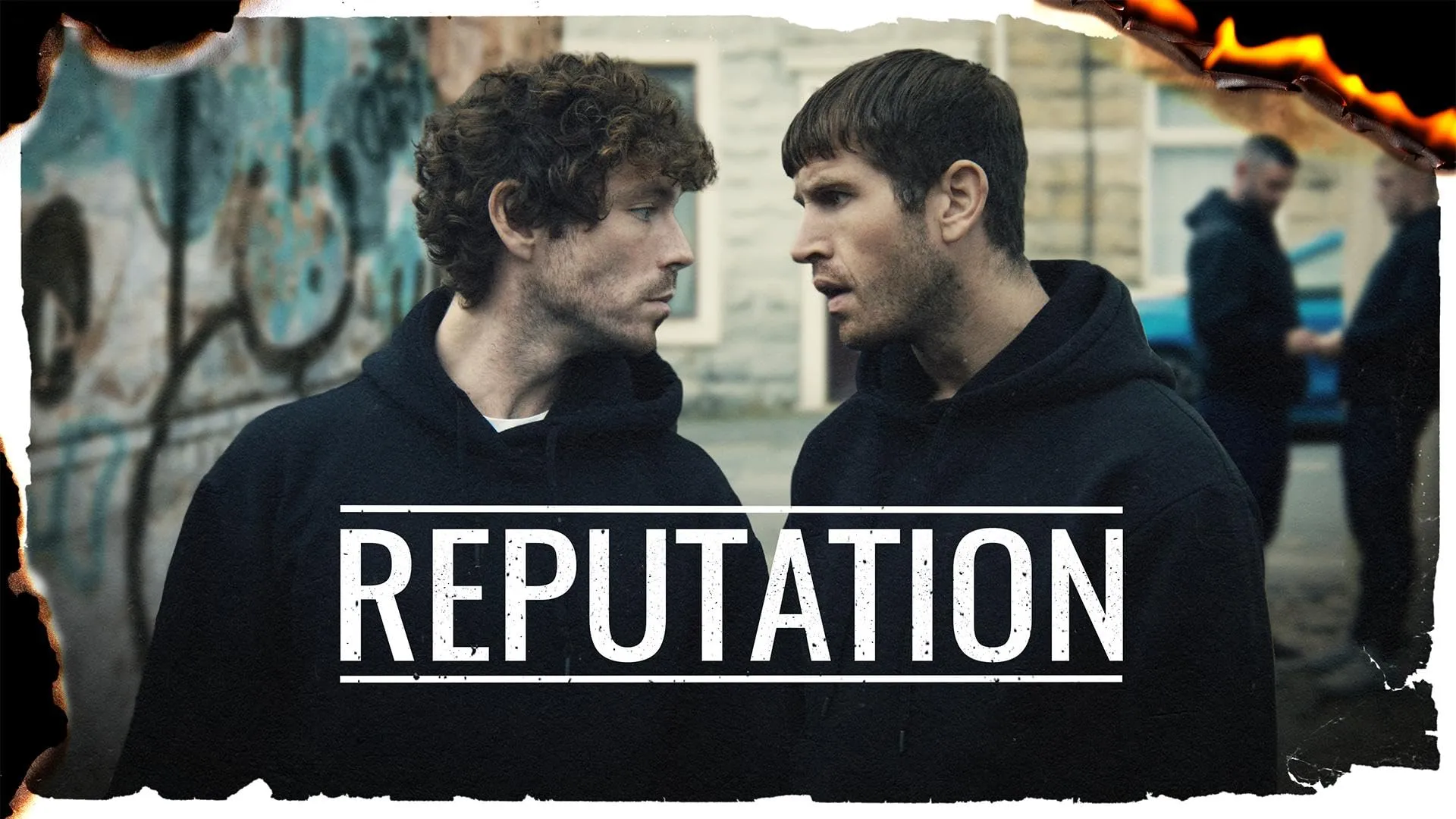

The air in some corners of Britain feels permanently damp, clinging to the rows of narrow terraced houses that define the landscape. Reputation situates itself firmly in this world, a fictional northern town painted in a palette of cold greys and blues.
The film introduces Wes, a small-time drug dealer whose criminal life feels less like a choice and more like an inheritance. He exists at a quiet turning point, a new father with a stable girlfriend, Zoe, and the nascent hope of a legitimate future. This fragile peace is built on the absence of his friend and partner, Tommy, who is in prison.
The story begins on the day of Tommy’s release, an event that carries not the promise of reunion but the unmistakable threat of disruption. It sets the stage for a tense examination of loyalty, masculinity, and the near impossibility of escaping the life you were born into.
A Collision of Wills
The film’s engine is the dynamic between its two central figures, a pairing that feels less like a friendship and more like a decaying orbit. Tommy is a personification of unchecked male aggression, a relic of a brittle masculinity that lashes out at anything it cannot control. His time inside has not prompted reflection; it has calcified his worst impulses.
He returns as a ferocious and volatile bully, intent on escalating their criminal enterprise with a terrifying lack of foresight. His violence is impulsive and deeply personal, aimed at anyone who represents a world beyond his own limited understanding—the educated, the content, the independent. He is a walking embodiment of stagnation, a man whose identity is so fragile it must be reinforced with constant acts of dominance.
In stark opposition stands Wes. His maturation is not a sudden epiphany but a gradual awakening, spurred by the profound responsibility of fatherhood. He now sees his old friend with a painful clarity, recognizing the dead-end path Tommy represents.
Wes is caught in a torturous bind, pulled by the gravity of old loyalties while yearning for the simple, clean future his family represents. The film expertly charts this internal struggle, showing a man trying to negotiate an exit from a world that has no exits.
The story’s tension comes directly from this friction, a constant pressure cooker of Wes’s quiet desperation against Tommy’s loud nihilism. The conflict that unfolds is not merely a turf war; it is an ideological clash between two opposing versions of manhood, one fighting for a chance at growth and the other committed to dragging everything back into the dirt.
The Architecture of Character
The film’s authenticity rests on the shoulders of its actors, who inhabit their roles with a disarming lack of artifice. James Nelson-Joyce gives a nuanced and layered performance as Wes, constructing a character whose poor choices are understandable, even sympathetic.
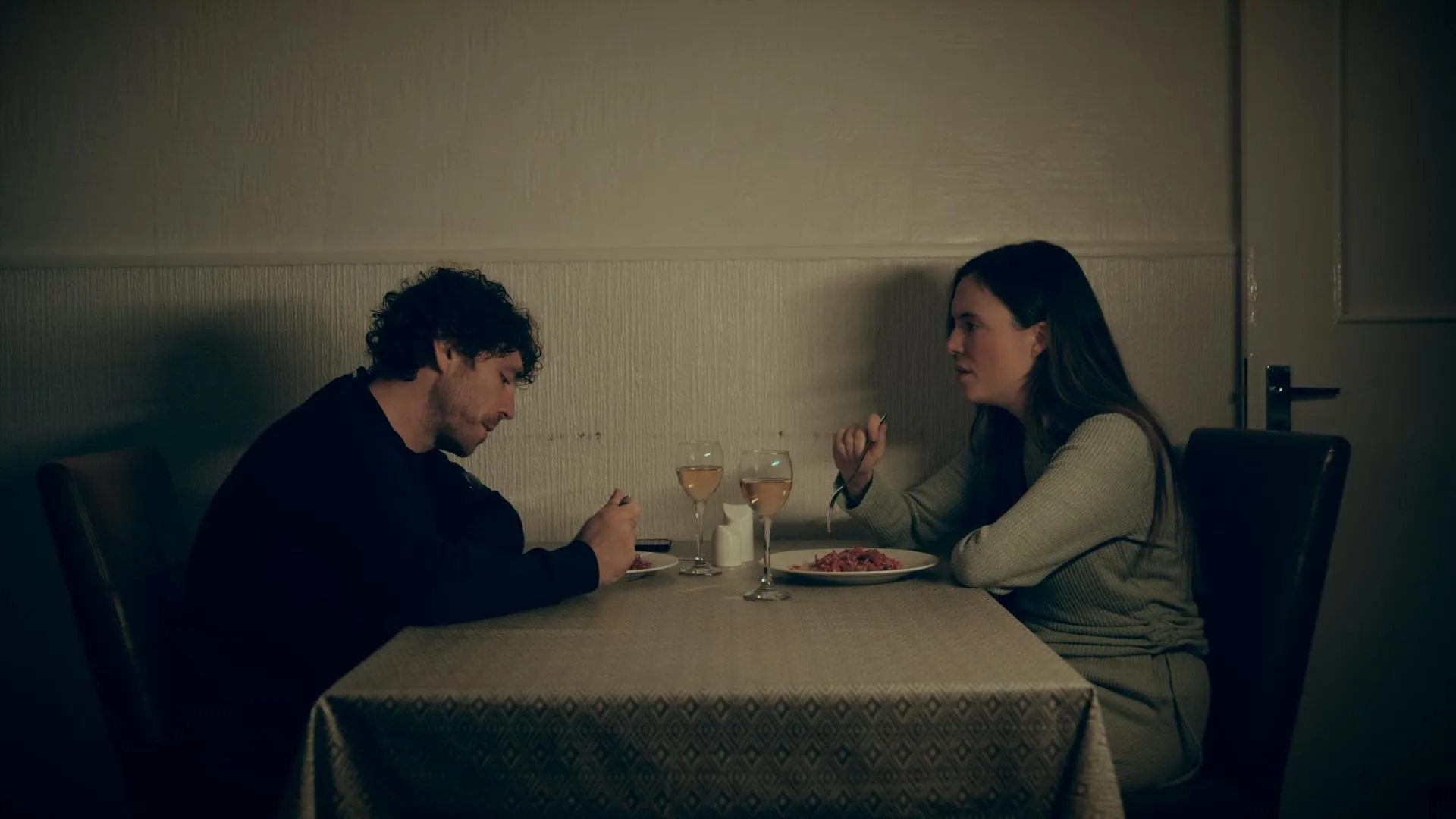
He carries the film’s emotional weight not through grand speeches but through posture and silence. The worry is etched onto his face; the desire for a better life flickers in his eyes. He makes the viewer feel the physical burden of his secrets and the quiet desperation of a man trying to hold his world together.
As his antagonist, Kyle Rowe is frighteningly real. His Tommy is a masterpiece of contained chaos, a coiled spring of rage who can shift from unnerving charm to explosive violence in an instant. The performance avoids the clichés of cinematic villainy; Tommy’s evil is banal, born of insecurity and ignorance, which makes him all the more terrifying.
He is the local tyrant whose power is built on fear, and Rowe captures this with a chilling precision that makes the character genuinely repellent—a true testament to the actor’s skill. The supporting cast provides a sturdy foundation.
Olivia Frances Brown imbues Zoe with a quiet strength that makes her more than a simple moral compass; she is the tangible representation of the life Wes stands to lose. Her presence provides the story’s emotional anchor. In a skillful dual role, Robyn Sass adds another dimension of sorrow and resilience to the town’s social fabric, a subtle accomplishment of her craft.
Kitchen-Knife Realism
For a debut feature, Martin Law’s direction is remarkably assured, displaying a confidence that bypasses youthful flash for something far more potent. He crafts a world that is grounded, gritty, and unflinching, a style that might be called kitchen-knife realism.

The aesthetic choice is deliberate, steeping the fictional Dennings in a cold, oppressive atmosphere through a visual palette of muted greys and blues. The camera stays close to the characters, creating a sense of claustrophobia that mirrors their trapped existence.
This proximity denies the viewer any comfortable distance. The film’s minimalist score complements this approach, using the stark sounds of the environment and the charged silence between people to build a near-unbearable tension.
Law’s handling of violence is likewise intelligent; it is often kept just off-screen, its brutal impact rendered more visceral through sound and reaction. This forces the viewer into the position of an uneasy bystander, implicated in the horror without the release of spectacle.
The film’s pacing is lean and muscular, with no scene wasted in its steady march toward confrontation. Its ending is abrupt and ambiguous, refusing the comfort of a neat resolution or moral catharsis. This choice is the film’s boldest stroke, reinforcing the story’s brutal honesty.
It suggests that such cycles of violence rarely conclude; they just pause. Reputation is an impressive and powerful piece of independent British filmmaking, driven by its stark honesty and excellent acting.
Reputation premiered at the Spirit of Independence Film Festival in September 2024. The film is set to be released on digital platforms, including Sky Store, Amazon Prime, Apple TV, and YouTube Movies, on July 28, 2025.
Full Credits
Director: Martin Law
Writers: Martin Law, Dean Gregson, Jordan Derbyshire
Producers: Martin Law
Cast: James Nelson-Joyce, Kyle Rowe, Olivia Frances Brown, Ross Thompson, Robyn Sass, Kru Lundy, Andrew Purcell
Director of Photography (Cinematographer): Daniel Llobera
Composer: Jake Bradford-Sharp
The Review
Reputation
Reputation is a stark and potent piece of British realism, anchored by two phenomenal central performances. It pulls no punches in its depiction of a man's struggle against the brutal gravity of his past. While its narrative follows a familiar trajectory, the film's unflinching honesty, raw atmosphere, and confident direction make it a gripping and deeply affecting watch. A powerful and unsettling debut.
PROS
- Outstanding and intense lead performances from James Nelson-Joyce and Kyle Rowe.
- Creates a tense, authentic, and gritty atmosphere.
- Assured and unflinching direction, particularly for a debut feature.
- Intelligent handling of its themes surrounding toxic masculinity and loyalty.
- An effective, ambiguous ending that reinforces the film's realism.
CONS
- The core plot of a criminal trying to reform is a familiar narrative.
- Its relentlessly grim and bleak tone may be too intense for some viewers.
- Focus is so tight on the two leads that some supporting characters feel underdeveloped.