












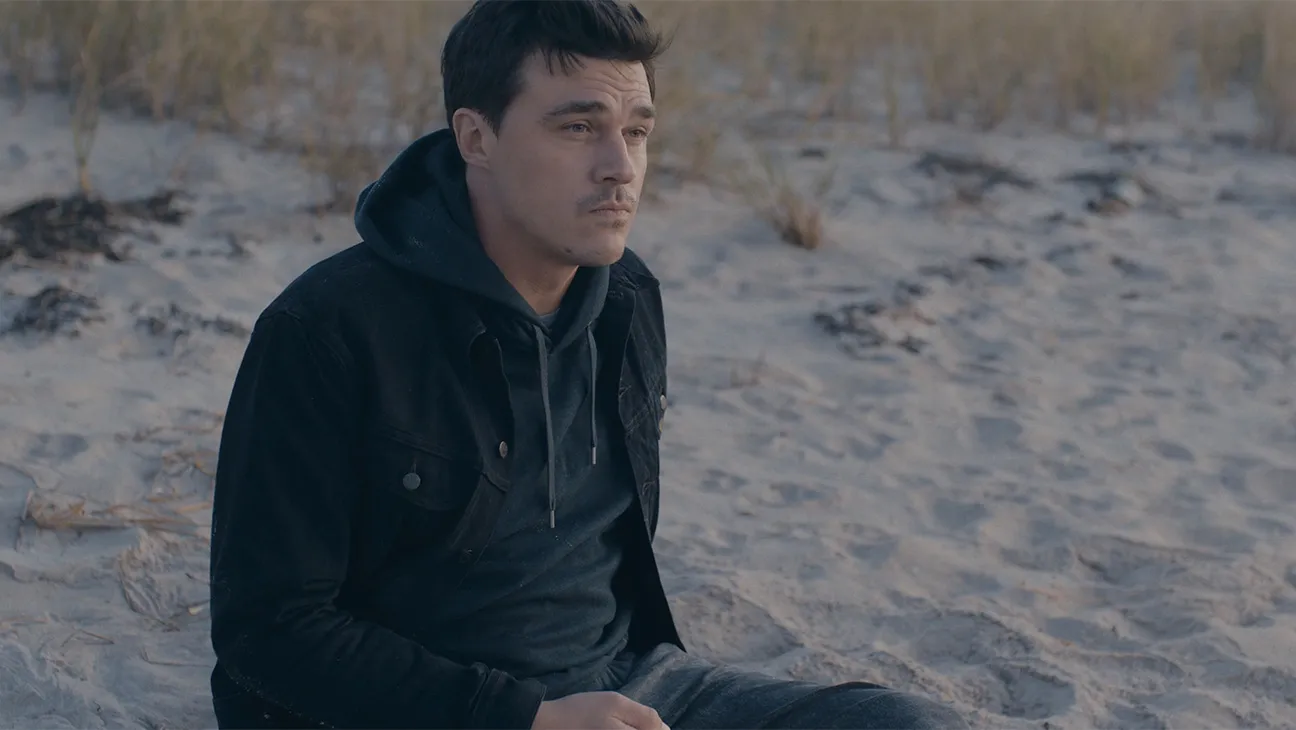

The story of the artist returning home is a familiar one, often built on a foundation of either triumphant celebration or angsty self-discovery. Westhampton positions itself squarely in the latter category, presenting a filmmaker whose past isn’t just a source of inspiration but an open wound.
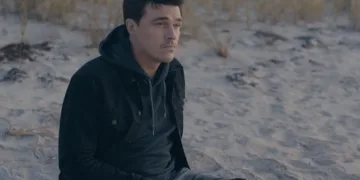
We meet Tom Bell, played by Finn Wittrock, a director whose career seems permanently tethered to the success of his first film. That film is a dramatization of a car accident from his adolescence, a moment that shattered his life in his small Long Island town.
His return is anything but victorious. He arrives for a local screening, an event that promises less adulation and more judgment from a community that remembers the real story. He is not a prodigal son but a pariah, treated with a mix of curiosity and contempt.
Adding to the pressure is the need to clear out his late parents’ home, a task that forces him into a physical space saturated with the memories he has spent years trying to outrun. The stage is set for a man to face the very people and places he fictionalized for his own gain, forcing a confrontation with the truth he left behind.
Revising History, One Frame at a Time
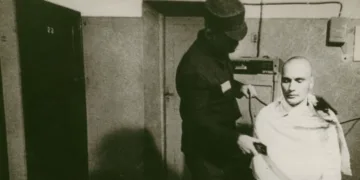
The central mechanism of Westhampton is its use of a film-within-a-film, a device that questions the very nature of storytelling as an act of healing. Tom’s movie, also called Westhampton, is presented in a stark, black-and-white 16mm aesthetic.
This visual choice gives his version of the past a veneer of artistic objectivity, of documented fact. Director Christian Nilsson frequently cuts to scenes from Tom’s creation, using these sequences not merely as flashbacks but as direct insight into Tom’s manufactured memory. They show us the story Tom needed to tell himself to survive. The self-aware script even includes a running joke about his work being “another shitty Garden State,” a nod to the tropes it knowingly engages with.
It becomes clear that Tom’s film is an act of narrative purification. It is his carefully edited truth, a version of events shaped to soften his own culpability. He makes specific, telling alterations—changing the fate of his girlfriend, modifying characters—that reveal his agenda. The primary film’s power comes from how it slowly peels back the layers of this fabrication.
As we spend more time in the real Westhampton, we see the stark differences between Tom’s cinematic account and the messier, more painful reality the town remembers. His filmmaking, initially framed as a form of catharsis, is re-contextualized as something far more self-serving. It’s a public performance of apology without the private work of atonement, a bid for redemption on his own terms.
A Town of Unsettled Ghosts
At the center of this story is Finn Wittrock’s performance as Tom. He portrays a man hollowed out by a guilt he can neither fully process nor escape, his posture often hunched as if under a physical weight.
Wittrock avoids easy sentimentality, giving Tom a brittle, defensive posture that speaks to years of practiced denial. His emotional exhaustion feels authentic, grounding the film in the experience of a person who is both the architect of his misery and a prisoner of it. Every interaction is laced with the fear of being truly seen.
The supporting cast functions as a Greek chorus of the town’s collective memory. Jake Weary as Dickie, Tom’s former best friend and the brother of the girl from the accident, is particularly effective. His anger isn’t simple rage; it’s a form of memorial, a way to keep his sister’s memory alive and undiluted by Tom’s self-serving narrative.
Weary allows glimpses of the profound pain beneath his hardened exterior. In contrast, RJ Mitte as Fitz offers a more welcoming presence, a figure representing a past not entirely defined by the tragedy.
Then there is Avery (Amy Forsyth), a young woman whose connection to the events forces Tom to see the past from a perspective other than his own. Even a brief appearance by Tovah Feldshuh helps create a believable ecosystem of shared history, where old wounds remain fresh and the air is thick with unspoken grievances.
The Quiet Craft of Reckoning
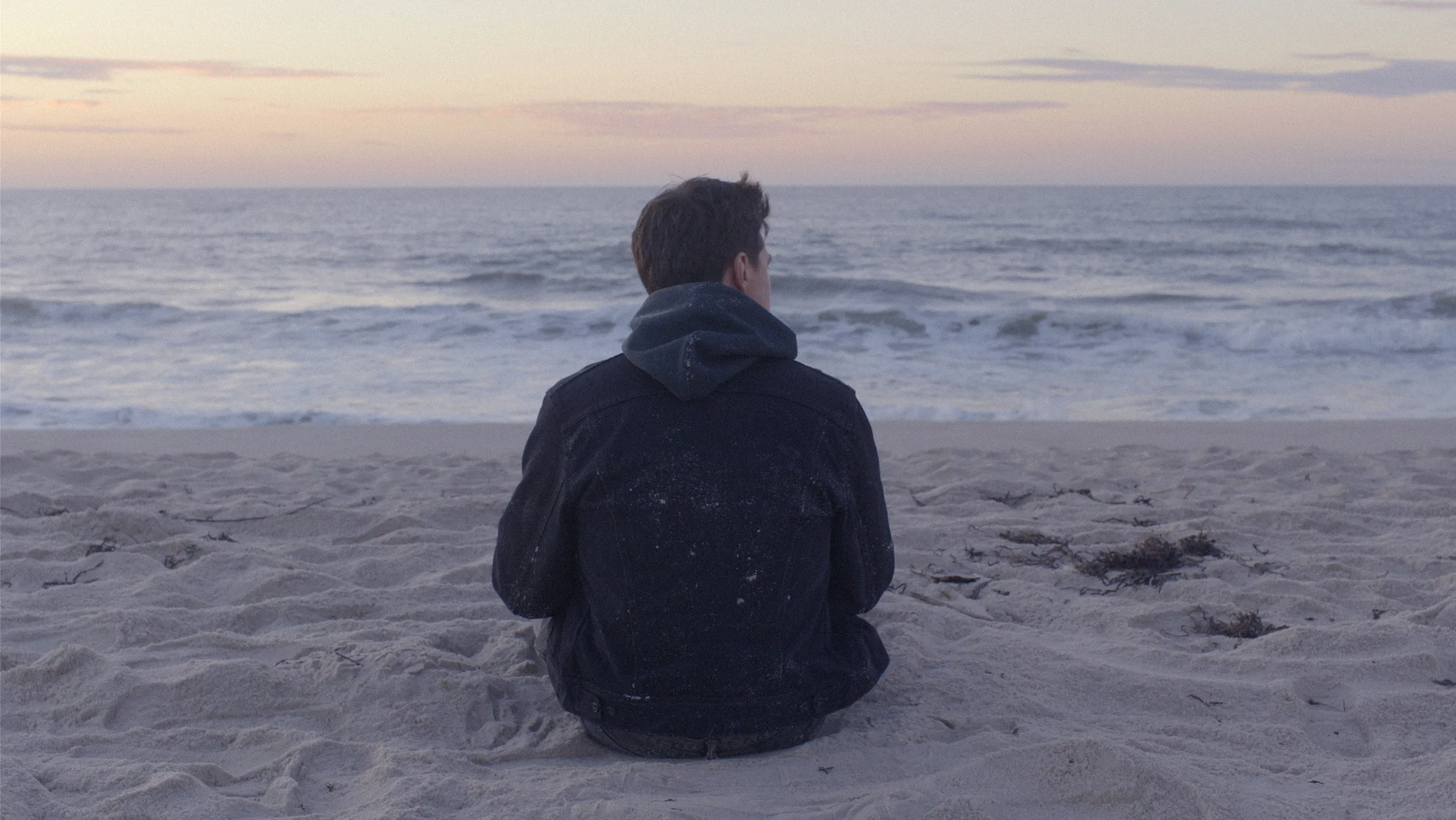
Christian Nilsson’s direction is marked by a deliberate, meditative restraint. He and writer Dave Brick create an atmosphere that feels authentic to its small-town setting, capturing windswept coastal landscapes and slightly worn-down streets that mirror Tom’s own internal decay.
The film avoids melodrama, often grounding its most charged emotional beats in mundane locations—a tense conversation happens just outside a locker room, a key confession is partially obscured by a closed patio door. This choice reinforces the idea that life’s heaviest moments rarely come with cinematic polish. The camera often observes from a slight distance, mirroring Tom’s own detachment.
The pacing is patient, supported by abrupt edits that feel like the jarring intrusion of a painful memory, disrupting any sense of peace. This fractured rhythm prevents the viewer from getting comfortable, keeping them in Tom’s unsettled headspace. The film doesn’t build toward a tidy resolution where all is forgiven.
Instead, its final scenes suggest that making peace with the past isn’t about erasing it but about learning to live with its imperfections. True accountability is shown to be a quiet, ongoing state, not a single, dramatic declaration. The powerful closing shot leaves the audience with a sense of acceptance, not of victory, a fitting visual statement for a story about the difficult, unglamorous work of atonement.
Westhampton is a drama film that premiered on June 7, 2025, at the Tribeca Film Festival in New York City.
Full Credits
Director: Christian Nilsson
Writers: Christian Nilsson, Terence Krey
Producers & Executive Producers: Christian Nilsson, Saraleah Cogan, Rob Hinderliter, Alex Robbins, Terence Krey, Eric Tabach, Dave Brick
Cast: Finn Wittrock, R.J. Mitte, Jake Weary, Amy Forsyth, Tovah Feldshuh, Dan Lauria, Ritchie Coster, Sam Strike, Joy Suprano
Director of Photography (Cinematographer): Dave Brick
Editors: Terence Krey
Composer: Nicholas Marks
The Review
Westhampton
Westhampton is a thoughtful and atmospheric character study, anchored by a career-best performance from Finn Wittrock. While the narrative of a troubled artist returning home is familiar, the film handles it with emotional sophistication and a compelling central gimmick—the film-within-a-film. Its quiet, meditative direction and strong supporting cast create a potent look at memory, guilt, and the messy truth that art can't always fix. It’s a rewarding watch for those who appreciate nuanced, performance-driven drama over tidy resolutions.
PROS
- A powerful and nuanced lead performance from Finn Wittrock.
- The film-within-a-film structure is used effectively to explore themes of memory and self-deception.
- Strong, atmospheric direction and cinematography that enhance the story's mood.
- A well-realized supporting cast that creates a believable town ecosystem.
CONS
- The plot follows a familiar "return to hometown" trajectory.
- A deliberately slow, meditative pace may not appeal to all viewers.
- Some supporting character arcs could have been more developed.