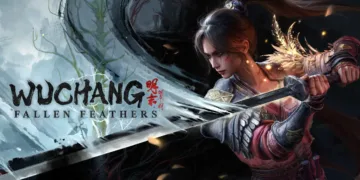
















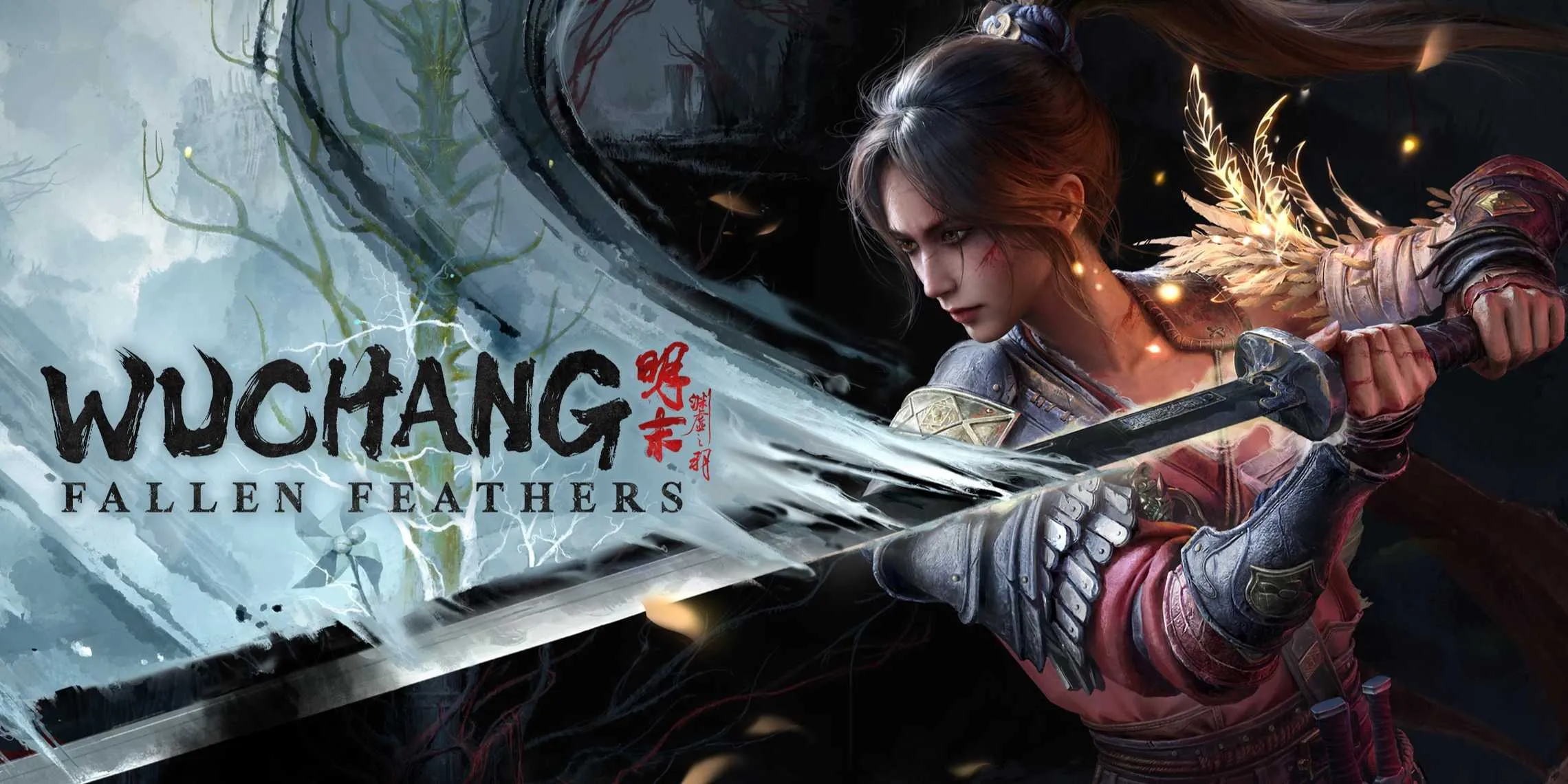

The land of Shu is dying. Set against the backdrop of a collapsing Ming Dynasty, this is a world choked by famine, rebellion, and a horror far worse than any war. A strange plague, the “Feathering,” sweeps across the countryside.
Those afflicted sprout ghostly white plumage from their skin, a grotesque transformation that erodes their memories and sanity until they become unrecognizable monsters. You awaken into this nightmare as Wuchang, a pirate warrior with no memory of her past.
The feathers already creeping up your arm are a terrifying clock, ticking down the moments you have left. Your quest is born from this immediate desperation: venture into the blighted wilds of Shu to reclaim your lost memories and find a cure before the sickness claims you completely.
Whispers in a Broken World
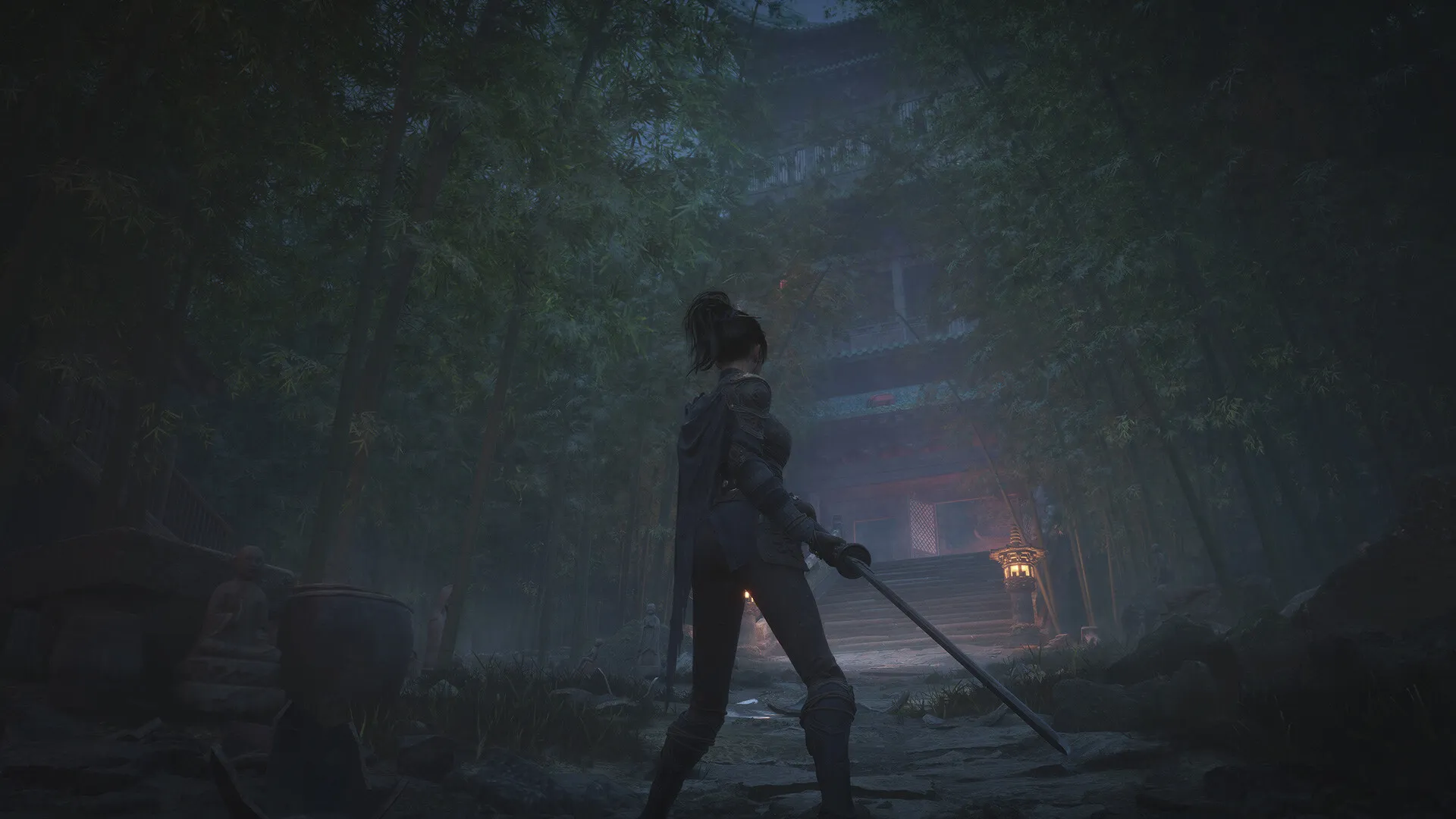
Wuchang’s world is built on a fascinating foundation, mixing the historical strife of its period with mythological horror inspired by the real-world Sanxingdui archaeological wonders. The result is an atmosphere thick with dread, where ancient temples and decaying villages are just as likely to house desperate survivors as they are to hide misshapen, feathered abominations.
The game tells its story in quiet moments, through the descriptions of the items you collect and the cryptic pronouncements of the few sane people you meet. This style of abstract storytelling will be familiar to anyone who has played FromSoftware’s titles, but Wuchang’s specific blend of history and myth gives its world a distinct identity. You can see the Sanxingdui influence in the designs of the more monstrous foes, whose forms echo the ancient bronze masks and bird-like totems, re-imagined as instruments of a body-warping plague.
The central narrative hook, the Feathering disease, is a powerful concept that feels disappointingly underutilized. It should be a constant source of tension, a malady that physically and mentally shapes the player’s experience. Instead, it feels strangely disconnected from the moment-to-moment action. The game introduces mechanics tied to it, but they often feel superficial or are poorly explained, leaving the plague as more of a background detail than an interactive threat.
One can imagine a version of this game where rising Feathering levels distort the player’s vision, cause auditory hallucinations, or even make friendly NPCs hostile. In its current state, the system lacks the gravity seen in games like Bloodborne, where the Insight mechanic fundamentally alters the world and its inhabitants.
While the environments themselves are often stunningly beautiful, with sprawling mountain vistas and decaying, lantern-lit towns, the human characters who inhabit them are less impressive. Many have a stiff, “doll face” appearance with static expressions that creates a jarring visual contrast with the otherwise thoughtfully designed world. During tense dialogue exchanges, this lack of emotion breaks the immersion, turning potentially poignant moments into something oddly sterile.
The Rhythm of Steel and Sorcery
The game’s combat creates a distinct and demanding rhythm. Wuchang moves with a deliberate, weighty feel that recalls the methodical pace of the original Dark Souls. Your character has inertia; attacks have commitment and recovery frames that must be respected. Your enemies, however, often attack with the speed and ferocity of creatures from Bloodborne or Sekiro.
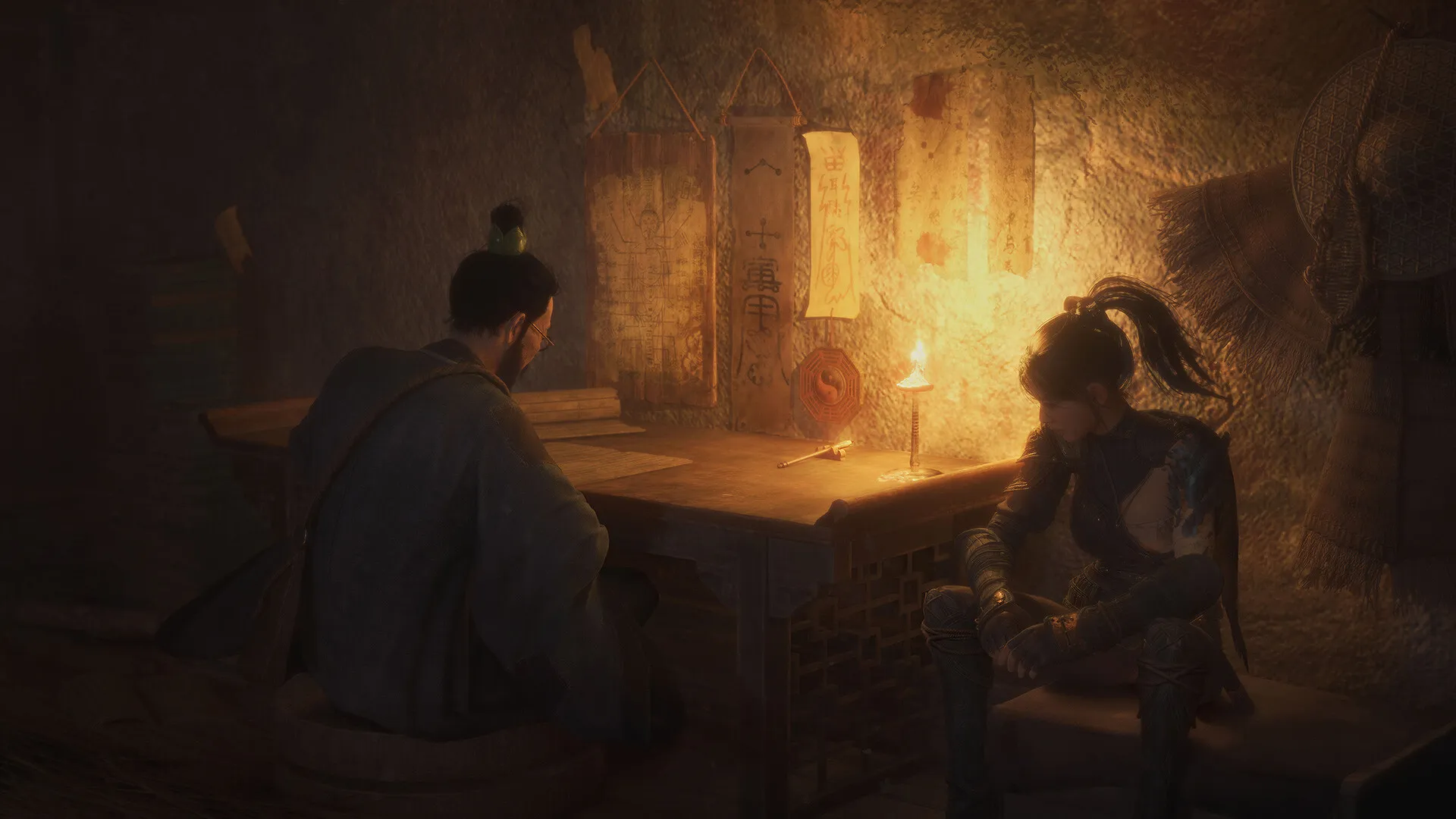
This mismatch forces a specific style of play, one centered on precise positioning and timed dodges rather than aggressive, head-on assaults. It creates a constant tension, a dance where you often feel on the back foot, patiently waiting for that single opening to strike. Your core tools are light and heavy attacks, with a quick dash serving as your primary defensive tool.
The absence of a universal parry or block is a significant design choice. These abilities are instead tied to specific weapon types and skills, forcing you to make strategic decisions about your loadout based on your defensive needs. You might equip a heavy axe not just for its damage, but for its attached block ability that provides a rare defensive anchor.
Two systems add a welcome layer of complexity. The Skyborn Might mechanic rewards skillful play. Executing perfect dodges and finishing attack combos fills a segmented meter that can be spent to unleash powerful weapon skills and magic. This creates a satisfying loop of risk and reward, pushing you to engage with enemy attack patterns to fuel your strongest abilities.
It pulls you from a defensive posture into moments of explosive offense. The Madness System reworks the genre’s standard death penalty. Each time you fall, your Madness increases, raising both the damage you deal and the damage you take. If it gets too high, a demonic, shadowy apparition of yourself will guard your dropped currency, adding one more obstacle to your recovery.
This turns a simple corpse run into a tense duel against a mirror image of your own power. This collection of five weapon types—slow but powerful longswords and axes, fast-hitting dual blades, long-reaching spears, and magically-inclined one-handed blades—each with their own special attacks, gives you a broad toolkit for tackling the challenges of Shu.
The Anatomy of a Hunter
Character growth in Wuchang offers a great deal of freedom. An expansive skill tree, branching out in several directions, allows you to invest points into improving specific weapon proficiencies or boosting your general combat attributes. Crucially, you can reallocate these skill points at any time without penalty.
This single feature is a massive boon, actively encouraging you to experiment with different builds. It removes the analysis paralysis that can plague other RPGs, where one wrong skill point feels like a permanent mistake. If you hit a wall against a tough boss, you can completely re-tool your character for a different approach—perhaps shifting from a heavy strength build to a nimble magic user—then switch back just as easily. This flexibility prevents you from getting locked into a build that is not working and respects the player’s time.
Your journey to become stronger is also defined by the gear you find. The world is littered with consumable items, which at times makes the loot feel unrewarding. But this design choice also makes the discovery of a new weapon or a fresh set of armor feel truly special and earned. Exploration is less about a constant stream of incremental upgrades and more about resource management and the thrill of a major find.
The customization goes deeper with Benediction mods, which can be slotted into weapons to grant passive effects like adding a bleed effect to your heavy attacks, and Acupuncture needles, which provide temporary, activatable buffs like doubling your poise for a short duration. These systems work together to let you fine-tune your capabilities and shape a warrior that perfectly suits your playstyle.
Peaks of Inspired Design
Where Wuchang truly shines is in its world structure and its boss encounters. The level design is a remarkable achievement, harkening back to the masterfully interconnected map of the first Dark Souls. Paths twist back on themselves, locked doors open from the other side, and newly discovered elevators reveal surprising shortcuts that connect seemingly disparate zones.
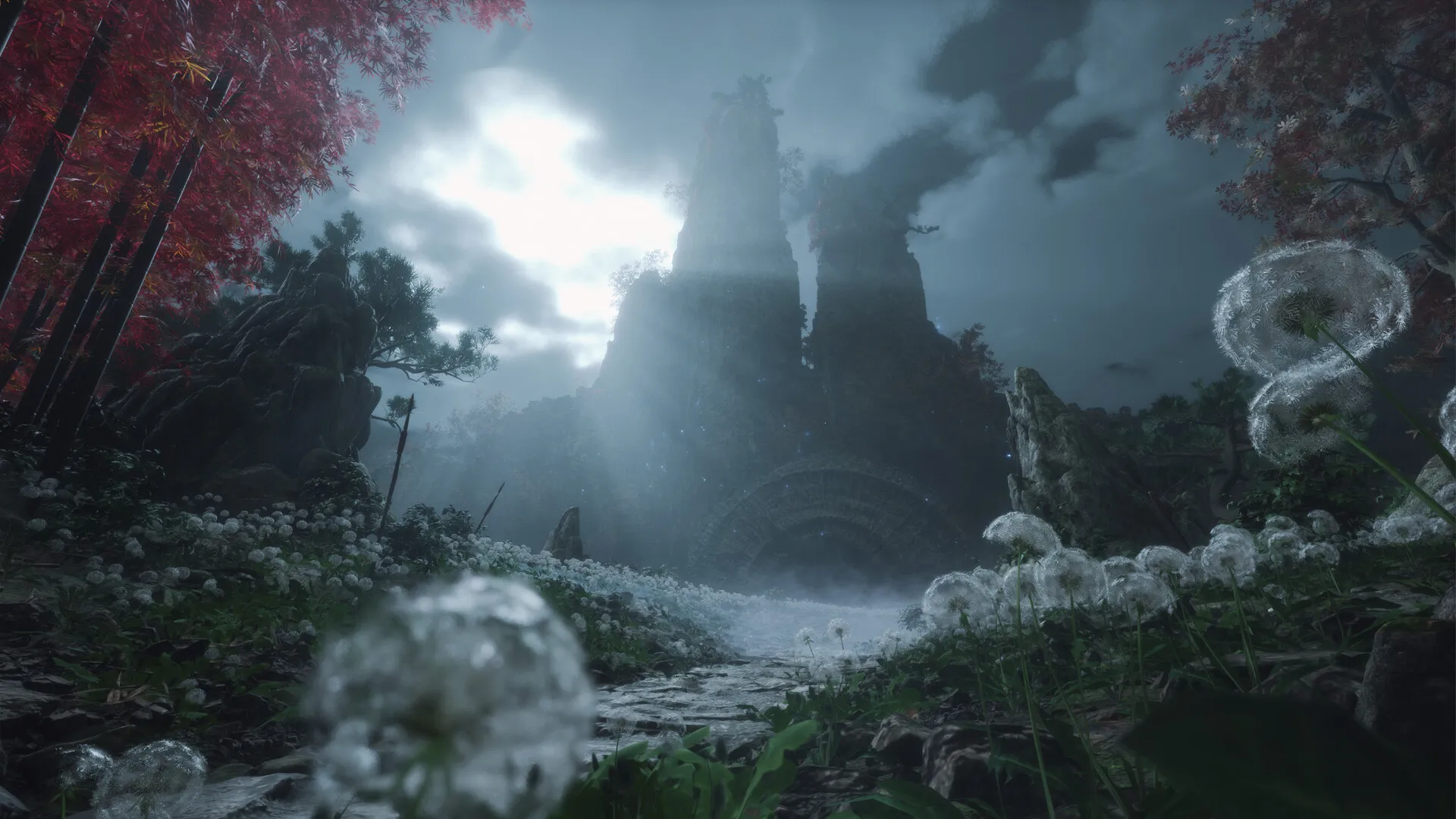
There is a palpable “aha!” moment that comes with this kind of design. You will spend an hour fighting through a treacherous, mist-filled swamp, only to open a rusted gate and find yourself right back at the entrance to a zone you cleared hours before. This creates a genuine sense of place and makes exploration a constant source of discovery.
The regions themselves are varied, taking you through a host of different environments as you push deeper into Shu. The game is full of branching paths that hide treasure and entire optional areas, making every step off the main road feel exciting.
This excellent exploration is punctuated by the game’s stellar boss fights. These encounters are the climactic tests of everything you have learned, and they rarely disappoint. The roster is varied, pitting you against swift, deadly warriors and huge, grotesque beasts in equal measure. These are not simple gimmick fights; they are pure, old-fashioned duels that demand you learn attack patterns and execute your strategy with precision.
An early-game encounter with a boss named Commander Honglan serves as a perfect skill-check. She is a fast, aggressive warrior whose relentless combos will punish panicked dodging. Defeating her requires patience and a mastery of the game’s core defensive timing, making her a difficult but fair fight that is incredibly satisfying to finally win.
Cracks in the Armor
For all its design strengths, the game is hampered by significant technical and mechanical issues. On the PlayStation 5, the performance is deeply problematic. Players must contend with severe screen tearing, blurry and low-resolution textures, and jarring frame rate drops that persist even in the dedicated Performance Mode.
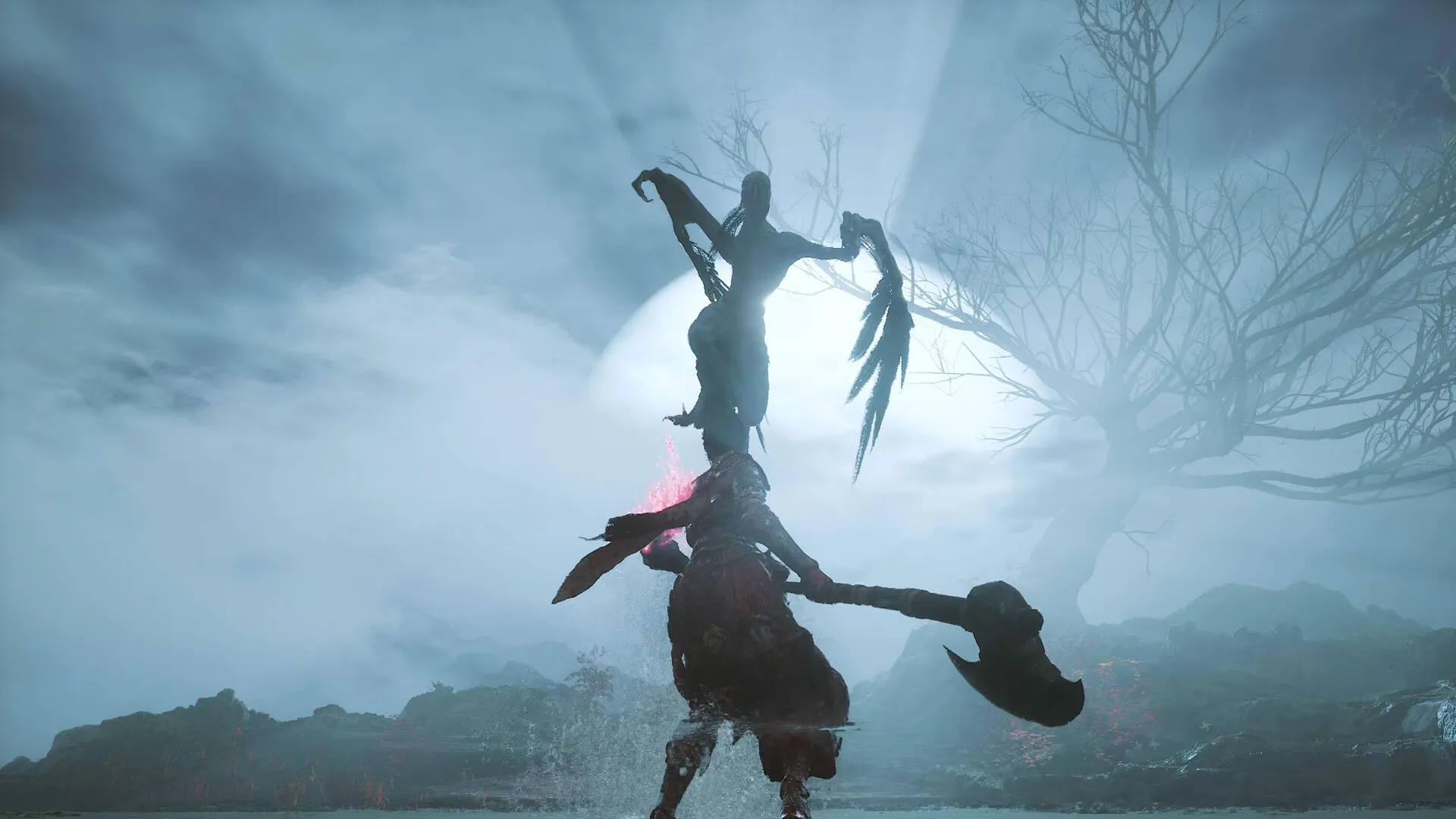
The screen tearing is not just an aesthetic annoyance; in a fast-paced boss fight, it is a disorienting mess that can lead to cheap deaths. The game offers a suite of graphical options, but in practice this just gives you the ability to choose which technical flaw you find least tolerable.
This lack of polish extends to the feel of combat. Many enemies don’t react when you hit them, absorbing your attacks without so much as flinching. When you land a blow with a colossal axe on an unarmored bandit and they continue their attack animation uninterrupted, it breaks the fantasy of the power you’re supposed to be wielding.
Enemy artificial intelligence is also frequently poor; you will watch a fearsome feathered knight get stuck walking into a wall for thirty seconds, shattering any sense of threat. Questionable collision detection means you will sometimes take damage from attacks that do not appear to connect. The game also features many classic genre frustrations, like hidden traps and areas designed to constantly drain your health with status effects. While veterans of this style of game may expect such things, their implementation here often feels more like a tedious replication of old ideas than a clever evolution.
The Final Cut
Wuchang: Fallen Feathers is a game of high ambition and uneven execution. At its best, it presents a beautifully realized world, a flexible and rewarding combat system, and some of the best boss fights and level design found outside of a FromSoftware title.
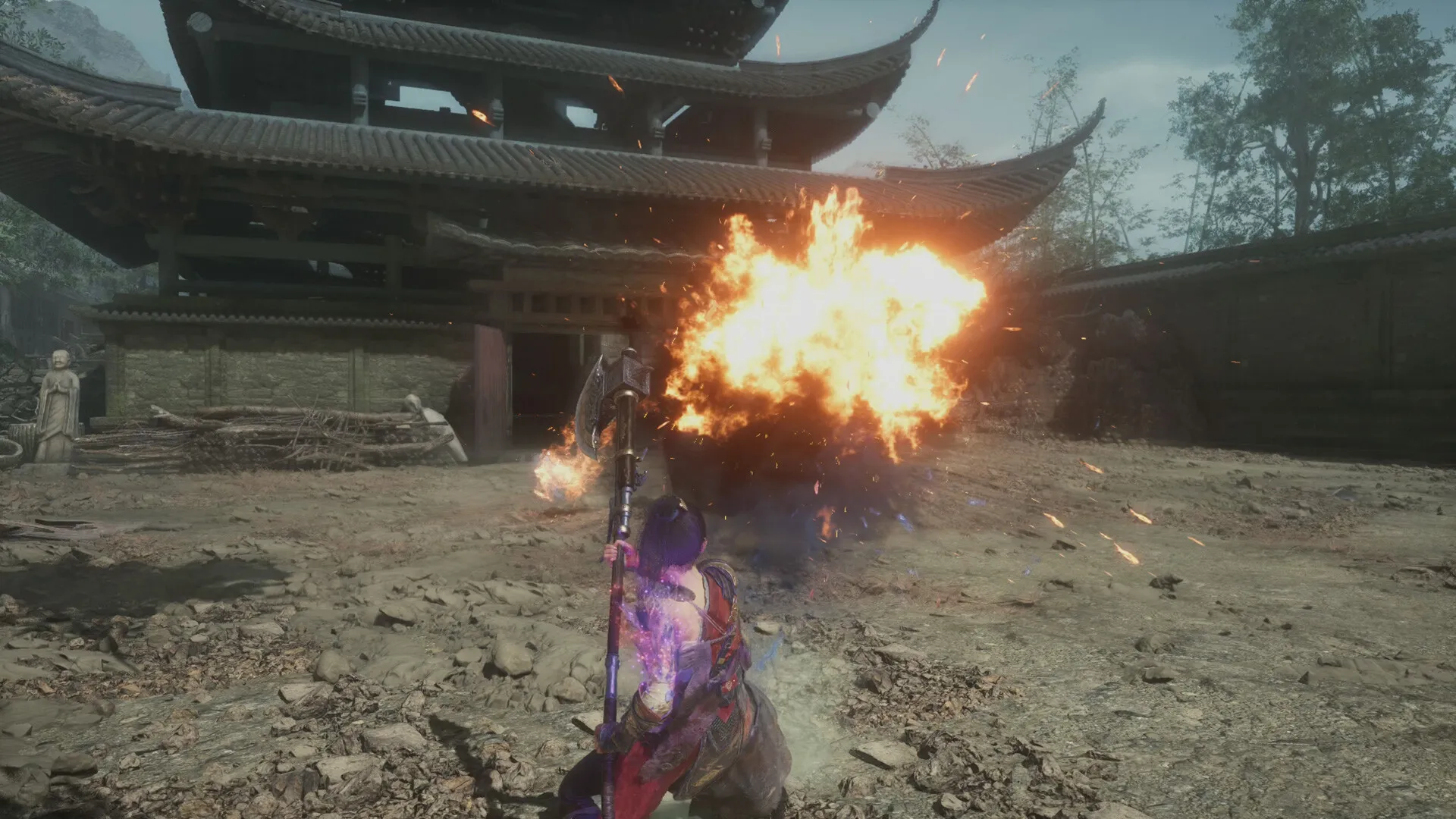
The core of a fantastic action RPG is here, waiting to be discovered through its intelligently interconnected world and deep character customization. That core, however, is buried under a host of serious problems.
The technical performance is in a poor state that actively hinders gameplay, key narrative ideas feel underdeveloped, and the moment-to-moment combat lacks the tactile feedback it needs to truly sing. There is a great game inside Wuchang, but its potential is directly locked behind these significant failings. It contains moments of brilliance, but in its current form, it is an experience that requires a great deal of patience.
The Review
Wuchang: Fallen Feathers
Wuchang: Fallen Feathers has the soul of a great action RPG, with fantastic world design and memorable boss encounters. Its deep character customization encourages experimentation. Yet, this brilliant core is trapped within a cage of technical problems, from severe performance issues to clumsy combat feedback. The central story hook also fails to deliver on its potential. A truly special game is here, but it is buried under a thick layer of frustration that is hard to ignore. It is a title worth watching, but perhaps not worth playing until significant patches arrive.
PROS
- Masterful, interconnected world design that rewards exploration.
- Challenging and memorable boss encounters that are a true test of skill.
- Deep and flexible character customization with a free respec system.
- Strong, atmospheric art direction in its environments.
CONS
- Severe technical issues, including poor frame rate, screen tearing, and bugs.
- Unresponsive combat feel due to a lack of enemy hit-stun and poor AI.
- The central narrative premise of the "Feathering" feels underdeveloped.
- Uninspired human character models that clash with the world's beauty.