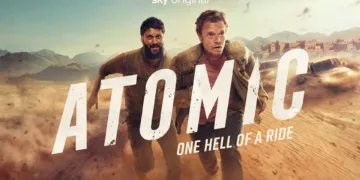


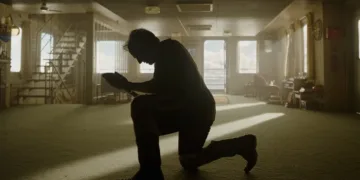



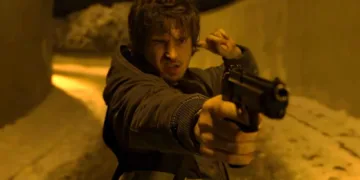












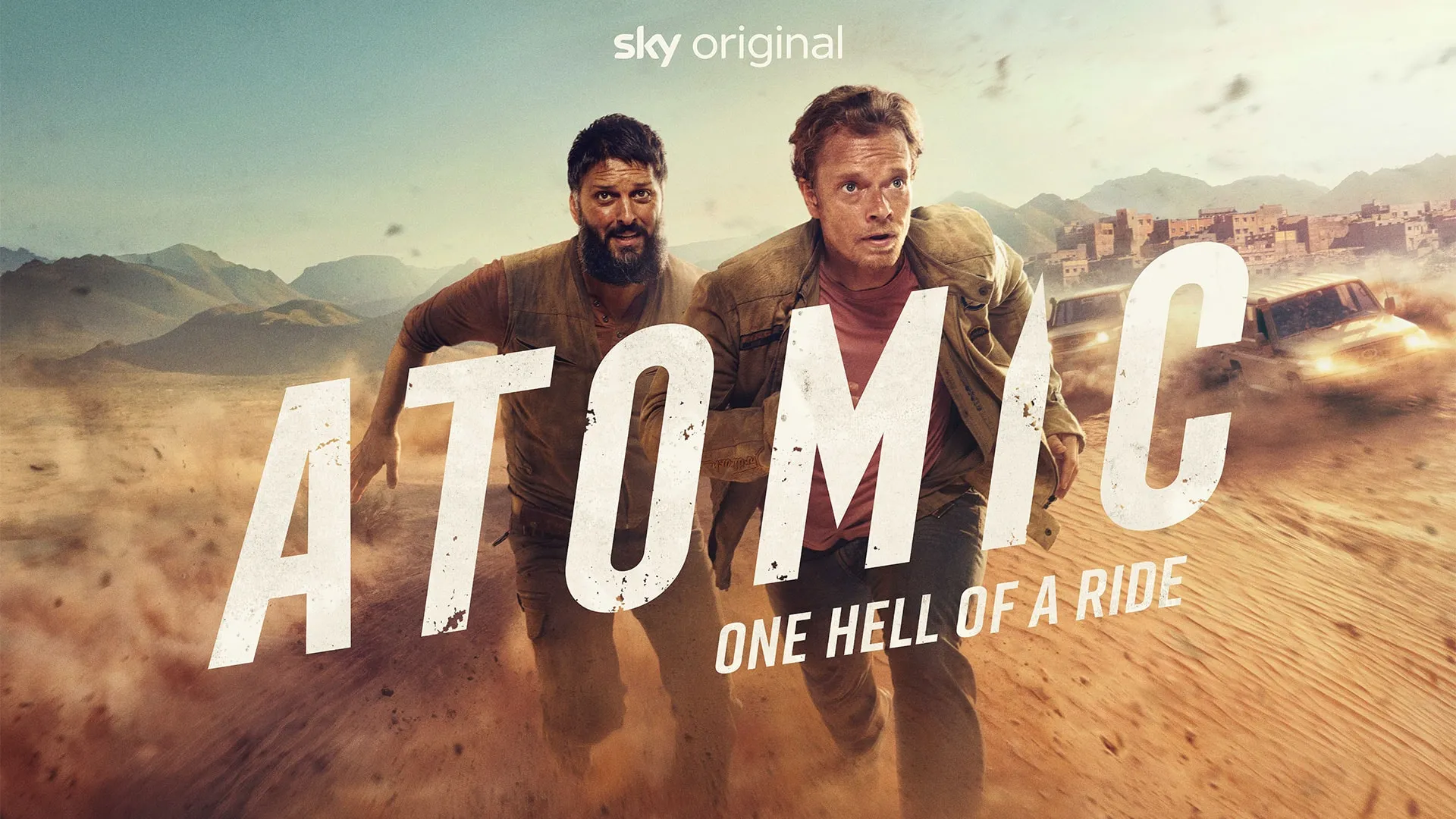

Having a bad day at work rarely involves your colleague getting shot before one of the assassins decides to kill his own squad and kidnap you instead. For the fast-talking smuggler Max, however, this is just the start of his troubles in Atomic. Alfie Allen plays Max with a reckless charm, a man whose simple job of trafficking cocaine through the Algerian desert detonates in the opening minutes.
The source of the explosion is JJ, a quiet, severe militant played with coiled intensity by Shazad Latif. He commandeers Max and his vehicle for a detour to Benghazi, kicking off a frantic road trip across North Africa. The premiere establishes its credentials immediately: this is a show that operates at full throttle, with little time for braking.
Captor, Co-pilot, Confidante
The series lives or dies based on the chemistry between its two leads, and Atomic wisely invests its best assets here. The dynamic is a classic odd-couple setup supercharged with automatic weapons, a road trip comedy where the destination is simple survival. Alfie Allen’s Max is a creature of pure nervous energy.
He fills every silence with patter about his girlfriend Laetitia, his belief in love a flimsy shield against the horrors unfolding around him. Allen, far from the broken Theon Greyjoy he famously portrayed, infuses Max with a wiry, desperate physicality. He is a man who thinks he can talk his way out of a gun barrel. His performance is a masterful calibration of charm and panic.
His foil is Shazad Latif’s JJ, a man who seems carved from the desert rock. Latif delivers a performance of remarkable stillness, conveying JJ’s violent past and internal torment through flickering glances and the rigid set of his jaw. His character, a former jihadist with a mystical belief that “everything is written,” could easily become a caricature. Latif gives him a quiet, wounded dignity. It is a testament to his skill that this stoic killer becomes the show’s moral center.
The evolution of their bond is the narrative’s main artery. Director Shariff Korver frequently frames them in tight two-shots within the claustrophobic confines of their 4×4, forcing an intimacy that their situation would otherwise prevent. The visual language traps them together, making their reluctant alliance feel inevitable. What begins with Max’s terrified attempts to placate his captor slowly shifts into something resembling trust.
A shared meal, a split-second decision in a firefight, a moment of unexpected vulnerability—these are the beats that build their relationship. Their dialogue, penned by Gregory Burke, crackles with an authenticity that elevates the material. It is through their grudging exchanges that the show finds its heart, transforming a high-concept thriller into a compelling character study of two broken men finding an unlikely tether in the middle of nowhere.
A Very Crowded Desert
Any hope for a simple trip evaporates when Max and JJ accidentally acquire the story’s real prize: two cases of enriched uranium disguised as statues. They come with a simple, terrifying instruction: keep them two meters apart or risk a Hiroshima-sized catastrophe.
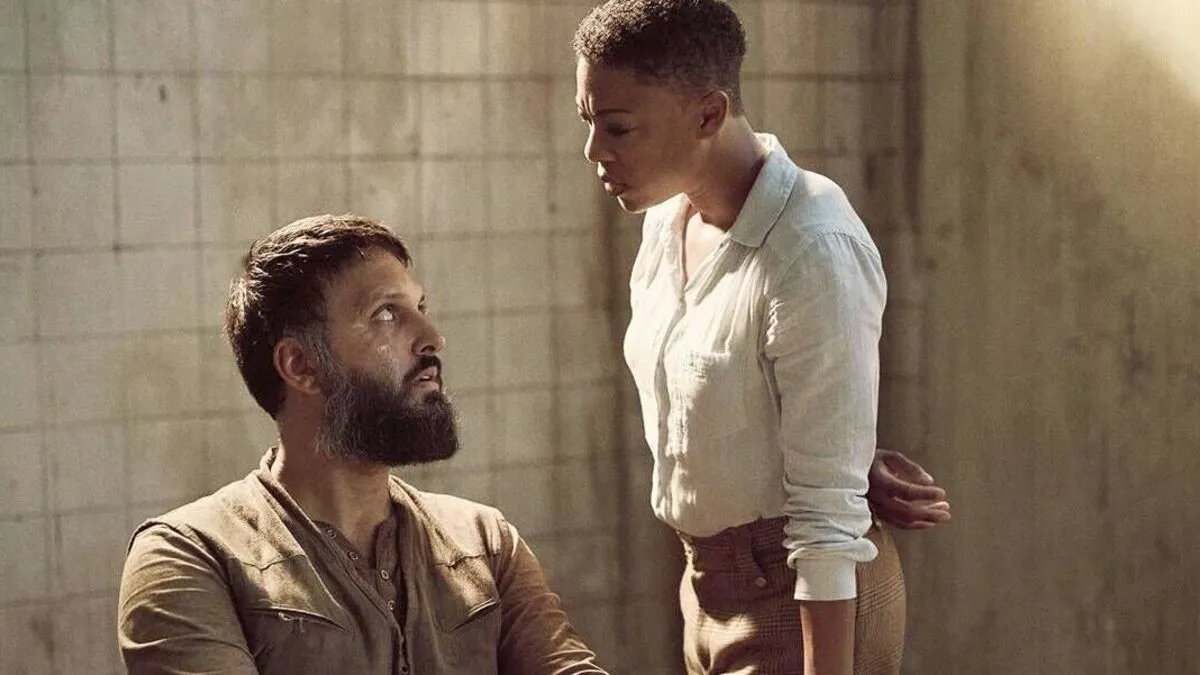
This nuclear hot potato makes them the most popular men in the Sahara. Suddenly, everyone wants to kill them. The narrative structure of Atomic is a chaotic pile-on, a relentless escalation of threat that borders on the absurd. For the first couple of episodes, the plot threatens to buckle under the weight of its own complexity, introducing new factions with dizzying speed.
The series throws a dizzying array of antagonists at the pair. Stuart Martin plays Rab Makintosh, a Scottish mercenary whose pursuit of JJ is fueled by a raw, personal vendetta. He brings a wild-eyed ferocity to the role, representing the emotional, irrational nature of revenge. In contrast, Avital Lvova’s Oksana Shirokova is the face of cold, corporate-style villainy.
As the agent of the Russian smugglers who want their uranium back, she is all icy professionalism and ruthless efficiency. Then there is the CIA, embodied by Samira Wiley as Cassie Elliott. She is a nuclear physicist pulled from her university cover, an intelligent and capable operative who represents a more institutional, morally ambiguous threat. The show smartly plays with spy-thriller conventions, suggesting the American interest is hardly pure. These groups, along with the original cartel and various corrupt local officials, create a 360-degree battlefield.
Director Shariff Korver shoots the action with a kinetic flair against the striking backdrop of North Africa. The vast, empty desert landscapes, captured in wide, sweeping shots, emphasize the duo’s isolation. This visual beauty is punctuated by brutal, well-choreographed action sequences. The editing is sharp and propulsive, particularly during the frequent car chases that feel both thrilling and genuinely dangerous.
The sound design is a key player, with the throbbing score and the visceral punch of gunfire creating a constant state of anxiety. The uranium itself is a brilliant plot device. It is a MacGuffin that generates its own unique physical tension, a ticking clock that the heroes must carry at all times, turning every bump in the road into a potentially apocalyptic event.
Violence with a Conscience?
Atomic barrels forward with a chaotic energy, mixing brutal shootouts with flashes of irreverent humor. The show’s primary mode is a kind of tonal whiplash, a deliberate mashing of genres that defines its style. One scene might feature Max comically attempting to explain his jihadist-on-ecstasy friend at a desert rave.
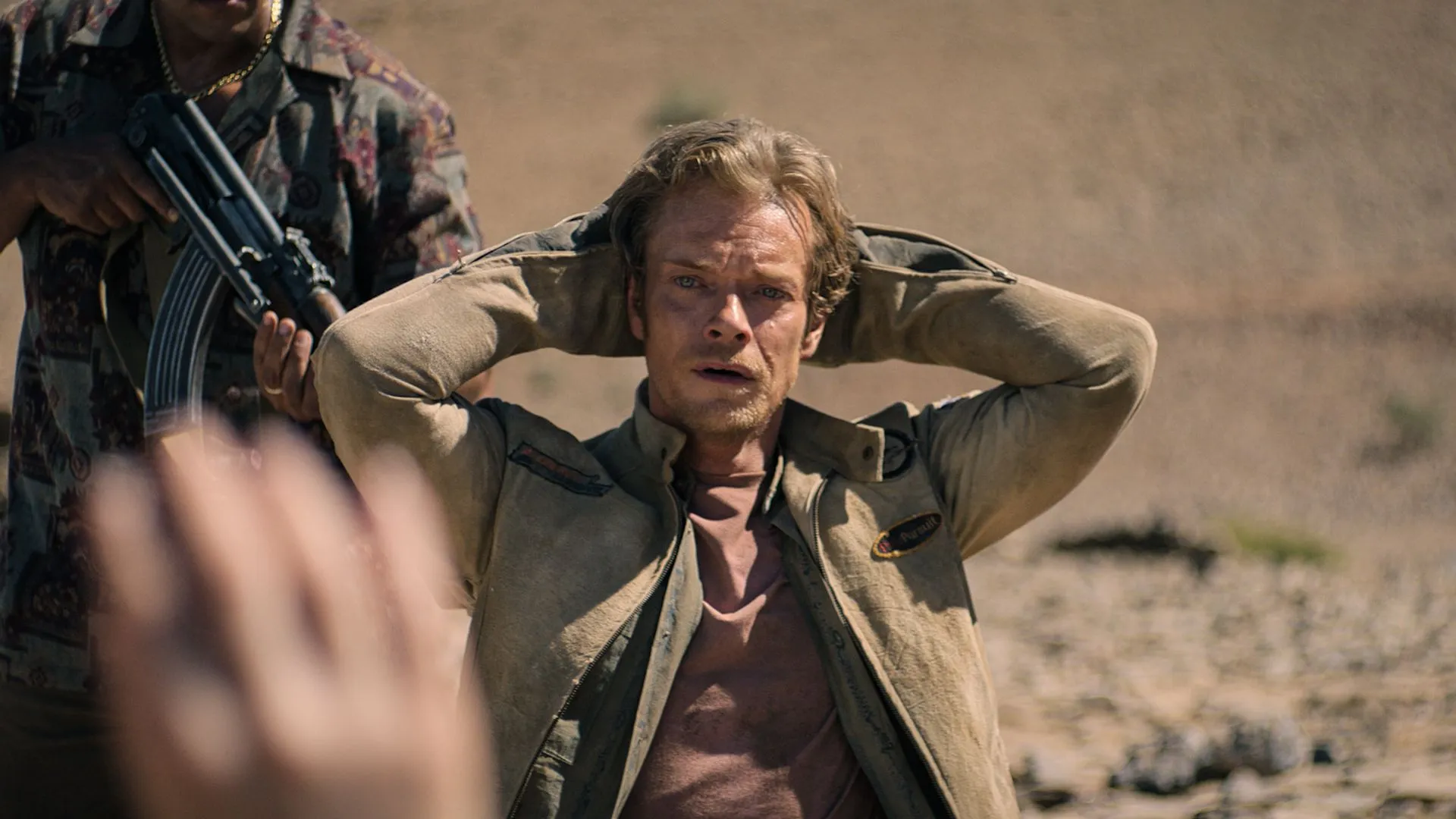
The next might present a stark, harrowing firefight with grim consequences. This constant shifting is a gamble. It aims for the modern action-comedy sensibility, where glib one-liners follow bloody executions. The pacing is consistently breakneck, a sprint of car chases and narrow escapes that rarely pauses for breath.
The show’s approach to violence is where this friction is most apparent. Much of the gunplay is stylized, presented as thrilling spectacle. Yet the series refuses to let its violence be completely weightless. The shocking death of a young boy the pair briefly protects is handled with devastating gravity, a moment that punctures the story’s cartoonish feel and forces its characters to confront the real cost of their actions. This is where the series reveals its ambition beyond being a simple shoot-‘em-up.
It uses its high-speed mayhem to probe at deeper questions of morality and redemption. The entire narrative can be read as a battle for JJ’s soul. His cryptic past and his halting attempts to be a better man—killing “only bad people now,” as Max puts it—form the show’s thematic core. The story explores the philosophical conflict between Max’s simple faith in love and JJ’s grim fatalism. Is a person’s path fixed, or can they choose a different one, even after committing heinous acts?
The show’s use of real-world geopolitics, from its title to the Jihadi John nickname, feels intentionally provocative. Is it a shallow deployment of loaded terms for edgy thrills, or a messy, good-faith attempt to explore salvation in a world defined by violent extremism? Atomic offers no easy answers, leaving its audience to ponder the moral fallout.
Atomic is a British action-adventure television series that premiered on August 28, 2025. The five-part series was produced by Pulse Films in association with Sky Studios. It is available to watch on Sky and to stream on NOW. The series was inspired by the non-fiction book Atomic Bazaar by journalist William Langewiesche, and filming took place in Morocco in the summer of 2024.
Full Credits
Director: Shariff Korver
Writers: Gregory Burke, Ishy Din, Jiwon Lee, Clare McQuillan
Producers and Executive Producers: Peter McAleese (Producer), Thomas Benski, Edward Berger, Michael Bloom, Gregory Burke, Judy Counihan, Jamie Hall, Sam Hoyle, Megan Spanjian, Ian Stratford (Executive Producers)
Cast: Alfie Allen, Shazad Latif, Samira Wiley, Avital Lvova, Mikhail Safronov, Franklin Vírgüez, Brian Gleeson, Akin Gazi, Charlie Murphy, Stuart Martin, Jacob George Wright, Essadiq Samali, Ouadia Al Aafou, Luis Jaspe, Mostafa Benkerroum, Faycal Attougui, Nezar Thalal, Mohammed Ait Hssein, Rabie Kati, Abass Abdulghani, Mansour Badri, Keni Emmanuelle, Ouidad Elma, Leïla Fadili, Chaouqi Abdellatif, Mustafa Touki, Jaeme Velez, Derek Reginald, Flavia Fazenda, Edward Tovar
The Review
Atomic
Atomic is a supercharged thriller powered by the spectacular chemistry between Alfie Allen and Shazad Latif. Their performances provide a necessary human core to a story that is relentlessly paced and packed with thrilling action. The plot's chaotic complexity and jarring tonal shifts between comedy and brutality can be overwhelming, but the central partnership is so engaging it holds the entire structure together. It is a messy, ambitious, and wildly entertaining ride that delivers an explosive amount of fun.
PROS
- Exceptional on-screen chemistry between the two leads.
- Strong, nuanced performances from Alfie Allen and Shazad Latif.
- Thrilling, well-directed action sequences and a breakneck pace.
- Striking cinematography across desert landscapes.
CONS
- The plot can feel convoluted with its many antagonist factions.
- Tonal shifts between dark humor and serious violence can be jarring.
- Supporting characters are less developed than the central duo.