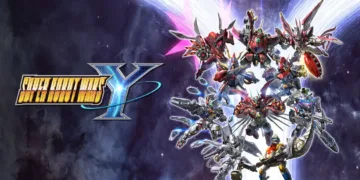




















Super Robot Wars Y arrives as the latest installment in a franchise that has thrived for decades on a single, powerful concept: the massive crossover of mecha anime. This tactical role-playing game continues that tradition, setting its stage in a world recovering from a devastating war. The peace is uneasy, and into this volatile landscape emerges a new faction, the A. Advent.
This technologically advanced, city-sized mobile fortress operates as an independent nation, aiming to use its unique energy supply to aid in global reconstruction. Players step into the role of either Cross or Forte Tsukinowa, cybernetic ninja siblings who serve as protectors for Echika Franburnett, the young woman who has just inherited leadership of the A. Advent.
The game immediately sets expectations for a narrative that weaves this original science-fiction plot through the abridged stories of dozens of classic and modern anime, creating a complex and sprawling conflict.
When Worlds Collide
The primary appeal of any Super Robot Wars title is its roster, and Y assembles an impressive one that carefully balances different eras and styles of the mecha genre. The lineup features a broad spectrum of units, from the fantastical “Super Robots” like Getter Robo Arc and Super Electromagnetic Robot Combattler V to the more grounded “Real Robots” found in franchises like Mobile Suit Gundam and Code Geass.
The Gundam representation is particularly heavy, featuring pilots and machines from popular alternate universes like Wing, SEED, and the recent The Witch from Mercury. These stand alongside deeper cuts for long-time genre fans, including Aura Battler Dunbine and Heavy Metal L-Gaim, ensuring the cast feels both recognizable and educational. The game further broadens its scope with the unique inclusion of Godzilla from Godzilla Singular Point.
Here, Godzilla is treated not as a simple monster to be defeated but as a near-apocalyptic force of nature whose presence warps the battlefield and demands the full attention of the world’s most powerful machines. This thoughtful integration extends to DLC, where the debut of Kamen Rider marks a significant step for the series, breaking the mecha-only mold to embrace another iconic Japanese hero genre.
The true success of Super Robot Wars Y lies in how its writers weave these disparate franchises into a cohesive narrative. The central plot, which begins in the aftermath of Lelouch’s Zero Requiem from Code Geass, provides a strong political foundation. From there, the A. Advent’s journey brings it into the orbits of other worlds and conflicts.
Some characters are pulled into the new world through dimensional distortions, while others are already established residents. This allows for clever and satisfying interactions that feel like expertly written fan fiction. The game is filled with small moments that reward dedicated fans, such as Shinn Asuka of Gundam SEED finding a new mentor in the fiery Domon Kashuu of G Gundam, or the tense political maneuvering between Char Aznable and Lelouch.
The original characters, particularly the earnest Echika and the player’s choice of the upbeat Forte or the brooding Cross, serve as effective anchors for the story. Their development provides a consistent thread through the chaos of dozens of intersecting plotlines. This narrative strength is needed, because the original story takes a considerable amount of time to find its footing. The early hours relegate the protagonists to simple bodyguard roles, with a plot that moves at a glacial pace.
The crossover interactions are what carry the experience during this slow start. Even then, not every series receives equal attention. The Witch from Mercury, a major modern Gundam series, feels particularly underutilized; its story is based only on its first season, causing its compelling characters to vanish from the main plot for huge stretches of the game, a missed opportunity that stands out in an otherwise well-balanced cast.
Evolving the Formula on the Battlefield
At its core, Super Robot Wars Y adheres to the turn-based tactical RPG formula the series is known for. Combat unfolds on a grid-based map where players and enemies take turns maneuvering units. Success depends on managing three key resources: Health Points (HP), which determine a unit’s survival; Energy (EN), a finite pool used to power the strongest attacks and abilities; and Pilot Morale, a stat that begins at a neutral level and increases as a pilot deals and receives damage.

Higher Morale is required to unlock a pilot’s most devastating weapons, creating a strategic arc within each battle where units become more powerful the longer they fight. When attacked, a player can choose to Defend to reduce incoming damage, Evade to try to dodge the attack completely, or Counter with a chosen weapon. While this foundation is familiar, Y introduces several new mechanics that add significant depth and customization.
The most impactful of these is the “Assist Link” system, a smart evolution that combines and refines the Supporter and ExC systems from previous titles. This feature allows non-pilot characters from across the various anime to be deployed as an “Assist Crew.” Each crew member provides a passive, army-wide bonus, such as increased EXP gain or reduced repair costs. Defeating enemies generates a shared resource called “Assist Points,” which can then be spent to activate powerful commands.
For instance, the crew from Godzilla Singular Point’s Otaki Factory can be activated to restore EN to every allied unit on the map, a potentially battle-turning move during a long fight. These crew members also gain experience and level up, improving their passive buffs and unlocking new abilities. This system gives beloved support characters a tangible and vital role in combat.
Complementing this is the “STG Memory” skill tree, a new progression mechanic that offers long-term strategic planning. Players spend a currency called MxP to unlock nodes on a large grid, which is divided into three branches roughly corresponding to Damage, Defenses, and Resources. Most nodes provide small, permanent stat increases to the entire army, while major checkpoint nodes offer game-changing perks, like removing the EN cost from all defensive barriers.
A key feature is the ability to re-spec points at any time, allowing players to tailor their army’s focus for specific challenges. This focus on preparation is important, as Y makes a clear effort to address difficulty complaints from recent entries. Even on Normal difficulty, enemies are more accurate and hit harder, and higher EN costs make resource management more critical.
Mission design is also more varied. The game moves beyond simple “defeat all enemies” objectives, sprinkling in stages with unique conditions, such as a battle inside a “Red Dust” cloud that hampers accuracy or an intense one-on-one duel against a superboss with massive health regeneration. The overall mission structure finds a comfortable middle ground between Super Robot Wars 30’s open-ended format and the linear design of older games, allowing player choice without sacrificing narrative pacing.
The Animate Soul of the Machine
The true purpose and primary reward of Super Robot Wars Y is the sheer spectacle of its combat. The battle animations are the centerpiece of the experience, elevating the game from a simple tactical RPG to a vibrant celebration of mecha history. Each attack is a meticulously crafted sequence, a high-quality, fluid tribute that faithfully recreates the iconic maneuvers from each source anime with profound reverence.

These are not mere representations of attacks; they capture the pacing, weight, and rhythm of an anime scene, complete with dynamic character portrait cut-ins that punctuate the action. The developers have invested heavily in this area, giving standout units like the Wing Zero Custom a beautiful graphical makeover that exceeds its previous appearances.
The game’s designers understand that these animations can be lengthy, so they provide players with full control over the fanfare. You can watch them in full, speed them up, or skip them entirely, allowing each player to manage the pace of battle according to their own preference and patience.
This visual excellence is reinforced by superb audio design. The sound effects for beam rifles, clashing swords, and massive explosions have an authentic crunch and zap that feels pulled directly from the shows. The audio experience reaches its peak with the game’s use of music. When a unit initiates an attack, its signature theme song from its original anime kicks in, a simple but incredibly effective touch that amplifies the feeling of a massive crossover event.
This is especially true for players who purchase the Premium Sound DLC, which replaces the default instrumental remixes with the official vocal tracks, creating an even more authentic experience. The entire production is supported by the original Japanese voice cast, with pilots shouting their attack names with the same passionate energy fans remember.
This high-energy, dynamic presentation during combat stands in stark contrast to how the story is delivered. The narrative primarily unfolds in static visual-novel segments, where character portraits are paired with text boxes. While some major plot points are accompanied by custom artwork, the vast majority of the game’s lengthy dialogue scenes are unvoiced and can feel flat.
The text is often filled with dense science-fiction jargon and technobabble, which can make it a slog to get through, creating a significant pacing disconnect between the explosive battles and the slow-burn conversations.
Even the user interface, while clean and functional, adopts a generic, minimalist aesthetic that lacks the stylized personality of previous titles. This divide makes the game’s priorities clear. The strategy is serviceable and the story is engaging, but both exist to serve the spectacle. The game is designed to evoke the thrill of seeing your favorite giant robots in action, and in that regard, it is an absolute triumph.
The Review
Super Robot Wars Y
Super Robot Wars Y is an extravagant celebration of mecha anime, prioritizing spectacular fan service above all else. Its combat animations are the best in the franchise, and new systems like the Assist Link add welcome strategic depth. While the core tactical gameplay remains simple and the story is hampered by a slow start and flat visual novel presentation, the sheer joy of seeing these iconic worlds collide is undeniable. It is an essential experience for fans and a solid, if dense, entry point for newcomers with a love for giant robots.
PROS
- Spectacular and faithful combat animations are a visual feast.
- Deep unit customization through new Assist Link and skill tree systems.
- Excellent crossover moments and character interactions for fans.
- A massive and diverse roster of iconic mechs and pilots.
CONS
- The original story has a very slow start.
- Static visual novel presentation makes lengthy dialogue a slog.
- Core turn-based strategy can feel simplistic on its own.
- Some prominent crossover series are noticeably underutilized.