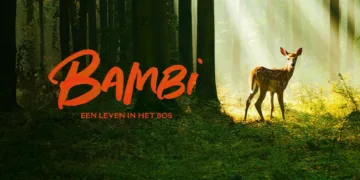






















This film is not the Disney classic many remember. It is a fresh adaptation of Felix Salten’s original 1923 novel, Bambi, a Life in the Woods, one that chooses a different path into the forest. The core concept is a patient, observational form of storytelling, using real animals filmed in their natural habitat to recount the tale.
We meet the young fawn Bambi moments after his birth, all knock-kneed charm and wide-eyed curiosity. His world is presented as a place of immense life and wonder, a landscape of new discoveries waiting around every corner. The initial tone is one of quiet gentleness, feeling much like a fairytale has been carefully layered over a nature documentary, inviting the viewer to watch a familiar story unfold through a new, more grounded lens.
Speaking Without a Voice
The film’s power comes from its visual language, a choice that dictates its entire structure. The decision to use real animals instead of computer-generated ones grounds the production in a tangible reality. The cinematography captures the immense beauty of a French forest, using patient, long takes that allow the viewer to simply observe.
The camera often stays low, mirroring a fawn’s perspective on the towering trees and dense undergrowth. Light is used to great effect, shifting from the dappled sunlight of a safe afternoon to the cold, flat light of a harsh winter. This visual approach forces a different kind of storytelling. With no speaking animals, the narrative is carried by their “performances.”
We see clear characterizations emerge through pure behavior: Bambi’s initial vulnerability, the imposing majesty of the Great Prince standing stoically on a ridge, and the intelligent, watchful presence of the crow who acts as a winged guardian.
Emotion is conveyed through body language and physical interaction, in a manner that recalls the techniques of silent film. The story is told through what is seen, supported by a symphonic score that guides the emotional tone where dialogue cannot. The animals express themselves through action and instinct alone, a creative constraint that makes their journey feel earned and authentic.
Life’s Harsh Curriculum
The narrative follows the timeless coming-of-age arc, but its pacing is dictated by nature’s rhythms. The early sections of the film are slow, depicting a carefree youth spent exploring meadows and learning from his mother. She serves as his first and most important teacher, instructing him on the ways of the forest through her own cautious example.
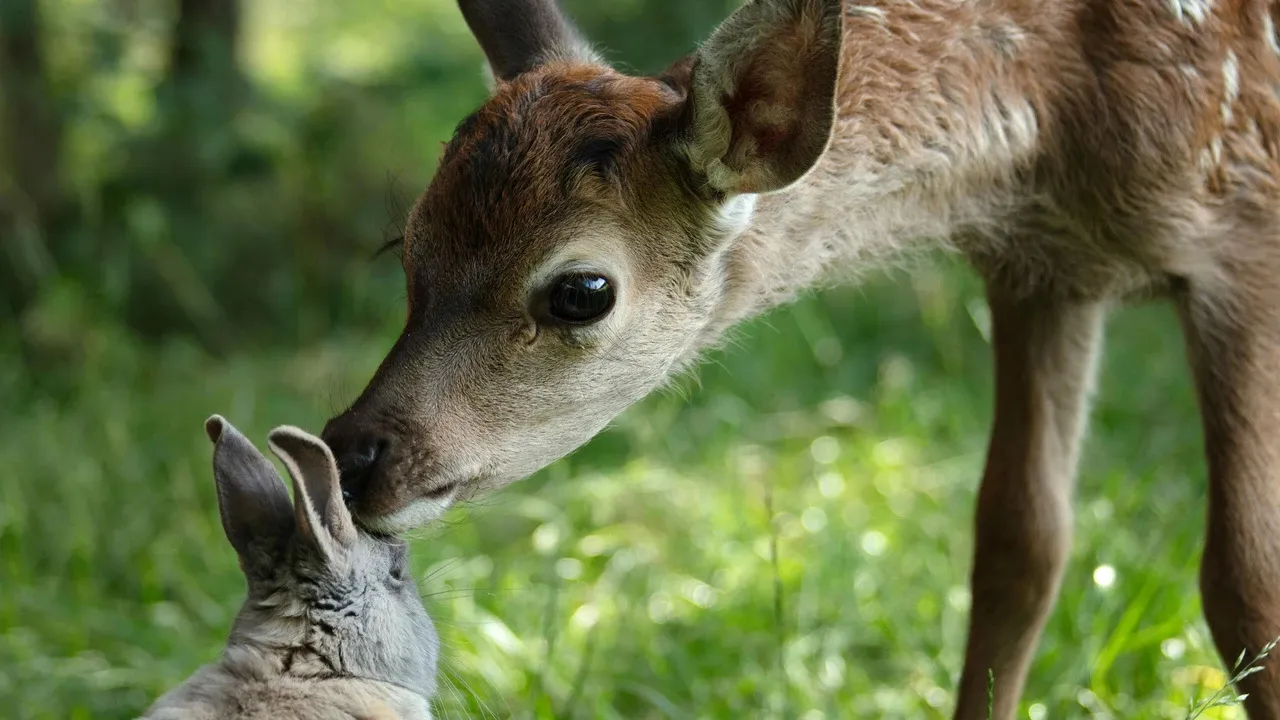
She shows him which plants to eat and which sounds signify danger. This gentle pacing makes the story’s central tragedy all the more jarring when it arrives. The loss of Bambi’s mother to a hunter is the pivot upon which his entire world turns. The event is handled with restraint; the violence occurs off-screen, yet its emotional weight is undeniable. It is the primary catalyst for Bambi’s growth, forcing him into a solitary existence.
From this loss, the film explores its main themes. We see the unceasing cycle of life and the resilience required to endure it. The threat of “Man” is not a specific villain but an abstract force, represented by the sharp sound of a gunshot or the cold metal of a trap. It is an environmental hazard, a permanent feature of Bambi’s world that he must learn to navigate.
Following his loss, the supporting cast becomes more significant. A rabbit and a raccoon offer moments of companionship, representing the small community that endures. Bambi’s journey from a dependent fawn to a self-reliant adult is long, showing his transformation into a cautious and solitary creature before he eventually finds his place and continues the cycle with his own mate, Faline.
The Voice Between Two Worlds
The film’s most defining artistic choice is its reliance on a single, omniscient narrator. This voiceover guides the audience, interpreting events and ascribing thoughts and feelings to the silent creatures. This technique is both the film’s greatest asset and its most challenging feature.

The narration gives the beautiful imagery a clear direction, weaving the scenes into a coherent storybook. It also creates a distance, imposing a human sentimentality onto events that could stand on their own. This approach is familiar in certain interactive experiences, where a guiding voice gives meaning to a player’s exploration of a visually rich world. Here, it positions the film in an ambiguous space between a family movie and a romanticized documentary.
This identity is not a flaw, but a defining characteristic. The film offers a quiet, meditative alternative to louder, effects-driven family entertainment. It asks for patience from its audience, rewarding them with an immersive and visually arresting experience. Its success depends on a viewer’s willingness to accept its unconventional terms. It may not function as a conventional drama, but it serves as a thoughtful depiction of the difficult journey toward maturity, told with a unique respect for the natural world at its center.
Bambi: A Tale of Life in the Woods, a French live-action documentary based on Felix Salten’s novel, premiered in France on October 16, 2024. The film uses live animals and features Mylène Farmer as the voice of the narrator. It is a documentary, adventure, drama, and family film that tells the adventures of a young fawn learning to navigate life’s dangers. It was produced by MC4 and Gebeka Films. The movie was released in the United States on April 24, 2025.
Full Credits
Director: Michel Fessler
Writers: Michel Fessler, Laurence Buchmann, Tristan L’Hermite, Felix Salten
Producers and Executive Producers: Jean-Pierre Bailly, Reginald de Guillebon, Marion Delord, Stéphane Millière
Cast: Mylène Farmer, Senta Berger, Arja Koriseva
Director of Photography (Cinematographer): Daniel Meyer
Editors: Laurence Buchmann, Tristan L’Hermite, Florian Chomienne
Composer: Laurent Perez Del Mar
The Review
Bambi: A Tale of Life in the Woods
This film is a patient and visually beautiful meditation on the cycles of nature. It trades dramatic urgency for a quiet, observational style that is both its greatest strength and its most significant challenge. For viewers willing to embrace its slow rhythm, it offers a unique and authentic cinematic experience that feels both timeless and refreshingly real.
PROS
- Stunning cinematography using real animals and natural environments.
- An authentic and grounded depiction of the forest through the seasons.
- A quiet, meditative alternative to more conventional family films.
- Effective storytelling through animal behavior and action.
CONS
- The constant narration can sometimes create a distance from the on-screen events.
- Its slow, observational pacing may not hold the attention of all viewers.
- The film's ambiguous identity sits between a drama and a nature documentary.