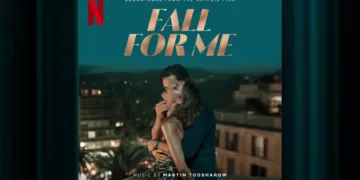





















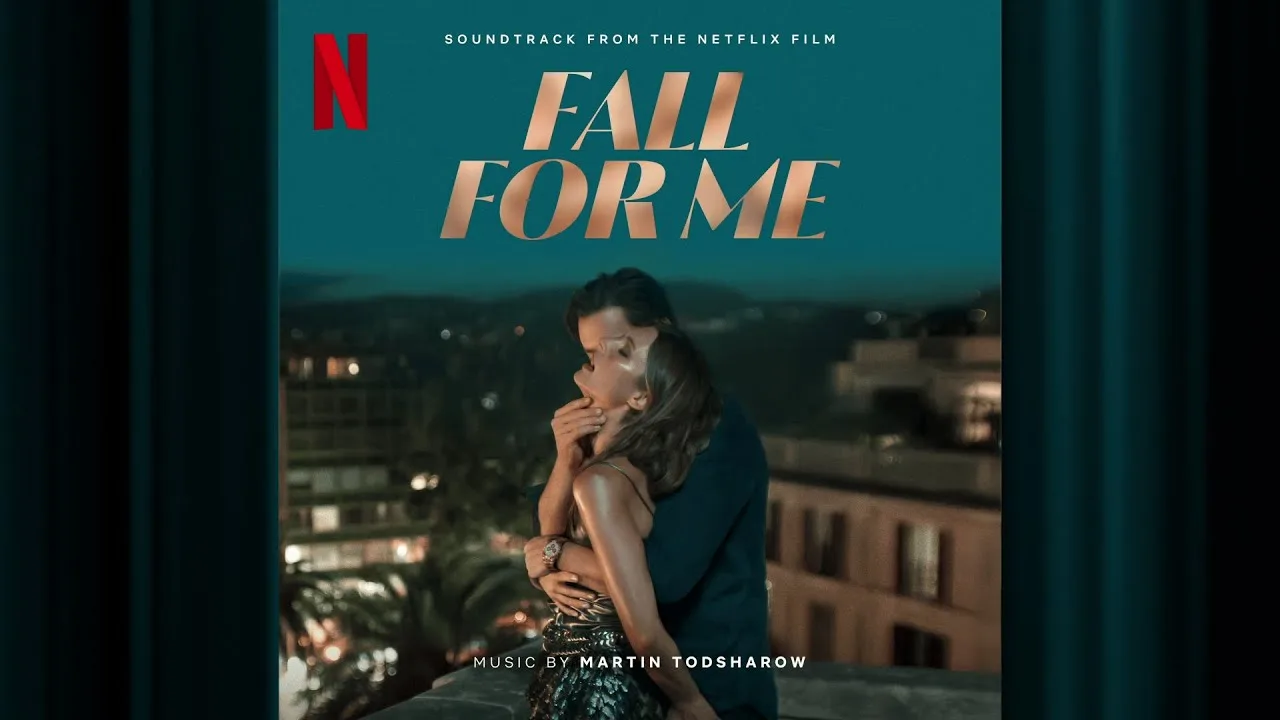

A bartender glowers across a crowded dance floor, his gaze fixed on a woman whose skin glistens with moisture. This is how Fall for Me introduces its central romance, with a look that is meant to convey smoldering passion but lands somewhere between threat and indigestion. The film immediately transports us to the sun-bleached shores of Mallorca, a picturesque setting for what promises to be a story of dangerous desire.
Here we meet Lilli, a German auditor whose professional life is defined by order and scrutiny. She arrives to visit her younger sister, Valeria, a woman guided by impulse, who reveals she is engaged to the suspiciously charming Manu after a whirlwind courtship.
The sisters have inherited a valuable family estate, a piece of property that becomes the immediate catalyst for conflict. Lilli’s protective skepticism clashes with Valeria’s romantic naivete, a tension complicated by the arrival of Tom, the intense bartender, whose presence promises to distract Lilli from the truth hiding in plain sight.
A Blueprint for Boredom
The architecture of a romance scam thriller holds inherent potential, a foundation built on deception, vulnerability, and suspense. A successful film in this genre carefully controls the flow of information, cultivating an atmosphere of paranoia where neither the protagonist nor the audience can be certain of who to trust. Fall for Me begins with this promising blueprint, establishing Lilli’s suspicions about Manu and the rushed plan to acquire a sprawling country estate.
This initial intrigue, however, is swiftly and inexplicably dismantled. The narrative introduces its cabal of conspirators early, showing its entire hand and shifting the dramatic question from a compelling “what is happening?” to a tedious “when will the protagonists catch up?”. The audience is left waiting for the characters to uncover a truth already known, a structural misstep that bleeds the story of all suspense.
This faulty design is compounded by erratic, often glacial pacing. Long stretches of the film feel like a travelogue, lingering on repetitive scenic vistas, cocktail preparations, and aimless conversations that reveal nothing new about the characters or their predicament. The story stalls, content to coast on its aesthetic. The slow burn leads not to an explosion but to a fizzle: a rushed, haphazardly edited climax that feels unearned and arbitrary.
The final confrontation dissolves without impact, a confusing flurry of shouting and clumsy action that seems to have been assembled in a panic. A satisfying payoff requires careful construction, escalating stakes, and a final release of tension. Here, the end simply happens, a poorly constructed conclusion to a story that telegraphed every move from its opening act.
Characters Adrift in Paradise
Svenja Jung’s performance as Lilli is the film’s strongest asset, providing a center of grounded intelligence in a story that seems determined to undermine her. She presents a character of sharp competence, an auditor whose profession is used as shorthand for a keen, analytical mind. Yet the script betrays this foundation at every turn.
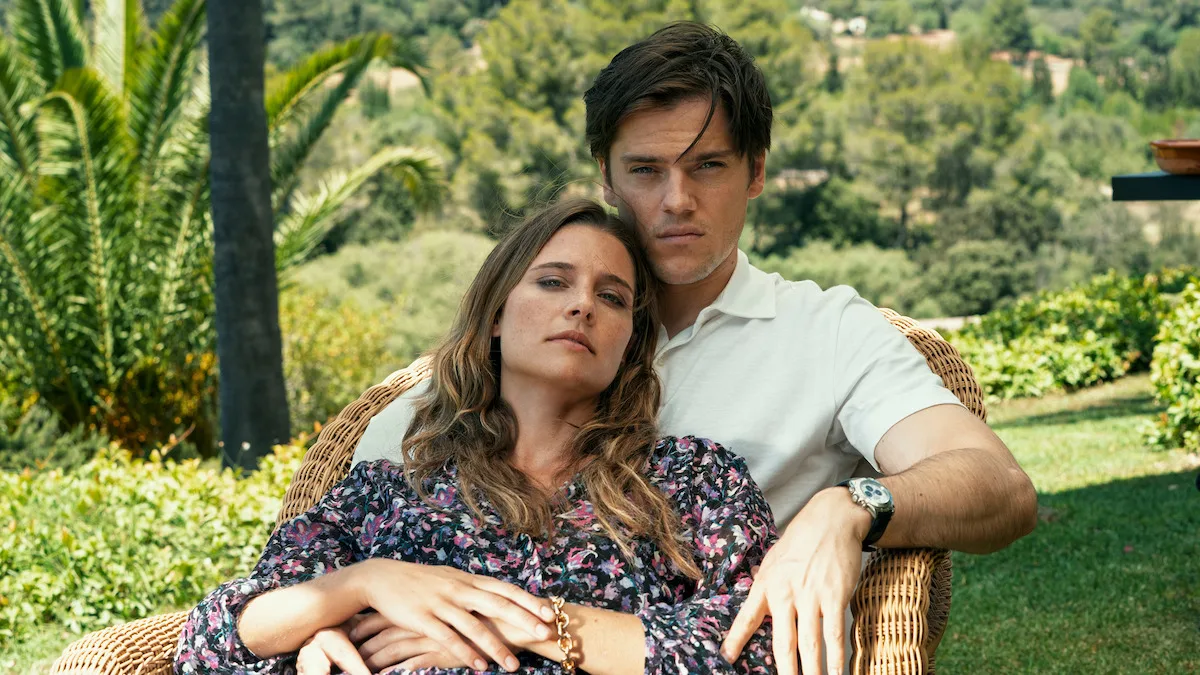
It asks us to accept that this same woman’s astuteness is completely short-circuited by a handsome stranger’s attention. The missed opportunity is immense; we never see Lilli apply her skills. She offers suspicious glances but never truly investigates, her supposed intellect becoming a passive character trait rather than an active force in the narrative. This is a classic case of telling the audience a character is smart while showing them the opposite.
Opposite her is Theo Trebs’ Tom, a character meant to be a dangerously seductive Casanova, the key to the entire con. Instead, he is a sketch, a collection of brooding glances and vague motivations. He is the archetypal reluctant criminal, but his reluctance is never dramatized. There is no visible internal conflict, no struggle between his mission and his supposed feelings.
His eventual change of heart arrives not as a character arc but as a switch being flipped, a moment of narrative convenience required to move the plot toward its resolution. The supporting cast fares worse. Valeria is rendered a passive plot device, a naive victim whose willful ignorance of countless red flags strains credulity and makes her difficult to sympathize with.
The antagonists, from the preening Manu to the masterminding real estate agents, are one-dimensional figures. Their convoluted scheme lacks any real sense of menace, making them feel more like inept bullies than formidable villains. A story’s tension is measured by the strength of its opposition, and here, the opposition is weightless.
Simulated Heat
Fall for Me presents itself as an erotic thriller, a label that proves to be a profound misrepresentation. The film is neither particularly erotic nor remotely thrilling. It operates under the common, misguided delusion that nudity is a direct substitute for sensuality, that frequent intimate encounters can generate tension on their own.
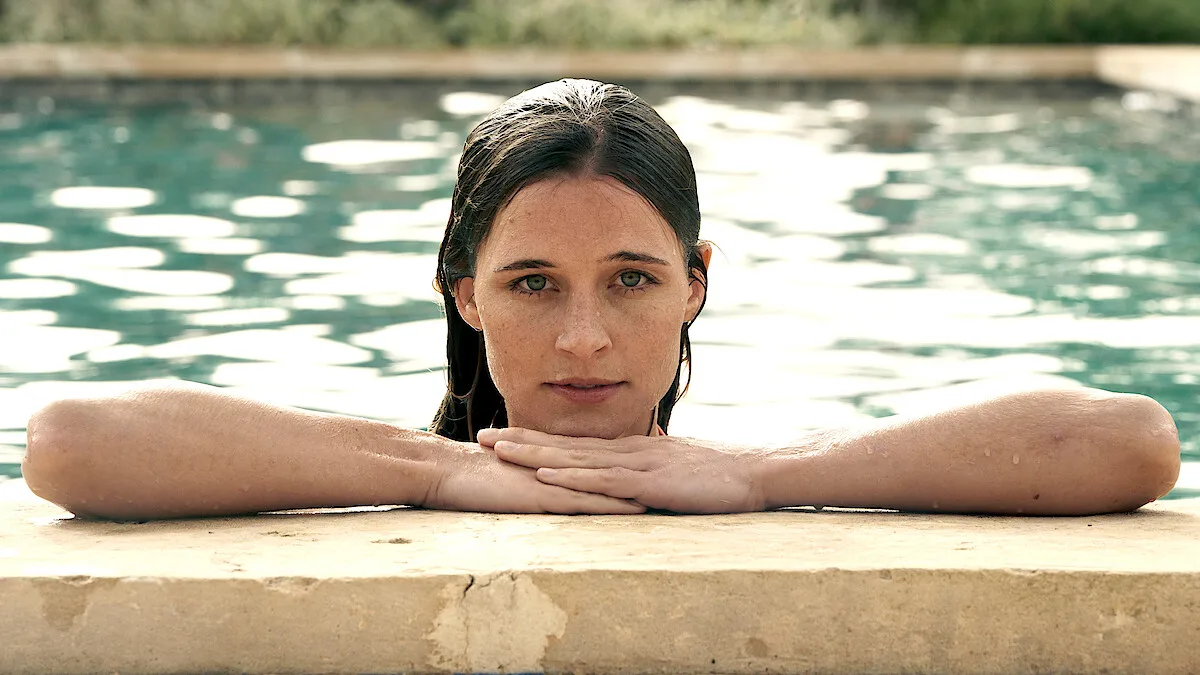
In a potent thriller, eroticism is a tool used to explore power dynamics, vulnerability, and transgression. Here, it is merely decorative. The sex scenes arrive with a sense of obligation, mechanical interludes that serve as filler instead of instruments for character development or plot escalation. They are aesthetically clean and emotionally sterile, signifying passion without ever embodying it.
This failure is rooted in a palpable void of chemistry between the two leads. Lilli and Tom’s exchanges feel staged and passionless, their body language suggesting two actors performing a series of actions rather than two people consumed by a dangerous attraction. Without a genuine, believable connection, Tom’s transformation from predator to protector is inexplicable, and Lilli’s descent into distraction feels entirely unconvincing.
The illusion of desire never takes hold. One scene, an attempt at portraying “angry sex,” misses its mark completely. It blurs the line between a complex emotional state and simple aggression, reading as uncomfortable and tonally misjudged. It is a moment that reveals the film’s shallow understanding of the very passions it purports to explore.
A Picturesque Void
Visually, the film is often stunning. Marc Achenbach’s cinematography captures the lush, sun-drenched beauty of Mallorca with an appreciative, often indulgent eye. The settings are impeccable, from rustic fincas nestled in rolling hills to vibrant, pulsating clubs. This aesthetic appeal, however, becomes a crutch, a style common in the world of streaming content where a high-gloss look is designed to seem appealing in a thumbnail image.

The glossy, travel-ad sheen serves as a substitute for a compelling narrative, a beautiful surface concealing a hollow core. The picturesque landscape does not enrich the story; it only highlights the emptiness of the drama unfolding within it. The characters become small figures lost in a postcard.
This visual polish is further betrayed by clumsy technical execution. The film’s editing, especially during the climactic sequences, is flat and disjointed, actively working against any sense of suspense. Scenes collide without logical flow, the geography of the action is often impossible to follow, and emotional beats are cut short before they can land.
A potentially tense standoff dissolves into an abrupt and confusing affair, a victim of editing that prioritizes speed over clarity. The tension a thriller needs to survive is systematically dissipated by these technical flaws, leaving the audience disengaged at the very moment it should be most invested.
An Echo in the Sun
The ingredients were all there: an attractive cast, a stunning Mediterranean location, and a workable premise for a genre piece. Fall for Me squanders these elements with a weak script, lethargic pacing, and a fundamental misunderstanding of suspense and passion.
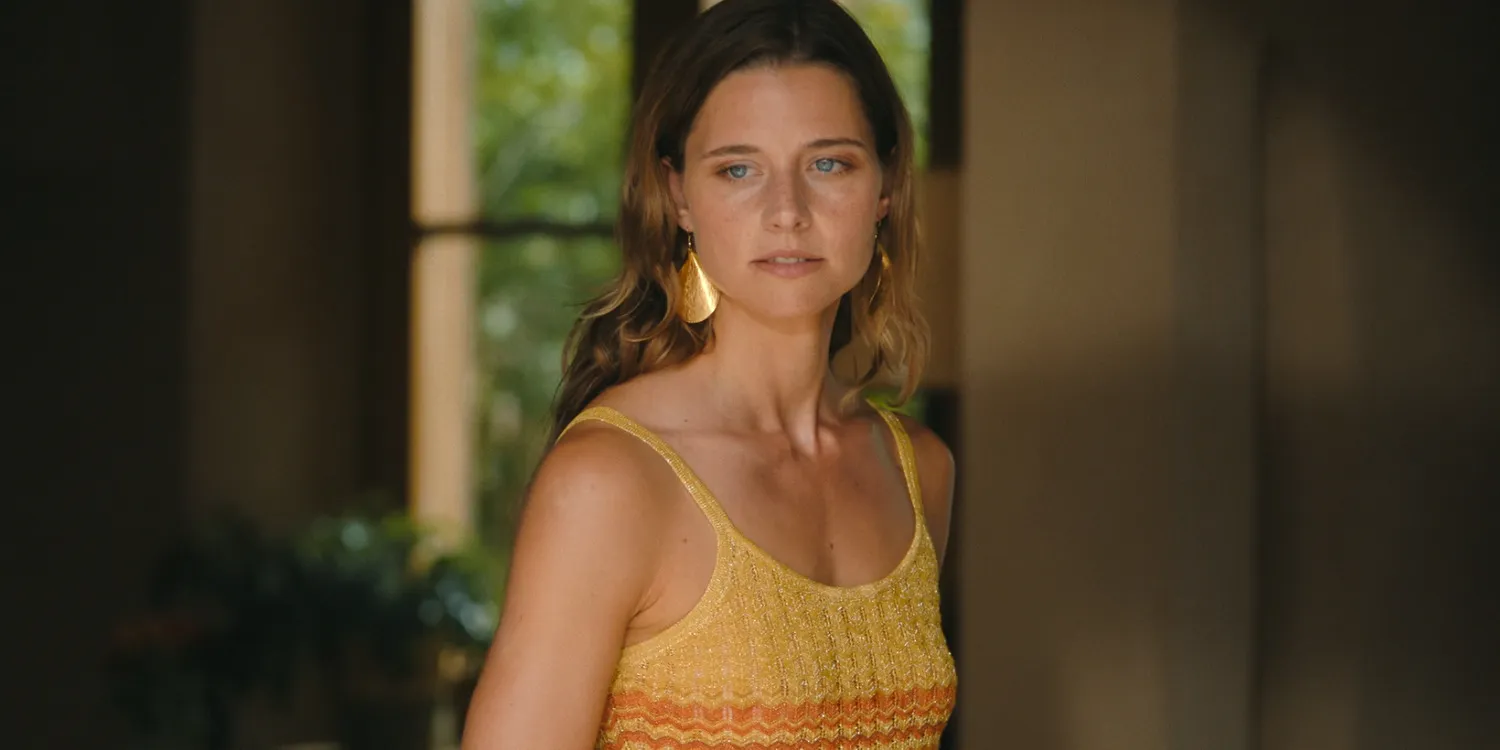
The result is a film that occupies a dull middle ground, never competent enough to be gripping, never outlandish enough to be memorable. It represents a particular kind of modern media product: content designed to fill a category in a streaming library, a disposable item meant to be consumed and immediately forgotten.
Its polish is a feature designed to keep a finger from scrolling, but its substance is negligible. The experience of watching it is passive and numbing; it asks nothing of its audience and offers little in return. It is the kind of film that evaporates from memory before the credits finish rolling, leaving behind nothing more than a faint, forgettable echo in the sun.
Full Credits
Director: Sherry Hormann
Writers: Stefanie Sycholt
Producers and Executive Producers: Quirin Berg, Max Wiedemann, Christina Henne, Silvia Araez Guzman, Chio del Olmo
Cast: Svenja Jung, Theo Trebs, Tijan Marei, Antje Traue, Thomas Kretschmann, Victor Meutelet, Lucía Barrado, Christian Friedel, Godehard Giese, Carolina Main, Maja Schöne
Director of Photography (Cinematographer): Marc Achenbach
Composer: Martin Todsharow
The Review
Fall for Me
Succinctly, Fall for Me is a picturesque void. It squanders a stunning Mallorca setting and a capable lead on a script that is neither thrilling nor erotic. With telegraphed plot points, zero chemistry between its leads, and a pace that mistakes scenic lingering for suspense, the film is a hollow, forgettable exercise in style over substance. It’s a beautiful postcard from a deeply boring trip.
PROS
- Excellent cinematography that beautifully captures the Mallorca landscape.
- A strong, grounded performance from lead actress Svenja Jung.
- A solid, if unoriginal, premise for a thriller.
CONS
- A predictable and suspense-free plot.
- A complete lack of chemistry between the romantic leads.
- Underdeveloped characters, especially the one-dimensional villains.
- Glacial pacing that kills any sense of momentum.
- Fails to deliver on the promise of being either an erotic or a thrilling film.