





























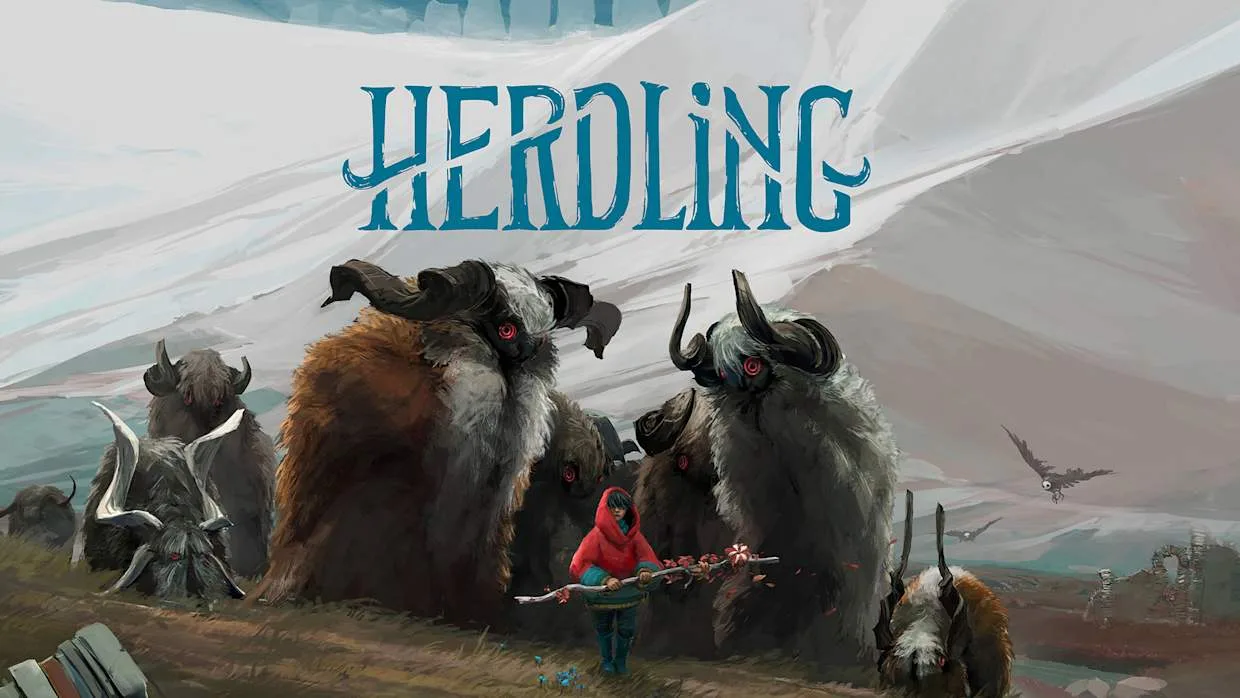

A child wakes beneath an overpass, the city around them worn and silent. In a nearby lot, a horned creature stumbles with a bucket over its face. A quick rescue becomes a bond, and that single act sets the tone for everything that follows. Herdling is a quiet herding adventure about care, trust, and responsibility.
You guide a growing group of Calicorns from concrete ruins to distant highlands, reading the world through murals, terrain, and sound. There is no dialogue. Direction comes from simple signals, from the way grass parts, from the rhythm of hooves, from music that swells when open fields invite a run.
The game favors feeling over exposition, with short playtime and clear goals. It asks you to lead, protect, and sometimes pause to clean burrs from a coat or toss a toy to a restless companion. The path holds danger, yet the tone never slips into cruelty for shock. Moments of risk exist so relief can land. By the time the mountains fill the frame, the herd feels less like cargo and more like company.
Core Herding Mechanics & Controls
Herdling replaces party formations and waypoint leashes with a true shepherd model. You stand behind the herd and steer it by taking the opposite side of the desired direction. An aiming guide clarifies intent, and the game asks you to think in arcs rather than straight lines. The result feels closer to flocking control in a strategy title than a standard companion system.
Commands are few and clear. You set the herd to move, to slow to careful steps, or to halt immediately. A charged input triggers a stampede that powers through brush or soft ground. The most useful tactic is the instant stop that tightens spacing before narrow crossings. These verbs read as tools for tempo control, which turns movement itself into a form of problem solving.
Terrain sculpts the crowd. Bridges and switchbacks encourage a thin column. Open plains reward speed, especially when tall grass gives a brief boost that changes both pace and color. Unstable ice punishes sloppy spacing and late calls. Level design exploits this push and pull, so you learn to read lane width, surface type, and safe angles before committing.
The best runs come from a balance between micro orders and flow. Scout a screen, spot the hazard chain, then funnel the herd with short bursts rather than constant correction. If someone slips, you can pull a Calicorn back to safety and regroup. That recovery loop reduces frustration while keeping tension high enough to matter.
Camera and readability support this style. Sightlines stay mostly clean behind a large group, with foreground hints that point to safe paths without UI clutter. A few edge cases pop up when selecting a specific Calicorn inside a tight cluster. Stepping a half body length to the side, thinning the pack, or calling a brief stop clears the prompt quickly.
The curve starts with forgiving spaces, then raises demand through tighter timing, squeeze points, and predator patrols. Late areas braid speed, spacing, and hazard reading into a single rhythm, which gives the herding model a firm arc without bloat.
Caretaking Systems & Calicorn Identity
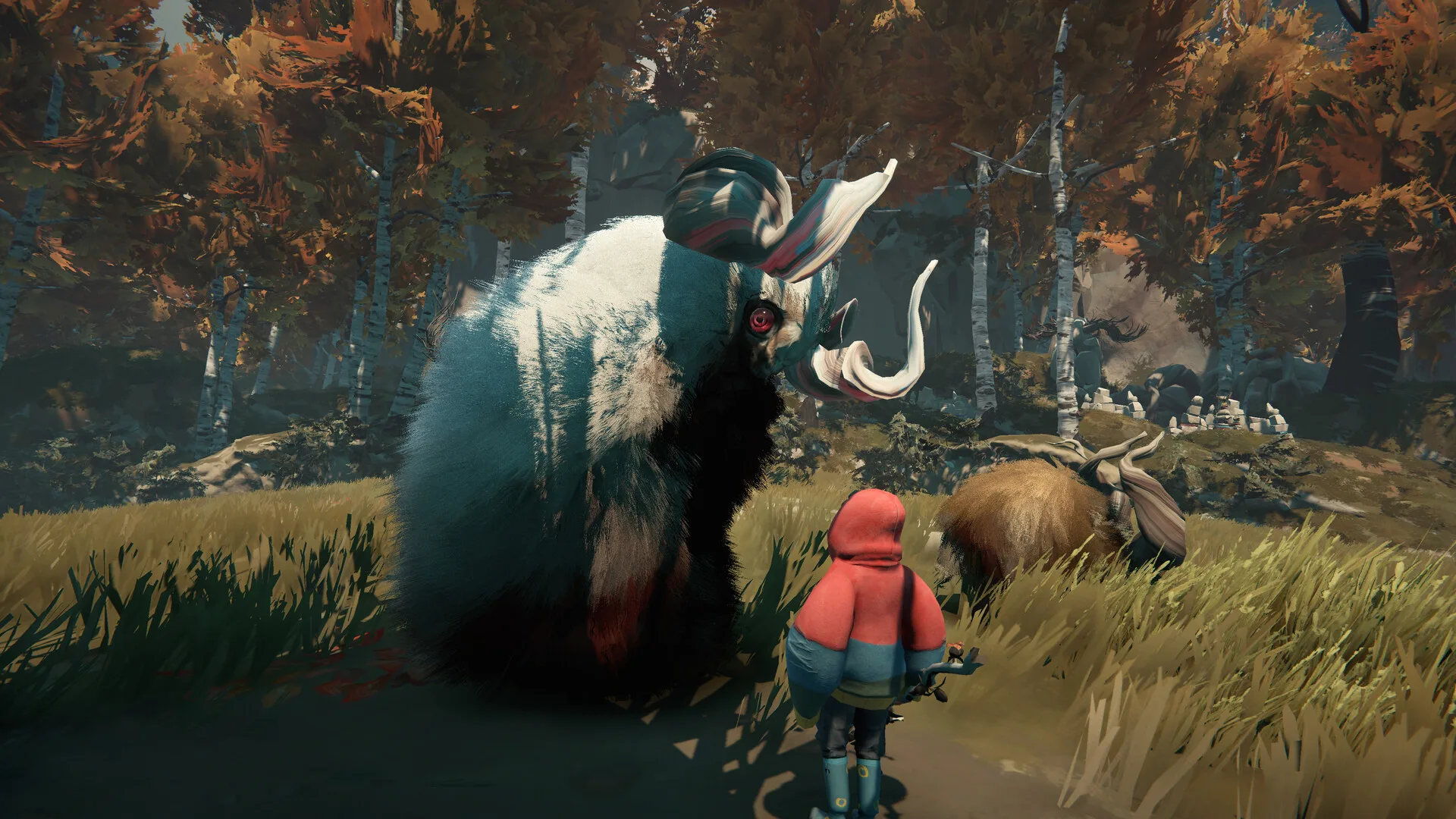
Herdling builds attachment through systems that read like a light caretaking RPG. You name each Calicorn by hand or through a randomizer, which turns a mass of bodies into trackable personalities. Distinct horn shapes, sizes, and coat patterns make identification easy at a glance.

Trust grows through small rituals. You pet to calm, groom after brush runs, and feed berries when injuries slow a companion. The game telegraphs needs through limp, posture, and coat state, so you rarely guess. These acts are simple, yet they set the tone for how leadership works here. You are less commander and more caretaker.
Stamina and mood affect pace. A well rested herd flows, while a bruised or winded one drags. Rest spots punctuate chapters with play, including a casual game of fetch that resets nerves and reaffirms the bond. These breaks are mechanical breathers that also deepen the sense of responsibility.
Loss is possible. Injury can escalate to death, which reconfigures the story you carry forward. An accessibility toggle can make Calicorns immortal for players who want safety. That option respects those who prefer to focus on guidance and atmosphere rather than high stakes management.
Reciprocity keeps the relationship from feeling one sided. Calicorns lend weight to doors, platforms, and movable objects. Cooperation reads as partnership. Progress depends on care and trust as much as positioning skill, which ties mechanics directly to theme.
World Structure, Encounters, and Pacing
The trek runs from city outskirts to riverlands, forest, snow, and high mountain corridors. Each chapter uses color, line direction, and mural hints to point the way without a quest log. The route feels authored yet readable, which supports a single session run of about four to six hours.

Hazards appear as teachable patterns. Thorn clusters punish overconfidence, cracking ice tests spacing and timing, and loose debris rewards patient scouting. Predator zones change the rules with sound or sight triggers. These sections ask for stillness and angle discipline rather than raw speed. When the game returns you to open grass, a stampede field acts as a pressure release. That contrast gives the next tense section sharper edges.
Puzzle cadence stays light. You push a boulder, drop a bridge, or use herd weight to shift a platform. Often you scout a short distance alone, set a route, then usher the herd through in a single clean pass. The design favors variation over complexity, which preserves momentum.
Failure and recovery are fair. Checkpoints sit close enough to limit repetition, and restarts echo the lesson that just burned you. Four save slots support multiple runs. After credits, the last pre-credits save remains available, which lets you revisit the final camp or preserve a favorite herd.
The rhythm matters. Stress and calm alternate with a steady beat. Campfires and quiet overlooks give the score room to breathe, and those calm pockets make later sprints feel earned rather than routine.
Storytelling Without Words, Motifs, and Themes
Herdling speaks through space, gesture, and sound. Murals and brief dream images hint at history and destination. The child signals with whistles and hand movement. The act of naming becomes soft narrative, since a name turns attention into care and care turns movement into meaning.
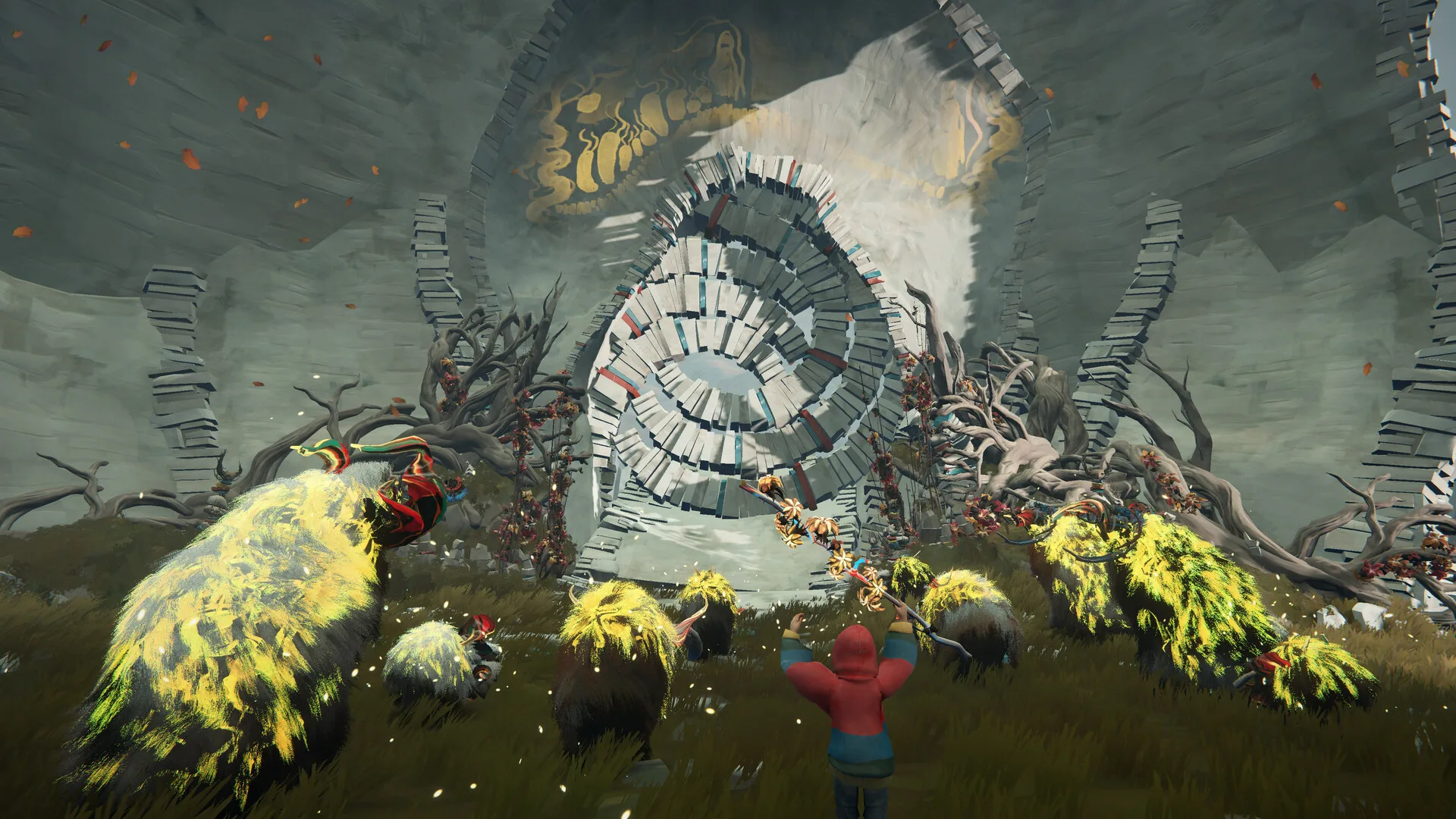
Motifs reinforce the arc. The world shifts from concrete to soil, with relics of industry leaning into fields and riverbanks. Grass that parts under hooves becomes a guide. During free runs, coats pick up saturated color, which reads as health and joy rather than a simple effect. The mountain range frames purpose from early shots to late ones, a fixed point that shapes every choice.
Themes are clear and grounded in play. Care is work. Responsibility scales with the herd size. Companionship looks like mutual aid where the herd helps lift gates or brace doors, and you return that help through grooming, food, and safe routes. The absence of dialogue keeps attention on bodies in motion, which suits a game about protection.
There is space for personal reading. Some will see survival and found family. Others will read purpose or return. The game supports both without leaning on text, which keeps the tone plain and honest.
Audio & Visual Presentation
Art direction favors legible silhouettes and painterly surfaces. Calicorns look hefty without feeling monstrous, with horn geometry and coat markings that instantly differentiate individuals. Color transitions from urban grays to earth tones to bright fields. During high spirit runs, coats take on saturated hues that communicate mood at a glance.
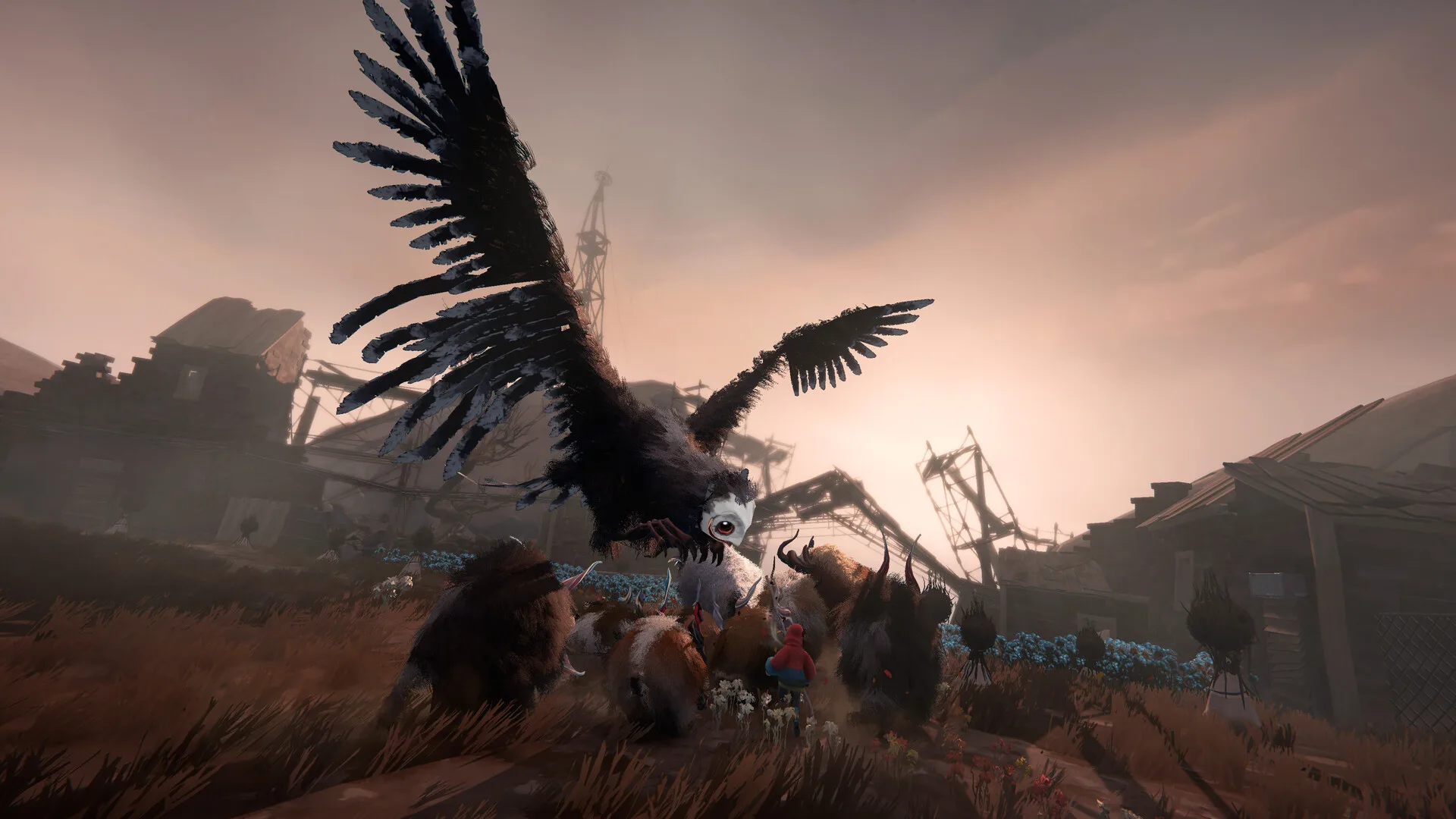
Animation sells mass and momentum. The herd surges as a unit, then compresses on command. Grass parts and stays parted for a beat, which helps route reading. Injury states are clear through gait, head position, and pace. Those tells are both empathetic and practical, since they prompt the next caretaking action.
Music and sound design carry as much story as the murals. The score swells during open field runs and thins during careful steps. Percussion cues danger and release. Strings color in the emotional state of the herd without drowning out hoofbeats or wind. Ambient layers place you in each biome and quietly hint at safe lanes.
The mix holds detail. Hooves, calls, wind, and the child’s signals remain distinct, so inputs feel tactile. Silence is used with intent before big movements. That restraint lets the reactive score land without blare.
Technical Performance, Accessibility, and Replay Value
Performance is mostly steady, with brief dips when the herd grows large or when heavy foliage fills the screen. Frame pacing hiccups can occur during stampede fields. Input timing stays readable in most cases, though late reactions feel worse during drops. On PC, resolution scaling and V sync smooth out rough patches. On PlayStation and Xbox, check for mode toggles that favor frame rate if available. None of this breaks the loop, yet it is worth noting for players who value perfectly even cadence.
Control options are lean but sensible. Sensitivity sliders keep the aiming guide manageable. Vibration feedback helps confirm halts and stampede charges. If remapping is present on your platform, it helps players who prefer reversed triggers for charge and stop. Color and contrast settings aid hazard readability in dark scenes or high glare rooms.
Accessibility reflects the heart of the design. A Calicorn immortality toggle removes death from the equation, which shifts the experience toward care and away from fear. Prompt size and clarity are strong enough to serve couch play. A few interaction prompts still crowd each other in tight clusters, though stopping and separating the herd resolves it smoothly.
Length fits the concept. A first run usually takes one long sitting or two relaxed evenings. Replay value comes from fresh herds, new name sets, self-imposed goals like zero injuries, and cleaner lines through tricky sections. Four save slots make it easy to preserve a favorite group while starting anew. There is no map or quest log, yet signposting keeps repeat runs brisk.
Value lands with players who enjoy tactile care systems, reflective pacing, and quiet spectacle. Fans of bond driven design in titles like The Last Guardian, the animal survival focus of Shelter, or the light herding feel of Pikmin will find familiar strengths here, reframed through gentle stewardship rather than combat or stat trees.
The Review
Herdling
Herdling turns movement, caretaking, and sound into a single throughline. Steering from the rear makes travel a readable puzzle, while small acts of grooming, feeding, and rest give those puzzles heart. The art and reactive score lift every stampede and hush. Camera clarity and fair checkpoints keep friction low. Minor input imprecision and spotty performance can break the spell, yet the bond with the herd endures. A concise, affecting trek that rewards patience and care.
PROS
- Shepherd-from-behind control that makes traversal strategic
- Care systems that build attachment through simple actions
- Painterly art with legible silhouettes
- Reactive score that follows pace and mood
- Fair checkpoints and clear signposting
- Accessibility option for Calicorn immortality
CONS
- Occasional targeting imprecision in crowded herds
- Performance dips during large stampedes or dense foliage
- Limited mechanical variety in puzzles
- Animal endangerment may unsettle some players