

























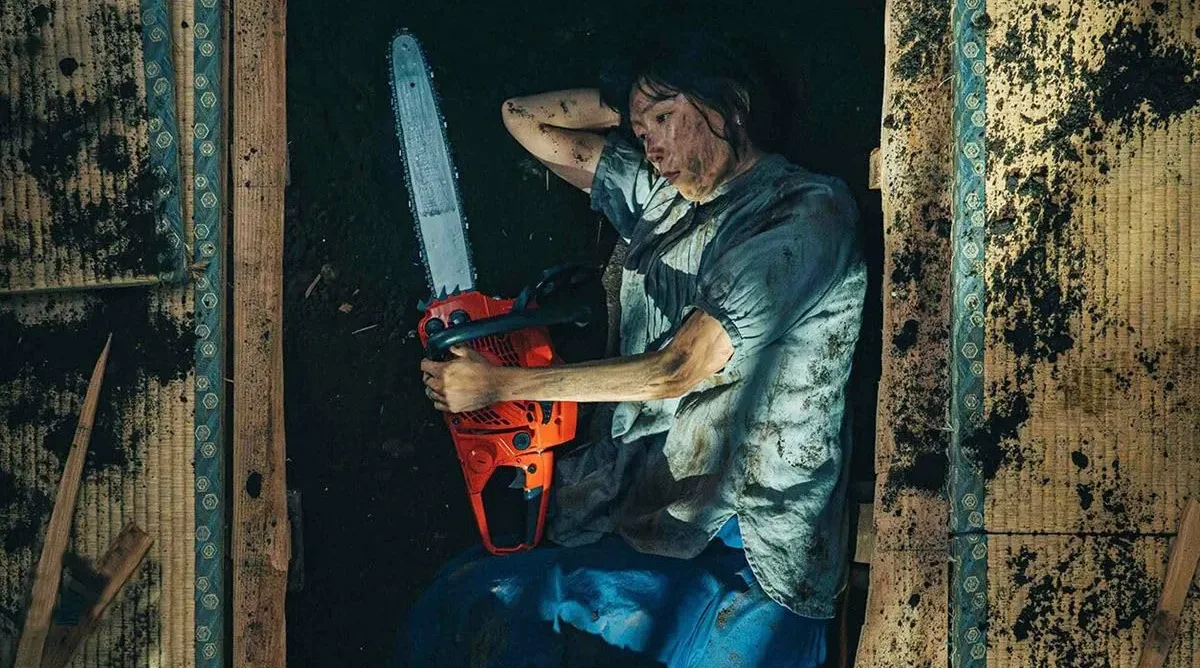

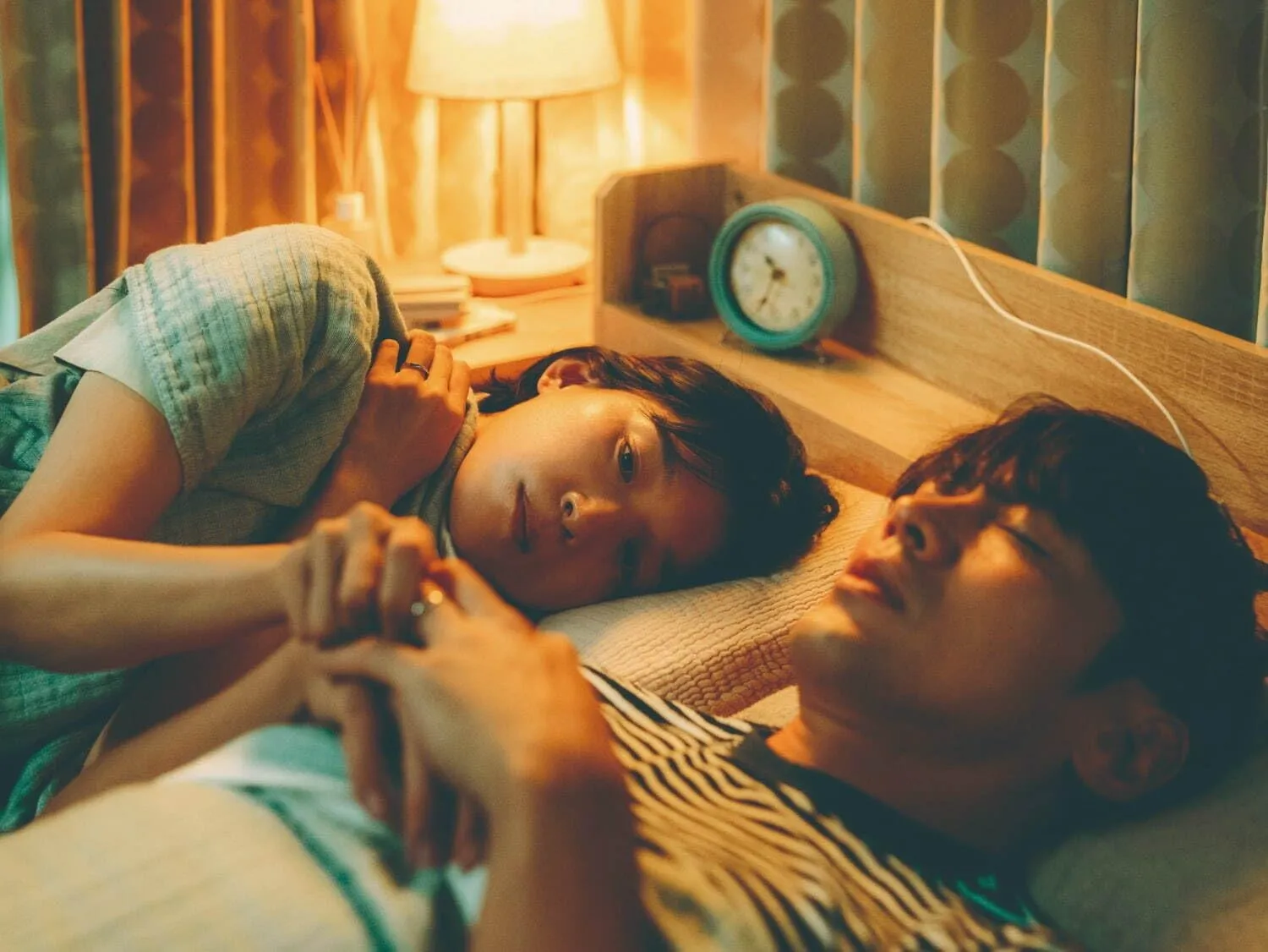
In the quiet suburbs of Japan, existence curdles. For Momoko, a woman of forty-one years, life has become a sequence of hollow rituals performed in the shadow of a silent husband. Eight years of marriage to Mamoru have evaporated into a vapor of neglect, leaving behind the solid, unbreachable fact of his absence.
He is a ghost at his own dinner table, a presence defined only by the space he fails to occupy. Momoko moves through the days, a custodian of a life that is not hers, tending to domestic chores with a precision that borders on the sacred.
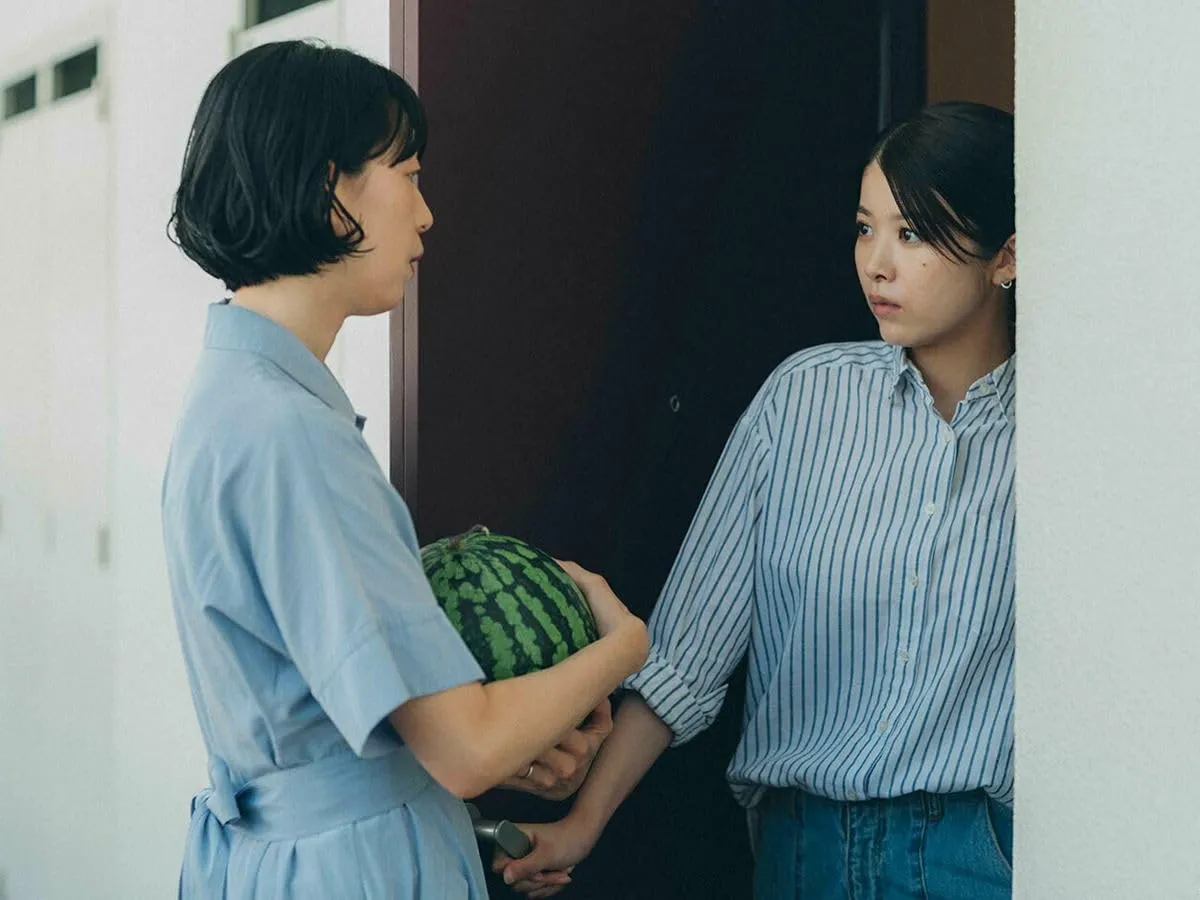
Next door, her mother-in-law watches with polite indifference. Momoko’s part-time soap-making classes are a faint, fragrant memory of a self she once was, a career surrendered to this void. A profound unease permeates the air, the kind of stillness that precedes a seismic fracture. Her world is a carefully constructed surface, and beneath it, everything is threatening to give way.
Architecture of Estrangement
The house is not a home; it is a mausoleum for a life never lived, a monument to a past that excludes her. Every wall and windowpane breathes the history of Mamoru’s family, a lineage she was grafted onto but never truly joined. Standing as a central totem is a single wooden pillar, its surface scarred with notches that chronicle a childhood she never witnessed.
It is an artifact of belonging that only highlights her profound alienation. This structure is her prison, and her obsession with renovation becomes a kind of desperate scripture. The catalogues of floor plans and modern appliances are not about home improvement. They are manifestos for a new reality, an attempt to tear down the existing architecture of her life and rebuild it with her own hands, to overwrite a narrative that has no place for her.
Mamoru’s apathy toward these plans is absolute, a quiet violence in its dismissiveness. His disinterest is a clear signal that he has already emotionally vacated the premises, leaving her to haunt its rooms alone. The constant, watchful presence of his mother, Teruko, solidifies Momoko’s status as a permanent guest.
Their strained, civil exchanges are a form of psychological warfare fought with teacups and pleasantries, with Teruko acting as the silent guardian of the old order. So Momoko cleans. She scrubs, she tidies the public trash collection point, a Sisyphean effort to impose a fragile, fleeting order upon the world’s detritus as her own life dissolves into an irreversible chaos.
Omens in Smoke and Shadow
The world outside begins to reflect the rot within. Anonymous fires bloom in the humid night, consuming the neighborhood’s carefully bagged refuse. Each blaze is a small, violent communiqué from a shared subconscious, a symptom of the rage simmering beneath the suburb’s placid skin.
The smoke that hangs in the air feels like an extension of Momoko’s own suffocating existence. In this atmosphere of rising menace, her cat, Pi-chan, vanishes into the twilight. The cat represented a small, fragile sovereignty, a tiny kingdom of affection in a world of indifference.
Its absence creates a vacuum that mirrors the one in her marriage, and her search becomes a pilgrimage through her own decaying emotional landscape. She is looking not just for a lost pet, but for a piece of herself set adrift, a domestic creature untethered and on the verge of becoming feral.
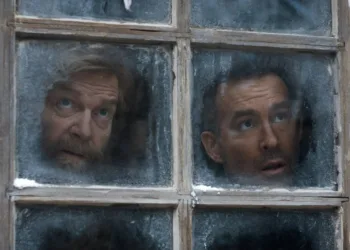
The film’s visual language conspires in this descent. The camera’s gaze becomes complicit in her alienation, often framing her through doorways and windows, making her an observer of her own life. The aesthetic borrows from the language of thrillers not to create suspense, but to articulate a deep psychological horror hiding in plain sight.
The color palette itself charts her decline. The soft, hopeful yellows of daylight slowly leach from the frame, giving way to the bruised tones of twilight and the oppressive, inky blackness of night. This visual shift is not merely stylistic; it is the chronicle of a soul succumbing to a long, encroaching darkness, a world losing its light.
A Rhapsody of Ruin
Revelation arrives not as a whisper but as a schism, a violent tearing of the veil that splits Momoko’s world. The truth of her husband’s betrayal, a cold and perfect echo of her own past, confirms the absolute nullity of her years of devotion.
The cruel, cyclical nature of this injustice is a cosmic joke played at her expense. In this moment of utter disillusionment, Noriko Eguchi’s performance transcends mere acting. She becomes a vessel for a primordial scream, her placid mask shattering to reveal the feral fury beneath. A terrifying, manic humor glints in her eyes, the laughter of a person who has stared into the void and is no longer afraid of its depths.
The chainsaw she calmly purchases is not a simple weapon. It is an instrument of theological rebellion. Its shrieking sermon is aimed at the very foundations of her confinement. The destruction of the house, specifically the ancestral pillar, is a symbolic deicide, the killing of the household god that demanded her silent sacrifice.
This is not madness, but a terrifying form of lucidity, a violent baptism in which the meek woman she was is obliterated. The gaping hole she carves into the living room floor is both a grave and a womb, a space where one self dies so another might be born from the wreckage. By demolishing her prison, she is not losing her mind; she is finally, brutally, reclaiming it.
“Rude to Love,” a 2024 Japanese drama, follows Momoko, a wife whose quiet, meticulous life is disrupted by unsettling events, forcing her to confront a hidden darkness. Directed by Yukihiro Morigaki, and based on a novel by Shuichi Yoshida, the film explores themes of societal pressures and a woman’s psychological unraveling. The film had its premiere at the Karlovy Vary International Film Festival on July 4, 2024, and was released in Japan on August 30, 2024.
Full Credits
Director: Yukihiro Morigaki
Writers: Sahoko Yamazaki, Ayako Suzuki
Producers and Executive Producers: Rampei Yokoyama, Takuma Yoshida
Cast: Noriko Eguchi, Kotaro Koizumi, Jun Fubuki, Fumika Baba, Ron Mizuma, Yuzu Aoki
Director of Photography (Cinematographer): Toyotaro Shigemori
Editors: Kenichi Hirai
Composer: Taro Iwashiro
The Review
Rude to Love
"Rude to Love" is a masterful and unsettling portrait of domestic disintegration. It transforms a familiar story of betrayal into a profound meditation on identity, rage, and the terrifying liberation that can be found in total annihilation. Anchored by a fearless lead performance from Noriko Eguchi, the film is a slow-burning psychological horror that lingers long after the credits roll, its power residing in the quiet, brutal honesty of one woman’s existential unravelling. It is a demanding, yet deeply rewarding, cinematic experience.
PROS
- A tour-de-force lead performance by Noriko Eguchi that is both powerful and nuanced.
- A deep, unflinching psychological exploration of a woman's existential crisis.
- Masterful use of symbolism and atmosphere to create a palpable sense of dread.
- A thematically rich narrative that elevates a simple premise into something profound.
- A cathartic and symbolically potent climax.
CONS
- The deliberately slow pace and heavy, bleak tone may not be for everyone.
- Subplots are more metaphorical than literal, which could frustrate viewers seeking conventional resolutions.
- Its emotional intensity can be relentlessly grim and challenging to watch.