



























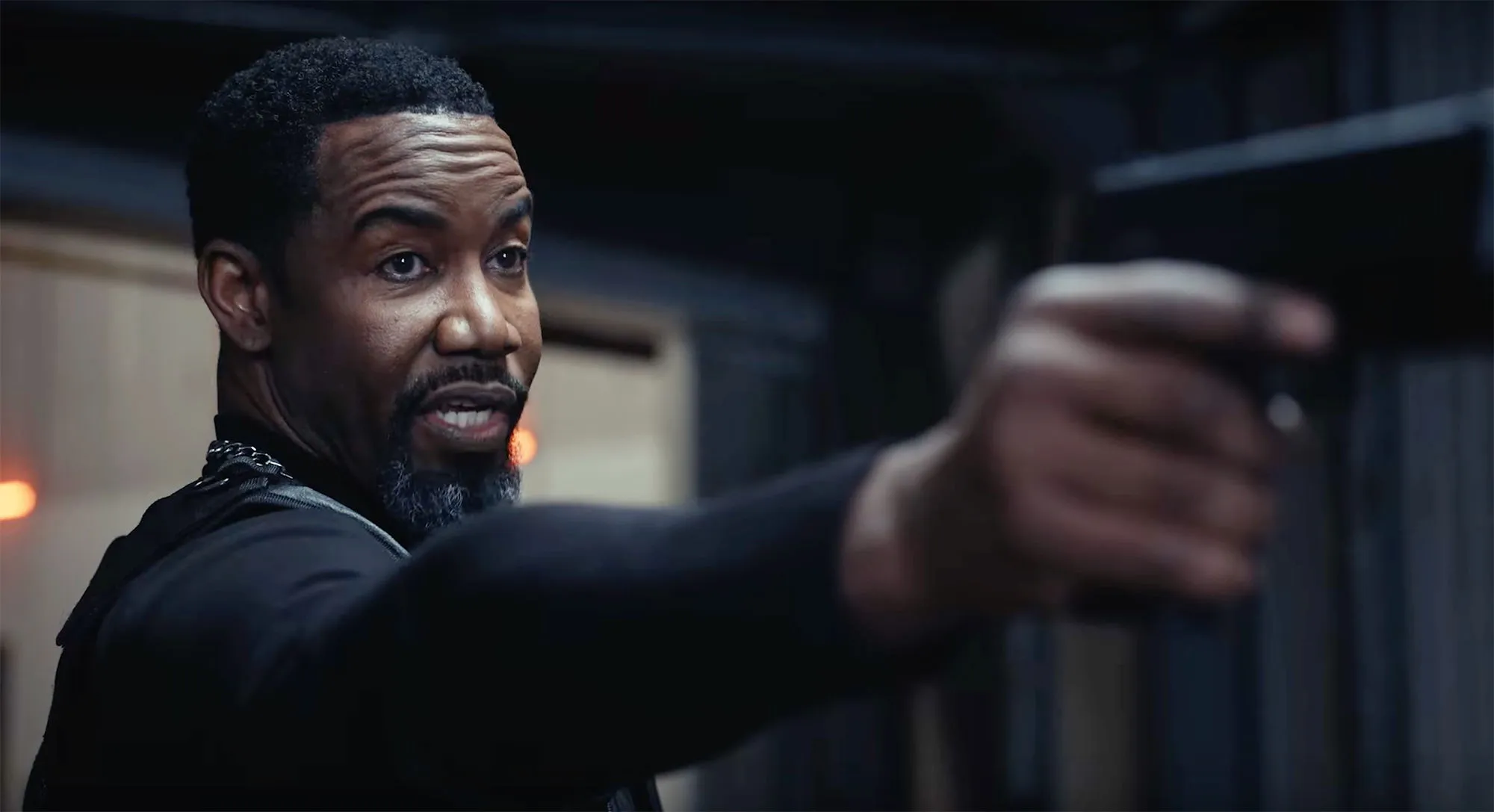

Michael Jai White’s Trouble Man introduces Jaxen, a private investigator who feels like a figure teleported directly from 1970s cinema into the streets of modern Atlanta. He is a man of quiet confidence, immense physical capability, and a clear moral code, an archetype familiar to global audiences yet distinctly rooted in American cultural history.
The film begins with a premise that could be pulled from any classic detective novel: a beautiful R&B singer has vanished, and her powerful record executive boss wants her found. This simple assignment quickly pulls Jaxen into a world of street gangs, corporate deceit, and personal vendettas.
The film operates as an affectionate revival of the blaxploitation genre, playing its conventions with sincerity and a self-aware charm. It avoids the path of parody, choosing instead to present a straightforward, modern chapter in a long-standing cinematic tradition. The movie invites the audience to appreciate its hero’s cool efficiency against a backdrop of escalating danger.
The Star’s Force: Performance and Charisma
As both director and star, Michael Jai White uses Trouble Man to meticulously construct and control his on-screen persona, an authorial approach common in genre filmmaking across the world. He presents Jaxen with a formidable physical presence, yet his true strength is in his stillness.
His martial arts style is efficient and direct, reflecting a character who ends conflicts with minimal fuss. White’s direction emphasizes this cool economy of motion, ensuring that Jaxen’s authority is understood long before he throws a punch. This self-aware creation of a heroic icon is the film’s solid foundation.
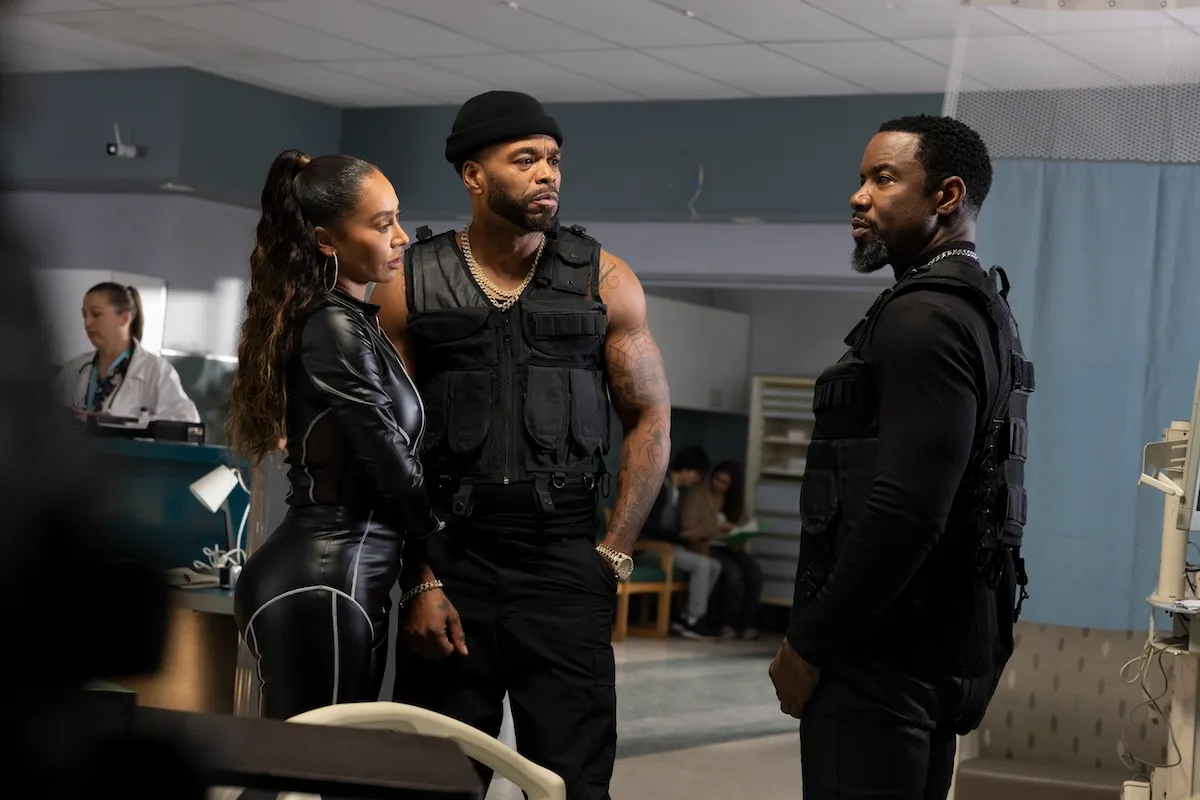
The supporting cast is essential in adding life and energy to this central performance. Method Man is particularly noteworthy as Money, the missing singer’s boyfriend. He is a whirlwind of comedic energy and anxious bravado, his rapid-fire dialogue and enthusiasm for the blaxploitation lifestyle providing a perfect counterweight to Jaxen’s stoicism.
Their partnership becomes a delightful bridge between the classic cool hero and a more contemporary, self-referential sensibility. Gillian White also adds a significant dimension as Gina, Jaxen’s former partner. Their relationship is defined by a shared history and mutual respect, communicated through sharp banter and a wonderful sparring scene that serves as a complex form of romantic dialogue. Her character is a capable, modern woman who stands as an equal to the hero, updating the genre’s traditional female roles.
Style and Substance: A Genre Revisited
The film’s aesthetic and narrative choices represent a deliberate engagement with cultural memory. Trouble Man works not as a deconstruction of the blaxploitation genre, like the satirical Black Dynamite, but as a heartfelt reconstruction of it for a new generation.

Its visual language speaks to this mission. The production’s modest budget is not a flaw but a feature that mirrors the resourcefulness of its 1970s ancestors. The clean, straightforward cinematography focuses on character and action, avoiding excessive stylization. This choice gives the film an unexpected authenticity, making it feel less like a slick modern imitation and more like a lost entry from the original era.
This stylistic commitment extends to the film’s material world. The settings, from the neon glow of a nightclub to the garish opulence of a criminal’s mansion, are rendered with an appreciation for the genre’s visual codes. Lavish costumes and oversized, gleaming cars are not just props; they are a vital part of the film’s language, communicating a specific attitude of defiance and aspiration.
The screenplay functions in a similar way, using a simple mystery as a framework upon which to hang its more important elements: character attitude, atmospheric locations, and dynamic action. The inclusion of a smooth R&B soundtrack, featuring a performance by Keith Sweat, further deepens this connection, recognizing that the sonic landscape of these films is as important as the visual one.
Action, Humor, and the Final Take
The film’s primary appeals are its well-calibrated mix of action and humor, which work together to create a consistently entertaining experience. The fight sequences are frequent and built around White’s credible martial arts background. While the choreography avoids the wire-work and hyper-editing of many contemporary action films, it possesses a satisfying weight and clarity.
The action reinforces character; Jaxen is a precise fighter who can also adapt to chaotic situations, as seen in a sprawling barroom brawl where he single-handedly dismantles a roomful of thugs. The film also stages moments of spectacular invention, such as Jaxen launching himself off a van to kick an assassin from a speeding motorcycle, a sequence that perfectly captures the heightened reality of the genre.
This action is balanced by a pervasive and often goofy sense of humor. The film finds comedy in the clash between Jaxen’s serious mission and the absurd characters he encounters. The script is filled with witty one-liners and situational jokes, but the humor also arises from the film’s willingness to embrace the ridiculous, like the sudden, unexplained appearance of a samurai sword during the rooftop climax.
This light touch ensures the film never becomes a stuffy historical recreation. Trouble Man is a success because it understands its purpose. It translates a very specific piece of American cinematic history into a universally accessible story about a righteous hero navigating a corrupt world. It is a fun, fast, and charismatic picture that delivers on its promise with skill and affection.
“Trouble Man” is an American action-comedy film directed by and starring Michael Jai White. The film follows a former cop turned private investigator named Jaxen in Atlanta, who is hired to find a missing R&B star. His investigation leads him to uncover a conspiracy, forcing him to confront his past and question those around him. The film premiered at the American Black Film Festival on June 12, 2025, and was released in the US on August 1, 2025.
Full Credits
Director: Michael Jai White
Writers: Michael Stradford
Producers and Executive Producers: Craig Baumgarten, Michael Jai White, Ron Robinson, Ben Feingold, Peter Goldwyn, Michael Stradford, Keith Sweat, Eric Tomosunas, Jimmy Watson
Cast: Michael Jai White, Cliff “Method Man” Smith, Gillian White, Mike Epps, Orlando Jones, La La Anthony, Noah Fleder, Theodore Park, Levy Tran, Deja Dee, Arnold Chon, Vernell “Poppa Snoop” Varnado, Daniel H. Chung, Keith Sweat, Terrence Hodges, Robert Milmote, Ernest Miller, Steven Shelby
Director of Photography (Cinematographer): Keith L. Smith
Editors: Scott Richter
Composer: Amani K. Smith, Demonte Posey
The Review
Trouble Man
Trouble Man is a confident and highly entertaining revival of a classic genre. Anchored by a perfectly calibrated performance from director and star Michael Jai White, the film succeeds because of its sincere affection for its source material. While the story is simple and its production modest, the energetic action and genuine humor make for a charismatic and enjoyable experience. It is a fun, stylish movie that knows exactly what it wants to be and delivers on that promise with a knowing wink. A worthy watch for anyone who appreciates old-school cool.
PROS
- A powerful and charismatic lead performance from Michael Jai White.
- Excellent comedic support from Method Man, who provides a perfect foil.
- Functions as a sincere and enjoyable tribute to the blaxploitation genre.
- Features energetic action sequences and a consistently fun, lighthearted tone.
CONS
- The plot is secondary and serves mostly as a framework for the action.
- Modest production values might not appeal to all audiences.
- The pacing and craftsmanship intentionally mirror older films, which can feel uneven.