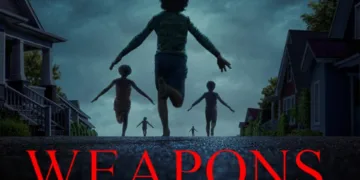














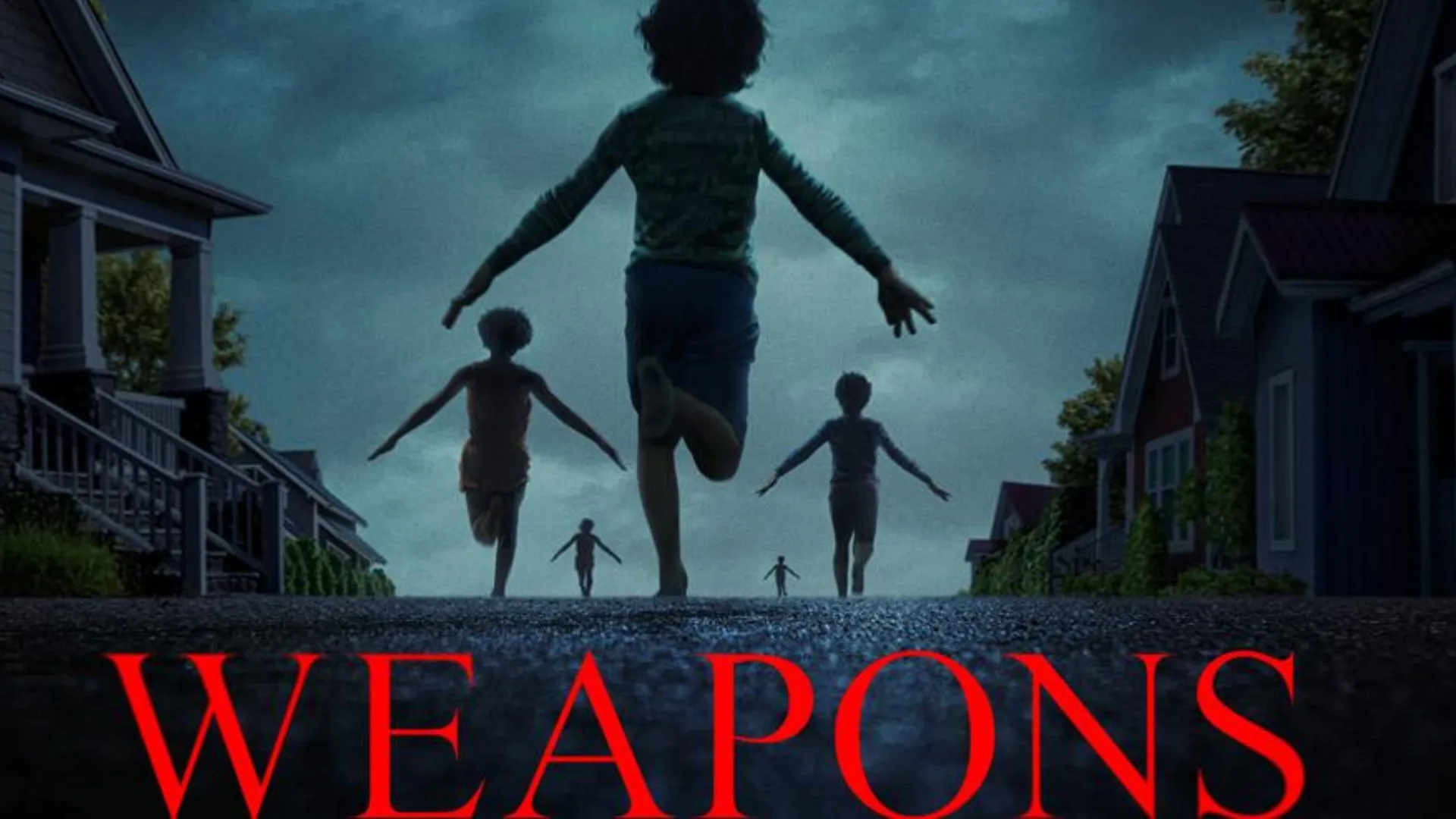

The American suburb sleeps, but it does not dream. It festers. Zach Cregger’s Weapons opens on this fundamental truth, transforming the familiar geography of quiet streets and sleeping houses into a landscape of profound dread. The film’s opening gambit is a masterpiece of minimalist terror: at precisely 2:17 AM, a spectral procession of children drifts from their homes, running with a silent, unnerving purpose into the all-consuming night.
Captured on the grainy, impassive eye of doorbell cameras, their flight is not an escape but a summoning. This chilling ballet of the disappeared poses the central, shattering question: What kind of god, or demon, commands such devotion? The ensuing panic in the town of Maybrook is not just the grief of parents.
It is the existential vertigo of a community forced to confront a void, a vacuum of reason where they desperately wish to find a culprit. The film immediately establishes itself not as a simple procedural, but as a descent into a moral labyrinth, a philosophical inquiry wrapped in the skin of a first-rate psychological thriller.
The Architecture of Dread
A story of communal collapse requires a fractured form, and Cregger constructs his narrative with the meticulous cruelty of a torturer. Forsaking linearity, Weapons unfolds in a series of character-centric chapters, a dislocated chronology that builds a mosaic of a town’s disintegration. The approach recalls the sprawling tapestries of filmmakers like Paul Thomas Anderson, but where a film like Magnolia sought a kind of chaotic humanism, Weapons uses its structure to cultivate a malevolent sense of doom.
It is less a cohesive plot and more an anthology of a single, sprawling catastrophe. This is not the clean, chronological investigation of a standard thriller. Instead, the audience is thrown into a state of perpetual epistemological crisis. We might follow one character to the brink of a discovery, only for the chapter to end, stranding us and shifting the point of view to a different part of town, to a different life unraveling.
This structure is a brilliant manipulation of narrative catharsis. The audience is systematically denied the comfort of resolution. A cliffhanger at the end of one segment is not immediately addressed but suspended, its tension left to curdle as the film pivots. The editing and sound design at these junctures are sharp, often cutting on a moment of shock to an image of mundane stillness, amplifying the viewer’s unease.
By withholding information, Cregger forces the audience into the role of an active detective, compelled to hold disparate, often conflicting, pieces of the puzzle in mind at once. This is a demanding and deeply effective technique. It perfectly mirrors the splintered psychology of the characters, each trapped in their own subjective nightmare, unable to see the full picture. The formalist approach is not a gimmick; it is the core of the film’s thematic project.
The fractured narrative suggests a world where coherence is an illusion. When the threads finally, violently, converge, the connections feel less like clever screenwriting and more like the grim clicks of a universe locking into a predetermined, calamitous alignment, an appointment with fate that was set long before the first child took their first running step into the dark.
Faces in a Broken Mirror
In the center of this maelstrom is Justine Gandy, the schoolteacher who becomes the town’s designated pariah. Julia Garner portrays her not as a noble heroine but as a classic noir protagonist: flawed, haunted, and trapped by a past that makes her the perfect scapegoat. It is a performance of exquisite control, built on nervous tics and a physicality that suggests a constant state of bracing for the next blow.
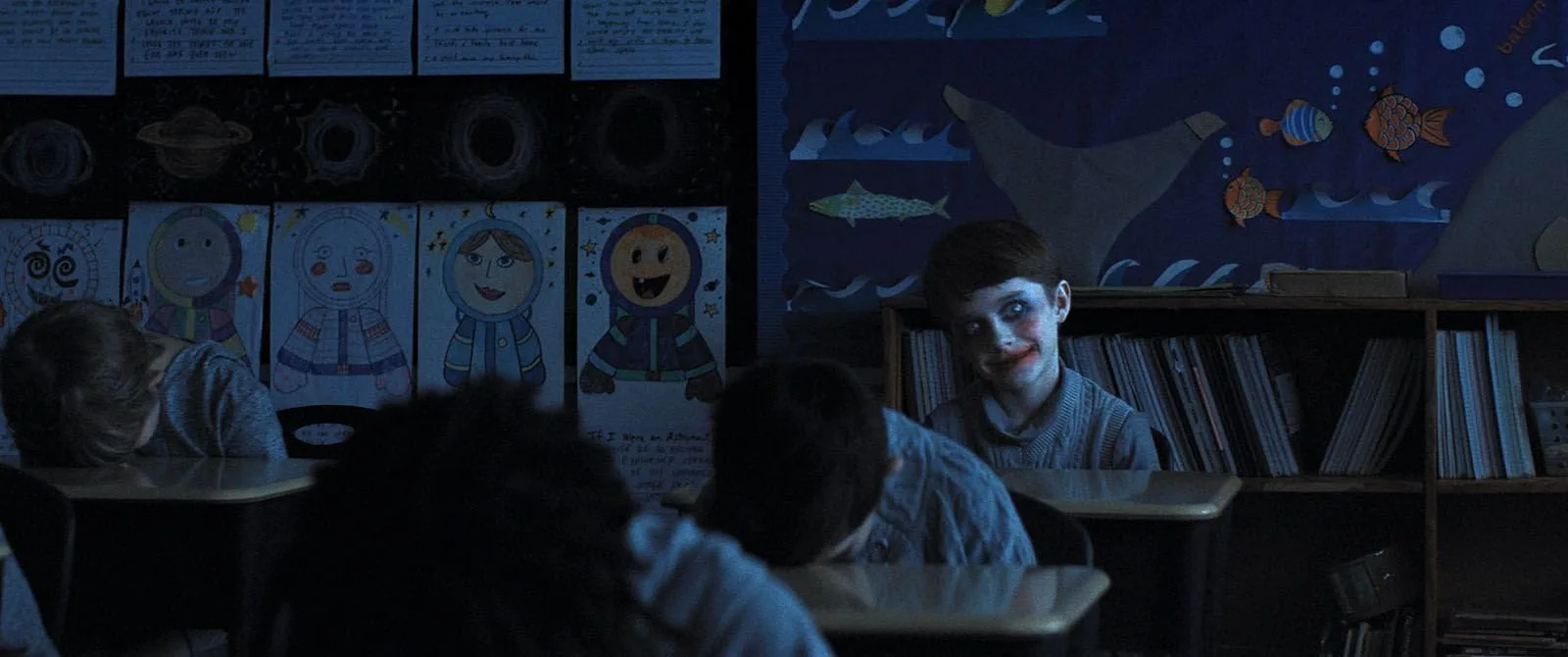
Her history of “misconduct” is a shadow that follows her, and the film uses the town’s readiness to believe the worst of her to question our own judgment of a flawed narrator. Her arc, from a guilt-ridden woman drowning her anxiety in a bottle to an active, if reckless, investigator, is a powerful reclamation of identity.
Opposing her, or perhaps just running in a different circle of hell, is Archer Graff. Josh Brolin gives the grieving father a brutish, kinetic pathos. He is a man of action in a situation that defies it, his frantic search for clues a poignant attempt to impose rational order on an irrational event. We see him poring over the same grainy footage of his son running, a ritual of self-flagellation that reveals a man trapped in a feedback loop of grief. His explosive confrontations at town meetings are not mere rage; Brolin grounds them in a desperation so palpable he avoids caricature, culminating in a delivery of the line “What the fuck?!” that registers as an all-time expression of pure, soul-shaking shock.
Then there is the law, embodied by Alden Ehrenreich’s Officer Paul, a man so entangled in his own moral failings he can hardly police himself. Ehrenreich finds the pathetic, dark humor in Paul’s unraveling; he is less a hardboiled cop and more a soft-boiled mess, a walking symbol of institutional rot. His scenes are a tragicomedy of incompetence, his personal decay mirroring the town’s broader collapse.
Floating on the periphery is Austin Abrams’ James, a drug addict who serves as the town’s fool and its accidental oracle. His neglect by the community is symptomatic of Maybrook’s deeper sickness. James stumbles through the narrative with a nervy energy that provides startling moments of comedy, particularly during a chase sequence that veers from slapstick to genuine peril. His altered perception, paradoxically, allows him to see truths the sober citizens cannot, making him a tragic and essential piece of the puzzle.
The Lie of the Manicured Lawn
The film argues that Maybrook was sick long before its children vanished. The suburban setting is presented as a grand American lie, a Potemkin village where social cohesion is a performance. Cregger and cinematographer Larkin Seiple use expressionistic framing and deep shadows to make these familiar spaces alien, turning cozy living rooms into interrogation chambers and empty streets into existential voids.
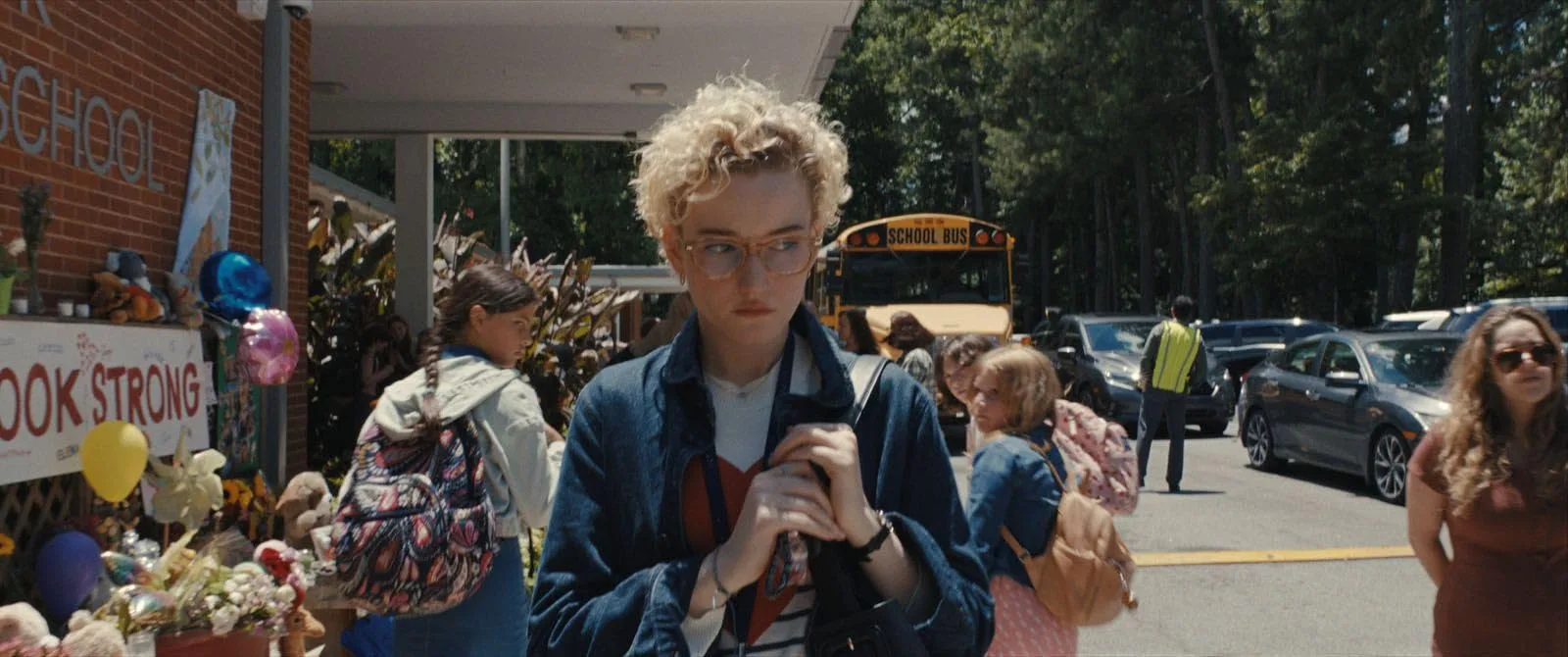
The oppressive symmetry of the housing developments feels less comforting and more like the design of a prison. The true horror is not an external invader but the internal rot of paranoia, apathy, and secrets that has been allowed to fester behind closed doors. This is a sharp commentary on the modern response to tragedy. The town’s frantic search for a simple target is a philosophical flight from the terrifying possibility of a complex, inexplicable evil.
Grief becomes a cudgel, a tool to enforce a comforting narrative rather than a process for confronting a devastating truth. This paralysis is reflected in the town’s institutions. The passivity of the school principal, Marcus, is not just a character flaw; it is a systemic choice to maintain a fragile, false peace over confronting a monstrous reality. The systems of Maybrook are not broken; they are functioning as designed, preserving a rotten status quo at any cost.
A Symphony of Unease
Cregger’s command of tone is absolute. He conducts the film’s disparate moods with a surgeon’s precision, shifting from squirm-inducing suspense to bleak, observational humor without ever losing the film’s atmospheric integrity. A confrontation at a gas station can begin as near-farce before snapping into a moment of shocking brutality, yanking the rug out from under the audience and reminding us that the stakes are lethally high.
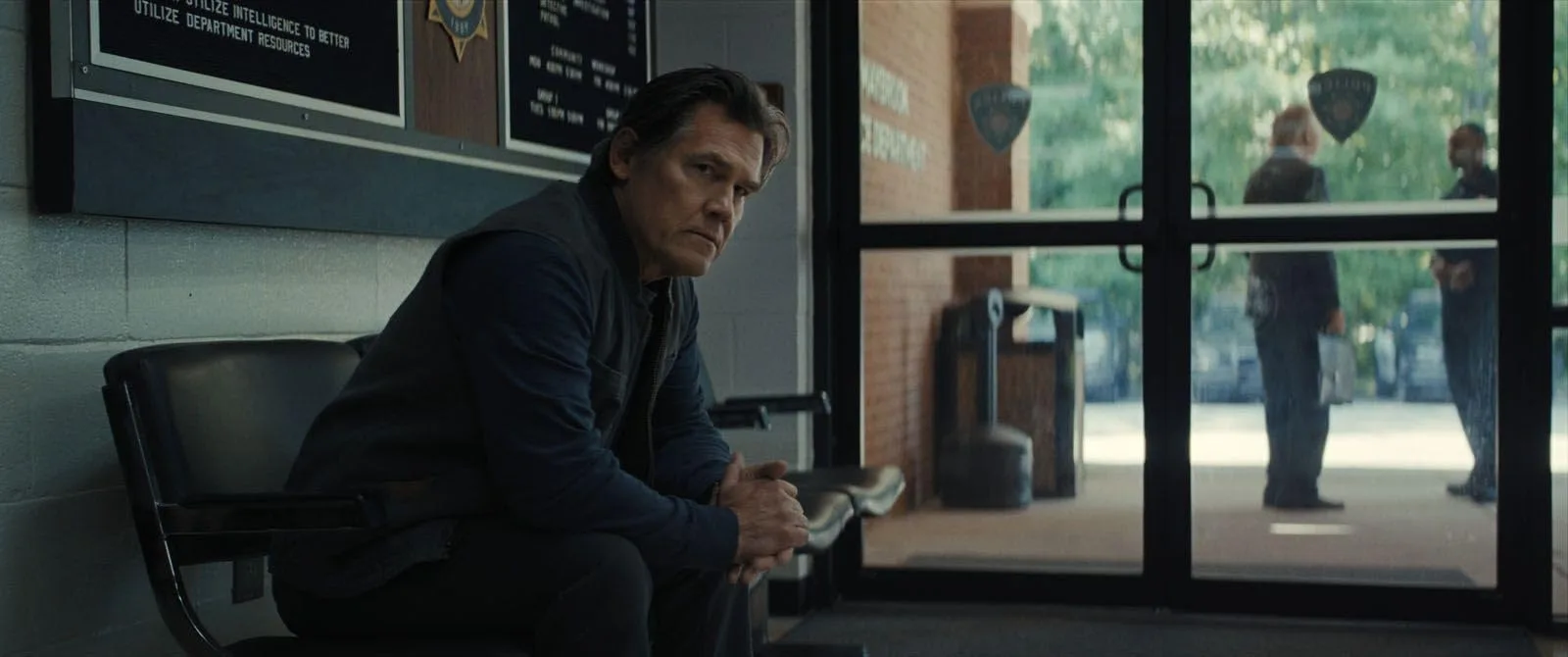
The tonal whiplash is deliberate, designed to keep the audience perpetually off-balance. Seiple’s cinematography is a character in its own right, employing stark, noir-inflected chiaroscuro that carves figures out of suffocating darkness. The sound design is equally crucial, often privileging an oppressive silence or distorted ambient sounds over a traditional score, creating the auditory texture of a waking nightmare.
The film’s antagonist, when it finally appears, feels less like a monster and more like an archetype dredged from the darkest corners of folklore. It is a thing of fairytale logic, a creature that thrives on the very fears it creates. Cregger’s confidence in this practical, uncanny form of terror is a welcome antidote to weightless digital threats, proving that some horrors are timeless.
Full Credits
Director: Zach Cregger
Writers: Zach Cregger
Producers: Roy Lee, Zach Cregger, Miri Yoon, J. D. Lifshitz, Raphael Margules
Executive Producers: Michelle Morrissey, Josh Brolin, Richard Brener, Andrew Lary, Anthony Tittanegro, Pete Chiappetta
Cast: Josh Brolin, Julia Garner, Cary Christopher, Alden Ehrenreich, Austin Abrams, Benedict Wong, Amy Madigan, Toby Huss, June Diane Raphael, Melissa Ponzio
Director of Photography (Cinematographer): Larkin Seiple
Editors: Joe Murphy
Composer: Ryan Holladay, Hays Holladay, Zach Cregger
The Review
Weapons
Weapons is a masterfully constructed nightmare, a labyrinth of suburban dread built on a foundation of audacious, fragmented storytelling. Director Zach Cregger orchestrates a symphony of unease, balancing psychological terror with cutting social critique and startling moments of dark humor. Propelled by flawless performances and stunning, noir-inflected cinematography, it is a demanding and unforgettable piece of modern horror that solidifies its director as a vital voice. The film lingers long after the credits, a chilling testament to the darkness lurking just beneath the manicured lawn.
PROS
- Zach Cregger’s confident and ambitious direction.
- The complex, non-linear narrative creates exceptional suspense and rewards attentive viewing.
- Outstanding, nuanced performances from the ensemble cast, particularly Julia Garner, Josh Brolin, and Austin Abrams.
- Larkin Seiple’s masterful cinematography, which uses shadow and light to create a palpable sense of dread.
- A perfectly controlled tone that expertly blends psychological terror, brutal horror, and bleak humor.
- Intelligent and timely social commentary on suburban decay and societal hysteria.
CONS
- The deliberately fragmented and demanding structure may prove challenging for some viewers.
- A necessary slowdown in pacing for exposition in the third act briefly tempers the tension.
- With such a large ensemble, some character arcs feel slightly less fleshed out than others.