
























![Kingdom Hearts Collection [I-III] Review](https://gazettely.com/wp-content/uploads/2026/10/Kingdom-Hearts-Collection-I-III-1-360x180.webp "Kingdom Hearts Collection [I-III] Review: KHII Holds Steady as Newer Entries Fluctuate 37")



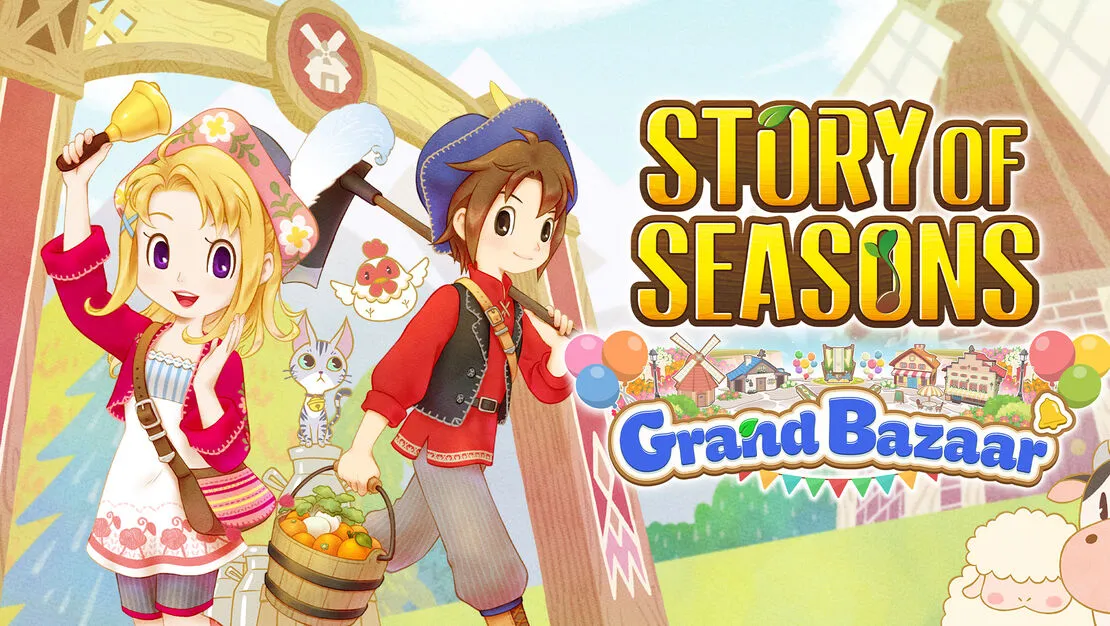

Story of Seasons: Grand Bazaar arrives as a complete remake of a 2010 Nintendo DS title, yet it feels entirely new. The game transports you to the charming but struggling Zephyr Town. Here, you inherit a neglected farm, a familiar starting point for the series.
Your primary task extends beyond cultivating crops and raising livestock. The town’s once-great weekly market has fallen on hard times, and its revival rests on your shoulders. You are tasked with restoring the Grand Bazaar to its former glory.
This premise blends the classic, relaxing farm work the franchise is known for with the specific challenge of managing a market stall. Your success is tied directly to the economic health and spirit of your new community, creating a gameplay loop centered on agriculture, commerce, and personal connection.
A Modern Harvest
The care invested in this remake is immediately apparent in its presentation, which elevates the original DS experience into a modern, polished package. The old 2D sprites have been replaced with a clean and colorful 3D world. The art style itself strikes a careful balance; it is undeniably cute without veering into the overly simplistic.
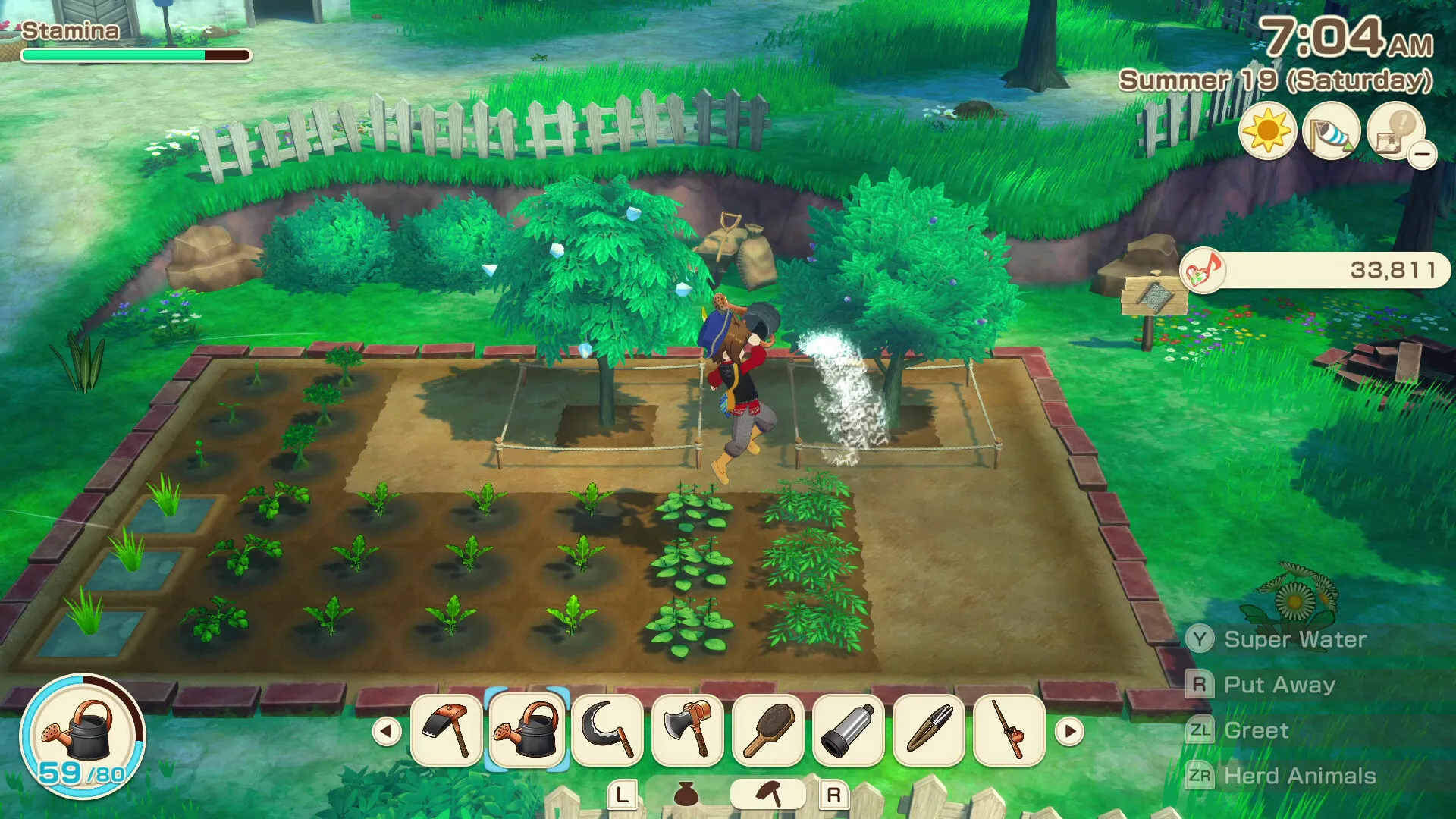
Details in the environment, like trees swaying in the wind and the gentle ripple of water, bring Zephyr Town to life. A significant artistic choice was to give character models more realistic, human-like proportions. This moves away from the chibi style seen in other series entries, such as the Friends of Mineral Town remake, and helps ground the world, making the town feel more like a homely, believable place. The visual upgrade is strong, though it is not flawless. When examined closely, some environmental textures can appear pixelated, a minor blemish on an otherwise beautifully realized world.
The audio design has received just as much attention. The most noteworthy addition is full voice acting for all character dialogue, a first for the Story of Seasons series. This feature is transformative, giving each resident of Zephyr Town a distinct personality that text alone cannot convey.
The quality of the voice work is high, adding considerable charm to daily interactions and making the choice of who to befriend or romance more meaningful. The game’s soundtrack provides a pleasant, relaxing backdrop that perfectly suits the pace of farm life, while the sound design for activities avoids becoming repetitive.
One point of criticism lies with the implementation of haptic feedback. Actions like hitting a rock with a hammer produce a sharp, loud buzz, which feels less satisfying than the more nuanced feedback found in games like Stardew Valley.
This small audio-visual misstep stands out mainly because the rest of the game feels so carefully crafted. The technical performance is solid, with a stable frame rate ensuring a smooth experience. Reports from pre-release versions of the game noted a surprising lack of bugs, speaking to the developer’s commitment to delivering a polished product from day one.
The Heart of the Market
The game’s defining feature, and its greatest departure from genre conventions, is the Grand Bazaar. This weekly market completely reframes the economic loop of the farming simulator. It replaces the passive, impersonal “shipping bin” model, a staple in everything from early Harvest Moon titles to modern classics like Stardew Valley.
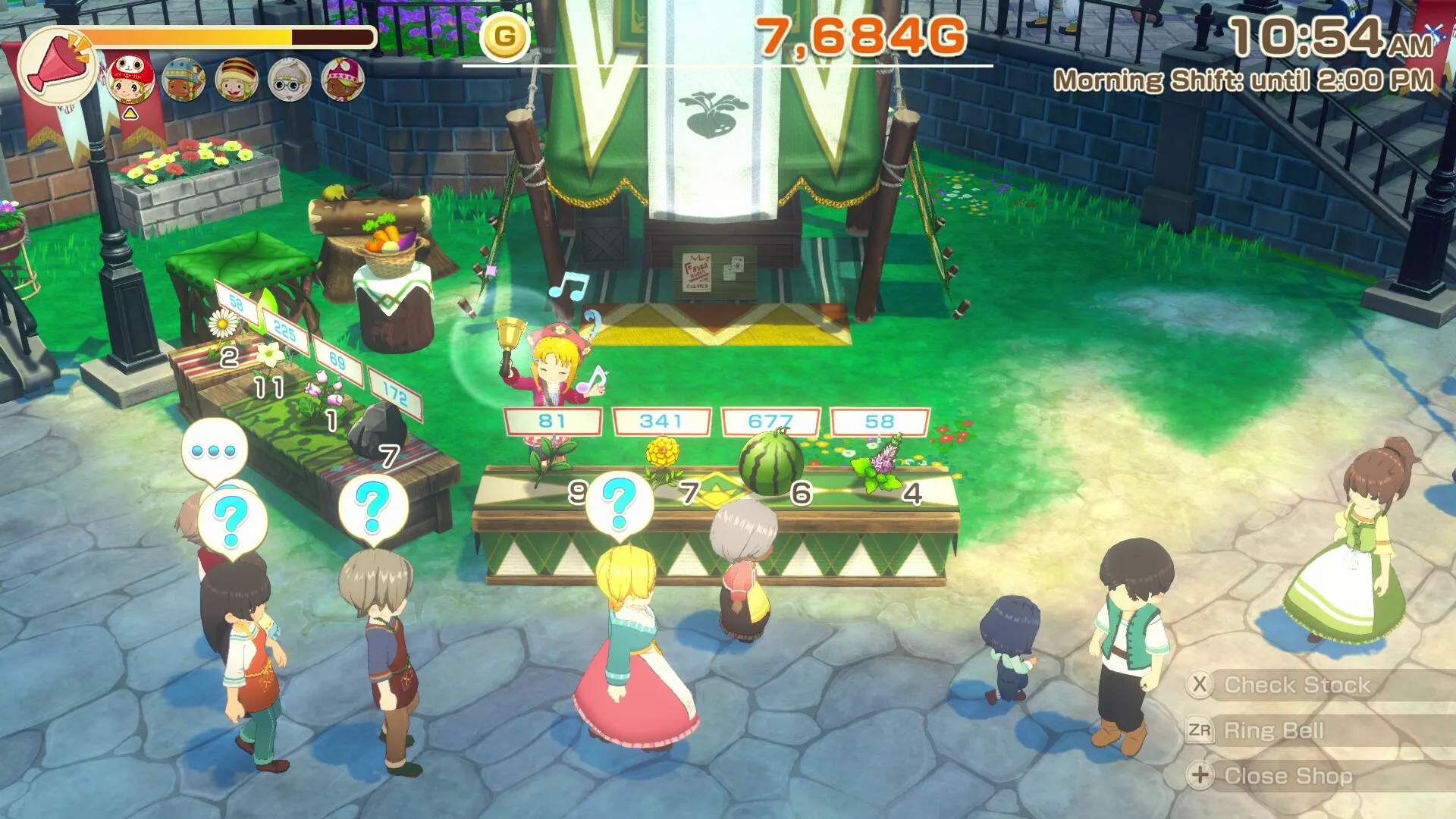
Instead of simply dumping produce into a box for an overnight payment, you become an active participant in the town’s economy. The bazaar provides a clear, motivating goal right from the beginning, a structural strength that gives players direction in a genre that can sometimes feel aimless.
Every Saturday, the town square transforms into a bustling marketplace where you must set up and manage your own stall. This process is an engaging mini-game in its own right. You ring a small bell to attract the attention of potential customers. When a shopper shows interest, an icon of a desired item might flash above their head, prompting you to quickly place that product on your display.
This active selling process is enhanced by other mechanics. For instance, the returning Nature Sprites can be called upon to cheer for you during the bazaar, triggering a small fanfare and providing helpful sales bonuses. The entire event feels dynamic and rewarding. Your success is measured by your total sales, which contributes to the bazaar’s overall rank.
As the market levels up, it attracts new and more specialized vendors to Zephyr Town. These new shopkeepers are essential for your progression. They sell critical upgrades, including expansions for your barn and farmhouse, larger bags to increase your pocket space, and better tools.
This creates a deeply satisfying feedback loop: improving your farm allows you to produce better goods, which leads to more successful sales at the bazaar, which in turn unlocks more upgrades for your farm. This intricate connection between farming and commerce is the game’s central pillar and feels as compelling as the dungeon-crawling and shopkeeping blend in a game like Moonlighter.
Success requires strategy; you must learn to stockpile your best goods throughout the week and even choose specific furnishings for your stall to gain temporary buffs, like keeping food fresh longer or increasing the chance of bulk sales. The only slight inconvenience is the stall management itself. Navigating your small space with full 3D analog movement can feel a bit slow and clumsy when speed is essential, and a simpler directional input might have felt more responsive.
A Farmer’s Life and Labors
Beyond the weekend market, your daily life in Zephyr Town is a full-time job governed by the clock and a demanding stamina bar. The core agricultural tasks will be instantly familiar to anyone who has played a farming game. You till the soil with a hoe, plant seeds, water them daily, and eventually harvest your crops. You also raise a variety of animals, including chickens, sheep, and cows, each requiring daily care.

At times, the sheer volume of these chores can feel like busy work, a common pitfall of the genre. The game mitigates this by steadily introducing better tools that allow you to perform actions over a wider area, streamlining the process as your farm grows. The most significant innovation in the daily loop is the enhanced movement system. You have a double jump and a new glider, which completely changes how you traverse the town.
Using the glider, you can catch wind currents to soar over buildings and across rivers, turning the simple act of running errands into a fun, breezy activity. This verticality opens up the town for exploration, allowing you to hop across rooftops or glide to hidden ledges to find rare minerals and forageables. This freedom makes the world feel interconnected and dynamic.
This freedom is sharply counterbalanced by a strict and often punishing stamina system. Nearly every significant action, from swinging a hammer to watering a plant, drains your energy meter, and it depletes very quickly. For the first 40 to 50 hours of the game, permanent stamina upgrades are exceedingly rare.
This forces you into a meticulous cycle of resource management, where every ten-minute day must be planned with ruthless efficiency. You can replenish stamina by eating meals or taking a bath, but you are constantly weighing the cost and benefit of every action. Pushing yourself too hard can cause you to collapse, costing you time and money.
This design choice makes the game feel less like a purely cozy escape, akin to Animal Crossing, and more like a demanding simulation that challenges your time-management skills. Your limited energy must also be divided among other activities. Cooking is a vital skill, as you learn new recipes by eating at the local restaurant, and cooked meals are the most effective way to restore stamina and gain temporary buffs.
The returning Nature Sprites can improve the quality of items you find, but this creates an inventory management puzzle, as you quickly accumulate many stacks of the same item at different quality levels. Of all the side activities, fishing is the weakest. The mechanics are simple, but the process is painfully slow, making it an inefficient use of your precious time and energy compared to mining or bug catching.
Community and Conveniences
Zephyr Town is populated by a charming and memorable cast of characters, and building relationships with them is a key part of the experience. The game features twelve marriage candidates, six bachelors and six bachelorettes, each with a distinct personality. The writing brings these characters to life, from the quiet and thoughtful Arata to the grumpy-on-the-outside, caring-on-the-inside merchant, Lloyd.
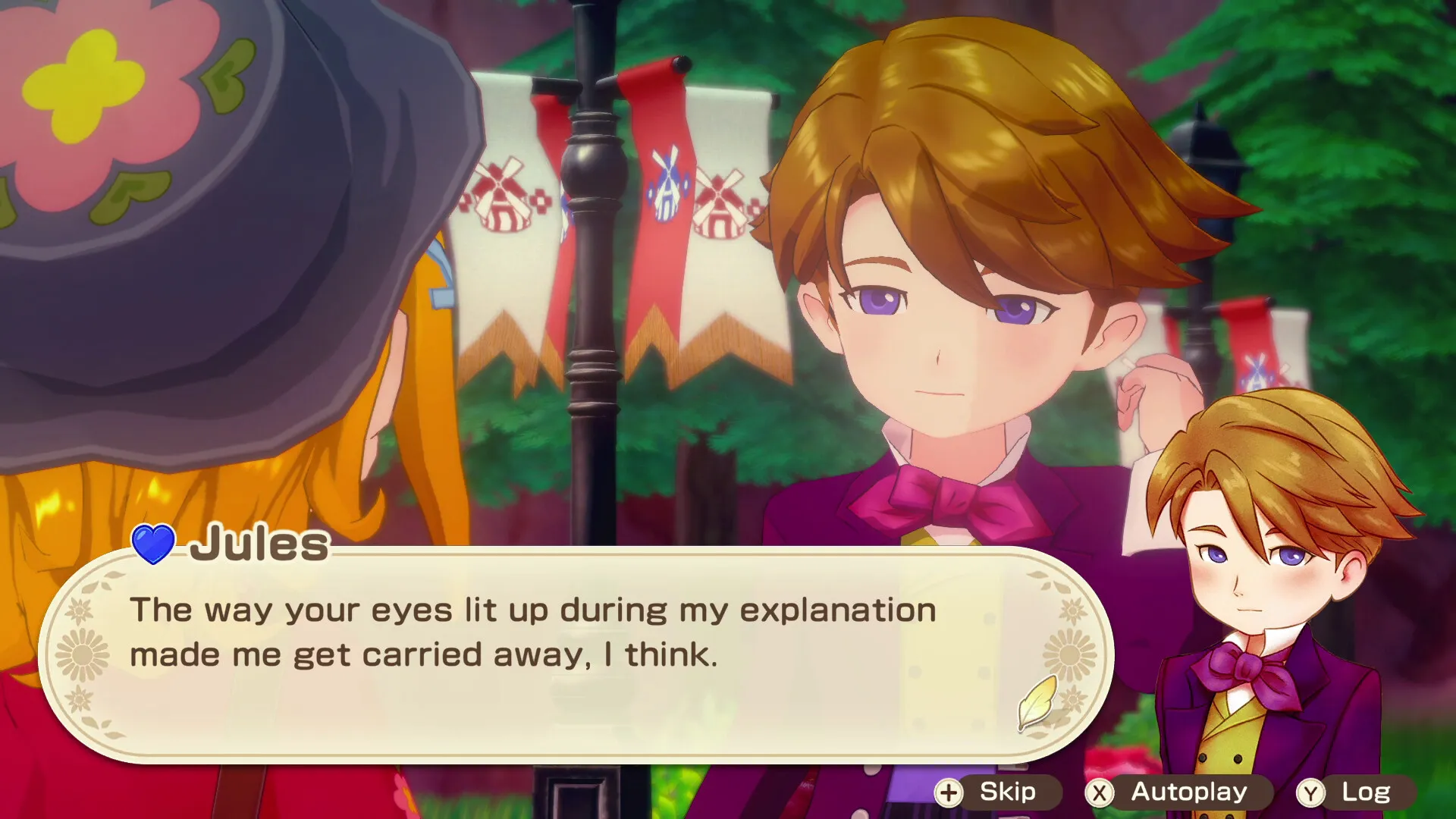
The game’s modern sensibilities are reflected in the removal of all gender restrictions on marriage, allowing you to pursue a relationship with any candidate you choose. Many small, thoughtful design choices make interacting with the community and managing your farm more convenient. A “quick greet” button allows you to build friendship points with villagers as you run past them, respecting the fact that your daily schedule is often packed.
Perhaps the most significant quality-of-life improvement is the ability to save your game at any time. This is a massive departure from the series’ traditional requirement to sleep in a bed to save, offering modern flexibility that is greatly appreciated. Character customization has also been expanded from previous entries, with a wide variety of options to help you create a character you can connect with, even if some outfits are locked behind game progression.
The crafting system, which uses several windmills located around the map, has also been streamlined. In the original DS game, each windmill was highly specialized, forcing a lot of travel. The remake distributes recipes more logically among them, cutting down on the busy work.
Some other minor annoyances persist, like the inability to sort your inventory by an item’s sale price, but these are small issues in a game that is largely focused on respecting the player’s time. These conveniences and social systems work together to make your life in Zephyr Town feel rich and rewarding.
The Review
Story of Seasons: Grand Bazaar
Story of Seasons: Grand Bazaar is a fantastic remake that successfully modernizes an older title. Its active bazaar system creates a compelling economic loop that distinguishes it from other farming sims. The addition of voice acting, enhanced movement with the glider, and numerous quality-of-life improvements make for a polished and engaging experience. While the demanding stamina system creates a challenging pace that may not suit everyone, the game offers a deeply rewarding and addictive blend of farming, commerce, and community building. It stands as one of the strongest entries in the series.
PROS
- Engaging and active bazaar mechanic.
- Excellent quality-of-life features like saving anytime.
- Fun traversal with the new glider.
- Charming presentation with full voice acting.
CONS
- The stamina system can feel punishingly restrictive.
- Fishing is slow and unrewarding.
- Minor visual and control blemishes.







