

























![Kingdom Hearts Collection [I-III] Review](https://gazettely.com/wp-content/uploads/2026/10/Kingdom-Hearts-Collection-I-III-1-360x180.webp "Kingdom Hearts Collection [I-III] Review: KHII Holds Steady as Newer Entries Fluctuate 37")



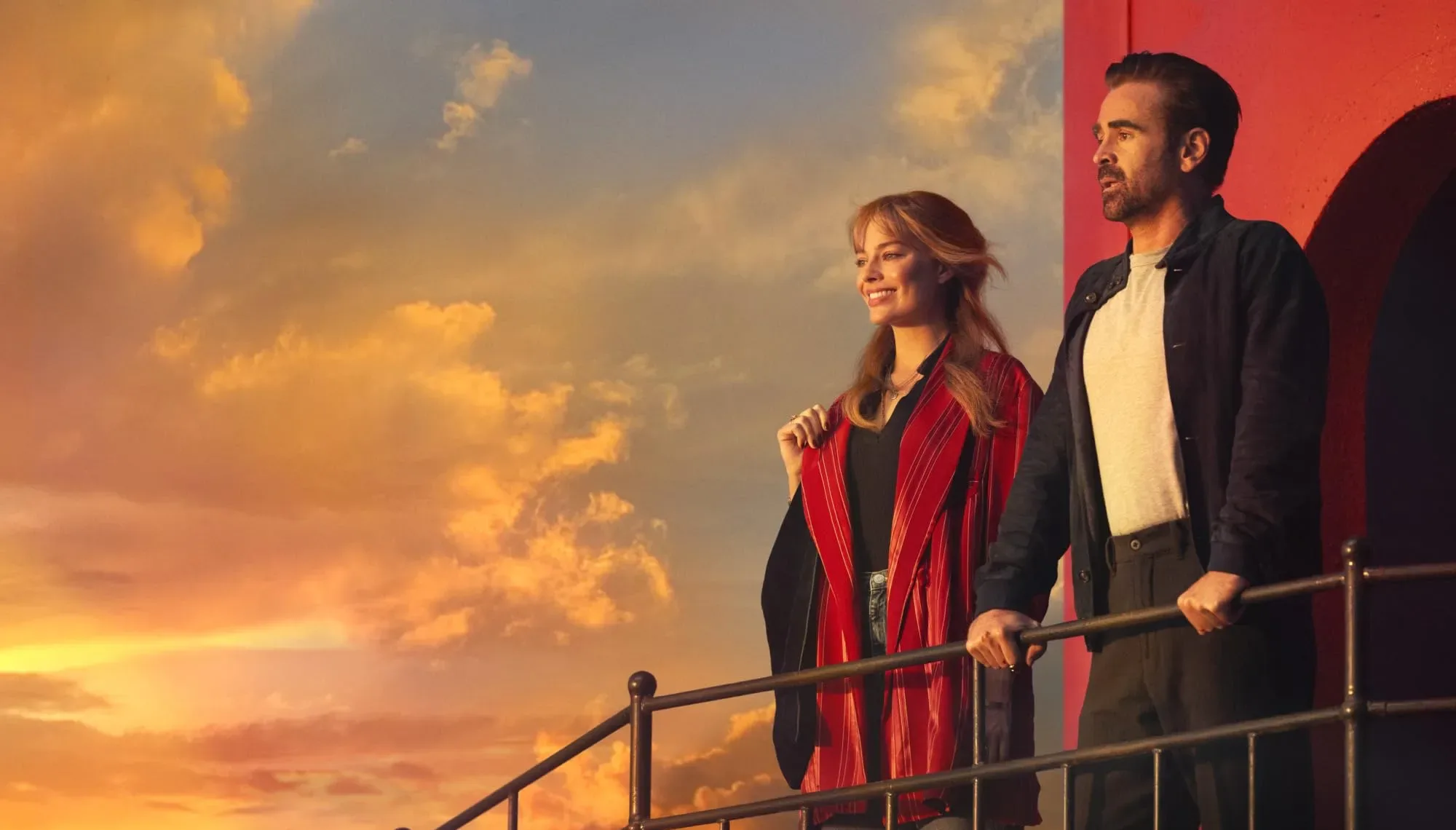

The modern condition seems to be a state of perpetual self-repair. We are all projects, armed with apps and affirmations, seeking to optimize our past traumas into future strengths. Kogonada’s A Big Bold Beautiful Journey taps directly into this therapeutic zeitgeist, presenting two emotionally quarantined people, David (Colin Farrell) and Sarah (Margot Robbie), who meet at a wedding.
Their immediate connection is one of mutual, articulate damage. They are lonely souls who have made a fortress of their loneliness. The film quickly abandons any pretense of conventional romance. It proposes a fantastical road trip as a form of accelerated therapy, a literal journey through the haunted backroads of memory.
Here, the past is not a foreign country; it is a series of roadside attractions one can visit and, perhaps, renovate. The question that hangs over this beautifully crafted artifice is a simple one. Can confronting old wounds pave a new way forward, or is this particular journey too perfectly contrived to feel true?
No Manual Included
The story opens, as many do, at a wedding saturated with rain and forced cheer, a perfect petri dish for loneliness. David and Sarah’s first conversation is less a flirtation than a preemptive negotiation of future heartbreak, a rapid-fire exchange of well-rehearsed reasons why any relationship between them would be doomed.
This dialogue is a perfect encapsulation of a modern defense mechanism: intellectualizing emotion to avoid the messiness of feeling it. This weary self-awareness is precisely what the film’s high-concept premise seeks to dismantle. The fantasy begins not with a flash of light but with a mundane transaction at a peculiar car rental agency.
It is a space that feels like an existentialist DMV, a cavernous, empty warehouse where one goes to process a change in their spiritual address. It is a Beckett play staged in a Costco, run by two peculiar agents of whimsy (a wildly German-accented Phoebe Waller-Bridge and a subdued, weary Kevin Kline) who seem less like employees and more like cosmic gatekeepers.
The vehicle for this journey is a 1994 Saturn SL, a relic from a seemingly simpler, pre-internet era; an analog solution for digital-age anxiety. It is, of course, outfitted with a sentient GPS. This navigation system is the story’s oracle, its silken, insistent voice guiding the protagonists toward a series of freestanding doors that appear in fields and forests without context or explanation.
These are portals to their pasts. The film offers zero logistical scaffolding for this magical apparatus. It presents its surrealism as a fundamental law of its universe, a set of operating conditions the characters and the audience must accept without a user’s guide. This demand for blind faith is the film’s central conceit. It argues that healing requires a surrender to the absurd, a rejection of the need to understand why.
Beautiful people, Familiar problems
Colin Farrell’s David is a man encased in a quiet, simmering melancholy. His emotional posture is a permanent defensive crouch, a state defined by a decades-old romantic rejection that has calcified into a core belief about himself. The film sends him back to the scene of this formative crime: a high school production of How to Succeed in Business Without Really Trying.

This episode, a moment of profound public humiliation, serves as his emotional origin story, a trauma that has dictated the terms of his adult life. Farrell portrays this quiet desperation with masterful subtlety. His performance is physical; it is in the slump of his shoulders and his downcast eyes, which seem to carry the weight of every disappointment. He is a specialist in wounded dignity, perfectly cast as a man whose sadness has become his most defining characteristic.
Margot Robbie’s Sarah is drawn from a different, yet equally familiar, template. She is an impulsive, quirky presence who initially seems to be a classic “manic pixie dream girl.” The script works to deconstruct this archetype by rooting all her eccentricities in the deep, unresolved trauma of her mother’s death. The film attempts to say that her manic energy is a symptom of her pain.
Does it succeed? Partially. The scenes of her confronting her past, especially an emotional visit with her mother (Lily Rabe), are powerful. Yet the character sometimes feels less like a deconstruction and more like a substitution of one cliché (the quirky girl who saves the sad man) for another (the traumatized girl who must save herself). Robbie works diligently against this, using rapid-fire speech patterns to convey a sense of panic beneath the whimsy and finding moments of profound stillness where the character’s carefully constructed facade cracks.
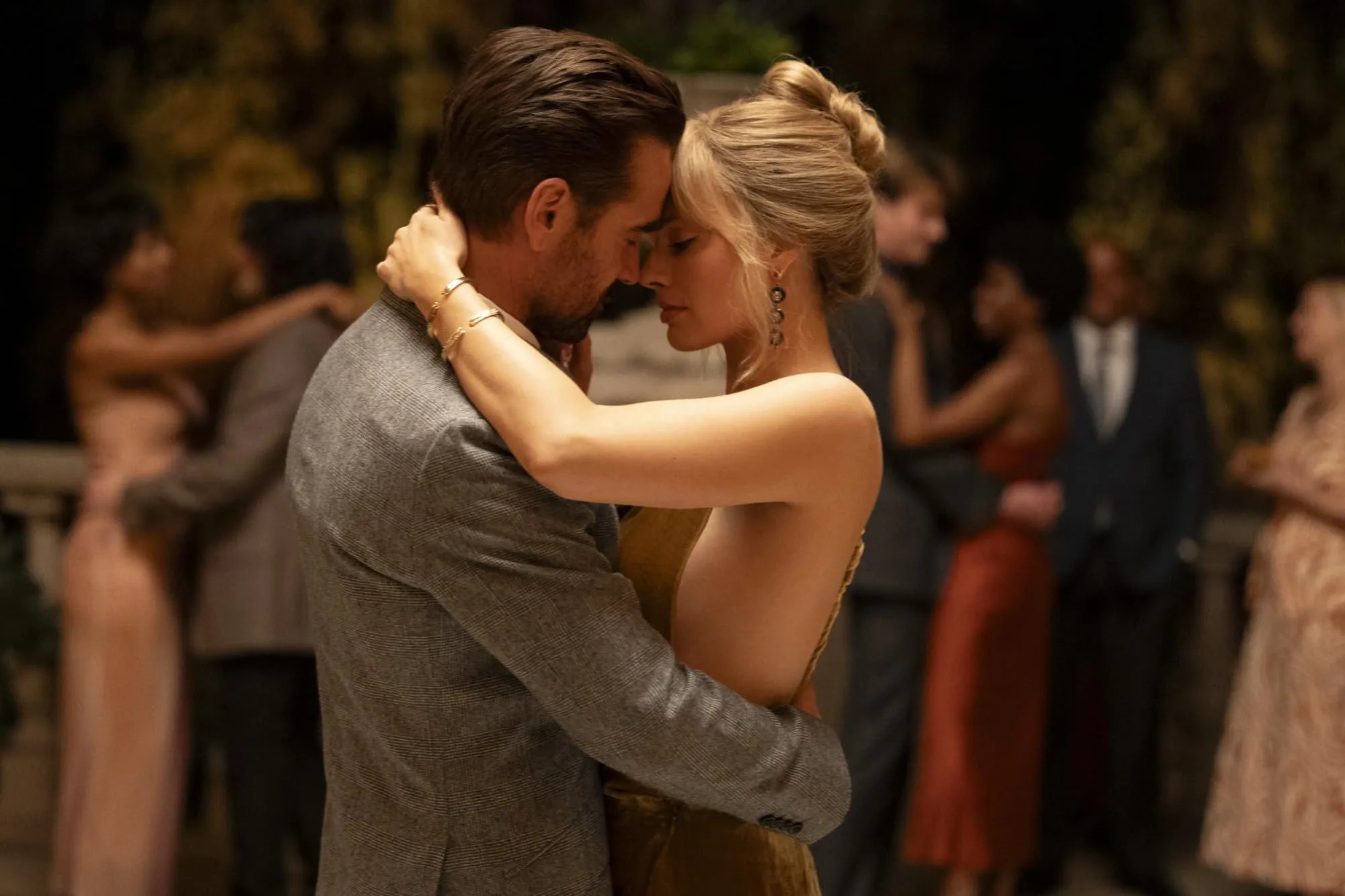
The central relationship is fueled by the sheer wattage of its stars. Farrell and Robbie are individually magnetic, and they look perfect in their shared, photogenic misery. The film wants us to believe in their fated, cosmic connection. Yet the bond between David and Sarah can feel more theoretical than actual, an intellectual exercise in healing.
Theirs is a romance born of a shared diagnosis, a mutual attraction to each other’s wounds. Is this a foundation for a real relationship, or is it a form of co-therapy? The film argues for the former, but its execution often feels closer to the latter, their interactions resembling two patients comparing notes in a beautifully lit celestial clinic.
Glossy Melancholy
With this film, director Kogonada moves from the quiet, atmospheric minimalism of Columbus and After Yang toward something with the scale and gloss of a major studio production. His directorial style here is a curious, sometimes dissonant, hybrid. Where his previous films let the environment (architecture, technology) act as a quiet participant, the fantastical setting here is an aggressive, interventionist force. The pacing remains deliberate and introspective, a signature of his work.
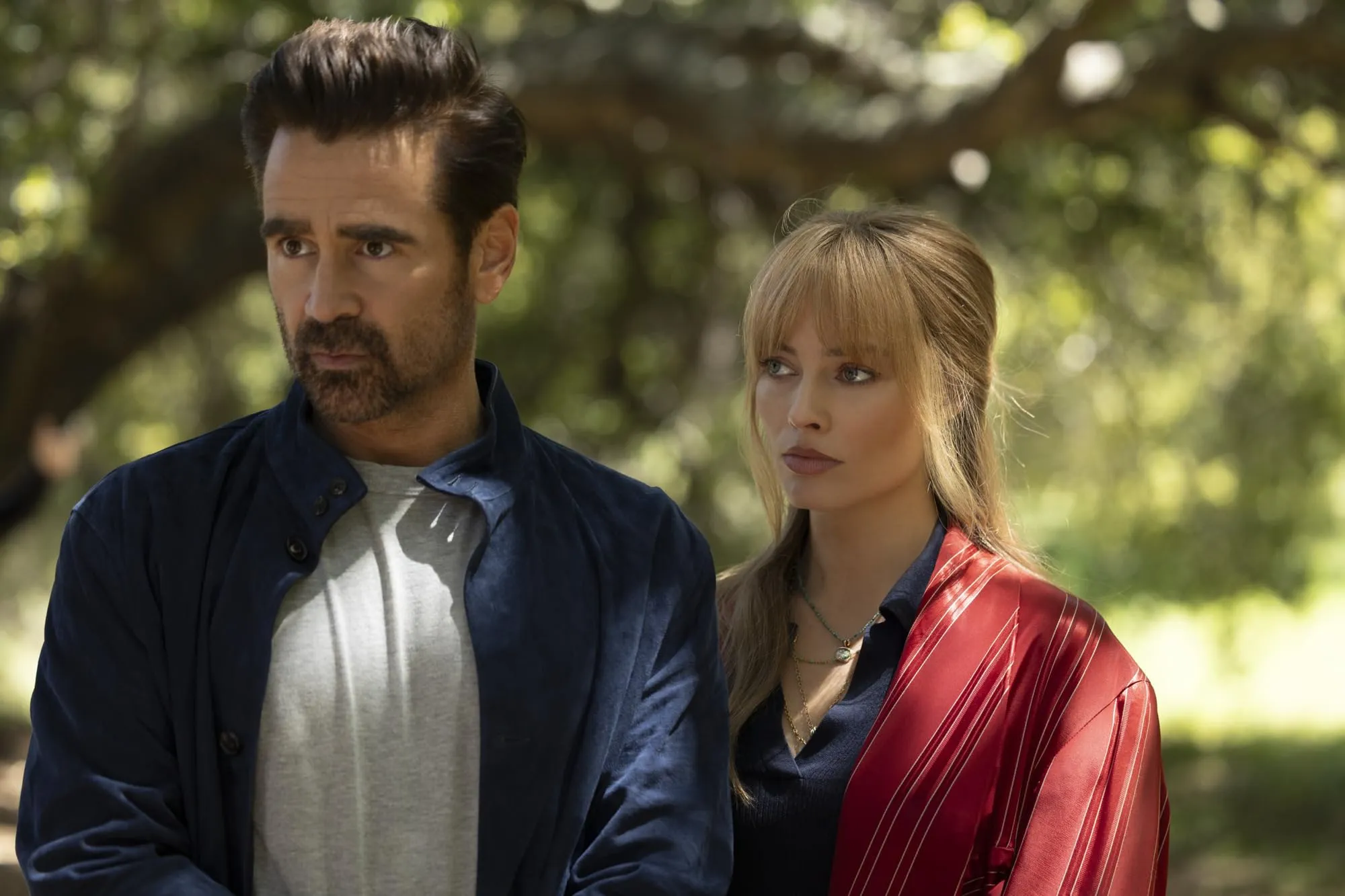
This meditative rhythm, however, sometimes clashes with the overt whimsy of the script. It is the odd-couple pairing of a quiet, observant director with a loud, high-concept story. Kogonada periodically pulls the characters out of their memories and places them on a stark, empty soundstage.
This meta-theatrical flourish is a key part of his approach, a Brechtian reminder of the artifice of performance, both in cinema and in life. It suggests that healing itself is a kind of reenactment, a staged confrontation with the ghosts of the past.
The film is visually sumptuous, a testament to cinematographer Benjamin Loeb’s command of light and color. The aesthetic is one of warm, glowing nostalgia, a world seen through a permanent magic-hour filter. Lens flares are not just a stylistic choice; they suggest a world haloed by memory or perhaps a benevolent divine intervention. The camera movements are often slow, deliberate pans, creating a sense of calm observation even during the most surreal moments.
This visual language is rarely subtle. The weather acts as a direct mirror to the characters’ feelings; relentless rain gives way to cleansing sunshine with the precision of a stage cue. This externalization of emotion extends to the design.
Katie Byron’s production is vibrant and painterly. Arjun Bhasin’s costumes function as clear symbolic markers. David’s muted dark blues announce his depressive stability, while Sarah’s bright reds and yellows broadcast her chaotic energy. Their journey is a visual blending of these primary colors, a movement toward a balanced palette.
The Heart’s Heavy Hand
The film’s central project is an exploration of regret and what we might call therapeutic revisionism. It posits that memory is not a fixed archive but an interactive environment, a landscape one can revisit to perform emotional repairs. This idea speaks directly to a digital-age fantasy. We live with a permanent, searchable record of our pasts on social media, and the film literalizes the dream of going back not just to view the archive but to edit it. This is where the film’s philosophy reveals its simplicity.
It treats complex psychological issues as bugs in a personal code that can be patched with a single visit to the source file. It presents deep trauma (parental death, lifelong rejection) and suggests it can be substantially healed through one magical do-over. This is the logic of self-help infographics and wellness gurus, not the messy, iterative, and often incomplete reality of human healing.
This tension between sincerity and simplification is perfectly reflected in the film’s soundscape. Joe Hisaishi’s magnificent score provides the emotional depth the script sometimes lacks. It creates a sense of epic, timeless feeling, a Ghibli-esque sense of wonder and sadness that elevates the very personal, small-scale story of two broken people.
In sharp contrast, the soundtrack choices are often painfully literal. Deploying Pete Townshend’s “Let My Love Open The Door” while a character is, in fact, physically opening a door to their past is a moment of such bluntness it threatens to shatter the delicate mood. This is the film in miniature. It is a sophisticated artistic vessel, impeccably crafted and beautifully performed, carrying a message of greeting-card simplicity.
A Big Bold Beautiful Journey is an upcoming romantic fantasy film directed by Kogonada. It is about two strangers, Sarah (Margot Robbie) and David (Colin Farrell), who meet at a wedding and find themselves on a fantastical journey where they can revisit key moments from their past. The film is distributed by Sony Pictures and is scheduled for theatrical release in the United States on September 19, 2025. It is rated R for language.
Full Credits
Director: Kogonada
Writers: Seth Reiss
Producers and Executive Producers: Dan Friedkin, Ryan Friedkin, Youree Henley, Kogonada, Seth Reiss, Bradley Thomas, Ilene Feldman, Gino Falsetto, Ori Eisen
Cast: Margot Robbie, Colin Farrell, Kevin Kline, Phoebe Waller-Bridge, Lily Rabe, Jodie Turner-Smith, Billy Magnussen, Sarah Gadon, Brandon Perea, Chloe East, Hamish Linklater, Lucy Thomas, Yuvi Hecht, Calahan Skogman, Jacqueline Novak, Jennifer Grant, Shelby Simmons
Director of Photography (Cinematographer): Benjamin Loeb
Editors: Susan E. Kim, Jonathan Alberts
Composer: Joe Hisaishi
The Review
A Big Bold Beautiful Journey
A visually magnificent film, A Big Bold Beautiful Journey is a feast for the eyes, guided by Kogonada’s impeccably artful direction and anchored by soulful performances from Colin Farrell and Margot Robbie. For all its aesthetic beauty, the journey itself feels emotionally engineered. It offers a stunningly rendered but philosophically shallow map for the human heart, trading psychological nuance for a beautiful, sentimental fantasy. It is a work of immense craft in service of a simple, comforting idea.
PROS
- The film features a gorgeous, highly stylized visual aesthetic with a warm, dream-like quality.
- Colin Farrell and Margot Robbie deliver committed and emotionally resonant performances.
- Kogonada’s deliberate and visually focused direction gives the film an elegant, introspective mood.
- The original score by Joe Hisaishi provides a layer of sophisticated emotional depth.
CONS
- The approach to complex psychological trauma often feels superficial and overly convenient.
- The characters' emotional breakthroughs and developing romance can feel scheduled and engineered.
- The use of popular songs is frequently too literal and on-the-nose.
- The protagonists sometimes feel more like collections of traits and traumas than fully realized people.







