


























The story begins in Billingham in the late 1980s, a place of brick houses and quiet streets where the worst thing that happens is usually a local dispute. Here we meet Ann Ming, an NHS nurse whose life runs on a predictable, comforting rhythm. That rhythm is shattered when her 22-year-old daughter, Julie Hogg, fails to answer the phone after a late shift.
I Fought the Law captures the specific, curdling dread of that silence. The initial panic gives way to a mother’s instinct, a frantic energy that the local police meet with patronizing calm. They suggest Julie, a devoted young mother herself, simply ran off. Ann knows better.
This early friction establishes the series’ central dynamic: a single, resolute woman pushing against a wall of institutional inertia. The show plants its feet firmly in Ann’s perspective, forcing us to watch as her world shrinks to a single, terrifying question. Her search begins, a prelude to a discovery far more awful than the initial silence.
A Catalogue of Failures
For 80 agonizing days, the search for Julie yields nothing. The series’ pacing in these early stages is masterful in its cruelty. Days bleed into weeks with a dreadful slowness, marked by fruitless phone calls and the mounting weight of official indifference. The passage of time is a form of torture, and the direction makes the viewer feel every second of Ann’s growing isolation. This drawn-out uncertainty makes the eventual discovery all the more brutal.
In a sequence of pure parental horror, it is Ann herself who locates her daughter’s body, hidden under the bath in Julie’s own home. The camera work becomes claustrophobic, trapping us in the small, ordinary bathroom as Ann traces a foul smell to its source. The sound design drops away, leaving only her ragged breathing before a raw, guttural cry of pain rips through the quiet. It’s a moment of profound horror, made infinitely worse because a professional forensic team had already searched the house and declared it clear.
This shocking oversight is just the first domino to fall in a cascade of failures. The series puts the police force squarely in the dock, depicting an organization hobbled by a potent mix of arrogance and incompetence. The dialogue is peppered with condescending assurances and dismissive platitudes, a verbal wall that Ann must repeatedly try to scale. This portrayal taps into a modern television trend that scrutinizes police work, a stark departure from older, more heroic depictions.
The show makes it painfully clear how these early blunders poisoned the entire case. The eighty-day delay meant a degraded crime scene and lost evidence, directly weakening the prosecution and handing the defense a ready-made argument of reasonable doubt. This setup pays its bitter dividend in the sterile, wood-paneled courtroom. The drama meticulously builds the case against the prime suspect, Billy Dunlop, only to have it crumble twice before a jury.
The editing during the deliberations is tense, but the verdicts land with a thud of anticlimactic injustice. After two mistrials, he is acquitted. The ancient double jeopardy law, a principle dating back to Magna Carta, then provides him with an impenetrable shield, a legal technicality that allows a killer to boast of his crime in local pubs, safe from prosecution.
The Unbreakable Center
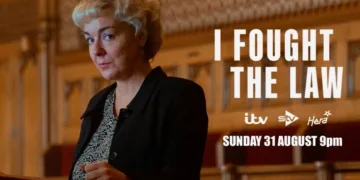
There’s a reason Sheridan Smith gets cast in these roles; she has cornered the market on portraying ordinary women forged into fighters by extraordinary circumstances. As Ann Ming, she delivers a performance of immense control and explosive force, cementing her status as the definitive actor for this character type. It’s a masterclass in conveying a psyche under siege, moving far beyond simple grief.

Her pain is a constant, but it’s alloyed with a simmering rage that fuels her every action. Smith’s physical transformation is key; the sensible wig seems to gray with each new injustice, visually marking the years stolen by her fight. Her power lies in the specifics: a lip that quivers for a split second before she steels herself to face another dismissive official, the unwavering gaze that dares men in power to look away.
In a key scene confronting an officer, her voice never rises to a shout. Instead, it drops to a low, dangerous register, each word precisely aimed. It is this contained fury that makes her performance so electric. Her work here is the series’ engine, providing the raw emotional fuel that propels the entire narrative.
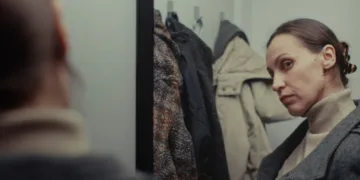
This portrayal is sharpened by its contrast with her husband, Charlie, played with quiet devastation by Daniel York Loh. While Ann’s response to trauma is to attack, Charlie’s is to retreat. He is a man hollowed out, flinching from newspaper headlines and unable to muster the energy for a public war. The direction emphasizes their growing emotional distance, often framing them on opposite sides of a room, trapped in their separate forms of grief. The series wisely presents his reaction not as a weakness but as a different, equally valid expression of loss.
Their dynamic paints a painful, realistic picture of how a shared tragedy can isolate people and create fractures within a family. Elsewhere, Jack James Ryan’s Billy Dunlop is a study in chilling banality. He is not a monster from a movie; he is an unsettlingly regular man from down the street. The series smartly reveals his guilt early on, aligning itself with the “inverted detective story” tradition. This is not a whodunit. It is a “how-does-he-get-away-with-it,” a far more infuriating and dramatically potent question.
An 800-Year-Old Wall
After the courtroom defeats, the series executes a sharp and ambitious pivot. The procedural crime drama gives way to a dogged political thriller, shifting from the question of guilt to the larger, more abstract problem of the law itself. The pacing changes, becoming a slow, methodical grind. Ann’s grief doesn’t dissipate; it transforms.

She channels her pain into a new, single-minded purpose: to overturn an 800-year-old legal principle. We watch her evolution from a heartbroken mother into a formidable, self-taught activist, a woman who learns to navigate the corridors of power armed with little more than righteous anger and meticulously organized files. Her house fills with boxes of documents, a visual metaphor for the weight she has chosen to carry.
Dramatizing this bureaucratic slog without losing momentum is a huge challenge. A story about letter-writing campaigns and meetings in stuffy offices could easily become static. The show avoids this trap by keeping its focus intensely personal. Each minor victory and crushing setback is filtered through Ann’s experience.
The direction uses tight close-ups on her face during meetings with her MP, Frank Cook, or figures like the Home Secretary, allowing the viewer to see the flicker of hope or the sting of disappointment. The show doesn’t shy away from the monotony of the task, using montages to show the passage of years and the sheer volume of work involved. Yet, the script, drawn from Ann’s own memoir, never loses sight of the human stakes.
The fight against double jeopardy is an abstract legal concept, but for Ann, it is always, simply, about getting justice for Julie. Small, grounding scenes, like a quiet moment with her grandson, constantly remind the audience of what was lost, ensuring the political battle never feels disconnected from its tragic origins.
A Story That Had to Be Told
ITV’s prestige true-crime dramas often follow a familiar template, yet I Fought the Law distinguishes itself with its fierce emotional intelligence. By centering Ann’s perspective and using her book as its foundation, the show avoids the genre’s more exploitative tendencies. It positions itself as an “advocacy drama,” a piece of television with a clear social purpose, following in the footsteps of hits like Mr Bates vs The Post Office.

It moves beyond the mechanics of the crime to present a searing critique of the systems designed to deliver justice, examining what happens after the conventional narrative ends. The show’s real subject is the long, grinding aftermath of institutional failure. It’s a powerful story about the potency of a single voice refusing to be silenced.
In an age of deep skepticism toward established power, the sight of one person successfully challenging an unmovable object feels almost revolutionary. This is television as public service, a drama that functions as a monument. It ensures Ann Ming’s relentless campaign is recognized and that Julie Hogg’s name is remembered not just for how her life ended, but for the legal revolution her memory inspired.
Full Credits
Director: Erik Richter Strand
Writers: Jamie Crichton, Ann Ming
Producers: Mark Hedges, Carley Armstrong, Maria Pavlou
Executive Producers: Liza Marshall, Charlotte Webber, Erik Richter Strand, Jamie Crichton
Cast: Sheridan Smith, Daniel York Loh, Enzo Cilenti, Victoria Wyant, Marlowe Chan-Reeves, Olivia Ng, Jake Davies, Kent Riley, Jack James Ryan, Andrew Lancel, Rufus Jones, Aimée Kelly, Bryony Corrigan, Buddy Wignall-Ho, Russell Bentley, Billy Gunnion, Dana Haqjoo, James Chalmers, Ben Mars, Philip Gascoyne, Sarah Annett, Ash Tandon, Steve Furst, Chris Lane, Joanne James, Ian Barritt, Harry Jones, Luke Cinque-White, Sarah Vickers, Gemma Nichols
Editors: Marnie Clark, Scott Hinchcliffe, Natalie Parker, Louisa Watkins
Composer: Luke Richards
The Review
I Fought the Law
I Fought the Law is a harrowing and essential piece of television, anchored by a titanic performance from Sheridan Smith. While it follows some familiar true-crime beats, its fierce emotional intelligence and sharp critique of systemic failure set it apart. It transforms a devastating personal tragedy into a powerful and inspiring story of resilience, meticulously detailing how one woman’s refusal to be silenced forced a nation to change its most entrenched laws. This is purposeful, profoundly moving drama that serves as a vital public record of an incredible fight for justice.
PROS
- A towering and deeply affecting lead performance from Sheridan Smith.
- A powerful, important true story of resilience and justice.
- An intelligent and sharp critique of institutional and legal failures.
- Effective direction that makes the bureaucratic struggle feel tense and personal.
CONS
- The narrative structure adheres to some familiar true-crime conventions.
- The intense focus on the protagonist leaves some supporting characters feeling less developed.
- The deliberate, slow pacing of the legal fight in later episodes may not appeal to all viewers.