



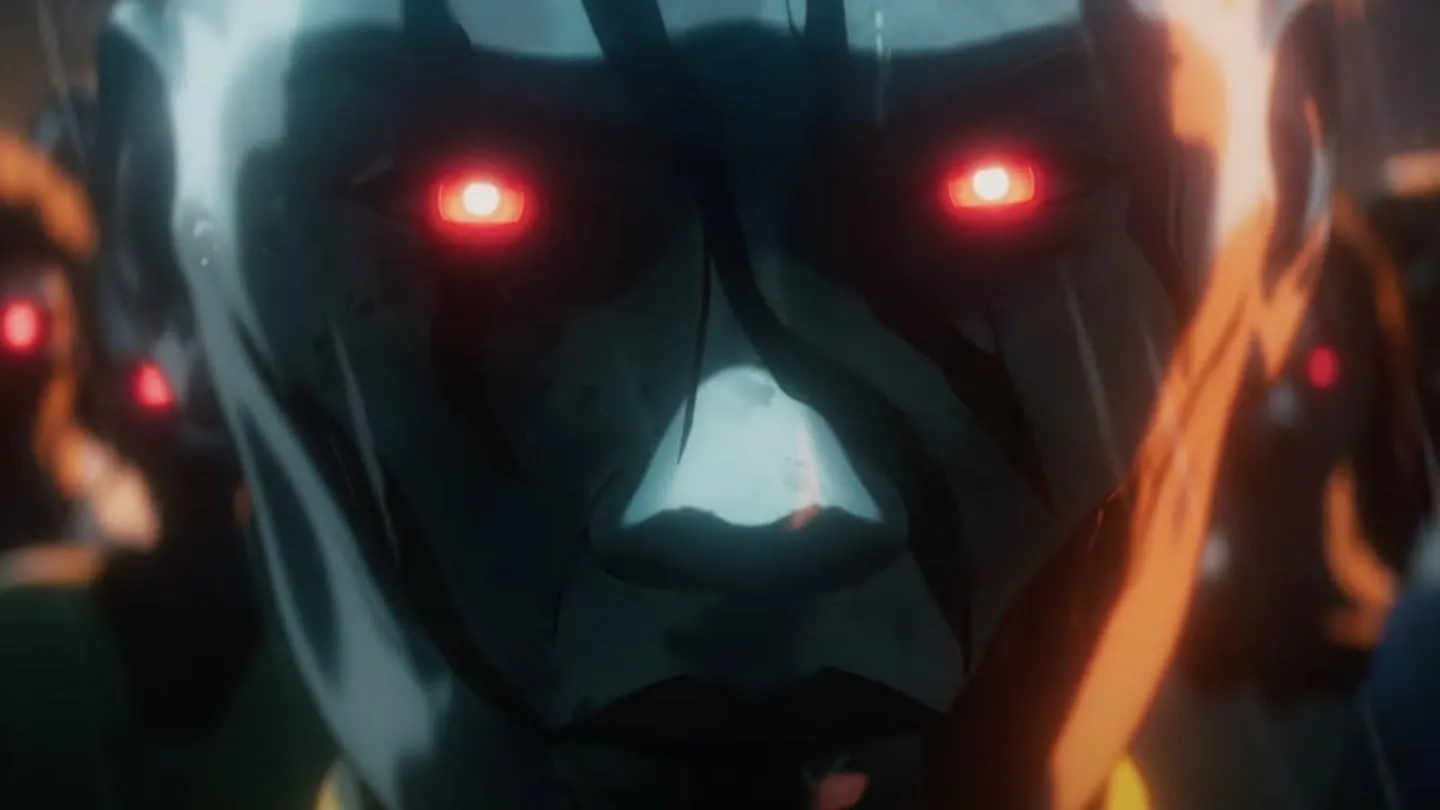

The Marvel Cinematic Universe has a stakes problem. After a decade of galaxy-saving and universe-rebooting, the peril has become abstract, the danger weightless. It is a universe where death is a revolving door and every ending is a potential prequel. The unlikely cure for this narrative ailment arrives not in a blockbuster film, but in a bloody, four-episode animated series.
Marvel Zombies is a spinoff of a spinoff, a multiversal detour that feels more vital than the main road. It drops us into a world already lost, five years after a quantum virus turned Captain America into a patient zero and the Avengers into a cannibalistic horde.
Here, a desperate crew of new-generation heroes finds a sliver of hope in a world-saving MacGuffin, launching a doomed-from-the-start mission across a ruined America. The show’s TV-MA rating is its thesis statement: this is Marvel without a safety net, a brutal, bleak, and surprisingly cathartic story where anyone can die. And they do.
The Kids Are Not Alright
The series smartly shifts focus to the inheritors of the MCU, assembling a team of heroes who have largely operated on the franchise’s periphery. We begin with a dynamic trio: Kamala Khan’s wide-eyed optimism, Kate Bishop’s weary competence, and Riri Williams’ technological genius.
This is the Young Avengers team-up that has been teased but never delivered, and their initial chemistry is a highlight. They are soon joined by a scattered collection of survivors, including the pragmatic Yelena Belova, a surprisingly paternal Red Guardian, and a trio of Mad Max-style scavengers in Shang-Chi, Katy Chen, and Jimmy Woo. The show’s greatest success is weaving these disparate personalities into a believable found family.
It does the difficult character work the mainline films have postponed, exploring how these heroes connect, clash, and grow under extreme pressure. The bond between David Harbour’s Red Guardian and Iman Vellani’s Kamala is the story’s emotional anchor, a touching relationship between a broken old soldier and the young hero who reminds him what they are fighting for.
Their undead opposition is led by Wanda Maximoff, a silent and terrifying “Queen of the Dead” who orchestrates the horde with chilling intelligence. After her complex arcs in WandaVision and Multiverse of Madness, this is a simpler, more elemental version of the character, less a grieving mother and more a force of nature.
The show’s most audacious creation, however, is “Blade Knight.” Fusing the iconic daywalker with the Egyptian moon god Khonshu is a bizarre concept that pays off spectacularly, creating a stoic, hyper-competent warrior who becomes the group’s reluctant protector. With Mahershala Ali’s live-action debut still in limbo, actor Todd Williams steps into the role with a commanding presence.
Iman Vellani’s voice work is, once again, perfect; she captures every ounce of Kamala’s spirit, making her the resilient heart of a heartless world. Harbour, too, finds new layers in Alexei Shostakov, his booming pronouncements laced with a sorrow that sells his protective turn.
Guts, Gore, and Grandeur
The cel-shaded animation style carried over from What If…? has undergone a significant evolution. The slightly uncanny facial expressions and stiff movements that occasionally plagued the first series are mostly gone, replaced by a more fluid and expressive aesthetic.
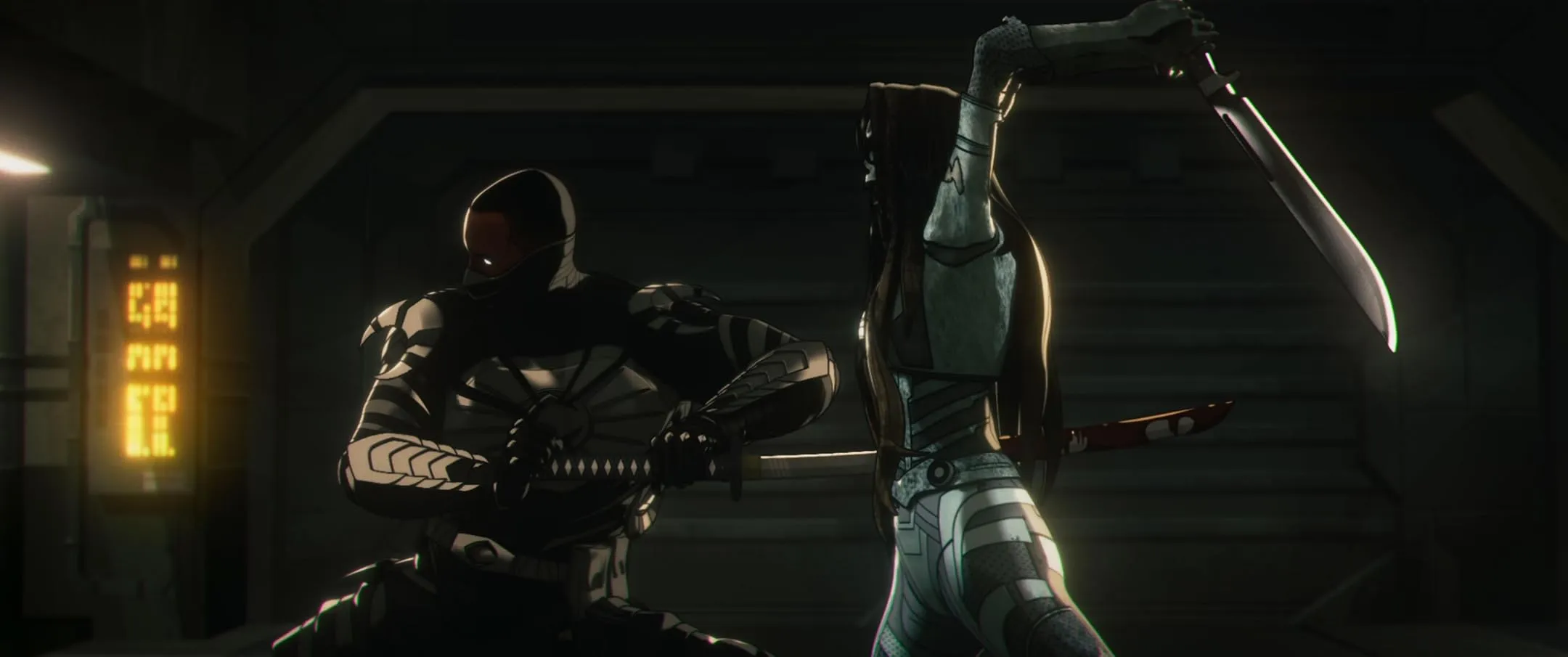
The direction treats the animated medium with cinematic flair, using dynamic camera work, tense one-shot sequences, and a bleak color palette to build a palpable sense of dread. The visuals truly excel when chaos erupts. Action sequences are rendered with a bombastic, anime-influenced energy, filled with motion lines and explosive impacts that feel torn from a comic book panel. The climactic battle, in particular, employs the classic “Kirby crackle” effect, a visual nod that adds a touch of cosmic grandeur to the carnage.
This is a show that earns its mature rating in the first ten minutes and never looks back. The horror is visceral and unflinching, more akin to the relentless dread of 28 Days Later than the shambling hordes of The Walking Dead. The violence is shockingly graphic, with characters being bisected, decapitated, and torn apart in gruesome detail.
These are not cheap thrills; they are declarations of intent, establishing a world where superhero powers mean very little against a relentless tide of death. The show uses classic horror tropes effectively, with well-timed jumpscares that prey on moments of quiet desperation.
The action builds in scale across the four episodes. Early fights are claustrophobic, brutal affairs set in familiar MCU locations like The Raft, now a floating tomb. This groundwork pays off in the finale, which delivers a massive, world-breaking showdown. It is a breathtaking piece of action storytelling, a truly epic conflict that provides a spectacular, show-stopping conclusion.
Apocalypse Now… and Again… and Again
For all its creative bloodshed, Marvel Zombies occasionally leans on narrative crutches that feel too safe. The structure of the first three episodes settles into a predictable rhythm that borders on formulaic. The heroes arrive at a new location, find a moment of respite, share a bit of backstory, and are then predictably overrun by a zombie horde, forcing them to flee to the next checkpoint.
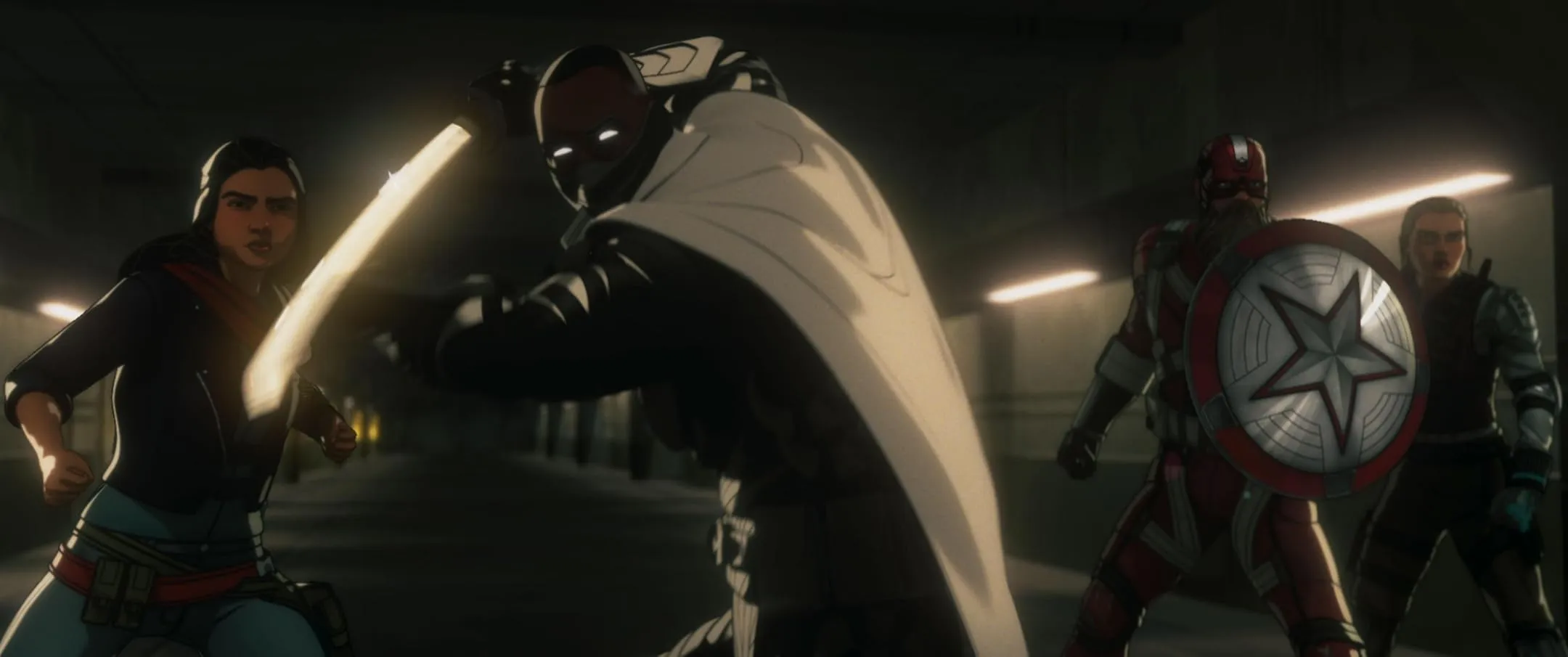
This “arrive, fight, flee” loop provides consistent action, but it robs the journey of its forward momentum, at times feeling less like a desperate quest and more like a series of video game levels. This repetition is a missed opportunity in a show that otherwise feels so fresh and dangerous.
The series also suffers from a case of tonal whiplash, a common affliction in modern franchise filmmaking. The grim, high-stakes horror sits awkwardly next to the brand-mandated, lighthearted MCU humor. The constant stream of quips feels jarringly out of place. In a claustrophobic sequence set in Baron Zemo’s compound, the genuine tension is repeatedly punctured by one-liners that make the characters seem oddly detached from their life-or-death situation.
This “quip problem” is a symptom of a larger issue: the show’s breakneck pacing. The four-episode run is simply not enough time to properly service its large ensemble cast. Characters like Riri Williams and Shang-Chi are present, but their arcs feel compressed and underdeveloped. The rapid pace ensures the story never drags, but it comes at the cost of the deeper character exploration needed to make the inevitable losses hit with their full, devastating force.
Finally, Some Real Stakes
The series’ most radical and successful choice is its complete demolition of plot armor. In this dead world, no one is safe. The willingness to kill off major, fan-favorite characters in sudden and brutal ways creates a genuine sense of peril that the mainline MCU has struggled to maintain. Each quiet moment is fraught with tension because we know that any character, at any time, could be ripped from the story.
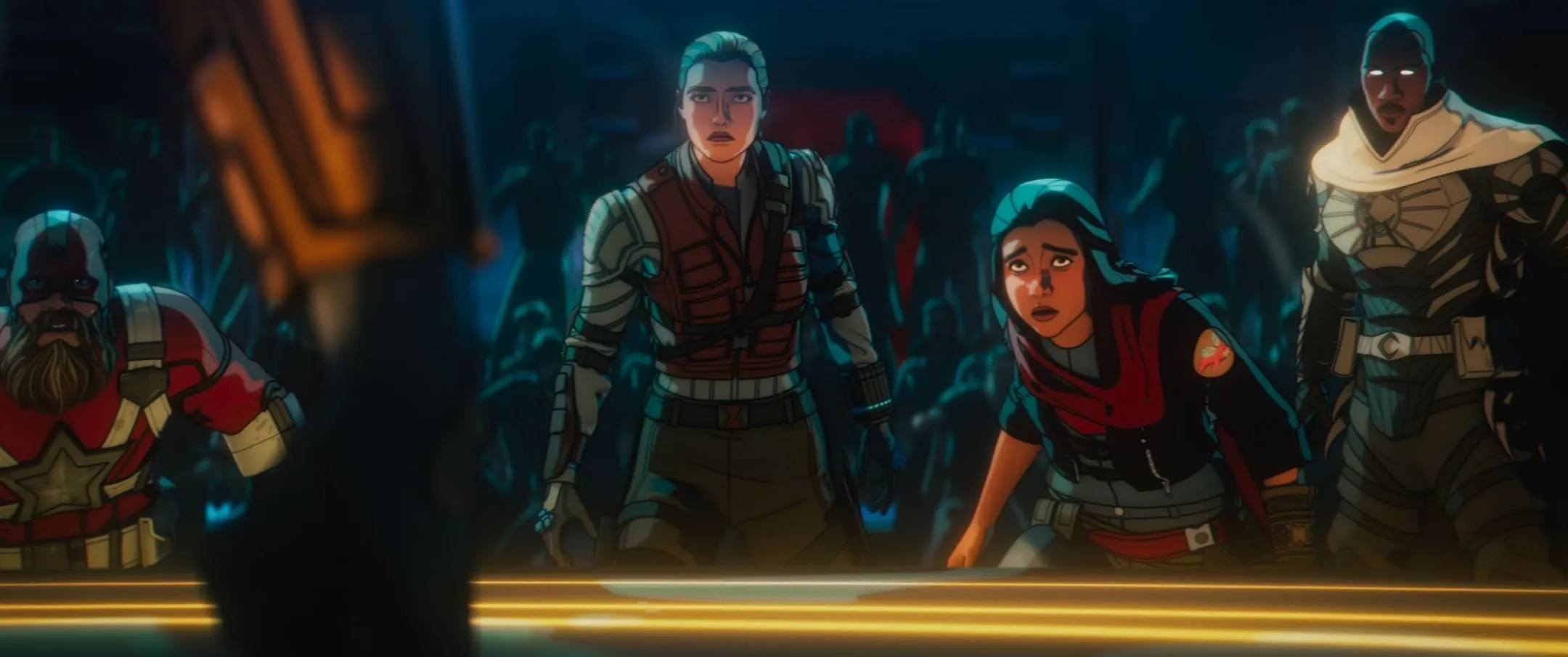
These deaths are not meaningless shocks; they are catalysts for the survivors, particularly for Kamala, who is forced to grow up at an accelerated, traumatic pace. The show explores what it means to keep fighting in a world where every victory is temporary and every attachment is a future heartbreak.
This dedication to its hopeless premise carries through to the very end. The show’s conclusion is stark, brave, and will almost certainly be divisive. It offers no easy answers or clean resolutions, instead doubling down on the bleak, unforgiving nature of its universe.
It is a thematically honest finish, one that feels earned by the grim journey that preceded it. The final moments provide a memorable, haunting image that stays with you long after the credits roll. Is a story only meaningful if the heroes win, or is there a greater truth in watching them fight on when there is nothing left to win?
Marvel Zombies is a four-episode animated miniseries that premiered on Disney+ on September 24, 2025. It is based on the Marvel Comics series of the same name and continues the story from the “What If… Zombies?!” episode of the series What If… The show follows a group of survivors fighting against a zombie plague in a world overrun by the undead. All four episodes were released on the same day for binge-watching on Disney+.
Full Credits
Director: Bryan Andrews
Writers: Bryan Andrews, Zeb Wells
Producers and Executive Producers: Kevin Feige, Louis D’Esposito, Brad Winderbaum, Dana Vasquez-Eberhardt, Zeb Wells, Bryan Andrews, Danielle Costa, Carrie Wassenaar
Cast: Iman Vellani, Dominique Thorne, Hailee Steinfeld, Kerry Condon, Kenna Ramsey, Todd Williams, Kari Wahlgren, Florence Pugh, David Harbour, Simu Liu, Awkwafina, Randall Park, Wyatt Russell, Rama Vallury, Elizabeth Olsen, Hudson Thames, Paul Rudd, Greg Furman, Adam Hugill, Daniel Swain, Sheila Atim, Tessa Thompson, F. Murray Abraham, Zenobia Shroff, Dave Boat, Terri Douglas, Robin Atkin Downes, Matt Yang King, Piotr Michael, Andrew Morgado, Ashley Peldon, Michael Ralph, Fred Tastasciore, Mike Vaughn, Debra Wilson, Matthew Wood
The Review
Marvel Zombies
Marvel Zombies is a brutal and welcome shock to the system. While its repetitive structure and tonal inconsistencies prevent it from achieving greatness, the series succeeds as a visceral, high-stakes horror story. It brilliantly utilizes its newer heroes and features stunningly gory animation, injecting a genuine sense of danger that has been sorely missing from the MCU. The commitment to its bleak world makes for a memorable, if flawed, animated apocalypse that is both thrilling and emotionally resonant. It is a necessary nightmare.
PROS
- The absence of plot armor creates genuine tension and makes every moment feel perilous.
- The series provides a satisfying team-up for newer MCU heroes, with standout relationships.
- The animation is fluid and impactful, delivering spectacular and unflinchingly brutal action sequences.
- Iman Vellani anchors the show with a powerful and heartfelt performance as Kamala Khan.
- The show’s dedication to its bleak, hopeless atmosphere feels refreshingly bold.
CONS
- The narrative loop of the first three episodes can feel repetitive.
- The constant MCU-style quipping often undermines the grim horror.
- The four-episode format leaves little room for deeper character development for the large ensemble.
- Some key heroes feel sidelined due to the brisk runtime.