
























![Kingdom Hearts Collection [I-III] Review](https://gazettely.com/wp-content/uploads/2026/10/Kingdom-Hearts-Collection-I-III-1-360x180.webp "Kingdom Hearts Collection [I-III] Review: KHII Holds Steady as Newer Entries Fluctuate 37")



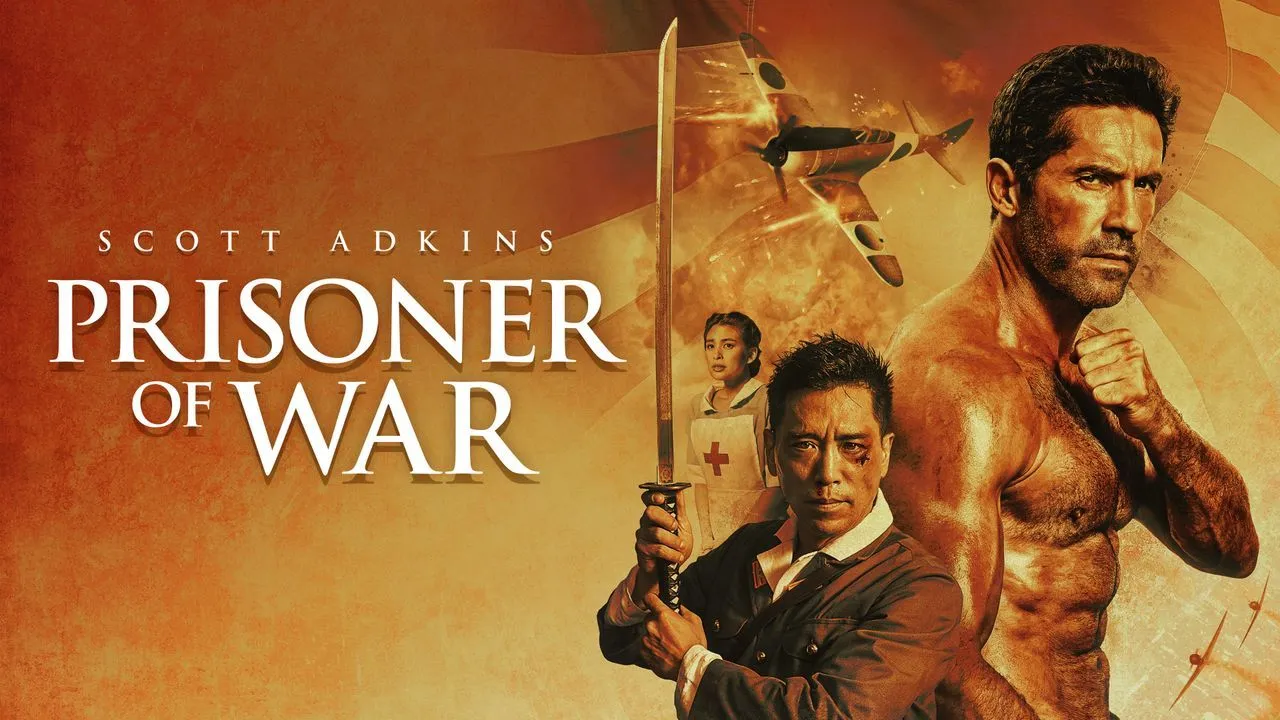

What is a war film? The question seems simple until one encounters a movie like Prisoner of War, which wears the skin of historical drama over the skeleton of a martial arts tournament. The film uses the well-documented agony of the Philippines in 1942 as its stage, yet it is less interested in the geopolitics of the Pacific Theater than in the pure physics of a spinning heel kick. This is not an examination of war’s toll on the human soul. It is a cinematic treatise on the body as a weapon.
We follow British pilot James Wright, downed and captured, into a POW camp that functions less as a prison and more as a gladiatorial arena for its commander, the mercurial Lieutenant Colonel Ito. Ito forces Wright to fight, ostensibly for his own sadistic amusement. The conflict becomes a strange, ritualized dialogue between the unmovable object of Wright’s defiance and the illogical force of Ito’s obsession. The background threat of a death march and a mass escape attempt provides the narrative with stakes, but the film’s real focus is on the brutal, isolated moments of combat.
An Architecture of Action
The film rests its entire weight on the shoulders of Scott Adkins, and the foundation is solid. His performance as James Wright is an exercise in stoic minimalism, a throwback to an era of action stars whose charisma was measured in presence, not prose. He builds a character not from words but from posture, from the tension in his jaw, from the explosive release of a perfectly executed strike. The film understands this and wisely cedes its storytelling responsibility to its action. Adkins’s body becomes the text, and each fight is a new chapter revealing his history and his resolve.
Director Louis Mandylor’s most significant contribution is his commitment to what might be called kinetic integrity. In an age of chaotic, suggestion-based action editing, his camera holds steady. The choreography, a brutal mix of styles, is presented in clean, wide shots and coherent, sustained takes. We are not just told that Wright is a formidable fighter; we are shown the mechanics of it. The viewer can trace the arc of every blow and appreciate the athleticism of the performers.
This clarity is a form of respect, both for the audience and for the stunt work itself. The fights are not merely interludes of violence; they are the film’s most articulate passages. The sound design amplifies this effect, with each thud and crack landing with sickening weight. The final sword duel is a necessary escalation, shifting the language of the conflict from brute force to a more disciplined, almost ceremonial form of violence. The film’s success, limited as it is, is born from this lucid presentation of its central spectacle.
The Logic of a Vacuum
A narrative structure built to showcase action can be forgiven for being simple, but it cannot survive being nonsensical. Once the fighting subsides, the film’s plot reveals itself to be a bafflingly fragile construct. The primary source of this failure is Lieutenant Colonel Ito, an antagonist who operates without a coherent psychological framework.
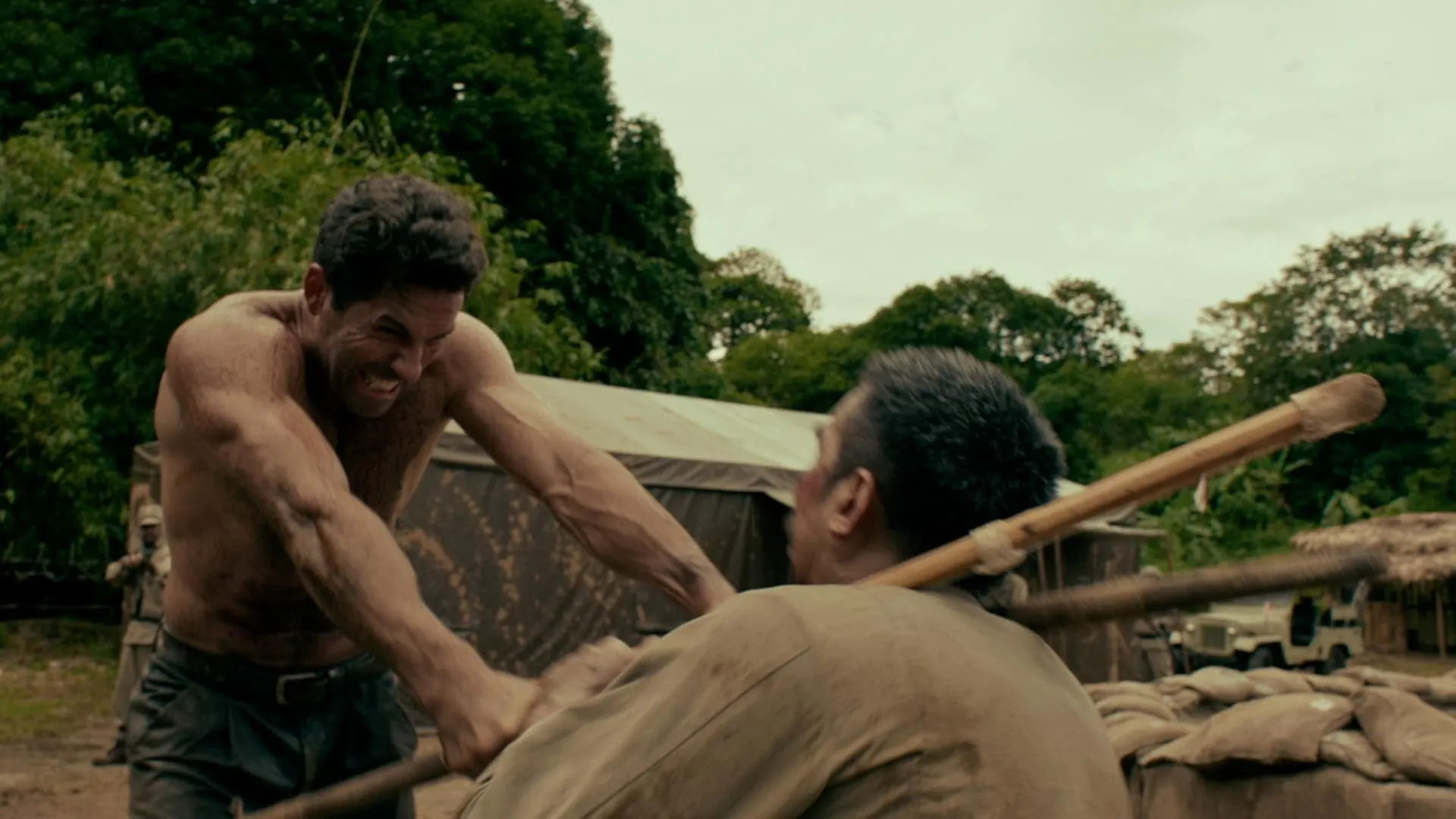
He is a walking contradiction, a man whose stated goals are actively undermined by his own actions. He forces Wright to fight to demoralize the other prisoners, yet Wright’s victories transform him into a symbol of hope, making Ito look incompetent.
His desire to learn a secret fighting technique from Wright is a plot point of such pulp silliness that it strains credulity, especially when his method of persuasion is torture and murder. He is not a character; he is a bundle of conflicting impulses that serve only to instigate the next scene. He is a narrative black hole, pulling the story into illogical orbits.
This hollowness extends to the supporting cast. The American POWs are a faceless chorus, their leader Captain Collins a missed opportunity for a strategic counterpoint to Wright’s physical prowess. A Filipina nurse is introduced with the suggestion of importance, only to vanish from the story almost entirely.
Without compelling characters or a logical antagonist, the scenes between the fights become exercises in waiting. The pacing slows to a crawl, filled with weighty pauses and solemn dialogue that feels like a poor imitation of a more serious film. The movie attempts to borrow the gravitas of a prestige war drama, but it has not earned it, leaving these scenes feeling empty and tonally confused.
History as a Prop
The film’s most troubling aspect is its relationship with its own setting. By invoking the Bataan Death March, Prisoner of War lays claim to a piece of profound historical suffering, but it does so without any sense of responsibility. The event is not explored or respected; it is used as a convenient plot device, a bit of set dressing to raise the stakes.
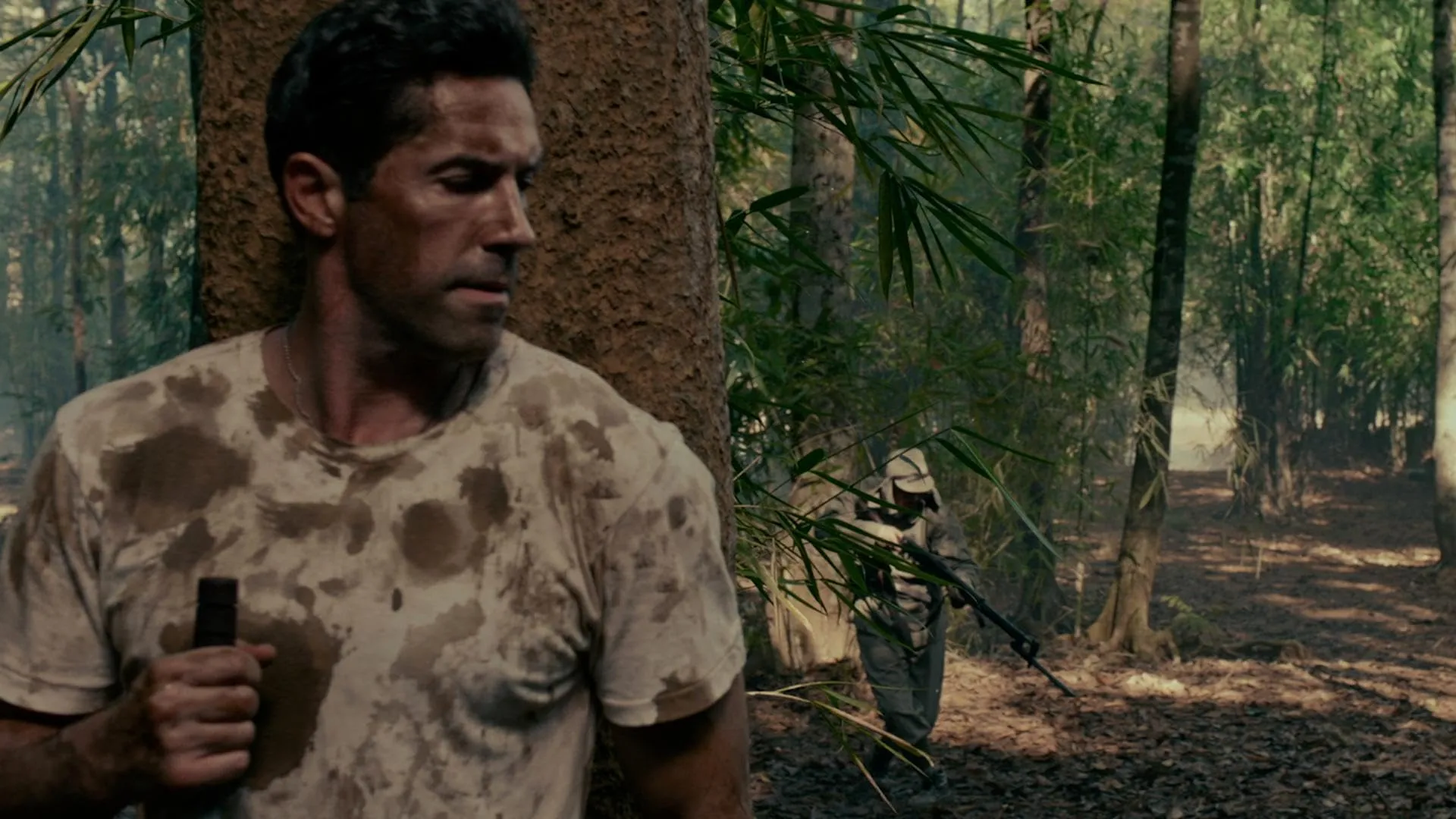
The result is a jarring tonal dissonance. Using a real-world atrocity as the backdrop for a straightforward action movie feels deeply shallow, like using a photograph of a tragedy as a coaster. The film’s primary historical inaccuracy is not factual but ethical. It trivializes the suffering it purports to depict.
This is worsened by the inexplicable decision to open the film with a scene set after the war, a framing device that immediately assures us of Wright’s survival. This act of narrative self-sabotage removes the single most important element of a POW story: the uncertainty of the protagonist’s fate. What remains is a film caught between two identities.
It delivers expertly choreographed action sequences for the genre purist, and in those moments, it succeeds. However, its attempts at serious drama are undone by a nonsensical script and a morally empty approach to its historical context. Prisoner of War is a finely crafted spectacle inside a hollow shell.
The movie “Prisoner of War” was released on September 19, 2025. It is available to watch on streaming platforms such as Apple TV, Plex, Prime Video, and others where you can rent or buy it. It is also available in theaters.
Full Credits
The Review
Prisoner of War
Prisoner of War is a film of profound contradiction. It succeeds brilliantly as a showcase for Scott Adkins’s physical artistry, with action sequences that are choreographed and filmed with brutal clarity. This kinetic triumph, however, is built upon a foundation of narrative ruin. The screenplay is a mess of illogical character motivations and a shallow plot that uses the weight of historical tragedy as little more than set dressing. It is a spectacle for the eyes undone by a story that insults the intelligence.
PROS
- Expertly choreographed and cleanly shot fight sequences.
- A commanding and physical lead performance from Scott Adkins.
- The direction of the action avoids confusing, rapid editing.
CONS
- A weak screenplay with a nonsensical and illogical plot.
- A poorly developed antagonist with no coherent motivation.
- Trivializes a serious and tragic historical event for its setting.
- Slow pacing and dull dialogue between the action scenes.







