




























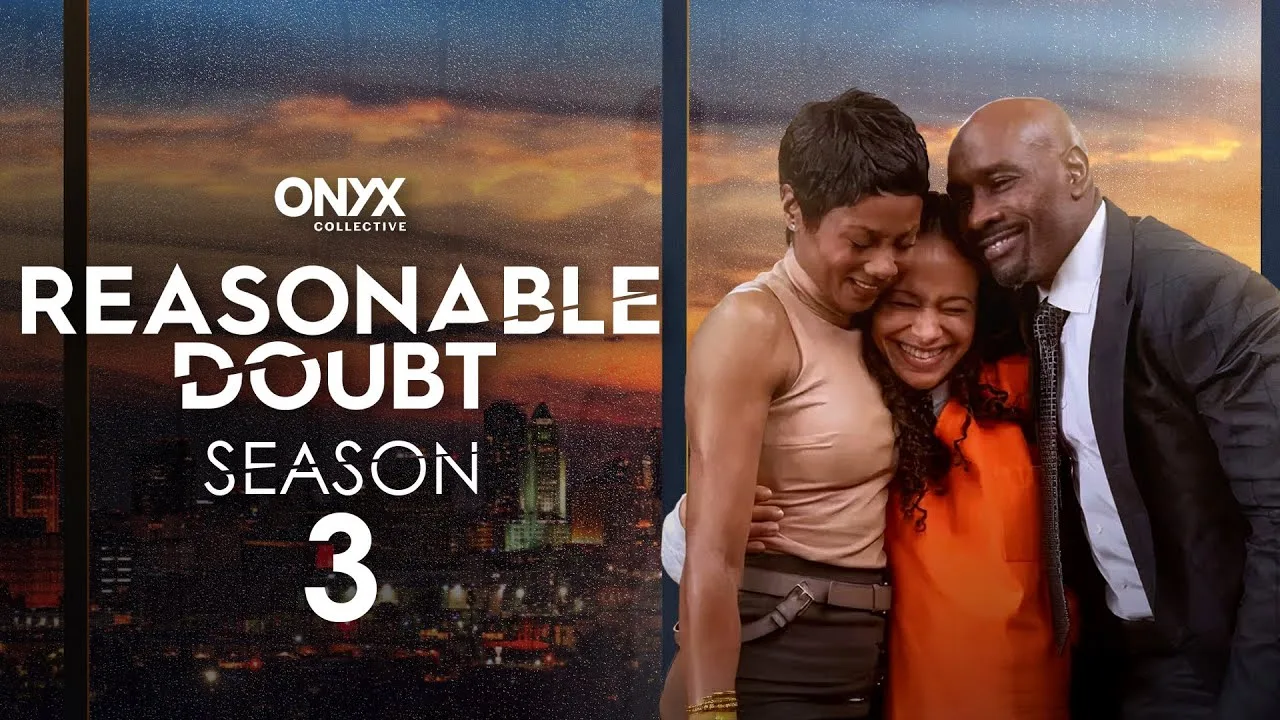

For a creature like Jax Stewart, tranquility is its own kind of threat. She is a character engineered for motion, for the high velocity of courtroom combat and the intricate damage control of her personal life. The third season of Reasonable Doubt finds her in an unfamiliar state of near-stillness.
Her marriage to Lewis is repaired, a delicate truce holding them together. This quiet, however, feels less like peace and more like a vacuum. At her law firm, the cases are civil, the stakes monetary, and the lack of a true fight leaves her restless. Jax’s energy, deprived of a proper outlet, begins to curdle into discontent. She pushes back against partners and chafes at industry awards given to peers.
The show masterfully establishes this tension, suggesting that for its protagonist, the absence of chaos is an unnatural state. It is the tense calm of a world holding its breath, waiting for the next inevitable impact that will send everything spinning once more.
A Golden Cage, a Missing Woman
The impact arrives in the person of Ozzie Edwards, a celebrity client who is less a man than a carefully managed brand. A former child actor, Ozzie exists in a state of arrested development, his life and career curated by his parents. The legal issue they bring to Jax seems almost trivial, a request for a non-disclosure agreement to muzzle his older girlfriend, Wendy.
This small matter of control soon ruptures into a full-blown crisis. After a bitter, public fight with Ozzie over his family’s influence, Wendy vanishes. Ozzie, with his history of managed appearances and shielded realities, is immediately cast as the villain. His attempts to handle the situation himself are disastrous; speaking to investigators without counsel, he projects an unnerving lack of concern.
The media machine, sensing blood, descends. A neighbor’s grainy cell phone footage of the argument becomes Exhibit A in the court of public opinion. The story writes itself: the volatile, entitled star and his missing lover. When Wendy’s body is discovered near Ozzie’s remote cabin, the narrative is cemented by physical evidence.
The murder weapon is a gun registered to him. Jax finds herself defending not just a man, but the wreckage of a public image, her client a volatile asset whose own behavior threatens to sabotage any chance of a real defense.
Debts of the Past, Battles for the Future
While Ozzie’s case consumes Jax’s professional life, her personal world demands its own difficult reckonings. The lawsuit from Toni, the woman from Lewis’s affair, continues to cast a long shadow. The conflict is a study in contrasting forms of grief and responsibility. Jax sees a legal problem to be neutralized, while Lewis feels the weight of a human tragedy that he helped create.
The resolution comes not from a courtroom but from a quiet, painful act of service. He spends an evening with Toni, helping her pack away the remnants of a life that never was, dismantling their deceased child’s nursery. It is a shared ritual of mourning that provides a form of closure legal documents never could. This hard-won domestic peace is juxtaposed with a rising threat within her firm.
Bill Sterling, an associate with an unnerving focus, is maneuvering for power. He is not a simple rival; he studies Jax, seeking her mentorship and approval with an intensity that feels strategic. When he is assigned to her team on the Ozzie case, it becomes clear that Jax is fighting a war on two fronts, one in the public eye and another in the polished hallways of her own firm.
The Architecture of a Narrative
The series is anchored by the formidable work of Emayatzy Corinealdi, who portrays Jax with a finely calibrated mix of external polish and internal friction. Her performance reveals a woman whose control is a constant, exhausting act of will. The show’s aesthetic supports this; its world is one of sleek surfaces, from the glass walls of Jax’s office to the minimalist luxury of her home.
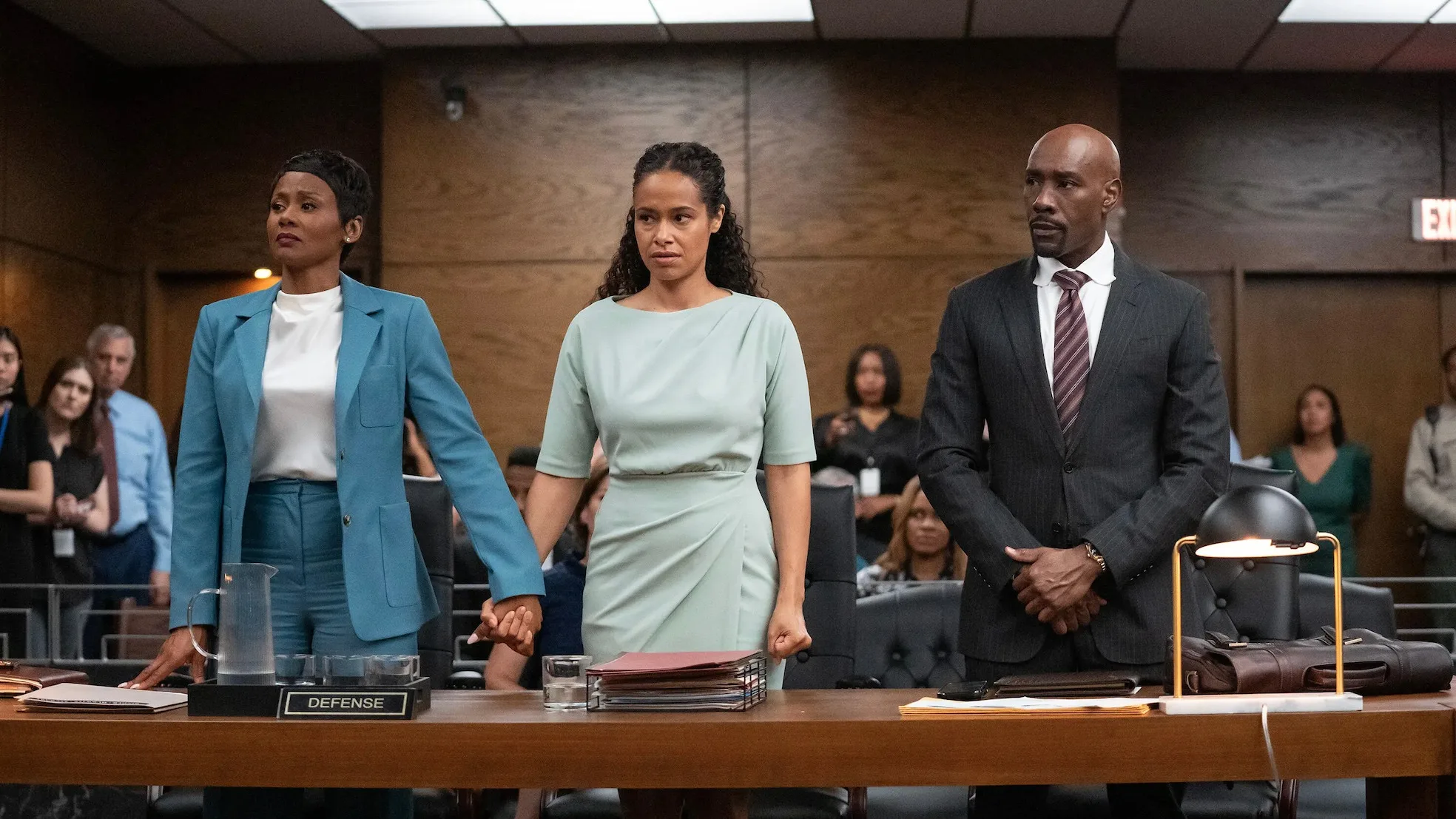
This visual language of clean lines and expensive taste creates a sharp contrast with the moral disorder of the characters’ lives. This season, the series uses the Ozzie Edwards case to dissect the mechanics of modern justice, where the battle for a client’s freedom is secondary to the war over their public story.
The narrative explores how celebrity, guilt, and media converge to create a truth that is often separate from the facts. The show’s excellent musical supervision amplifies this atmosphere of sophisticated tension, using its soundtrack to underscore both the glamour and the dread. The result is a sharp examination of a system where perception is a more powerful currency than innocence.
Reasonable Doubt Season 3 premiered on Thursday, September 18, 2025, on Hulu. In the series, criminal defense attorney Jax Stewart finds herself craving chaos after a period of peace. Her wish is granted when she takes on the case of a former child star accused of murder, whose messy life puts her own professional future and success at risk. The series is available to stream on Hulu in the United States and Disney+ internationally, with new episodes releasing weekly.
Full Credits
Directors: Anton Cropper, Pete Chatmon, Neema Barnette, Julie Dash, Darren Grant, Numa Perrier, Carl Seaton, Kerry Washington
Writers: Raamla Mohamed, Jordan Crawford, Michelle Flowers, Ryan Richmond, Christopher Sanford, Loy A. Webb, Tyger Williams, Anil K. Foreman, Zahir McGhee, Erika Harrison
Producers and Executive Producers: Kerry Washington, Pilar Savone, Larry Wilmore, Anton Cropper, Lena Cordina, Shawn Holley, Jon Leshay, Tamara Gregory, Erika Harrison, Zahir McGhee
Cast: Emayatzy Corinealdi, McKinley Freeman, Tim Jo, Angela Grovey, Thaddeus J. Mixson, Aderinsola Olabode, Michael Ealy, Morris Chestnut, Joseph Sikora, Kyle Bary, Rumer Willis, Brandee Evans, Richard Brooks, April Parker Jones, Keith Arthur Bolden, Lori Harvey, Kordell Beckham
Editors: K. Kyle Bond, Todd Gerlinger
Composer: Adrian Younge, Ali Shaheed Muhammad
The Review
Reasonable Doubt Season 3
Reasonable Doubt returns with a confident and stylish season that thrives on intricate plotting and sharp cultural commentary. Propelled by Emayatzy Corinealdi’s commanding lead performance, the series skillfully dissects the mechanics of modern justice and celebrity through a high-stakes central case. While its structure feels familiar, the execution is so polished and its observations so astute that it stands as a sophisticated and engaging legal drama. The show remains a sharp, intelligent exploration of a world where narrative is more powerful than fact.
PROS
- A powerful and layered lead performance by Emayatzy Corinealdi.
- Sharp, fast-paced writing that balances a central case with complex subplots.
- Intelligent examination of fame, media manipulation, and public perception.
- Polished, stylish production design and an effective soundtrack.
CONS
- The season-long legal case follows a somewhat conventional structure.
- Its focus on the legal troubles of the rich and famous may not appeal to all.
- New viewers might find the dense personal subplots challenging without prior context.