



























Skye Borgman’s “Unknown Number: The High School Catfish” emerges from the Netflix true crime machine like a fever dream wrapped in the banality of suburban Michigan. Set against the claustrophobic backdrop of Beal City, a town so small it makes Peyton Place look cosmopolitan, this 94-minute documentary transforms teenage texting into something approaching modern horror.
The film tracks the systematic psychological torment of 13-year-old Lauryn Licari and her boyfriend Owen McKenny, who receive hundreds of anonymous threatening messages over the span of more than a year. What begins as apparent cyberbullying metastasizes into something far more disturbing, requiring the intervention of school authorities, local law enforcement, and eventually the FBI’s cybersecurity unit.
The case transcends typical digital harassment through its intimate knowledge of the victims’ daily lives and its relentless escalation from relationship interference to body shaming to suicide encouragement. Borgman positions this investigation within the mystery framework, allowing audiences to play detective while slowly unveiling a perpetrator whose identity will fundamentally challenge assumptions about trust, family, and the darkness that can lurk behind the most familiar faces. The documentary functions as both procedural thriller and sociological study, examining how digital technology has rewritten the rules of human predation.
The Architecture of Suspense: Constructing a Digital Noir
Borgman employs the structural mechanics of classic whodunit fiction, transforming a real-life investigation into something resembling a neo-noir thriller adapted for the smartphone age. The chronological progression from October 2020 through the FBI’s eventual breakthrough reads like a procedural manual, each investigative layer revealing new depths of technological sophistication and human deception. The director’s pacing mirrors the harassment pattern itself: periods of relative calm punctuated by explosive revelations that recalibrate everything the audience thought they understood.
The mystery framework allows viewers to construct their own suspect lists, weighing alibis and motives with the confidence of armchair detectives. Borgman deliberately feeds this impulse through her interview structure, presenting each potential perpetrator with equal screen time and apparent credibility. The focus on classmate Khloe Wilson serves as the documentary’s primary red herring, a misdirection so convincing that it exposes the viewer’s own prejudices about teenage jealousy and social dynamics.
The technical breakthrough arrives through FBI liaison Bradley Peter’s digital forensics work, tracking IP addresses and cell tower data with the methodical precision of laboratory analysis. This sequence transforms abstract concepts like the Pinger app and Verizon cell tower triangulation into tangible investigative tools, grounding the mystery’s resolution in concrete technical evidence rather than psychological speculation. The revelation sequence builds tension through deliberate withholding, creating a moment of genuine shock that retroactively recontextualizes every preceding interview and assumption.
Borgman’s interview strategy reveals careful orchestration, structuring conversations to maximize both information gathering and emotional impact. She secures remarkable access to all parties, including the perpetrator, creating a 360-degree view of the case that few true crime documentaries achieve.
Faces in the Digital Shadows: Performance and Presence
The documentary’s strength lies in its ability to present authentic human subjects without reducing them to true crime archetypes. Lauryn and Owen emerge as genuinely typical small-town teenagers, their relationship dynamic refreshingly free of manufactured drama or premature sophistication.

Their on-camera presence carries the awkward honesty of adolescence, making their victimization feel particularly invasive and cruel. The McKenny and Licari family dynamics initially appear picture-perfect, the kind of supportive middle-American networks that make small towns feel safe and nurturing.
Kendra Licari’s on-screen presence becomes the documentary’s most chilling element. Her attempts at explanation range from transparently false to psychologically disturbing, delivered with a combination of defensiveness and inappropriate casualness that suggests a fundamental disconnect from the gravity of her actions.
Her various justifications, from claims of protective investigation to assertions about mental health struggles, crumble under minimal scrutiny. The camera captures micro-expressions and vocal inflections that betray the hollowness of her rationalizations.
The authority figures provide a study in institutional competence and limitation. Sheriff Mike Main emerges as a dedicated small-town lawman operating beyond his technical expertise, his body camera footage adding authenticity to the investigative process. School officials superintendent Bill Chillman and principal Dan Boyer navigate the impossible balance between student privacy and safety, their “administrator speak” revealing the constraints of institutional language when confronting unprecedented situations.
FBI liaison Bradley Peter represents technical competence incarnate, his methodical approach to digital forensics providing the documentary’s most satisfying sequences. His explanation of IP tracking and cellular data analysis transforms abstract concepts into comprehensible investigative tools, demonstrating how modern law enforcement adapts to digital-age crimes.
Borgman’s interview technique emphasizes listening over interrogation, allowing subjects to reveal themselves through extended responses rather than aggressive questioning. This approach proves particularly effective with the perpetrator, whose self-justifications become increasingly transparent as they accumulate on screen.
Visual Grammar of Violation: Cinematography in the Service of Unease
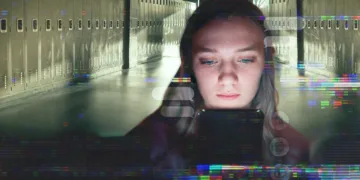
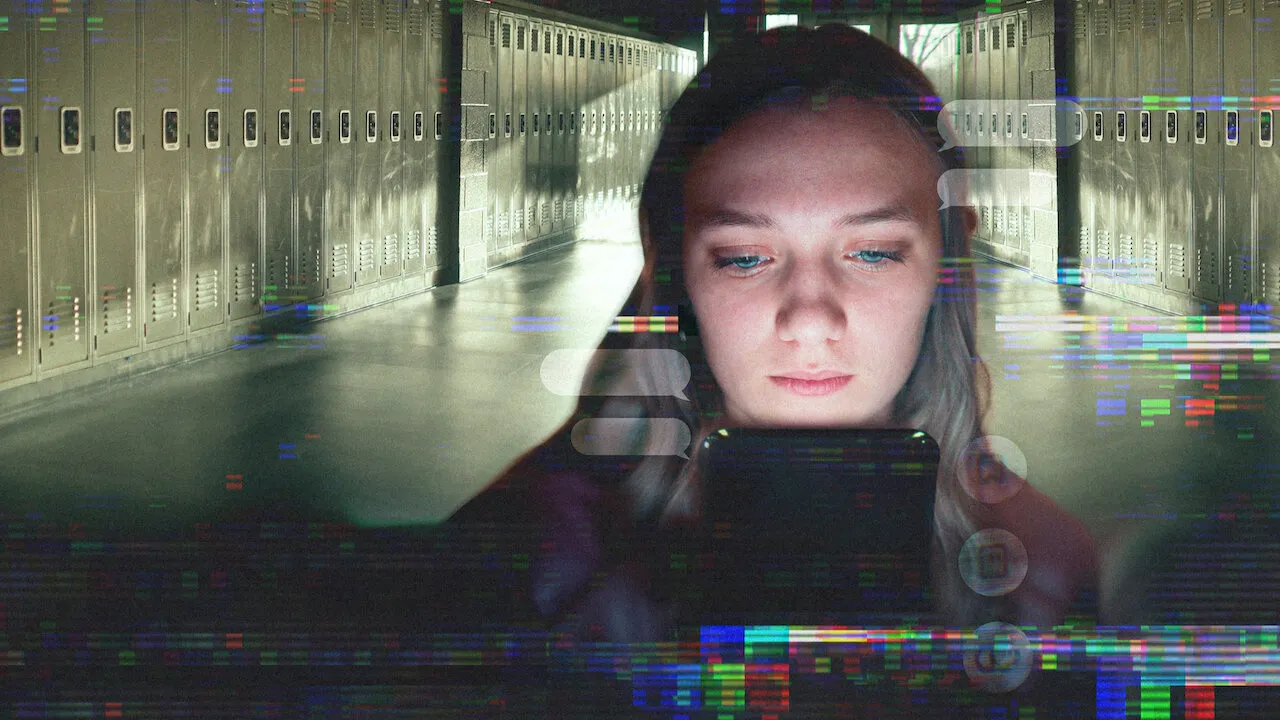
Borgman’s visual approach transforms everyday suburban environments into landscapes of psychological tension. The high school hallway recreations employ expressionistic framing that makes viewers feel observed and judged, the camera’s perspective suggesting the paranoid hypervigilance that characterizes adolescent social anxiety. These sequences avoid melodramatic excess while still conveying the oppressive atmosphere of institutional surveillance and peer judgment that defines the teenage experience.

The text message recreations dominate the screen with stark typography against neutral backgrounds, each cruel word rendered in clinical precision that somehow makes the harassment feel both more intimate and more universal. The messages appear with deliberate pacing that mirrors the victims’ experience of receiving them, creating a temporal rhythm that builds dread through accumulation rather than shock value.
The distorted “Text Voice” used for message readings becomes a character unto itself, a disembodied presence that sounds simultaneously mechanical and malevolent. This audio design choice transforms written harassment into something approaching horror movie territory while maintaining documentary authenticity. The voice carries undertones of dismissiveness and threat that would be impossible to achieve through standard narration.
The documentary’s color palette emphasizes the gray zones of moral ambiguity, favoring muted tones that reflect both Michigan’s seasonal landscape and the ethical murkiness of the case itself. Interior lighting tends toward the naturalistic, avoiding the dramatic chiaroscuro effects that might push the material into exploitative territory while still maintaining visual interest.
Borgman’s editing rhythm alternates between methodical procedural pacing and moments of genuine shock, creating a viewing experience that mirrors the investigation’s own progression from routine inquiry to disturbing revelation. The director resists the temptation toward sensationalistic recreation, instead allowing the authentic horror of the situation to emerge through careful documentation and restrained presentation.
The Psychology of Digital Predation: Exploring Modern Moral Labyrinths
The documentary’s most disturbing insights emerge from its exploration of Munchausen syndrome by proxy adapted for the digital age. Kendra Licari’s systematic psychological torture of her own daughter represents a perversion of maternal protection that creates dependency through manufactured crisis. This dynamic transforms traditional understanding of proxy abuse from physical manipulation to psychological warfare conducted through digital intermediaries.

The small-town setting amplifies every element of the case, creating a fishbowl environment where anonymity becomes impossible and suspicion spreads through social networks with viral intensity. The documentary captures how digital harassment intersects with physical proximity, making the unknown texter simultaneously everywhere and nowhere within the confined social geography of Beal City. This geographic intimacy transforms cyberbullying from a distant threat into something approaching stalking.
The investigation’s focus on innocent parties like Khloe Wilson reveals the collateral damage of digital witch hunts, where technological sophistication meets institutional incompetence to create new forms of injustice. The documentary doesn’t shy away from examining how the search for a perpetrator can itself become a form of harassment, particularly when directed at vulnerable teenage subjects.
The perpetrator’s various explanations expose the inadequacy of conventional psychological frameworks when confronting digital-age predation. Her claims about protective investigation and mental health struggles serve as transparent deflections that reveal the gap between traditional therapeutic language and the reality of technological manipulation. The documentary suggests that digital mediation creates new possibilities for psychological abuse that existing frameworks struggle to categorize or treat.
The case raises fundamental questions about parental authority and technological boundaries in an age where smartphones have become extensions of teenage identity. The school’s resistance to blanket phone bans reflects broader societal tensions between safety and autonomy, protection and privacy, that define contemporary adolescence.
Technical Craft: The Mechanics of Documentary Manipulation
Borgman’s production approach balances technical sophistication with documentary authenticity, avoiding the overwrought stylization that characterizes much contemporary true crime content. The graphic elements serve functional rather than aesthetic purposes, providing clear timelines and identifying information without calling attention to their own design. This restraint allows the material’s inherent drama to drive viewer engagement rather than relying on manufactured visual excitement.

The archive material integration demonstrates careful curation, with body camera footage and attempted security camera analysis providing authentic procedural texture without overwhelming the narrative flow. These sequences ground the investigation in recognizable law enforcement methodology while highlighting the limitations of traditional surveillance in digital-age crimes.
The documentary’s sound design creates an atmosphere of unease without resorting to obvious manipulation. Background audio maintains naturalistic levels while subtly emphasizing the isolation and vulnerability that characterize small-town teenage life. The absence of overwrought musical scoring allows the material’s inherent tension to build organically rather than through external emotional manipulation.
The pacing reveals sophisticated understanding of audience psychology, alternating between procedural methodicalness and moments of genuine revelation in ways that mirror the actual investigation’s rhythm. This structural choice creates authentic rather than manufactured suspense, allowing viewers to experience something approaching the confusion and mounting dread that characterized the case’s development.
However, certain production choices raise questions about exploitation and voyeurism. The extensive recreation of text messages, while serving clear documentary purposes, also risks sensationalizing the victims’ psychological trauma for entertainment value. The decision to provide the perpetrator with substantial screen time creates uncomfortable viewing experiences that blur the line between documentation and platform provision.
The documentary premiered on August 29, 2025. You can watch Unknown Number: The High School Catfish exclusively on the streaming service Netflix.
Full Credits
Director: Skye Borgman
Producers and Executive Producers: Skye Borgman, Ross M. Dinerstein, Rebecca Evans, Tom Forman, Ross Girard, David Metzler, Justin Sprague, Alysia Sofios, Jamie Blank, Kasey Han, Will Mavronicolas, Mark McCune, Andrew Sachs, Kaley Roberts, Tiana Alexandria Williams.
Cast: Lauryn Licari, Sophie Weber, Macy Johnston, Owen McKenny, Shawn Licari, Kendra Licari, Jill McKenny, Dave McKenny, Bill Chillman, Dan Boyer, Mike Main, Craig Wilson, Tami Wilson, Korin Weber, Khloe Wilson, Adrianna, Bradley Peter, Dave Barberi, Melissa Perry, Ruari Marie, Matt Callahan, Zoey Domino.
Editors: Hans Ole Eicker.
Composer: Ian Hultquist.
The Review
Unknown Number: The High School Catfish
Borgman crafts a technically proficient documentary that succeeds as both procedural mystery and disturbing social commentary. The film's strength lies in its restraint, allowing genuine horror to emerge through careful documentation rather than sensationalistic manipulation. While it raises important questions about digital-age predation and family trust, the extensive platform given to the perpetrator feels ethically questionable. The documentary works best as a cautionary tale about the psychological vulnerabilities that technology can exploit, though it occasionally crosses into voyeuristic territory.
PROS
- Exceptional access to all parties involved
- Restrained visual approach that avoids exploitation
- Effective mystery structure that engages viewers
- Authentic portrayal of small-town dynamics
- Technical competence in explaining digital forensics
CONS
- Potentially exploitative treatment of perpetrator
- Limited psychological depth in exploring motives
- Some voyeuristic elements in presentation
- Insufficient examination of systemic failures