



























The search for utopia often begins with an escape from a private hell. For Marlon Brando in the late 1960s, that hell was Hollywood, a kingdom he had conquered and grown to despise. Bill Fishman’s Waltzing with Brando opens on this self-imposed exile, finding the actor amidst the blinding sunlight and saturated greens of Tahiti.
The camera captures a landscape that feels less like a paradise and more like a beautifully appointed prison. Into this world steps Bernard Judge, a Los Angeles architect whose belief in ecologically sound design is as earnest as Brando’s cynicism is profound. Judge arrives to scout land for a hotel, a simple commercial enterprise.
He is soon commandeered by the island’s resident deity for a far grander project: the construction of a sustainable sanctuary on the private atoll of Tetiaroa. The film establishes its central conflict here, in the space between a god’s impossible dream and the mortal architect hired to give it form. It is a story of a partnership built on the unstable ground of genius and eccentricity.
An Uncanny Echo
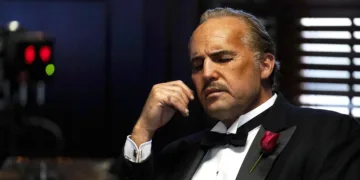
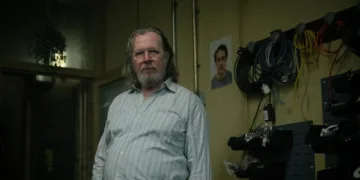
Billy Zane’s work in this film is less a performance than a meticulous resurrection. Aided by transformative prosthetics, the physical resemblance to the Brando of the Godfather era is startling, a spectral echo made manifest. The true artistry, however, lies beyond the makeup.
Zane has perfectly calibrated the infamous vocal cadence, that soft, deliberate purr that seemed to weigh each word before releasing it. Fishman’s camera understands this, often pushing into tight close-ups that allow us to study the subtle mechanics of Zane’s face as he channels the actor’s spirit. The performance manipulates the viewer’s own memory, forcing a constant negotiation between the image of Zane and the phantom of Brando.
He embodies the man’s contradictions without judgment. We see the impish trickster who delights in unsettling the buttoned-up Judge, the fierce activist who saw injustice everywhere, and the weary intellectual exhausted by his own mythos. He doesn’t play Brando. He contains him. In recreated scenes, from tense negotiations on the set of his gangster epic to combative appearances on The Dick Cavett Show, the effect is uncanny.
These moments are filmed with a precision that mimics the source material, yet they feel like found footage from an alternate reality. Zane serves as a near-perfect vessel for a ghost, revealing the profound solitude of a man who changed the world and then tried to leave it behind. It is a performance that explores the existential weight of a singular identity, asking what remains when a man becomes a monument.
A Foundation of Sand
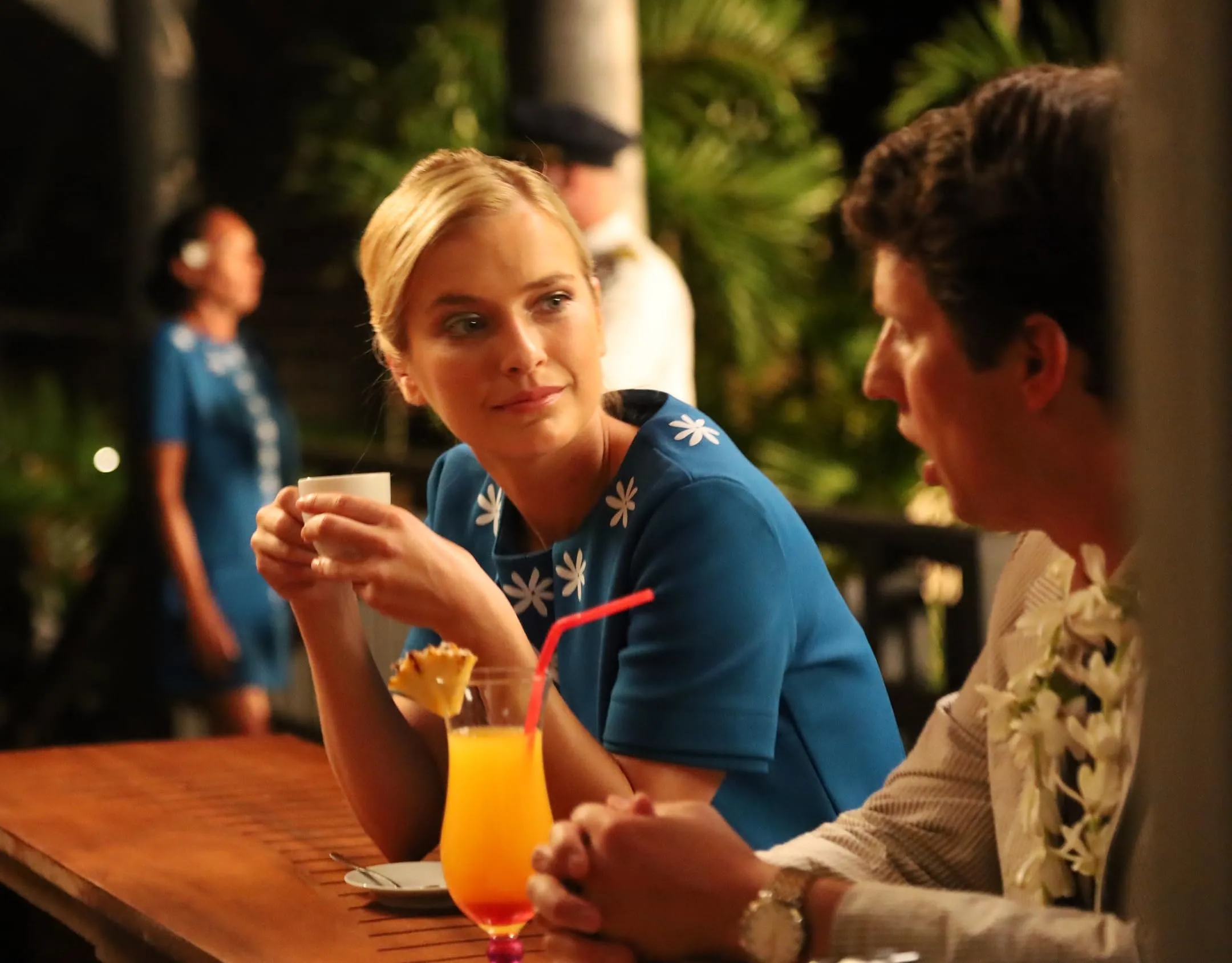
A structure is only as strong as its foundation, and here the film collapses. The central architecture of the narrative, the dynamic between the icon and the architect, is critically unbalanced by Jon Heder’s performance as Bernard Judge. Heder portrays Judge with a wide-eyed, slack-jawed wonder that feels imported from a different film, likely a broad comedy from twenty years ago.

He offers no interiority; his Judge is a reactive surface upon which the film projects its simplistic fish-out-of-water tropes. This creates a performance vacuum. Zane’s Brando is a magnetic force, but he has nothing of substance to pull against. Heder’s presence feels less like a character and more like an audience surrogate from a lesser movie, gaping at the strange man.
This mismatch sends fractures through the entire production. The film’s tone shifts violently, without warning. One scene probes Brando’s existential despair with quiet sensitivity, while the next offers a clumsy, exoticizing gag about Tahitian customs that feels both dated and dissonant. The film cannot decide if it is a serious character study or a light farce. This indecision is amplified by a script that leans on a near-constant, overbearing narration.
In classic noir, voiceover pulls the viewer deeper into a protagonist’s psyche. Here, it functions as a crude expository tool that holds the audience at arm’s length. The film’s visual language is similarly confused. Conversational scenes are assembled through a disorienting sequence of mismatched eyelines and reaction shots, suggesting the actors may not have been in the same room. This technical sloppiness makes paradise feel fraudulent, a poorly constructed cinematic artifice.
The Brilliant Ruin
The film struggles to become a cohesive whole, remaining a fascinating character study locked inside a flawed cinematic frame. It gestures toward a “sunshine noir,” a story of moral ambiguity under a bright, unforgiving sun, but it lacks the courage of its convictions. It retreats from the darkness that Brando so clearly embodied, preferring easy jokes.
The movie offers a valuable glimpse into Brando’s desire to build a legacy apart from the one Hollywood had assigned him, something real and permanent. His quest to engineer a sustainable future on Tetiaroa is a poignant metaphor for his attempt to engineer a sustainable identity, one that could survive beyond the ephemeral flicker of the projector. The film, in its fragmented state, mirrors the tragic incompletion of that project.
The primary reason to see the movie is Billy Zane. His powerful work rises above the picture’s many shortcomings. The recreated scenes from Brando’s famous roles are effective, but the film’s lasting value is in the quieter moments between the actor and his unrealized dream. The movie itself is much like Brando’s Tetiaroa project: a grand and ambitious concept that is ultimately an unfinished cathedral. It is a beautiful ruin, worth visiting for the ghost that haunts it. The final impression is not of a finished film, but of a compelling piece of evidence.
Waltzing with Brando is a biographical drama that premiered at the Torino Film Festival on November 30, 2024. The film had a theatrical release in the United States on September 19, 2025. The film is currently available in select theaters and is not yet available on major streaming platforms.
Full Credits
Director: Bill Fishman
Writers: Bill Fishman, Bernard Judge
Producers and Executive Producers: Bill Fishman, Billy Zane, Dean Bloxom, Doug Dearth, Brett Kerr
Cast: Billy Zane, Jon Heder, Richard Dreyfuss, Camille Razat, Alaina Huffman, Tia Carrere, James Jagger, Rob Corddry, Sofia Masson, Woody Fu, David Guierera, Jessica Rizo, Charles Venturi
Director of Photography: Garrett O’Brien
Editors: Michael Yanovich
Composer: Matei Bratescot
The Review
Waltzing with Brando
A fascinating failure, Waltzing with Brando is a structurally unsound film built around a monumental, load-bearing performance. Billy Zane’s uncanny inhabitation of Marlon Brando is a work of mesmerizing artistry, capturing the actor's spirit with eerie precision. This central achievement is unfortunately stranded within a tonally confused narrative, weakened by a miscast co-star and clumsy filmmaking. The movie is a cinematic curiosity, a compelling character portrait trapped inside a picture that cannot support its weight. It is a brilliant ruin, worth visiting for the ghost that haunts it.
PROS
- Billy Zane delivers a transformative, career-defining performance as Marlon Brando.
- The film explores a fascinating and little-known chapter of the actor's life.
- The meticulous recreations of Brando's iconic screen and television appearances are a highlight.
CONS
- The film suffers from severe tonal inconsistency, shifting awkwardly between serious drama and broad comedy.
- Jon Heder is miscast as Bernard Judge, creating an unbalanced central dynamic.
- An over-reliance on narration and disjointed editing weaken the storytelling.