



























“You’ll be experiencing radical detachment,” Isaiah White explains as he takes the phone. The line is delivered with the serene confidence of a wellness guru, yet it lands with the finality of a closing cell door. In Him, this is the moment the world shrinks to the size of a remote, sun-scorched training compound, a private kingdom where legendary quarterback Isaiah (Marlon Wayans) molds the next generation.
His new ward is Cameron Cade (Tyriq Withers), a phenom whose professional dreams were nearly shattered by a traumatic brain injury. This invitation is his last hope. The film presents itself as a psychological sports horror, a story about the hidden costs of greatness.
Isaiah’s compound is a place outside of normal rules, a manicured desert prison where mentorship and madness become indistinguishable. The training is punishing, the methods are unorthodox, and the promise of glory seems to mask a far more sinister transaction.
A Duel of Presence and Absence
The film rests almost entirely on Marlon Wayans’s portrayal of Isaiah White, a performance of immense charisma and coiled menace. Wayans builds Isaiah as a man who is part motivational speaker and part cult leader, his every word a mix of encouragement and threat. It is a deeply physical and emotionally committed performance.
We see it in the forced, camera-ready smile that never quite reaches his eyes, the barely contained rage that flickers behind his disciplined facade, and the seamless shifts from paternal warmth to cold intimidation.
Isaiah is the film’s gravitational center, and the tension he generates is its most potent asset. He expertly manipulates Cam’s admiration, turning the young man’s ambition into a weapon against him. His brand of mentorship is a form of psychological torture, breaking down his subject’s identity to rebuild it in his own image.
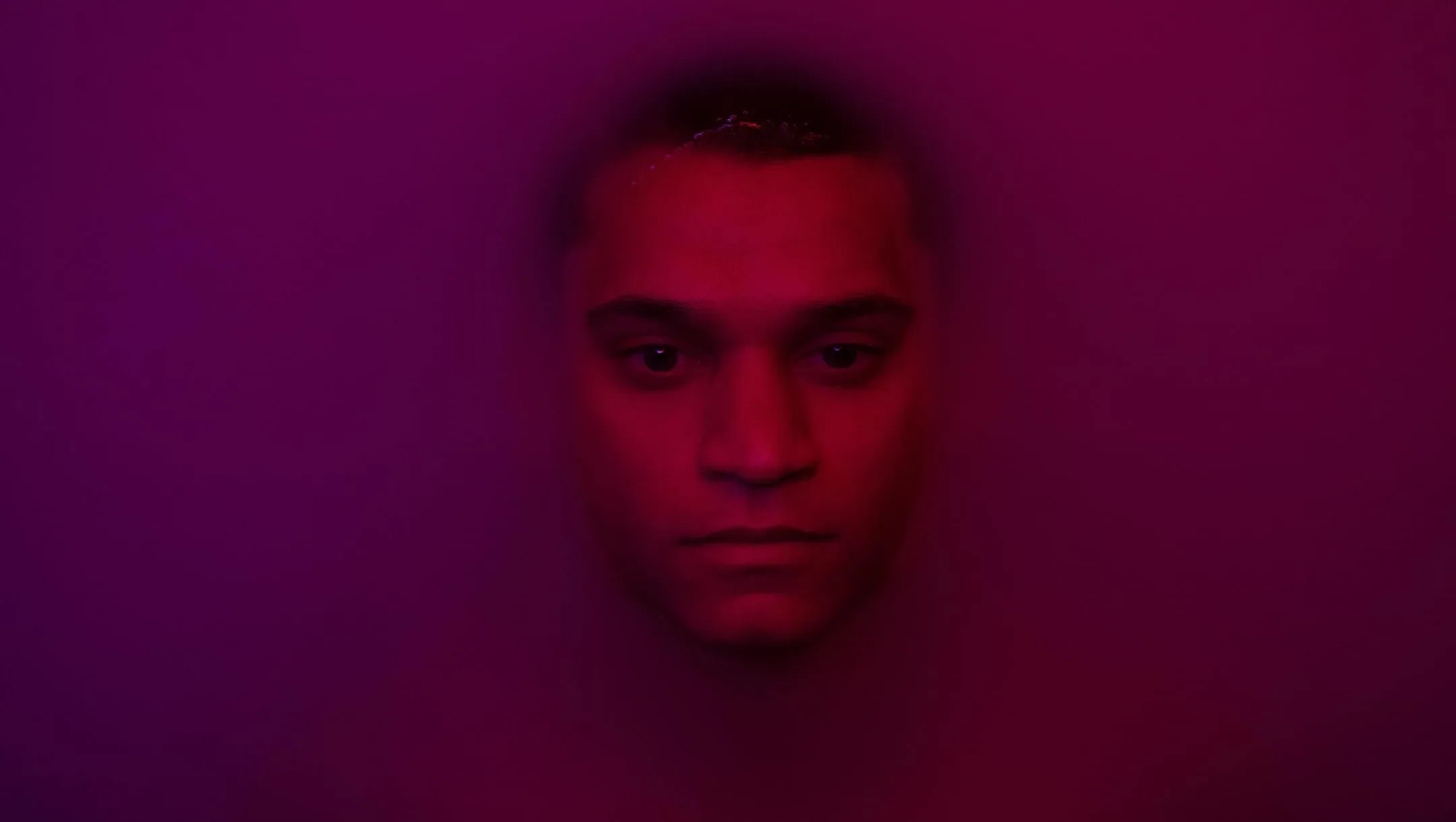
Against this force, Tyriq Withers’s Cameron Cade is a study in reaction. As the story’s protagonist, Cam’s injury and disorientation render him passive, a dazed observer in his own life. The script gives him little internal world to inhabit, positioning him as a physical object to be acted upon rather than a person with agency. For much of the runtime, he drifts through scenes with a quiet confusion that can alienate audience investment.
His performance finds its footing in the film’s opening moments and ignites in the final, shocking sequence, but the character remains more of a vessel than a hero. His passivity feels less like a symptom of trauma and more like a narrative requirement to keep him inside the compound long after any rational person would have fled.
The compound’s strange atmosphere is amplified by its supporting inhabitants. Julia Fox as Isaiah’s wife, Elsie, is an otherworldly presence. A bleached-blonde influencer who glides through the brutalist architecture with an unnerving calm, she embodies the curated perfection and hidden rot of their world. Her cryptic smiles and meticulously crafted social media persona suggest a deeper knowledge of the compound’s secrets, making her a figure of modern horror.
Tim Heidecker appears briefly as Cam’s rapacious agent, a perfect sketch of the corporate greed that feeds young athletes into the grinder. His brand of surreal anti-comedy is repurposed here into a disturbingly plausible portrayal of avarice. Providing a dose of cynical commentary is Jim Jefferies as the sardonic team doctor. His deadpan delivery and moral indifference represent the willing complicity required to maintain such a system of abuse. He is the jester in a court of horrors, his jokes landing with the thud of a body hitting the turf.
A Playbook Full of Half-Measures
Him is built on a foundation of rich ideas: the cult of celebrity in American sports, the perversion of mentorship, and the brutal physical toll demanded of athletes. These concepts are presented with initial clarity but are left largely unexplored. The film gestures toward a serious critique of football culture, raising questions about hero worship and the commodification of Black bodies, but it seems more interested in its surreal aesthetic than in any meaningful commentary.
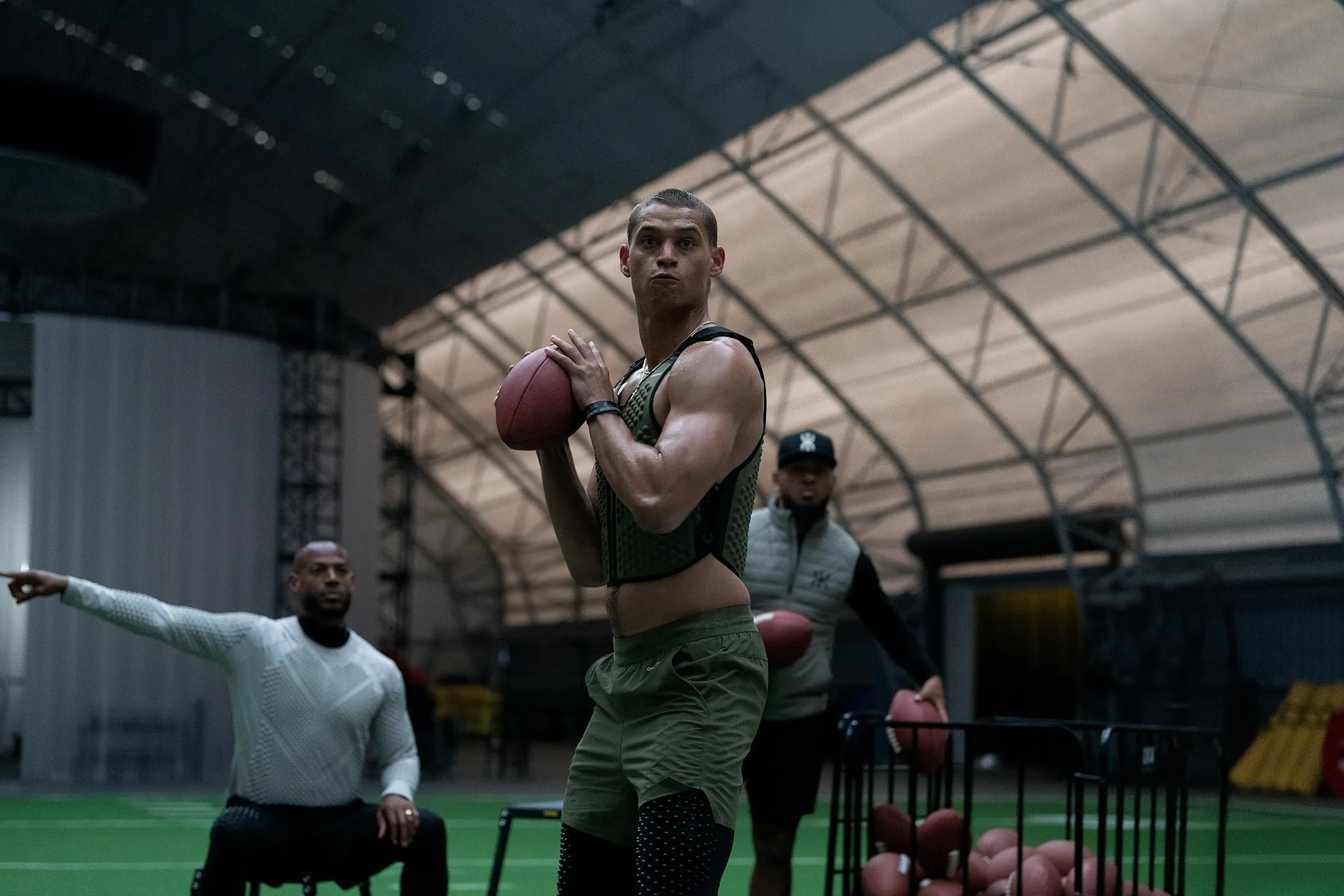
The potential for a sharp examination of chronic traumatic encephalopathy, the psychological pressures of fame, or the parasocial relationships between fans and stars is present but remains dormant. The film points at the monster but refuses to dissect it, using the very real horrors of the sport as a backdrop for a more conventional horror narrative.
This thematic superficiality is matched by a familiar narrative structure. The film is a classic “spider web” plot, where an unsuspecting protagonist is lured to an isolated location run by sinister figures. From the moment Cam arrives and surrenders his phone, the story follows a predictable trajectory. Every warning sign, from the cult-like followers on the road to the suspicious blood transfusions, is so pronounced that Cam’s failure to recognize the danger strains believability.
This removes suspense, turning the first two acts into a tedious waiting game for the inevitable horror to erupt. The audience is always several steps ahead of the hero, watching him walk into a trap that has been clearly labeled. The script telegraphs its punches, making the build-up feel stagnant instead of tense.
The film’s identity is likewise unsteady. It struggles to find a consistent tone, wavering between an eerie psychological thriller and a visceral body horror film. Because it never fully commits to either path, it masters neither. The psychological elements that could have explored Cam’s fractured mental state are underdeveloped.
His brain injury becomes an excuse for surreal visuals rather than a true exploration of a damaged mind. The outright horror is too sparse to be effective until the finale, leaving the long middle section of the film to sag under the weight of its own inaction. The narrative stalls, circling the same points without deepening the characters or the stakes.
Style in Search of Substance
Director Justin Tipping’s approach is visually ambitious, yet it often feels narratively unfocused. The film’s signature visual is an X-ray effect that reveals shattered bones and internal damage during moments of high impact. Initially, this is a potent technique, a visceral illustration of the sport’s inherent violence. Its repeated use, however, diminishes its power, turning it into a stylistic tic.
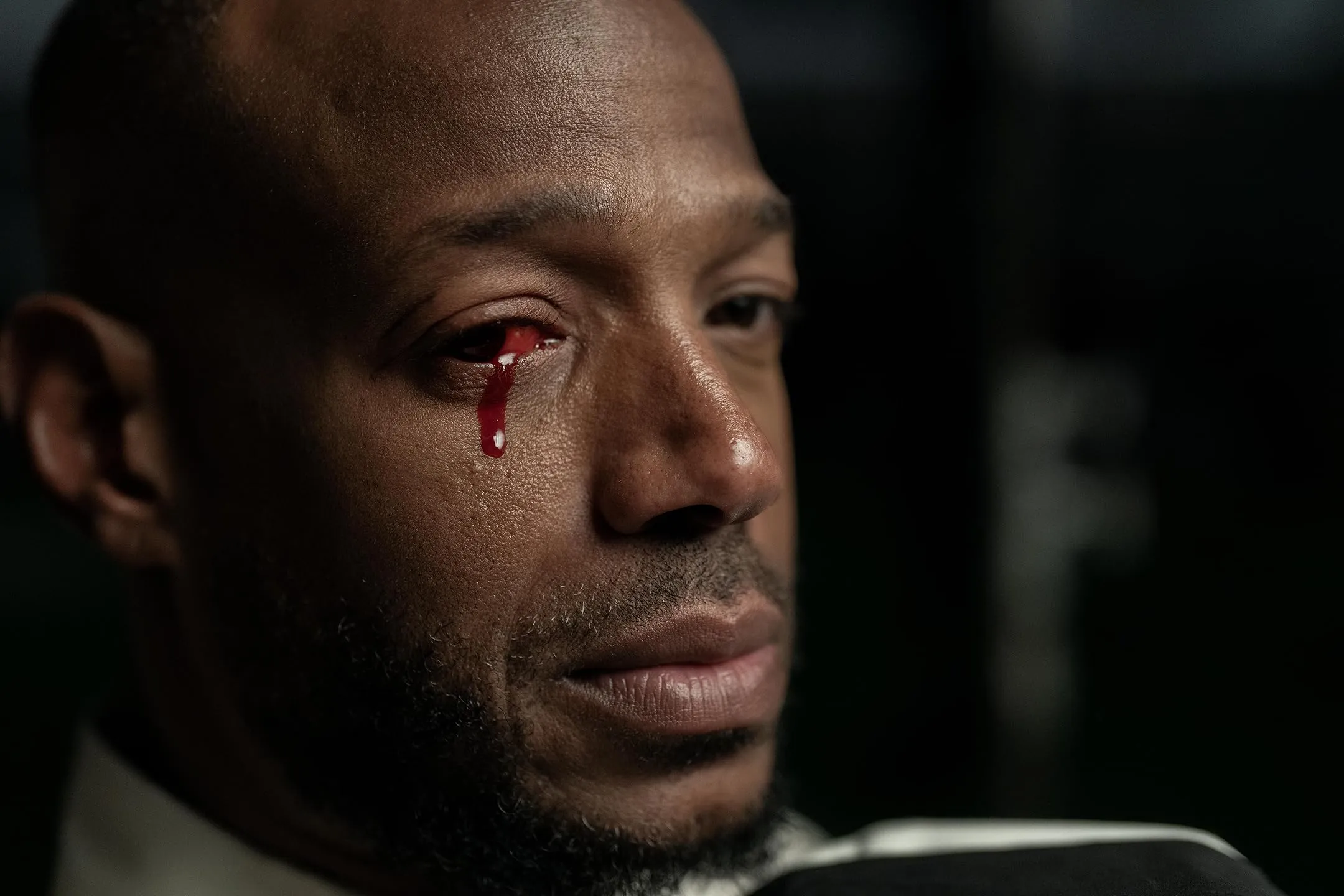
The effect aestheticizes the very brutality it purports to critique, making the violence look cool instead of horrifying. In its second half, the film abandons restraint and descends into a “gonzo” style, full of phantasmagorical and trippy imagery. A visual reenactment of “The Last Supper” is striking but feels disconnected from the story, a bizarre flourish for its own sake. This approach favors fleeting shock over the slow-burn dread the premise promises, creating a work that is more a collection of arresting images than a coherent film.
Where the visuals falter, the soundscape succeeds. Bobby Krlic’s unsettling musical score is essential to the film’s atmosphere. The tense, industrial drones and discordant electronic notes create a persistent feeling of dread that the script and cinematography often fail to sustain on their own. The music works harder than the narrative to build tension, filling the compound’s open spaces with a sense of claustrophobia and paranoia. It is a masterclass in creating an auditory environment of decay.
Tipping employs quick cuts and disorienting camera work to put the audience inside Cam’s concussed mind. The technique is meant to create ambiguity, blurring the line between what is real and what is a symptom of his injury.
The execution, however, often tips over into outright confusion. Instead of making the audience question the reality of the events, it makes them question what is physically happening on screen. The geography of a scene becomes muddled, and the sequence of events unclear. This substitutes genuine psychological disorientation for simple visual incoherence, a crucial failure that undermines the narrative’s clarity at key moments.
An Explosive Ending Without a Fuse
The film’s final act is an eruption of baroque, gory violence. It is a visually unforgettable spectacle, a bloody crescendo that finally allows Tyriq Withers to break Cam free from his passivity. The raw, physical nature of the climax is undeniably memorable, an aesthetic jolt after the long, slow build. The sheer audacity of the finale is something to behold, a commitment to excess that is both ludicrous and arresting.
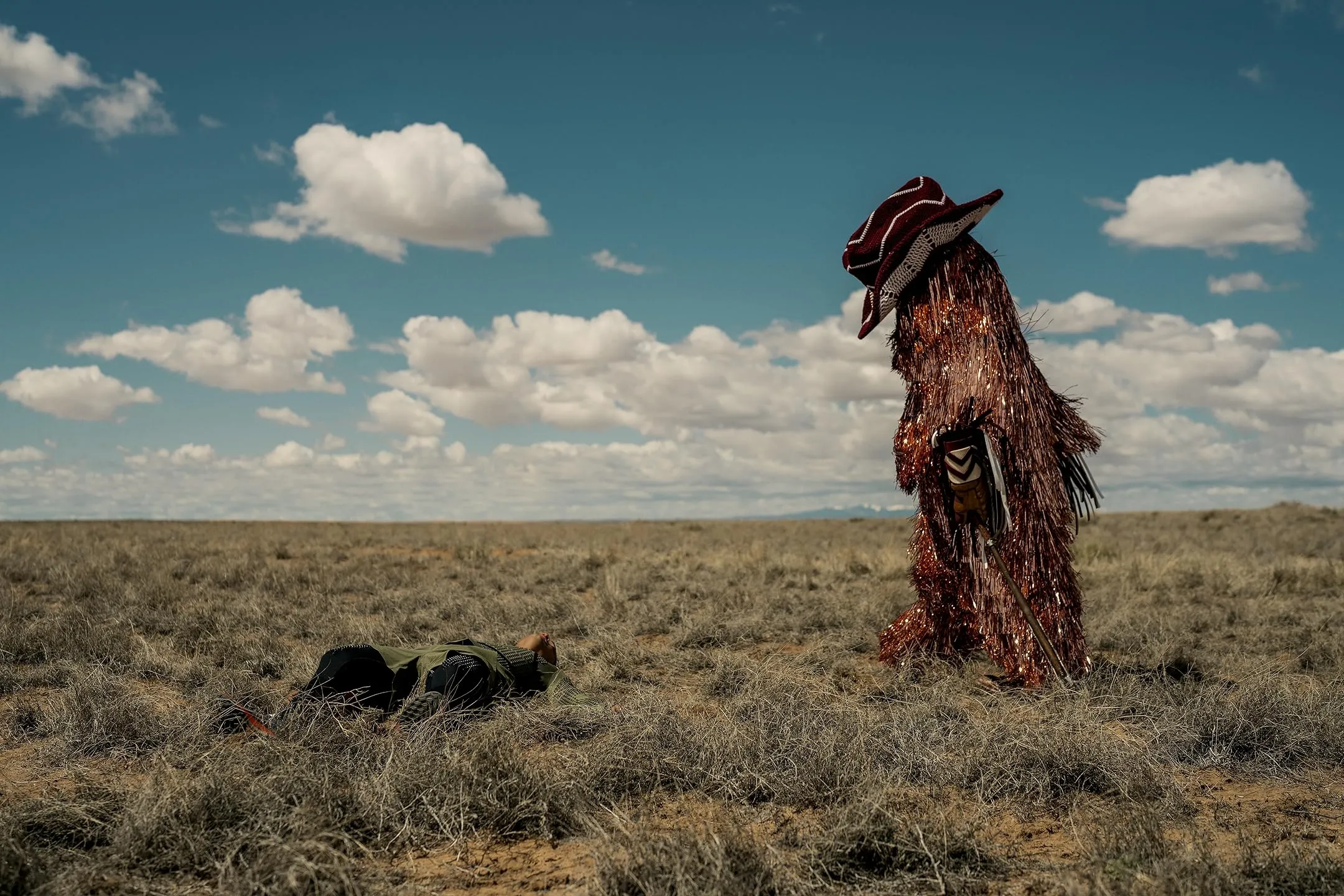
The problem is that this ending feels disconnected from the story that preceded it. The climax is poorly set up, with key character choices appearing abruptly and contradicting their established behavior. It feels less like the natural culmination of the film’s events and more like an ending tacked on for its shock value.
Him spends its runtime building the foundation for a story about a psychological collapse but delivers a finale of pure physical destruction. The result is a film that squanders its own potential, trading a meaningful resolution for a hollow, albeit spectacular, display of fury. It successfully gets into the end zone, but the entire game leading up to it was a fumble.
“Him” is a supernatural, psychological sports horror film produced by Jordan Peele’s Monkeypaw Productions and distributed by Universal Pictures. The movie is scheduled to be released in the United States on September 19, 2025. It follows a young football player who trains at an isolated compound with a legendary quarterback, only to find himself in a situation that is more sinister than he could have imagined.
Full Credits
Director: Justin Tipping
Writers: Zack Akers, Skip Bronkie, Justin Tipping
Producers: Jordan Peele, Win Rosenfeld, Ian Cooper, Jamal Watson
Executive Producers: David Kern, Kate Oh, Zack Akers, Skip Bronkie
Director of Photography: Kira Kelly
Editors: Taylor Joy Mason
Composer: Bobby Krlic
Cast: Marlon Wayans, Tyriq Withers, Julia Fox, Tim Heidecker, Jim Jefferies
The Review
Him
Him is a film of frustrating contradictions. It is anchored by a phenomenal, terrifying performance from Marlon Wayans that almost single-handedly sustains the picture. The direction is stylish and the premise is potent, hinting at a sharp critique of modern sports culture. Yet, the film fumbles its thematic potential with an underdeveloped script, a predictable plot, and an inconsistent tone. Its shocking finale provides a memorable burst of violence but feels disconnected from the sluggish build-up, leaving a hollow victory in a game that was already lost.
PROS
- A commanding and genuinely menacing lead performance from Marlon Wayans.
- An unsettling and atmospheric musical score that effectively builds dread.
- An interesting premise that attempts to blend the sports and psychological horror genres.
- Some striking, if overused, visual techniques.
CONS
- A predictable narrative that follows familiar horror tropes, reducing suspense.
- Underdeveloped themes that fail to provide meaningful commentary on its subject matter.
- The protagonist is too passive for much of the film, making him difficult to root for.
- Uneven pacing makes the middle section feel slow and repetitive.
- The baroque finale feels abrupt and thematically unearned.