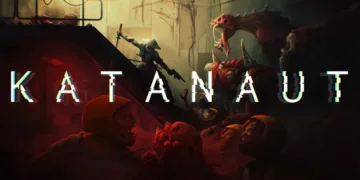





















The airlock hisses open onto silence. A lone warrior, Naut, steps aboard a derelict space station, a place that should be bustling but is now a tomb. The mission was to investigate a distress signal, yet the only greeting is the grotesque shriek of twisted creatures that were once human. Katanaut establishes its grim reality immediately.
This 2D action game is a fusion of genres, blending the high-speed, precision swordplay of its contemporaries with the deep, oppressive dread of cosmic horror. Survival here is not guaranteed. It is earned through bloody, fast-paced combat inside corrupted steel corridors, where every shadow holds a new threat and every death is a lesson. The game paints a stark picture of its world, inviting you to uncover its secrets one violent run at a time.
Environmental Catastrophe
Katanaut trusts its players to be detectives. The game’s narrative is not presented in overt cutscenes or long blocks of text; it is embedded within the station’s decaying architecture. This “show, don’t tell” approach is fundamental to its design, asking you to piece together the tragic events from clues left behind. You might find a hastily erected barricade in a maintenance hallway, its defenders long dead.
A scientist’s abandoned log may flicker on a terminal, detailing the initial discovery of an anomaly and the subsequent, rapid descent into madness. The careful placement of bodies tells its own story of a desperate last stand. This method of environmental storytelling creates a powerful pull, encouraging exploration and turning the player from a simple combatant into an active participant in uncovering the station’s central mystery. What was this place? What were they studying that led to this disaster? The answers are there, scattered among the carnage.
This sense of discovery is amplified by the game’s masterful use of cosmic horror. The aesthetic borrows heavily from Lovecraftian lore, focusing on the terror of the unknown and humanity’s insignificance. As you progress deeper, the station’s cold, industrial shell gives way to something disturbingly organic. Steel beams are entwined with pulsating flesh, and blinking server lights are replaced by watchful, unblinking eyes in the walls. The enemies mirror this transformation.
You begin by fighting the corrupted remnants of the human crew, but soon face abstract horrors: creatures of writhing tentacles, chitinous plating, and geometries that seem to defy nature. The game builds a persistent, oppressive atmosphere of dread rather than relying on simple jump scares. It is a slow-burn horror that seeps in between the frantic moments of combat.
A small, fortified hub provides your only sanctuary from this nightmare. Here, a handful of survivors like the Specialist, who provides new skills, and the Keeper, who helps you make sense of collected memories, offer a sliver of stability. These characters act as a narrative anchor, much like the denizens of the hub in Hades, grounding you before you plunge back into the abyss.
The Science of Violence
The combat system in Katanaut is its heart, a precisely engineered engine of fast, fluid, and deeply punishing action. At your disposal is a simple toolset: a primary katana, a secondary firearm, a dodge, and two customizable skills. What elevates these familiar mechanics is the implementation of a stamina meter. Every single action, from the quickest sword slash to a desperate dodge roll, consumes a portion of this meter.

This design forces a calculated rhythm upon the player. Mindless button-mashing will leave you exhausted and vulnerable, unable to attack or defend. Success requires a strategic approach, turning each encounter into a high-speed resource management puzzle where you must balance offense and defense to survive. The system rewards measured aggression and punishes recklessness, adding a satisfying layer of tactical depth to the moment-to-moment gameplay.
Your entire approach to a run is defined by the katana you select at the outset. This choice is permanent for that attempt and dictates your combat philosophy. The dash katana, for example, is built for relentless offense, lunging you forward with every strike and allowing you to slice through entire groups of enemies.
This high mobility comes with a risk; a poorly aimed dash can send you careening into a hazard or off a platform. Alternatively, the parry katana rewards a more defensive, methodical player. It lacks the forward momentum but allows you to negate incoming attacks with a well-timed block, creating an opening for a devastating counter. Other katanas introduce elemental effects or unique attack patterns, ensuring that each weapon offers a distinct experience and encourages experimentation over many runs.
Firearms provide crucial tactical flexibility, but the game cleverly prevents you from relying on them. Your gun’s ammo is a finite resource, and the only way to replenish it is by successfully landing melee hits with your katana. This creates a brilliant and aggressive feedback loop. It actively discourages passive, long-range play and constantly pushes you back into the fray.
You might use a shotgun to blast an opening in a crowd, then dash in with your sword to finish them off and recover the spent ammunition. This constant weaving between ranged and melee attacks is the core of the game’s combat flow.
Your loadout is rounded out with two active skills, which can offer anything from a powerful area-of-effect ground smash to an ability that briefly slows time. Pairing the right skills with your chosen katana is key; the time-slowing ability, for instance, makes the precise timing required for the parry katana far more manageable.
This intricate system is necessary because you are exceptionally fragile. Most runs will end after just two or three hits. The lack of any invincibility frames after taking damage means a single mistake can lead to a quick death if you are caught in a flurry of attacks. This high lethality makes every encounter incredibly tense. The game’s primary weakness emerges here, as some reviews have noted issues with visual clarity.
In the heat of battle, with blood splattering across the screen and particle effects flashing, smaller enemies or faint projectiles can become lost in the visual noise. This can lead to frustrating deaths that feel unearned.
Still, most encounters feel like fair, if demanding, tests. Elite enemies with special modifiers can change the entire dynamic of a room, while hidden bosses, found through an amusing “cat system,” provide unique challenges. The main boss fights serve as climactic examinations of skill, demanding that you use every tool and technique you have learned to succeed.
Failure is Progress
As a roguelite, Katanaut is built upon a cycle of death and repetition. Each time you fall, you are returned to the safety of the central hub, stripped of your in-run upgrades but retaining key resources for permanent progression. You then venture back into the station, which reconfigures its layout for each new attempt. The game uses a combination of handcrafted room designs and procedural generation to stitch its levels together.

This approach ensures that while the overall flow of a biome remains familiar, the specific path and enemy placements are unpredictable, striking a balance between authored design and endless replayability. The game also incorporates a Metroidvania-style map, complete with shortcuts and areas that require backtracking. Some may find this exploration slows the pace of an otherwise blisteringly fast game, but it encourages a more thorough approach to clearing each level.
The sting of failure is mitigated by a robust permanent progression system. The primary currency for this is memory fragments, which you collect during your runs. Back at the hub, these fragments are used to unlock new katanas, a wider pool of available skills, and powerful passive upgrades called implants. This system is the long-term engine of your growth, ensuring that even a run that ends in the very first room can contribute to your overall power.
It provides the crucial “one more run” incentive that defines the genre, as a new weapon or a game-changing skill might be just a few fragments away. The implant system adds another strategic layer, as you have a limited number of slots to equip these powerful buffs. This limitation prevents you from becoming overpowered and forces you to make meaningful choices about your build before a run even begins, encouraging you to specialize in a particular playstyle.
During a run, your power is supplemented by temporary upgrades. Gold can be spent at shops for new weapons or health, while syringes offer a choice between several immediate statistical boosts, such as increased damage or a higher critical hit chance. These in-run choices can feel less impactful than they do in other roguelites. Often, a direct damage upgrade is the obvious best choice, making the decision feel less strategic than it could be.
Similarly, finding a new, high-quality weapon mid-run presents a difficult dilemma: do you swap your currently upgraded starter weapon for a powerful but un-upgraded new one? These systems create interesting short-term decisions, but they lack the run-altering potential seen in games like The Binding of Isaac, where a single item can completely redefine your strategy.
A Symphony of Gore and Synth
The presentation in Katanaut is a significant achievement. Its 2D pixel art is meticulously detailed, with fluid animations that are essential for the game’s fast-paced combat to feel responsive and fair. The artists have created a deeply atmospheric world, using color to great effect. The early industrial sections are awash in cold blues and sterile grays, which gradually give way to the sickly purples and deep crimsons of the more heavily corrupted parts of the station.

Dynamic lighting casts long shadows, hiding threats just out of view, while the generous use of gore ensures that every impact feels weighty and brutal. Blood coats the walls and floors after every fight, serving as a visceral record of your violent passage. While this visual density is impressive, it can occasionally hinder gameplay. The option to adjust the luminosity of different visual elements is a welcome feature to help mitigate the moments when enemies blend into the background.
The sound design works in perfect harmony with the visuals to create an intense and immersive experience. The soundtrack is a driving, dark synthwave score that acts as the pulse of the game. The music swells during intense combat encounters and recedes to a low, ominous hum during moments of quiet exploration, perfectly matching the on-screen action.
It becomes a motivating force, pushing you forward through the chaos. The sound effects are equally important. Each weapon has a distinct and satisfying sound, from the sharp clang of a katana to the heavy boom of a shotgun.
More important, enemy attacks are telegraphed with clear audio cues. Learning to recognize the screech of a lunging creature or the charging sound of a projectile is vital for survival. The combination of the impactful combat sounds and the subtle environmental audio, like the hiss of a steam pipe or the distant groan of straining metal, makes the station feel like a living, breathing, and deeply hostile place.
The Review
Katanaut
Katanaut is a brutal and stylish roguelite that delivers an exceptional combat experience within a deeply atmospheric world. Its fusion of high-speed action and cosmic horror is masterfully executed, creating a compelling loop of death and discovery. While it doesn't innovate on the genre's formula and can suffer from visual clutter during intense fights, its polished presentation and satisfying mechanics make it a standout title. It's a demanding yet rewarding experience that fans of action roguelites should not miss.
PROS
- Fast, fluid, and precise combat system.
- Excellent atmospheric world-building and pixel art.
- Strong sense of progression that makes each run feel meaningful.
- Superb sound design and a driving synthwave soundtrack.
CONS
- Adheres closely to established roguelite conventions without much innovation.
- On-screen action can become visually cluttered, leading to some frustrating moments.
- The high difficulty may be off-putting for some players.