
























![Kingdom Hearts Collection [I-III] Review](https://gazettely.com/wp-content/uploads/2026/10/Kingdom-Hearts-Collection-I-III-1-360x180.webp "Kingdom Hearts Collection [I-III] Review: KHII Holds Steady as Newer Entries Fluctuate 40")
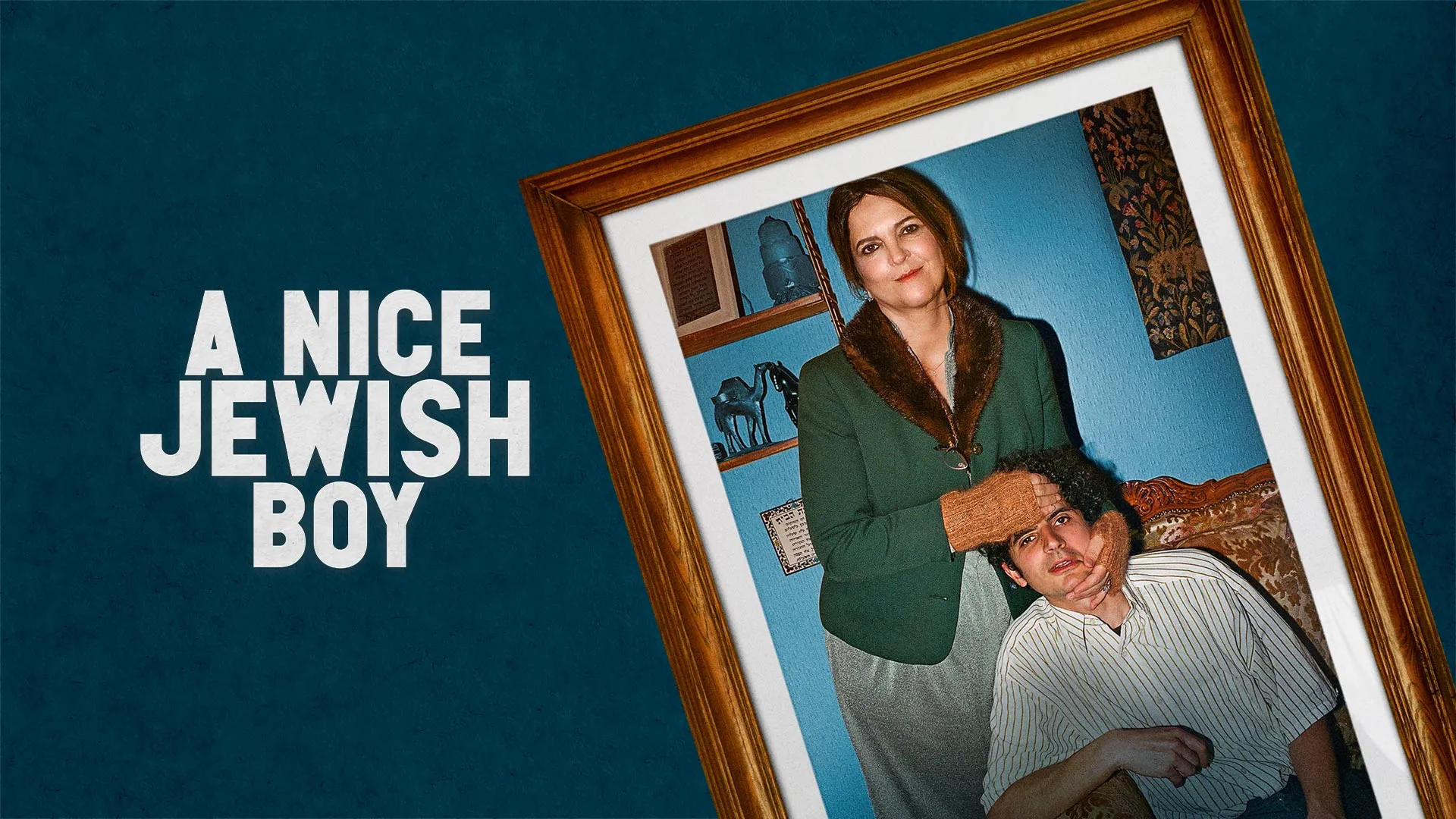

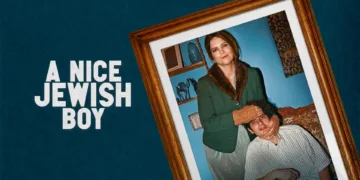
A lie, told with enough conviction, can become a kind of architecture, a room built to shield a loved one from a world grown cold. This is the space Ruben Bellisha inhabits. At 27, he is a man-child of prodigious charm, his life an intricate performance for an audience of one: his ailing mother, Giselle. Director Noé Debré introduces them as historical remnants, the last two Jews in a Parisian suburb that has shed its former identity.
Giselle, housebound by sickness and a creeping fear of the antisemitism she feels closing in, wants to flee. Ruben, who moves through this same world beloved and unbothered, responds by carefully curating her reality. He is the guardian of a past that no longer exists. The film that unfolds is not a simple comedy but a gentle, melancholic meditation on the moral ambiguity of protection and the weight of a history that two people are left to carry alone.
A Fortress of White Lies
The claustrophobic heart of the film is the Bellisha apartment, a space that functions as both sanctuary and prison. Here, the central drama plays out through a series of tender deceptions. The relationship between Ruben and Giselle is a finely wrought study in codependence, a system of unspoken agreements where his lies are met with her willful suspension of disbelief.
He is a bumbling, compulsive fabulist; she is a woman of formidable perception and unyielding tradition. Their dynamic is the film’s narrative engine, generating moments of high comedy and quiet pathos. When the last kosher butcher closes, Ruben procures a halal chicken, an act of desperate improvisation that leads to a farcical confrontation and a subsequent, absurdly solemn ritual cleansing of every plate and fork. The incident is a perfect microcosm of their existence: his frantic effort to maintain the illusion, her grounding in a reality of ritual that he cannot fake.
The camera often frames them in tight two-shots, emphasizing their isolation from the world outside. Michael Zindel portrays Ruben with a perpetual motion of nervous energy, his affability a thin veneer over a deep-seated panic. Agnès Jaoui is his magnificent counterpoint as Giselle. She uses silence as a weapon and a comfort, a single discerning glance conveying everything she knows but will not say. Her performance suggests that she is not a victim of his deception but a willing participant in a story they must tell themselves to survive.
Humor in the Face of Prejudice
Debré confronts the specter of antisemitism not with righteous anger, but with a wry, knowing wit that feels deeply rooted in a culture of survival. The film finds its sharpest satirical edge in dissecting the clumsy performance of tolerance. The script stages various encounters where Ruben is subjected to a kind of “positive racism,” a well-intentioned othering that is as absurd as it is insidious.

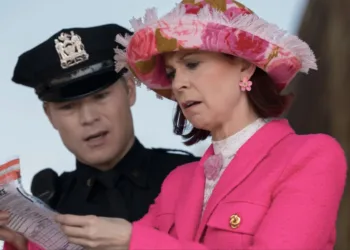
In a key sequence, he is recruited by city officials to be their token Jew, a smiling face in a photo-op designed to advertise a diversity that has already vanished. He poses awkwardly in a kippah, a living exhibit. The humor is layered with discomfort, exposing the hollowness of performative inclusion. The screenplay’s chutzpah is its greatest asset, unafraid to find irony in its characters’ own prejudices.
Giselle’s offhand remark about not wanting to move to Israel because “there are so many Jews there” is a brilliant piece of self-implicating comedy. Visually, Debré contrasts Giselle’s fearful, interior world with Ruben’s experience on the streets. He shoots the neighborhood with a warm, handheld intimacy, capturing the easy camaraderie Ruben shares with his Arab and African neighbors. This dissonance between perception and reality creates a quiet but persistent argument for a humanism that exists beyond fear.
A Reluctant Adulthood
Ruben’s journey is a prolonged stasis, an adulthood held in abeyance by duty and fear. The film presents him with several potential futures, each a pre-packaged version of adult identity. His cousin schools him in the art of being a traveling salesman, a role requiring a different kind of performance. Other paths lead to Israel or a quiet life as a synagogue caretaker in another town.

Ruben resists them all, each choice representing an abandonment of the fragile world he maintains. His personal life is similarly provisional, defined by a secret affair with a married neighbor. It is a relationship that offers the illusion of escape without the burden of actual commitment, another facet of his arrested development. The narrative’s true inciting force is biological: Giselle’s steady physical decline.
As her body weakens, the architecture of Ruben’s lies begins to crumble. Her mortality is the one truth he cannot edit or conceal. The film understands that growing up is rarely a heroic choice; it is often a reluctant surrender. His final reckoning is not a triumphant leap into maturity but a quiet acceptance of a reality that has finally become too heavy to rewrite.
The film, also known by its French title Le Dernier des Juifs (The Last of the Jews) and its international title A Good Jewish Boy, is a 2024 French comedy-drama movie. It is the feature directorial debut of screenwriter Noé Debré. The film centers on Ruben Bellisha, a young man who lives with his anxious mother, Giselle, in a working-class Parisian suburb where their once-vibrant Jewish community is rapidly fading, leaving them as the last Jewish residents. The film had its French release on January 24, 2024. It has been distributed in North America by Film Movement and is available to stream or rent on platforms such as Apple TV and Amazon Video (availability may vary by region).
Full Credits
The Review
A Nice Jewish Boy
A Nice Jewish Boy is a beautifully observed film that finds profound warmth and wit in its central deception. Anchored by two magnificent lead performances, Noé Debré’s debut is a compassionate and cleverly written story about the architecture of love and lies. It uses a gentle, satirical touch to explore the complexities of identity and community in modern Paris, resulting in a film that is as thoughtful as it is touching. A quiet gem that resonates with a deeply human heart.
PROS
- Magnificent and finely tuned central performances from Michael Zindel and Agnès Jaoui.
- A witty, intelligent script that handles serious themes of prejudice and identity with a light, satirical touch.
- Compassionate and intimate direction that creates a moving mother-son portrait.
- Effective use of self-deprecating humor to explore complex cultural dynamics.
CONS
- The narrative's scope is intentionally modest and small-scale, which may not appeal to all viewers.
- Its gentle, deliberate pacing could be perceived as slow by those preferring more plot-driven stories.
- The focus is almost entirely on the central relationship, leaving some secondary characters less developed.