

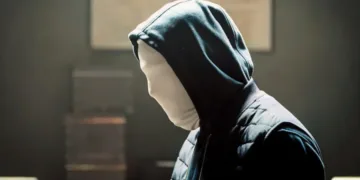
















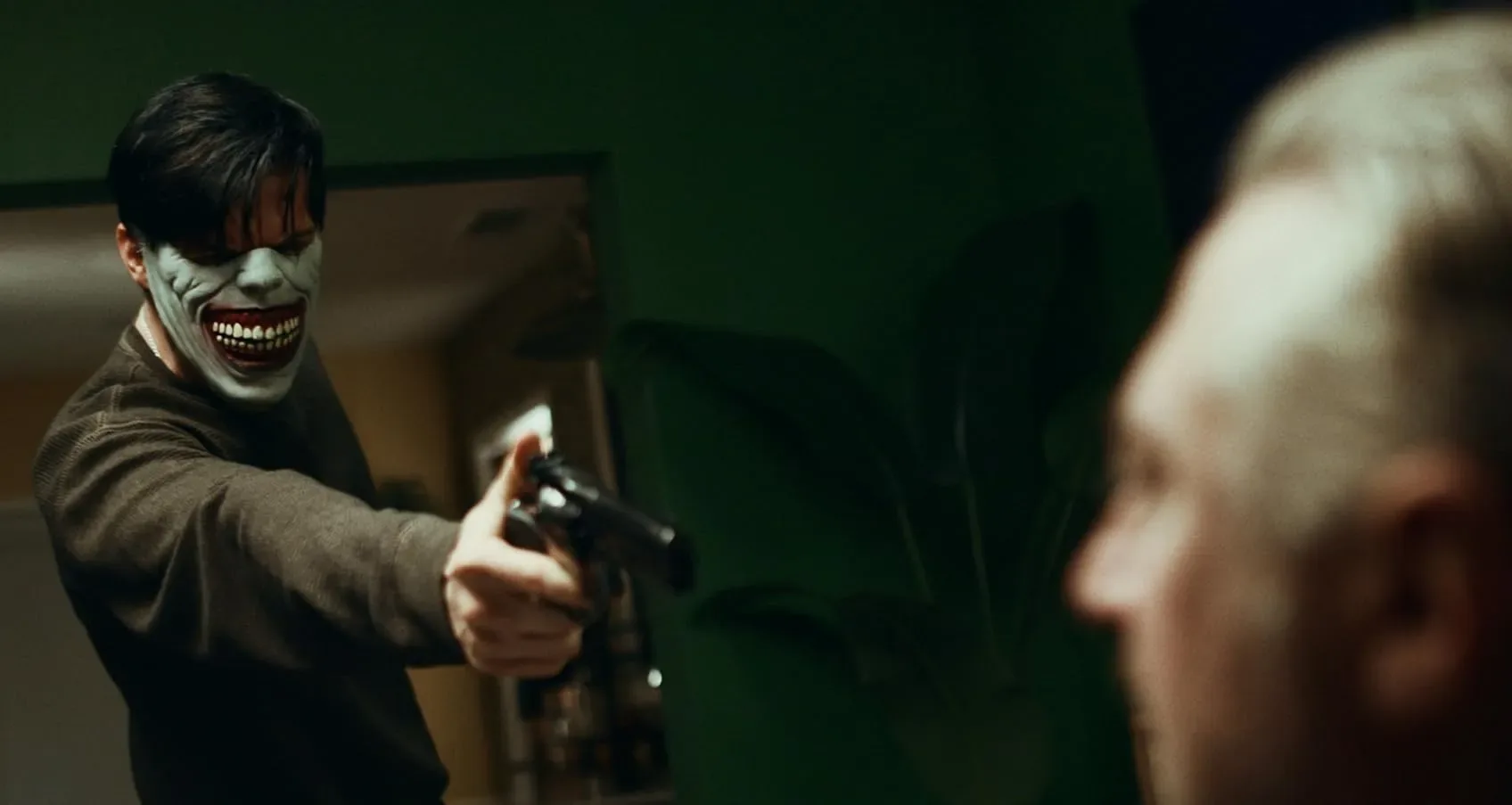

The present unease around deepfake tech forms the chilling foundation of Chris Marrs Piliero’s confident feature debut. After honing visual instincts on music videos, Piliero steps in with Appofeniacs, a gore-slashed horror-thriller filtered through caustic dark comedy. The threat does not arrive as a hulking android. The antagonist sits inside a consumer app, a software weapon in the petty hands of Duke (Aaron Holliday).
The film works as an ensemble of linked vignettes, a mosaic that recalls the fractured chronology of 1990s crime dramas. Duke turns the deepfake tool into a device for targeted havoc. Victims are ordinary people, close at hand: a rideshare driver, a woman in a coffee shop. Proximity sharpens dread. Appofeniacs plants its theme early. Readily weaponized misinformation can unmake identity in a networked world. Trust erodes. Fast.
Narrative Geometry and Directorial Authority
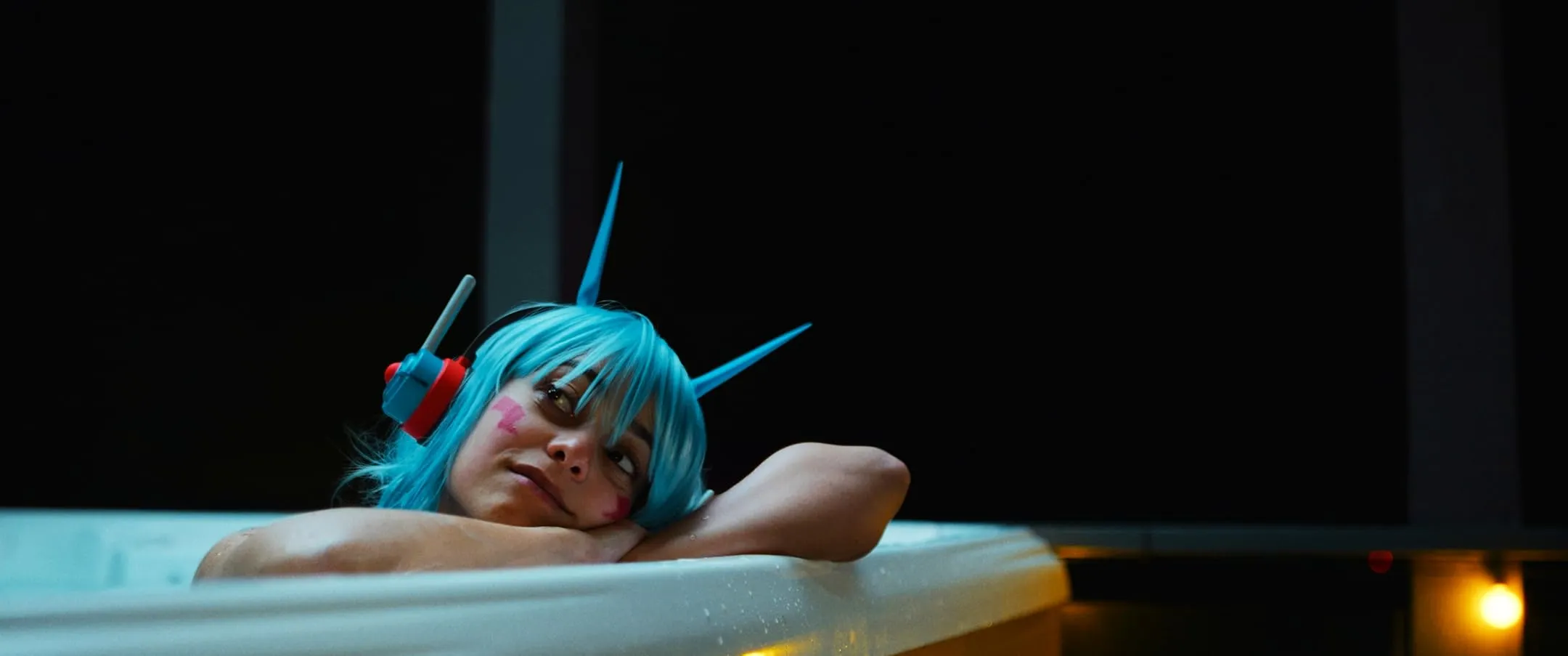
Piliero shapes the story as a braided anthology. Lives intersect under Duke’s digital blight: the paranoid rideshare driver Will Brandt, the publicly shamed Paige Searcy, the eccentric cosplay designer Sean Gunn. Causality behaves like a Rube Goldberg chain. A small digital nudge triggers loud physical fallout.
Pacing tilts on purpose. The opening act lingers on character tics and private routines. That hush tightens, then accelerates. Connections snap into view, and the dominos drop at speed. The non-linear timeline keeps the audience slightly off balance, a tactic that mirrors the film’s subject: induced confusion in an information fog. The structure can wobble as threads compete for space, then the final act binds the strands into a single surge.
Dialogue moves with a quick, kinetic rhythm. Lines carry bite and wit, with a philosophical snap that recalls the quickfire chatter of Clerks. Velocity has a cost, since dense exchanges can outrun processing time. Piliero’s command remains evident. Shot composition arrives polished, spatial control looks assured, and the camera thinks through problems with clarity.
The film takes its chill from realism. The terror grows from an accessible app rather than a grand supercomputer. That choice matters because it locates danger in human hands shaped by spite and smallness. Appofeniacs guides attention to present fears: public shaming built on lies, digital erasure, and the mental strain of separating fabrication from fact in a mediated life.
The film studies how malice online touches ordinary citizens. Deepfakes threaten anyone, not only the celebrated. Lazzy’s sequence (Paige Searcy) shows how a forged clip can ignite real-world peril and seed durable mistrust. The point lands with force.
Subtext widens the frame. Duke’s orchestrated chaos exposes social fractures. Toxic masculinity surfaces in volatile form through Banks, played by Michael Abbott Jr. Greed corrodes. Inequity amplifies harm. The film states a clear claim about tools and users. Technology does not invent vice. It routes vice with ruthless efficiency. The question of blame stays open on purpose. Code or user. System or will. Appofeniacs turns the screen into a mirror for digital fragility and makes that mirror hard to look away from.
Expressionistic Framing and the Carnal Payoff
The visuals lean into expressionistic framing. Cinematographer Adam Leene sets a bright, neon palette against grim subject matter, creating visual dissonance that pricks the skin. The camera favors the slow zoom to cultivate unease, an old psychological-thriller technique tuned here to inner slide and public spectacle.
Tension peaks in a finale of exuberant violence and explosive gore. The mayhem plays with technical precision and hits with physical immediacy. The move toward outsized, stylized carnage carries a tradeoff, since earlier passages conjure a queasy plausibility that the climax partly abandons. Psychological dread gives way to impact. Red on the screen. Pulse up.
The cast steadies the frenzy. Paige Searcy’s Lazzy supplies moral weight as an ordinary person facing a surreal, cruel digital betrayal. Aaron Holliday gives Duke a grating, needling presence that suits a petty saboteur with a powerful tool. Michael Abbott Jr. tears into Banks with relish and volatility, shaping a segment that sticks in memory. Appofeniacs reads as ambitious and technically assured for a first feature. Energy and timing carry the piece past minor structural scuffs, and the afterimage that remains concerns the softness of identity under hostile code.
Technique and Theme in Concert
Camera movement, composition, and light align with the film’s ethic. Compositions isolate characters inside clean lines that feel like cages. Foreground objects shave faces into planes. The slow zoom presses thought toward panic. The neon scheme glamorizes the frame while curdling the mood, a jitter between candy and rot. The approach echoes the expressionistic heritage that feeds noir and psychological thrillers. The frame suggests theater and trap at once. Short shot durations during spikes of chaos crank arousal; held shots in quiet beats feed paranoia.
Structure performs the philosophy. Free will wobbles once images lie persuasively. A forged clip can redirect a life before any verification arrives. Characters adjust, then misjudge, then escalate. Choice persists, yet each choice swims inside polluted data. Identity turns negotiable, a ledger revised by uploads and shares. Ethics blur because action follows information, and the information carries poison. The script does not chase absolutes. It watches small motives expand once a tool removes friction.
Tension comes from time pressure and informational asymmetry. The viewer often knows less than the characters during setup, then knows a little more during payoff. That flip produces either dread or release. Verbal tempo raises physiological arousal, and joke-bright edges in the writing keep the mind alert while the stomach sinks. The disorienting timeline withholds bearings long enough to plant suspense, then restores bearings to let consequences land. Sound in the text arrives mostly as talk, quick and clipped. The speed of exchange functions like percussion, a metronome for nerves. A dry aside here and there lets the air out, just enough to prime the next squeeze. Breathe. Then brace.
The film circles a simple, effective claim. Harm scales when petty intent meets efficient code. The faces belong to regular citizens who carry phones, chase bills, and live by informal trust. Once a false image circulates, the social world takes hold of the lie and supplies momentum. The problem becomes collective. The app did not invent cruelty. It cleared the runway.
Performances drive the themes into flesh. Searcy gives Lazzy a steady human center. Holliday makes Duke small, smug, and reliably aggravating. Abbott rides volatility to high heat inside his segment and leaves scratch marks. Appofeniacs enters as a debut with craft confidence and topical bite. The structure shows seams, yet the film leaves a hard impression of digital precarity that lingers after the credits, like screen glare on closed eyes.
Appofeniacs is an indie horror-thriller film that premiered in 2025, notably at the Fantastic Fest film festival. It is a modern cautionary tale that uses a stylized, non-linear, and often comedic approach to explore the terrifying implications of deepfake technology and the ease with which digital tools can be weaponized for petty vengeance, connecting several destructive vignettes through the actions of one volatile antagonist. As the film is recent and has premiered on the festival circuit (Fantastic Fest, FrightFest), it is currently in the process of securing wider distribution and a definitive platform for streaming or theatrical release, so it is not yet widely available to watch at home.
Full Credits
The Review
Appofeniacs
Piliero's debut is a confident, visually striking exploration of digital terror. Its strength lies in grounding AI horror in accessible, everyday technology, creating a deeply relevant cautionary tale. While the non-linear structure occasionally fractures the pacing, the energetic direction, sharp dialogue, and explosive, gory payoff secure its status as a compelling, timely thriller. It is an indictment of the chaos wrought by weaponized misinformation.
PROS
- Provides a chilling and plausible exploration of the dangers inherent in accessible deepfake technology and online misinformation.
- Exhibits confident, visually striking direction and cinematography, effectively utilizing bright, contrasting colors and expressive framing.
- The nonlinear, cascading structure skillfully builds suspense and keeps the audience engaged as connections are revealed.
- Features kinetic, witty conversations that enhance the film's dark comedy elements.
- Delivers an over-the-top, cathartic, and technically proficient finale.
CONS
- The non-linear structure can lead to moments of uneven pacing or a sense of aimlessness before the plot threads fully connect.
- The rapid pace of the dialogue can occasionally make it difficult to fully track and process the conversations.
- The extreme nature of the finale sacrifices some of the unsettling, grounded realism established in the preceding psychological sequences.