



























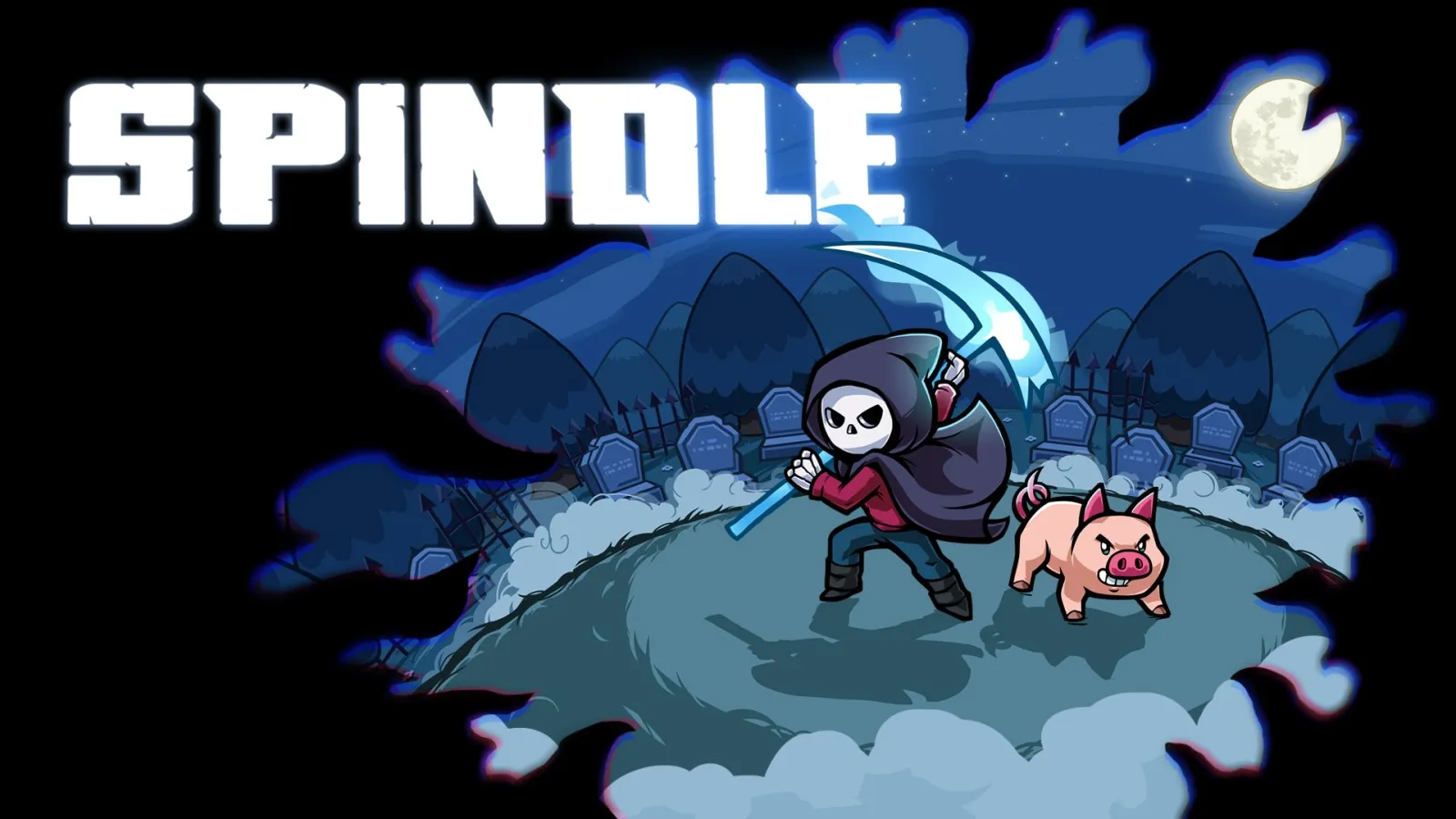

Spindle arrives from developer Wobble Ghost and publisher Deck13 as a hand-drawn pixel art action-adventure that asks players to embrace an unconventional role: Death himself. You control Dengel, a young boy mysteriously transformed into the Grim Reaper, accompanied by a talkative pig who serves as your guide through a world where the natural order has collapsed. Souls no longer pass between realms as they should, leaving the living and dead trapped in a liminal space that demands intervention.
Priced at $19.99, the game wears its influences openly. The top-down perspective, dungeon crawling, and puzzle-focused design recall SNES-era classics, particularly early entries in The Legend of Zelda series. A Link to the Past’s shadow looms large here, from the satisfying chime of discovered items to the methodical unlocking of new abilities. Yet Spindle carves its own identity through tone.
Where many adventure games treat death as an obstacle, this one frames it as peaceful acceptance, exploring mortality through warmth and quiet melancholy. The opening establishes this perfectly: rain pours as piano notes strain against the storm, you wake beside a broken bridge with a small pig nudging you awake, then stumble toward a locked graveyard. The game explores themes of empathy, connection, and finding meaning in endings, asking you to become part of the cycle.
A Story That Trusts You to Understand
The narrative begins in deliberate confusion. Dengel enjoys time with his father before an unexplained transformation strips away his humanity and leaves him holding a scythe. The talking pig offers explanations, though they raise more questions than answers. Charon appears as your nominal guide, yet he seems as uncertain about the broken cycle as you are. Dark forces corrupt souls, preventing them from releasing properly. Your task becomes clear: find the wandering souls, reunite them with their bodies, and grant them the final moments they need before crossing over.
Spindle excels at withholding information without feeling obtuse. An elderly man waits alone in the only house with fires still burning. You find his soul deep beneath the village, and suddenly the game’s true nature crystallizes. Villagers greet you with calm acceptance, never questioning your presence. You exist as part of their world, helping when the machinery of existence grinds to a halt. You can get to know townsfolk, fulfill their requests, and even go fishing.
The game allows for multiple levels of engagement. One soul belongs to someone’s son, and unpacking what that means hits with devastating weight. The pig companion chatters constantly, adorable if passive during combat. Spindle mixes devastating emotional beats with genuine humor. The talking pig and Charon’s hot air balloon provide levity against the reality of guiding the dead to their rest. Some souls carry profound weight, their stories rippling through the world meaningfully. Others feel perfunctory, existing only to advance the plot. When a character’s entire purpose boils down to “he was difficult, but at least you learned something,” it undermines the game’s insistence that every life matters.
Familiar Combat, Mixed Execution
Spindle structures itself around exploration, puzzle-solving, and combat. You move through towns, graveyards, dungeons, and surreal spaces, gradually unlocking abilities like self-healing, dash attacks, spin moves, and pig-riding. An energy meter governs special abilities, refilled by defeating enemies or destroying bushes. The game eschews experience points and currency entirely. Combat serves puzzle progression rather than character growth. Death respawns at the last autosave point, though placement feels arbitrary.
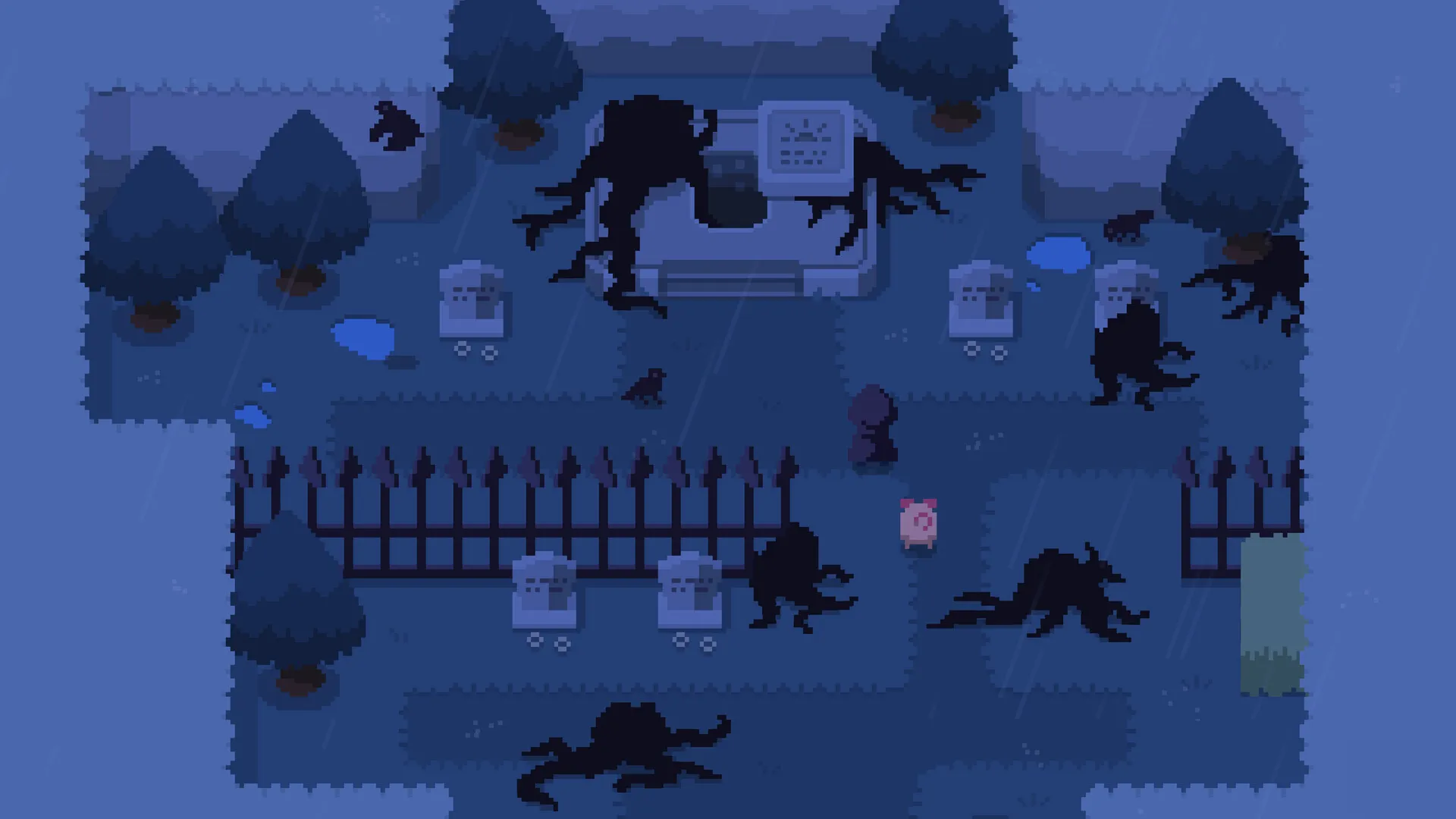
Puzzles strike a satisfying balance between clever and approachable. Environmental hazards add tension: collapsing floors, sequential switches, hidden paths. Optional puzzle rooms reward players willing to engage with villagers and listen for clues. One side quest connects chili peppers and chicks through careful dialogue attention.
Combat proves less successful. Boss fights inject creativity, but difficulty rarely escalates. Many encounters resolve through wild swinging. As you gain abilities, fights become easier, reducing them to rote exercises. The pig partner’s controls feel awkward initially, with one boss area functioning as an extended tutorial for mechanics that see limited use afterward.
Controller support proves essential. Keyboard and mouse controls feel awkward and immersion-breaking. The mouse cursor hovers with no clear purpose, while default keyboard bindings defy logic (K for interact, L for cancel). Anyone attempting keyboard play should expect frustration.
The game includes thoughtful accessibility options: difficulty adjustments, invulnerability toggles, enemy health displays, and brightness settings for darker areas. An easier fishing mode exists, though fishing already feels simple.
Progression suffers from pacing issues. The core experience could take four hours, yet actual playtime stretches through backtracking and tedious traversal. Pig riding lacks precision for long distances. The map fails to clearly differentiate water from land. Some chase sequences demand pixel-perfect positioning to escape instakill enemies. Technical problems compound these issues: landscapes that fail to render properly, invisible walls, errant shadows. Loading pauses between areas disrupt flow and occasionally throw off the soundtrack’s rhythm.
Soft Pixels and Sorrowful Melodies
Spindle’s visual identity rests on soft, detailed pixel art that feels genuinely handcrafted. The color palette stays gentle and thoughtful. Lighting shifts guide your attention naturally. The world feels simultaneously still and alive. Peaceful graveyards feature neat rows of headstones. Mountain peaks catch morning light. Quiet homes, silent temples, and lingering ruins each possess distinct character. Character designs embrace simplicity. The small reaper and his pig companion feel personal rather than grand. The pixel art grounds everything in a timeless aesthetic.
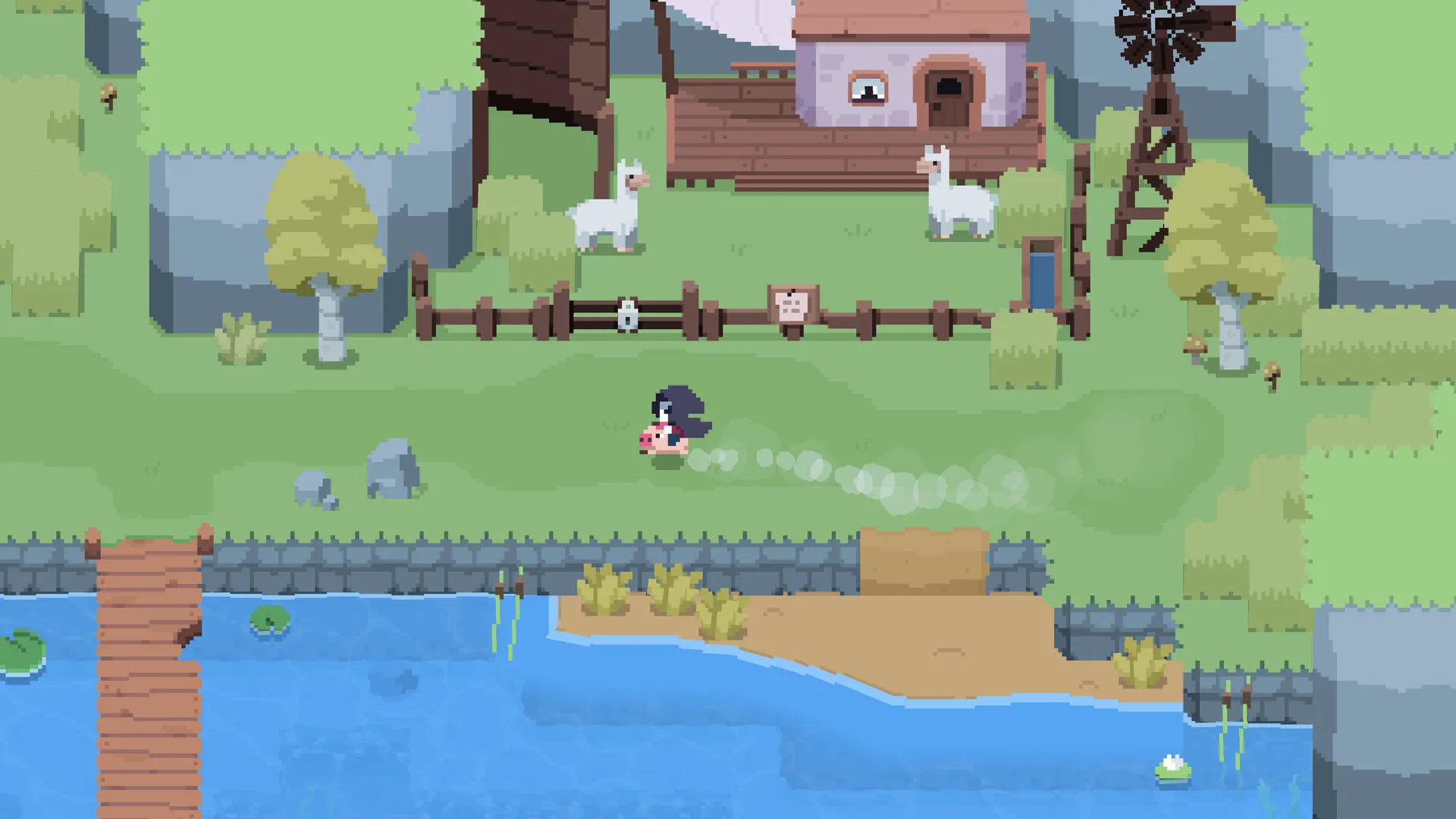
The soundtrack complements this restraint with area-specific compositions that avoid endless looping. Early tracks feature soft, sorrowful piano that sounds like it’s struggling against the storm. As Death feels less isolated, the music opens into gentler melodies. The volcano city’s eclectic score stands out, offering complex instrumentation. Some tracks lean too heavily on familiar territory. Isolated piano with somber tones appears frequently enough to feel repetitive. Sound effects compensate through careful selection: doors creak quietly, wind sighs through caverns, item discoveries sparkle with nostalgic familiarity.
Every audio and visual element feels deliberately placed, creating the sensation of existing between two realms. The presentation excels at building atmosphere through restraint. Completionists will find hidden Death Coins, fishing opportunities at multiple locations, and a Fishopedia documenting every catch across three sizes. Christopher tracks your discoveries as you reel in fish like the Green Scamp and Fire Fish.
The Review
Spindle
Spindle offers a heartfelt meditation on mortality wrapped in nostalgic pixel art and thoughtful puzzle design. The story unfolds with patience and sincerity, exploring death as acceptance rather than terror. Technical hiccups and awkward keyboard controls undermine the experience, while combat never quite finds its footing. Some narrative threads feel underdeveloped compared to others. Still, this remains a beautifully melancholic adventure that trusts players to find deeper meaning. Best experienced with a controller, Spindle rewards those seeking emotionally resonant storytelling over mechanical complexity.
PROS
- Thoughtful, emotionally resonant story about mortality
- Beautiful hand-drawn pixel art and atmospheric music
- Well-balanced puzzle design
- Strong accessibility options
- Nostalgic without feeling derivative
CONS
- Clunky keyboard and mouse controls
- Technical issues (rendering problems, invisible walls)
- Combat lacks challenge
- Inconsistent soul characterization
- Tedious backtracking and traversal