



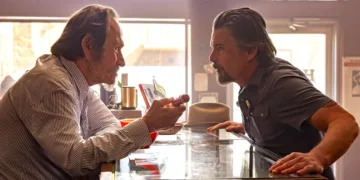





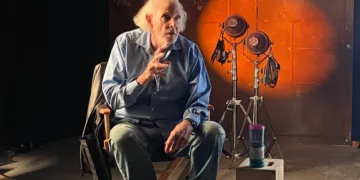















The late David Gulpilil feels carved into the bedrock of Australian cinema, a Yolngu actor, dancer, and storyteller whose first appearance in Walkabout set a path that never dimmed. His life moved along two tracks: an ancient spiritual plane and an international stage. Journey Home, David Gulpilil turns its gaze to the closing movement of that life.
The film attends to his stated wish for burial on ancestral country, Gupulul in remote East Arnhem Land. What unfolds is a record of a ceremonial voyage undertaken by his family, carrying his body from South Australia, where he spent his final years, back to the ground that shaped him.
The passage runs for roughly 4,000 kilometers by plane, hearse, and helicopter. Directors Maggie Miles and Trisha Morton-Thomas witness a collective farewell guided by traditional protocol, a promise kept with care. The motion toward Gupulul reads as a restoration of identity, a return to source, where body and story align with country.
Spanning the Void
The documentary details an immense logistical task. The coffin crosses great distances, a physical negotiation with the Australian continent that forms only the surface of the film’s inquiry. Each segment of the route functions as a cultural map, set by the need for extended family and community to take part in the rites. The wet season slows the procession for a long stretch; the delay arrives without drama, a plain truth of land and weather. Human intention yields to climate and terrain, and the film lets that law stand.
The ongoing presence of Gulpilil’s coffin creates an intense paradox: presence that aches with absence. The image signals a spirit in passage between worlds. A quiet cadence shapes the film, with sun-dappled frames and dust in the air, a visual hush that sustains reverence without sweetness. Death reads as motion. The soul moves, and the camera listens.
Two narrators speak across that threshold: Hugh Jackman and Yolngu rapper Danzal Baker (Baker Boy). Their voices echo Gulpilil’s life carried between cultural spheres. New interviews sit beside archival fragments, and the edit treats time like water. Clocks lose authority. Memory pours into the present and lingers there.
Culture as Final Currency
This is a portrait of a community enacting grief and honor in concert. The sheer number of family and clan participants gives the structure weight. Density clarifies purpose. A people carries a foundational storyteller back to the country that formed his voice.

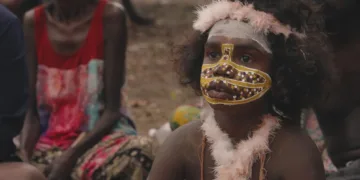
The film grants layered access to the ceremony’s aims: fulfilling Gulpilil’s wishes for a traditional burial, raising totems, and observing the lengthy Bäpurru ceremony. These rites work over many days to guide his spirit to rest. The measure of Gulpilil’s legacy does not sit with material tallies or box office receipts.
His value rests in the teaching he offered and in his role as conduit through which Aboriginal culture reached wider audiences. That gift survives him. As mourning rites close, the cycle opens. The initiation of his young grandson signals transfer. Stories, songs, and dances move into new hands, so culture continues its breath.
The Luminous Document
Miles and Morton-Thomas approach the subject with a light, airy, and gentle hand. The tone stays cleansing and spiritual, so the physical and emotional labor never tips into melodrama. A soft, meditative quality carries the work from scene to scene.

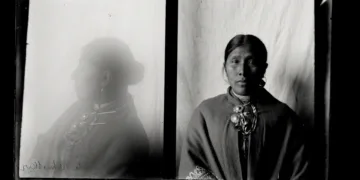
At times the imagery strikes with quiet force: a monochrome figure of Gulpilil layered over the same waterway seen now, which folds distance between past and present. Existence feels like light skimming a river, shape shifting with every ripple.
The record that remains can appear “messy” by rigid measures, yet it shines with necessity. The film concerns returning to country, and in that attention it sketches a difficult and beautiful path toward spiritual completion. The grave receives the body. Country receives the story. The viewer receives the echo and hears it keep sounding.
Journey Home, David Gulpilil is a documentary charting the immense, 4,000-kilometer ceremonial journey to return the body of legendary Yolngu actor David Gulpilil from South Australia to his ancestral homeland of Gupulul in remote East Arnhem Land, Northern Territory, following his passing in 2021. The film provides an intimate, rare insight into the traditional Yolngu funeral ceremonies, known as Bäpurru, which took place over several months to guide his spirit back to his birthplace and a sacred waterhole. The documentary premiered at various film festivals in 2025, including the Sydney Film Festival, and was locally distributed for Australian cinemas on October 30, 2025. It is scheduled to premiere on NITV and SBS On Demand in 2024 (as per 2023 announcements for Australian audiences).
Credits
Title: Journey Home, David Gulpilil
Distributor: Madman Entertainment, NITV, SBS On Demand
Release date: October 30, 2025 (Australian Cinemas)
Rating: The content rating (e.g., PG-13, TV-MA, etc.). M (Australia), Unclassified 15+
Running time: 88 minutes, 89 minutes
Director: Maggie Miles, Trisha Morton-Thomas
Writers: Maggie Miles, Trisha Morton-Thomas
Producers and Executive Producers: Rachel Clements, Jida Gulpilil, Lloyd Garrawurra, Maggie Miles, Trisha Morton-Thomas, Witiyana Marika
Cast: David Gulpilil, Hugh Jackman (Narrator), Danzal Baker (Baker Boy – Storyteller/Narrator), Joyce Malakuya Malibirr, Witiyana Marika, Lloyd Garrawurra, Alfred Yangipuy Wanambi, Peter Guyula, Yirrmal Marila
Director of Photography (Cinematographer): Allan Collins, Anna Cadden
Editors: Bill Murphy
Composer: David Bridie
The Review
Journey Home, David Gulpilil
Journey Home, David Gulpilil is a profound meditation on origin and finality. The film powerfully contrasts the actor's international life with the spiritual demands of his country, affirming the ancestral claim over all worldly fame. The unique access to the Bäpurru ceremony provides invaluable insight into the enduring nature of Yolngu culture. It is an essential, gentle document exploring the passage from celebrated existence to ultimate, inevitable return to the source.
PROS
- Offers unprecedented, generous access to sacred Yolngu funeral rites and ceremonies.
- The tone is meditative and gentle, avoiding forced drama or overt sentimentality.
- Provides a powerful depiction of collective grief, community responsibility, and cultural honor.
- Effectively uses visual motifs to suggest the fluidity of time and spiritual presence.
CONS
- The film's structure can feel unconventional or "messy" when judged by traditional documentary standards.
- The large number of family members and connections may be difficult for outside viewers to track.
- Minimal focus on Gulpilil’s career may disappoint viewers expecting a typical retrospective biography.