





























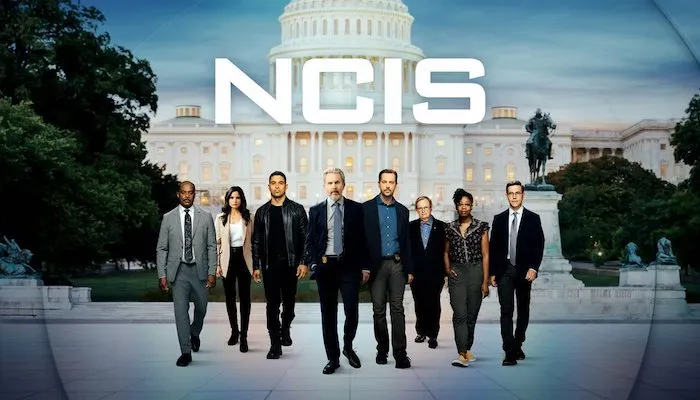

NCIS remains a fixed point in network television, a procedural that has weathered two decades of shifting tastes and rotating ensembles. The show’s longevity rests on a steady formula that keeps naval criminal cases clear and legible. Season 23 opens by shifting the frame. Instead of a routine investigation, the premiere anchors the plot in a personal fallout: mob boss Carla Marino arranges the murder of Agent Alden Parker’s father, Roman Parker.
“Prodigal Son (Part 1)” converts that loss into immediate narrative energy. The episode pushes the team from standard jurisdictional work toward a story charged by vengeance, and it does so with focus. The choice signals an older series testing its lead with sharper stakes.
Parker’s Fall from Compliance
Roman Parker’s death resets Alden Parker’s temperament. The affable, orderly supervisor who followed Gibbs gives way to a harder, impulsive operator. Early hints from his FBI past now have room to surface, and the character occupies them without hesitation. The case stops resembling professional obligation and becomes a grief-driven hunt for justice, paced by anger that has found a target.
His behavior tracks the shift. He ignores Director Vance’s stand-down directive and chooses instinct over procedure. The episode underlines the change with specific actions: phoning in bomb threats to box Marino into a corner and pressing suspects with physical force. He treats the manual as optional, prioritizing outcomes over career safety. Gary Cole gives the pivot shape and restraint. The performance reads as burdened rather than theatrical, which keeps the character credible while the plot runs hot.
From a structural standpoint, the move back into “rogue agent” mode solves two problems. It recenters Parker’s long-range arc with a catalyst strong enough to claim the series’ spine. It also echoes a lineage inside the show. Gibbs set a pattern for leaders who bend rules when confronted with personal catastrophe, and Parker’s choice fits that pattern. Stepping outside the lines installs him as the narrative’s anchor for the season ahead.
The Weight of Familial Duty
Introducing Harriet Parker, Alden’s sister and a Navy Vice Admiral, gives the season a second engine. Her arrival extends Parker’s backstory at the worst moment in his life, and it immediately reframes the personal stakes. The sibling conflict draws power from the contrast between their temperaments and careers, and the episode treats that friction as story fuel rather than decoration.

Flashbacks handle the history. They sketch a split forged in childhood: Alden’s rebellious streak and juvenile trouble set against Harriet’s rule-keeping path. She grows into the “good kid” who becomes a high-ranking officer. He becomes the MCRT lead who solves problems with intuition and controlled risk. In the present, Alden keeps his distance from her even as they share grief, which preserves tension on two tracks at once.
The script then uses their jobs to press the conflict. Vice Admiral Harriet Parker receives command of the operation involving the cargo ship Quentin, which Alden boards covertly. Her duty as an officer collides with his off-book pursuit, and the episode studies the line between service and family in direct terms. Orders force Harriet toward a hard call about the ship, and that pending decision turns abstract conflict into a ticking clock. The character matters immediately because the plot welds her authority to an ethical test.
The Strength of the MCRT Family
As Parker breaks from protocol, the team moves closer together. Loyalty remains a key operating principle for NCIS, and the hour uses it without sentimentality. The agents refuse Vance’s stand-down order, a familiar procedural beat that still lands because the show grounds it in small actions. McGee packs a bag for Parker without fanfare. Quiet gestures read as care that has accumulated over years of shared work.

Their irritation comes from his self-imposed isolation, not from the mission itself. They present themselves as peers who can shoulder fallout with him, which clarifies the team’s internal balance. The hour also checks in on Jimmy Palmer and Jessica Knight.
Their conversation about Parker’s grief offers a clean, human beat that recognizes experience with loss. The moment keeps their romantic tension alive without stalling the story. For a long-running drama, growth inside established relationships functions as maintenance and as forward motion. The episode keeps that maintenance active.
Escalation and A New Narrative Trajectory
Framing the premiere as a two-parter signals ambition. The scale recalls early high-intensity arcs like “Kill Ari” and sets audience expectations for consequence. The plot expands at speed. Carla Marino’s role widens from a revenge target to a node in something larger once the Quentin’s cargo becomes clear. The ship carries weapons tied to active threat networks, and the pursuit shifts from personal restitution to national security. That expansion redefines the stakes without losing the emotional throughline.

The hour peaks when Harriet receives the order to destroy the ship with Alden aboard. The scene fuses the season’s two engines. Family duty and institutional duty become the same decision, and the character stakes turn concrete. The structure benefits from the choice, since the cliffhanger does character work and plot work at the same time.
Parker’s current tactics will reshape his relationship with Vance and may reorder the team’s dynamics. The premiere sets a marker for tone moving forward, favoring serious, character-centered conflict and visible consequence. Previous seasons sometimes leaned on cases that felt light; this opener aims for weight and continuity. The setup positions the show to draw sustained momentum from the Parker family fault line and from the fallout of his rule-breaking.
NCIS (Naval Criminal Investigative Service) is a long-running American military police procedural and action-drama television series that premiered on CBS on September 23, 2003, as a spin-off of the show JAG. The series follows a fictional team of special agents from the Naval Criminal Investigative Service as they investigate crimes involving the U.S. Navy and Marine Corps. It is one of the longest-running scripted primetime series in U.S. television history, and as of the user’s query, it is running through its 23rd season. The show is currently available to watch on its original network, CBS, and is available to stream on Paramount+.
Full Credits
Director: Dennis Smith, Thomas J. Wright, Michael Zinberg, Tony Wharmby, Rocky Carroll
Writers: Donald P. Bellisario, Don McGill, Steven D. Binder, David J. North, Frank Cardea, George Schenck
Producers and Executive Producers: Donald P. Bellisario, Steven D. Binder, Shane Brennan, Mark Harmon, Gary Glasberg, David Bellisario, Avery C. Drewe
Cast: Mark Harmon, Sean Murray, David McCallum, Michael Weatherly, Pauley Perrette, Cote de Pablo, Wilmer Valderrama, Rocky Carroll, Katrina Law
Director of Photography (Cinematographer): William Webb, Christos Bitsakos, Jon L. Kunkel
Editors: Gregory Gontz, Mitchel Stanley, David C. Cook, J. Scott Harvey, Roy C. Poole
Composer: Joseph Conlan, Brian Kirk, Steven Bramson
The Review
NCIS Season 23
This season's launch is a powerful, two-part event that successfully raises the emotional stakes. Roman Parker's murder forces Alden Parker into a gripping rogue state, finally deepening his character beyond his predecessor's shadow. The introduction of his sister, Vice Admiral Harriet Parker, creates a sharp, high-stakes conflict between duty and family loyalty that anchors the season's narrative potential. This pivot promises a return to more serious, character-driven storytelling, representing a thrilling and necessary course correction for the long-running procedural.
PROS
- Successfully makes the central case intensely personal for the team leader, Alden Parker.
- Solidifies Parker's place as the current face of the MCRT by exploring his darker, more determined side.
- The introduction of Harriet Parker and the subsequent exploration of the duty versus family conflict offers significant narrative depth.
- Gary Cole delivers a grounded and intense portrayal of grief-fueled rage
- The two-part structure and high-stakes national security angle suggest a welcome return to serious storytelling.
CONS
- Parker's decision to "go rogue" is a predictable narrative beat, echoing past team leaders like Gibbs.
- The show continues to struggle with the unresolved relationship issues between Jessica Knight and Jimmy Palmer.