





















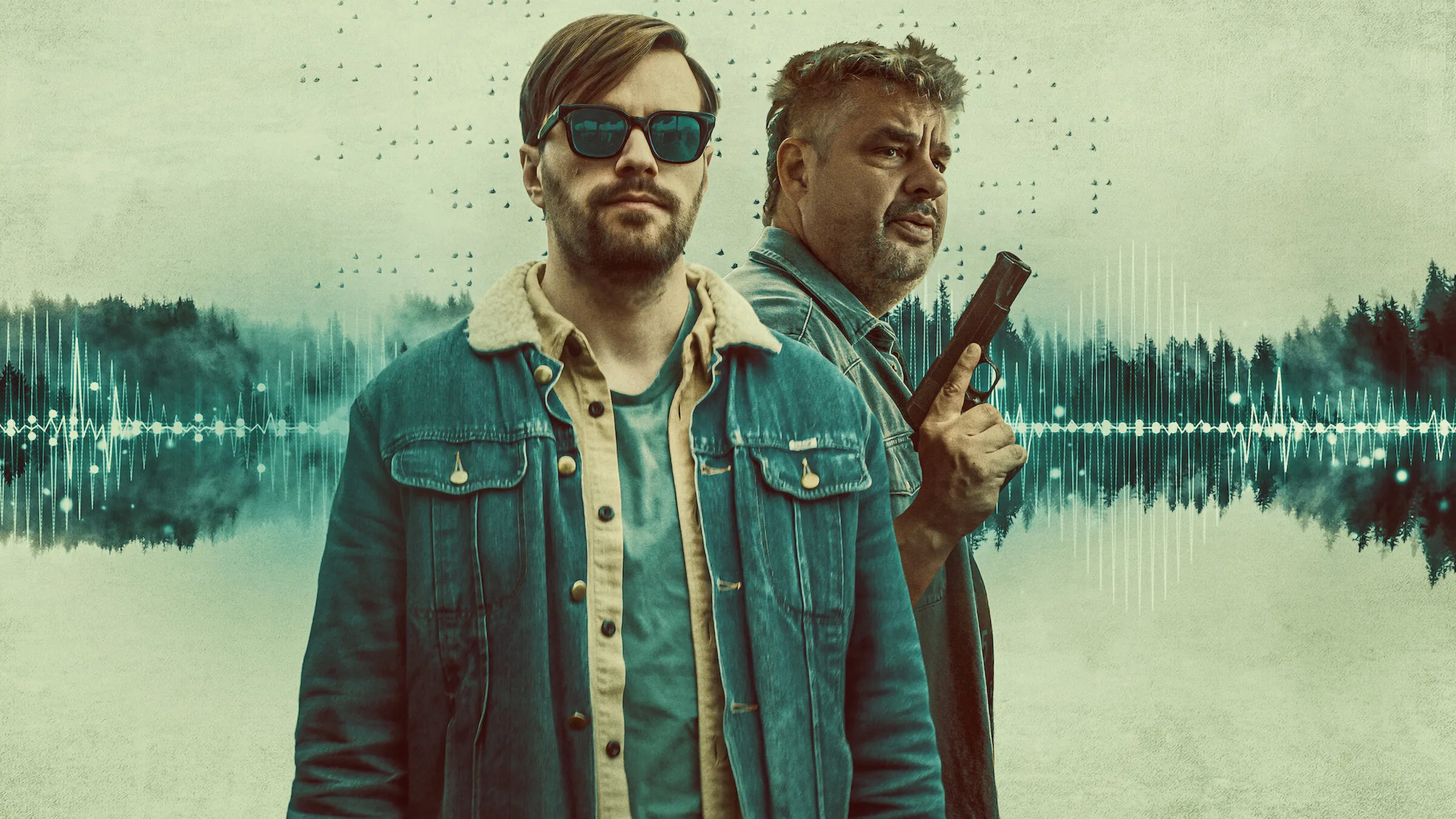

Rotterdam plays like a sprawling industrial stage for a contemporary drug war. Massive quantities of cocaine, valued at fifty billion euros, move through its dockyards. The city’s cold metal geometry frames Roman Mertens, a man stepping away from repetitive call center work into a specialized position inside a police wiretapping unit. The transition reads as a kind of sensory reassignment. Roman is blind. His presence still carries an acute, almost surgical sharpness in hearing, as if attention itself has become a tool with an edge.
The storytelling keeps its feet planted on the ground and refuses the swagger of superhero fantasy. It takes inspiration from the real life of Sacha van Loo and holds tight to realism. Roman’s work is built on audio analysis and the plain mechanics of perception, with every recording treated as material to be handled rather than mythologized.
His adversaries are the Uzbek Beatles, a criminal hierarchy whose leaders borrow names from legendary musicians. The pop culture echo sits beside the brutality of their actions, turning each name into a faintly grotesque joke that the series never laughs off. The emphasis stays on lived pressure, on the daily improvisations required to function in a world designed for the sighted, on competence carved out through necessity.
The Human Frequency
Bart Kelchtermans grounds the series with a performance that registers as startlingly authentic. His visual impairment informs the portrayal of Roman Mertens, and the result avoids the familiar stiffness that often clings to roles built around disability. Roman moves through scenes with exacting control. Perfectionism defines him, and his home life repeatedly slips behind the demands of the job. That imbalance produces friction that can be felt in the air of his domestic space, a constant low hum under the procedural surface.
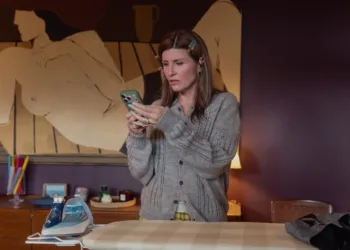
Caro carries much of the emotional weight that Roman pushes aside. She runs a veterinary clinic and functions as his primary support, the person who manages the practical and emotional spillover of his fixation. Her presence sharpens the cost of Roman’s professional devotion, especially as he prepares for fatherhood. The series does not present this as a neat moral lesson. It treats it as a lived tension, a relationship shaped by the way work colonizes time and attention.
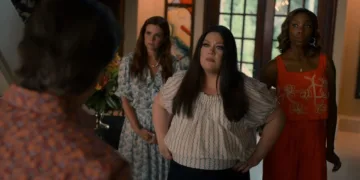
Nico leads the task force with brassy, frequently vulgar energy. He is loud, abrasive, and oddly attentive, building a protective bond with Roman without treating him as fragile. That choice matters because it defines the team’s atmosphere. Roman is not positioned as a mascot or an inspiration poster. He is treated as a specialist whose value comes from results. Tess and Suus bring a higher-intensity presence that pushes toward the theatrical. Their heightened energy casts Roman’s quiet, clinical focus into sharper relief and keeps the room from settling into a single register.
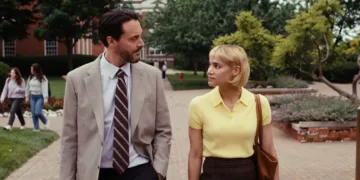
Meryem arrives as an interpreter and as a childhood friend from the institute for the blind. Her entrance pulls the past into the present with real weight. A shared history of a boating accident hangs over their collaboration as an unspoken heaviness, shaping pauses, glances, and the careful distance between what can be said and what remains lodged in memory.
Supporting figures such as Yaqub, the broker, and Umut, the informant, operate like reflective surfaces. They throw Roman’s anxieties back at him: loyalty to family, the fear of failure, the private dread that competence can evaporate under pressure. Through these relationships, the show takes on the feel of a character study wearing the clothing of a police procedural.
Deciphering the Static
The plot focuses on a fracture inside the Uzbek Beatles organization. A power struggle between John Lennon and Paul McCartney erupts over a missing container valued at one hundred million euros, and that split propels the investigation. The wiretapping unit’s work moves at a slow, methodical pace. The series lingers on the labor itself: transcribing calls, isolating tiny background noises, treating sound as evidence that requires patience and discipline.
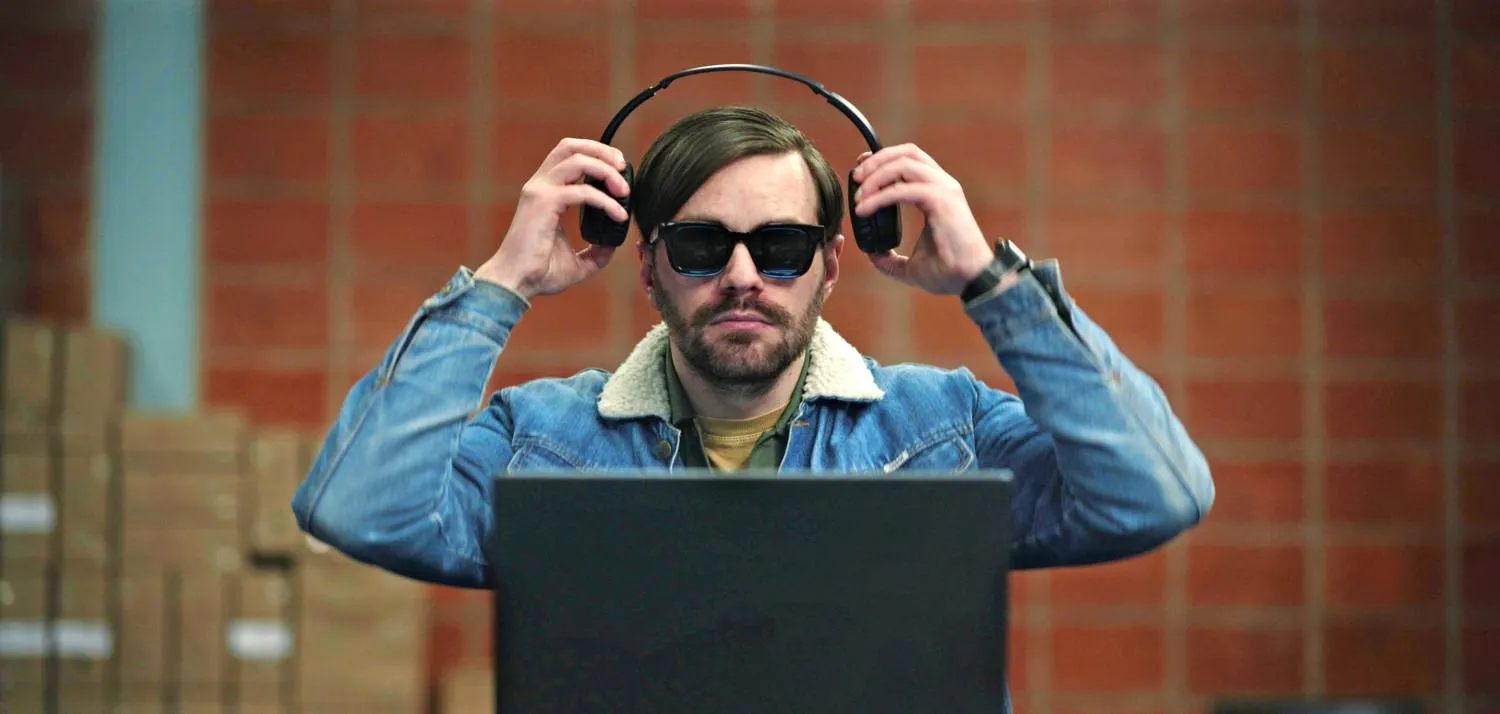
Roman identifies fire sirens and car washes to locate criminal hideouts. These are not cinematic “aha” moments shaped for applause. They function like careful lab work, and the show’s attention to procedural detail gives it the texture of a clinical documentary. The logistics of the hunt dominate the rhythm, and emotional payoff arrives through accumulation rather than spectacle. The audience is asked to sit with process, to understand how knowledge is built from fragments that rarely announce their importance.
Misdirection remains a constant instrument in the script. The shifting identity of Lennon and the unstable loyalties of biker assassins keep tension in motion. The writing maintains distance from its subjects, watching with a cool, detached eye that emphasizes the drug trade’s coldness as an everyday machine. Stakes crystallize when a young girl, Amaya, is injured in a shooting. Her loss of sight jolts Roman into a different intensity. He inserts himself into the interrogation process with renewed, almost desperate focus, driven by something rawer than professional pride.
The investigation keeps its attention on small audible facts. Each recording becomes one piece of a larger violent puzzle, and the series treats patience as a form of moral endurance. Sound is the medium. Listening becomes the central act, an ethic as much as a technique.
The Aesthetics of Echo
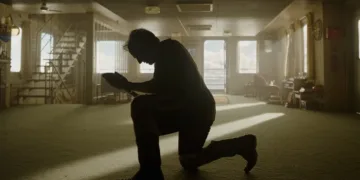
The series faces a difficult creative problem: translating sound into images without betraying the logic of Roman’s experience. It meets that challenge with stylized interpretations that let the audience see what Roman hears. Shoes shift color on screen as he identifies hue through audio cues. Objects appear in his mind’s eye, turning aural information into a visual vocabulary that remains tethered to perception rather than fantasy. The technique serves as a bridge between Roman’s inner mapping and the sighted world around him, and it keeps the series from treating blindness as an abstract symbol.
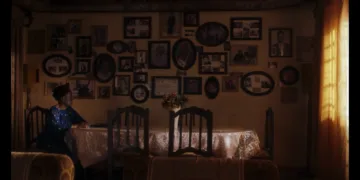
Cinematography leans into Rotterdam’s industrial grit, favoring dockyards and sterile police rooms. These spaces feel cold, functional, and unromantic. Roman’s home carries warmer, messier energy, shaped by human chaos rather than metal order. The visual design turns environment into pressure: the city’s hard surfaces, the police unit’s clinical interiors, the domestic sphere’s lived clutter. Each space speaks to what Roman is asked to become in it.
The soundtrack draws on trap and hip hop beats to sustain a modern urban tone. At times those choices collide with the gravity of expositional scenes and produce a jarring atmosphere, like the show’s pulse briefly slips out of step with its own material. Flashbacks operate as connective tissue rather than decoration. They offer glimpses of a childhood car crash and the years that followed at the institute. These memories avoid pure sentiment. They function as explanation, giving shape to Roman’s defensive nature and the behaviors that define him in the present.
Pacing shifts across the season. Early episodes build slowly and deliberately, then the final stretch moves with more urgency as pressure tightens around the investigation. Direction mirrors that rising strain. Sound carries consequence. Visual choices keep returning to the task of rendering what remains unseen, pushing the viewer to grasp the weight of evidence that arrives through listening.
The Weight of Unseen Expectations
The show’s governing idea is simple and stubborn: seeing without looking. Roman’s blindness becomes the engine for a different expertise, a form of sensory specialization that confronts conventional assumptions about capability. His internal tension grows from anxiety about competence. He fears becoming a burden to his brother, Bo. He fears failing as a father to his unborn child. Those fears surface in parenting classes, where the social scripts of preparedness and confidence press against his private doubt.
A recurring nightmare circles back to a past accident involving his nephew, and that fragile thread of fear runs straight into Roman’s professional aggression. He seeks validation through his father’s legacy as a police officer, and the hunger for approval pushes him deeper into obsession with the case. The series examines social treatment of impairment through the behavior of people around him. Bo offers protection that becomes smothering. Nico and Suus provide blunt equality, the kind Roman prefers because it grants him adulthood rather than pity.
As the investigation intensifies, ethical lines blur. Roman turns to blackmail and manipulates colleagues to get what he wants, and the show refuses to tidy those actions into heroic necessity. He recognizes a strange commonality with the criminals he pursues, especially those who are fathers, and that recognition curdles the comfort of clear moral categories. The result is a portrait of a man trying to claim a place in a world that rarely listens with the care he practices every day.
The series premiered on Netflix on January 23, 2026. This Dutch crime drama takes inspiration from the actual life of Sacha van Loo, a blind man who worked in a police wiretapping unit. Set in Rotterdam, the plot follows Roman Mertens as he handles the dangers of drug crime by using his sharp hearing. Audiences can watch the show on Netflix or ZDF.
Full Credits
Title: Blind Sherlock
Distributor: Netflix, ZDF, Studio TF1
Release date: January 23, 2026
Rating: TV-MA
Running time: 52 minutes per episode
Director: Joost Wynant
Writers: Kristof Hoefkens, Maarten Goffin
Producers and Executive Producers: Ivy Vanhaecke, Kristof Hoefkens, DeMensen, Studio TF1
Cast: Bart Kelchtermans, Frank Lammers, Sigrid ten Napel, Charlie Chan Dagelet, Pierre Bokma, Cynthia Abma, Aysegül Karaca, Rein Hofman, Denzel Goudmijn, Eline ten Camp
Director of Photography (Cinematographer): Dries De Clercq
The Review
Blind Sherlock
While it occasionally struggles to balance its clinical procedural elements with its high-energy police archetypes, the series succeeds as a grounded study of sensory adaptation. The creative visualization of sound and a dedicated lead performance provide a fresh perspective on a familiar genre. It is a thoughtful exploration of competence and the domestic cost of professional obsession.
PROS
- Authentic lead performance by Bart Kelchtermans
- Innovative visual representation of auditory analysis
- Realistic approach to disability and police work
- Strong focus on the psychological weight of fatherhood
CONS
- Jarring use of trap and hip-hop background music
- Tonal inconsistencies between the lead and police cast
- Pacing feels rushed in the initial episodes
- Secondary characters lack emotional development