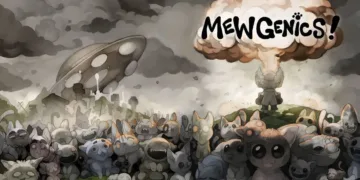


























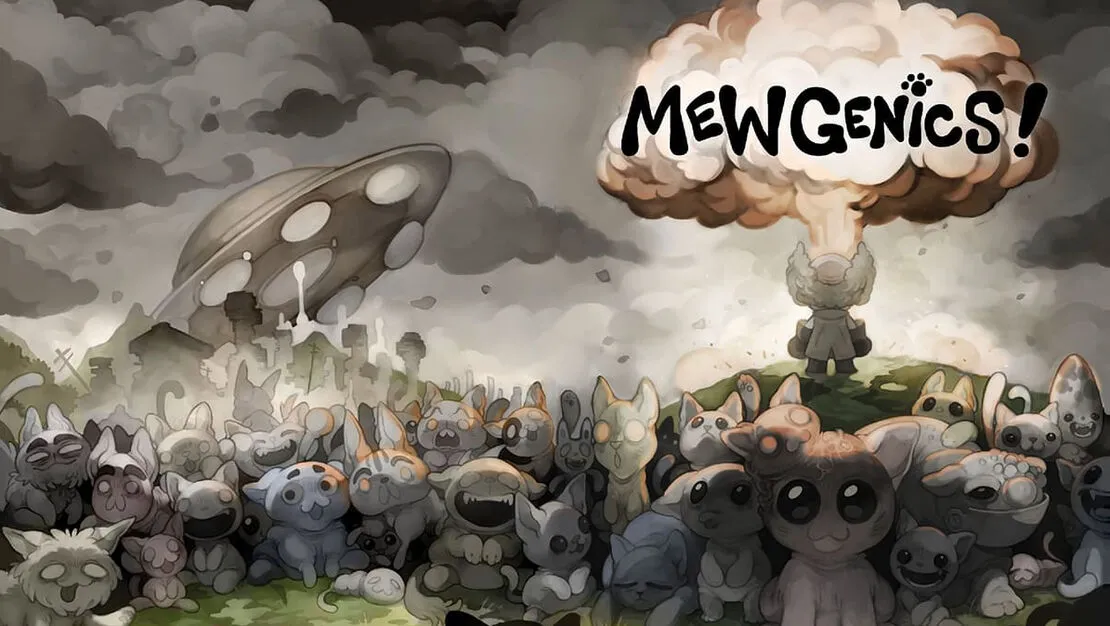

Mewgenics plays like a gleefully cruel marriage of grid tactics and breeding-room logistics. You run a household of cats built for brief, brutal careers, and the game never lets you forget what that means. Its look lands squarely in the familiar visual language associated with Edmund McMillen and Tyler Glaiel: hand-drawn lines, sketchbook textures, jittery motion. The jokes come coated in rot.
Blood and grime are part of the scenery, part of the tone, part of the daily rhythm. Cats function as a resource you grow, spend, and replace. That emotional distance sits right in the driver’s seat. The fantasy casts you as the operator of a meat grinder, flipping between the calm routines of the house and the lethal unpredictability outside. The whole thing carries the hazy, slightly sick energy of early internet culture brought to life.
Grid-Based Strategy and Emergent Combat
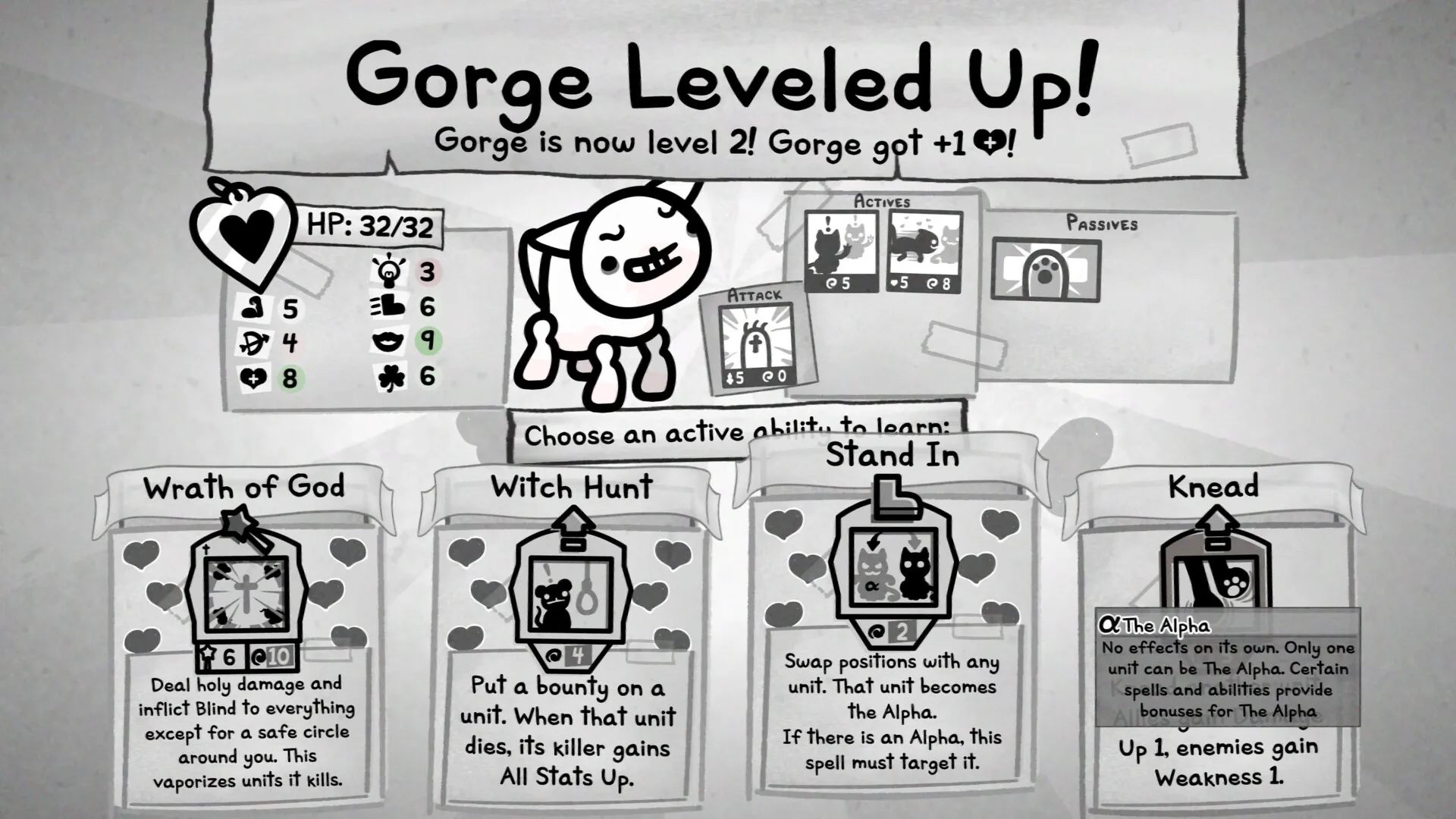
Fights unfold on a tight 10×10 grid where every square matters. You bring four cats into turn-based encounters, and their jobs define the shape of your turns. The Fighter leans on direct pressure. The Mage brings fragile, high-output magic. The Druid ties into nature-based interactions. The Butcher and Ranger add their own forms of utility. Each class pulls from a pool of 75 possible abilities, and your final kit represents a small sample of that range once a character is locked in. That limitation drives planning because you build around what you rolled, then accept the gaps.
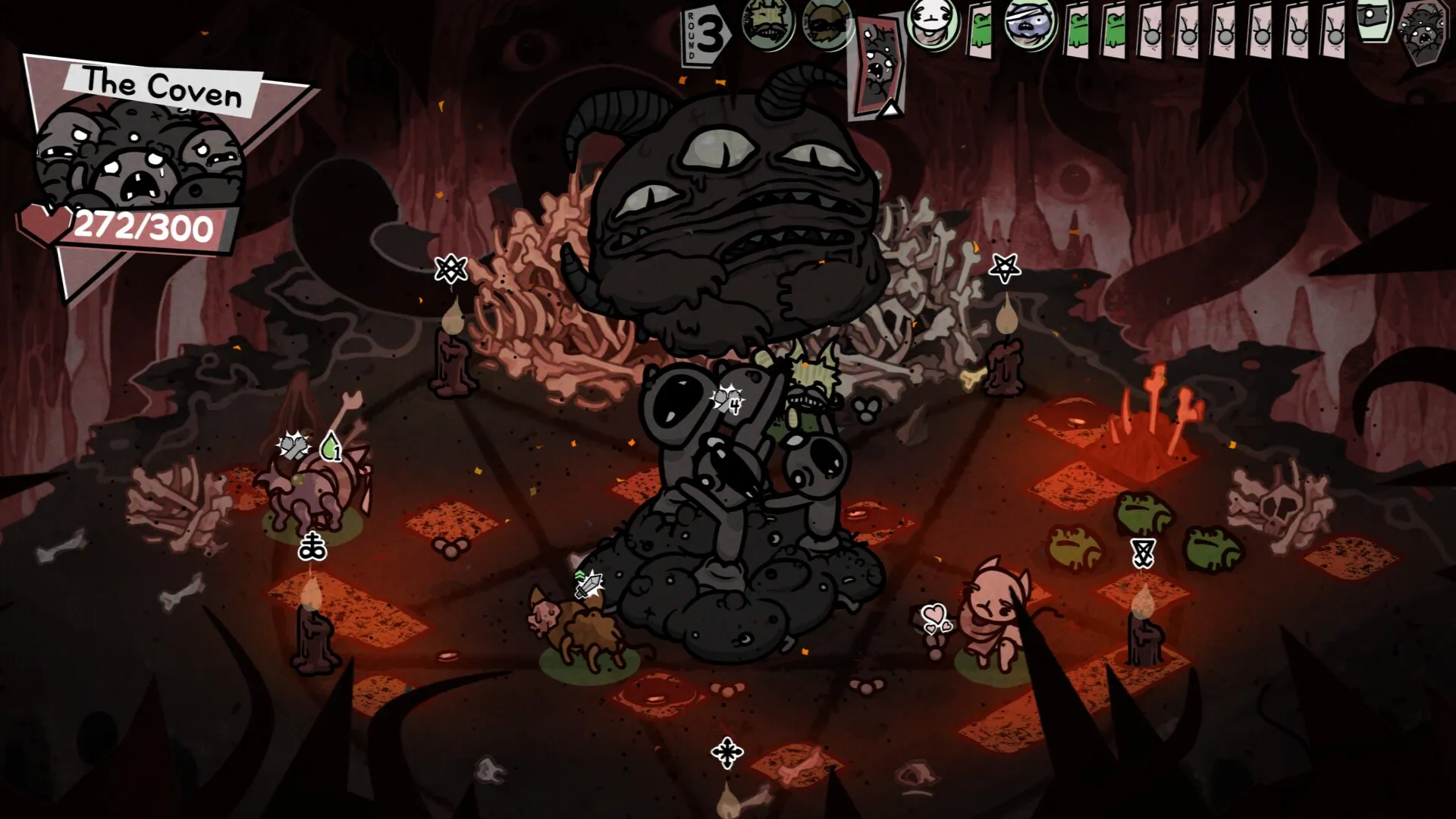
The battlefield reacts to what you do. Water on the grid can become a conduit for electricity that jumps across targets. Ice can shut down fires that spread across tiles. Those cause-and-effect links turn positioning into a conversation with the environment, not a simple math problem.
The game also keeps the threat level high through enemy tools that can end a cat instantly or saddle them with parasites that linger and ruin future decisions. A single misstep can translate into a permanent loss, and that permanence changes how you read each turn.
Clarity becomes part of the challenge. Blood sprays, elemental bursts, and layered effects can hide the grid beneath the mess, so the tactical view becomes a survival tool for separating information from noise. Wins come from understanding how abilities, terrain states, and status effects collide.
The game encourages players to test those collisions and learn from the wreckage. Sometimes that means discovering that an affliction can be redirected into offense. Sometimes it means noticing that something as humiliating as a cat’s incontinence can leave puddles that set up elemental chains.
Genetic Engineering in a Household Hub
The house is the long-term machine that powers future runs. You see it from a 2D side view while cats wander around, and you handle the space like a system to be optimized. Furniture placement runs through a grid-based inventory layout that asks for real spatial thinking. Item positioning feeds stats such as Stimulation and Comfort, and those numbers shape breeding outcomes, so interior design becomes a practical lever tied straight to progression.
Breeding itself is packed with variables. Kittens inherit traits from their parents, including libido and sexual orientation. Physical mutations carry down the line too, from extra heads to leech eyes. The goal pushes you toward curating a gene pool that can handle harsher and harsher threats, and that implies losses along the way. Progress asks for trades.
You hand cats over to NPCs to unlock improvements in the house. Tink takes newborns in return for breeding tools. Other characters want older cats or mutated ones to widen what you can do next. The exchange system keeps reinforcing the same uncomfortable message: cats function as property in a production chain.
Naming adds to that distance. Every kitten gets a randomized name and the game blocks you from renaming them. The result discourages attachment and speeds up the moment where sending a cat away feels like routine maintenance instead of a personal decision. Your attention shifts to the family tree, the inherited traits, and the next generation’s prospects. That long view frames progress as slow refinement across generations of feline body horror, where success comes from shaping a lineage built to endure the game’s harshest trials.
Structural Persistence and Sonic Character
Runs follow a three-act adventure structure with branches along the way. You pick between regular encounters and routes labeled by higher risk and better rewards, and that choice feeds directly into the game’s appetite for consequences. The progression model leans on planned obsolescence. A cat tends to retire after one adventure. Equipment mirrors that churn, with many items snapping after three or four uses. The effect is constant rebuilding. Your playbook has to stay flexible because the roster rotates and the gear refuses to stay permanent.
New content unlocks through side objectives with specific demands. You might haul a faulty invention through a dangerous area to open access to a new region. That sort of requirement turns a run into a puzzle about what you are willing to carry, protect, and gamble for future options. The game also watches how you behave. It tracks restarts meant to dodge bad outcomes, and it attaches consequences to that habit. The difficulty starts to include your relationship with risk, not just your performance inside battles.
Sound gives the grind a sharp personality. Ridiculon’s music leans on strong boss themes that stick in the head. The meowing layer runs deep too, built from more than 12,500 distinct voices, including guest cameos. That scale matches the game’s appetite for surprise. Each run can expose another tucked-away system, like a cryptid cat or a rare mutation. The amount of content supports hundreds of hours of discovery, with new angles for bending the chaos in your favor and new ways for the chaos to bite back.
The Review
Mewgenics
Mewgenics is a masterpiece of systematic chaos. It balances the precision of grid-based tactics with a sprawling, unpredictable genetic simulation. The loop of breeding, adventuring, and retiring creates a unique sense of history within your feline colony. While the juvenile humor and sheer randomness might alienate some, the depth of its interlocking systems provides endless discovery. It is a dense, morbidly beautiful experiment in player agency and consequence.
PROS
- Deeply rewarding breeding and genetics system.
- High replayability with thousands of potential skill combinations.
- Inventive, reactive turn-based combat.
- Fantastic soundtrack and unique personality.
CONS
- Visual clutter can occasionally obscure tactical data.
- High reliance on RNG can lead to frustrating losses.
- Inventory management becomes tedious with large colonies.