





















![Kingdom Hearts Collection [I-III] Review](https://gazettely.com/wp-content/uploads/2026/10/Kingdom-Hearts-Collection-I-III-1-360x180.webp "Kingdom Hearts Collection [I-III] Review: KHII Holds Steady as Newer Entries Fluctuate 37")



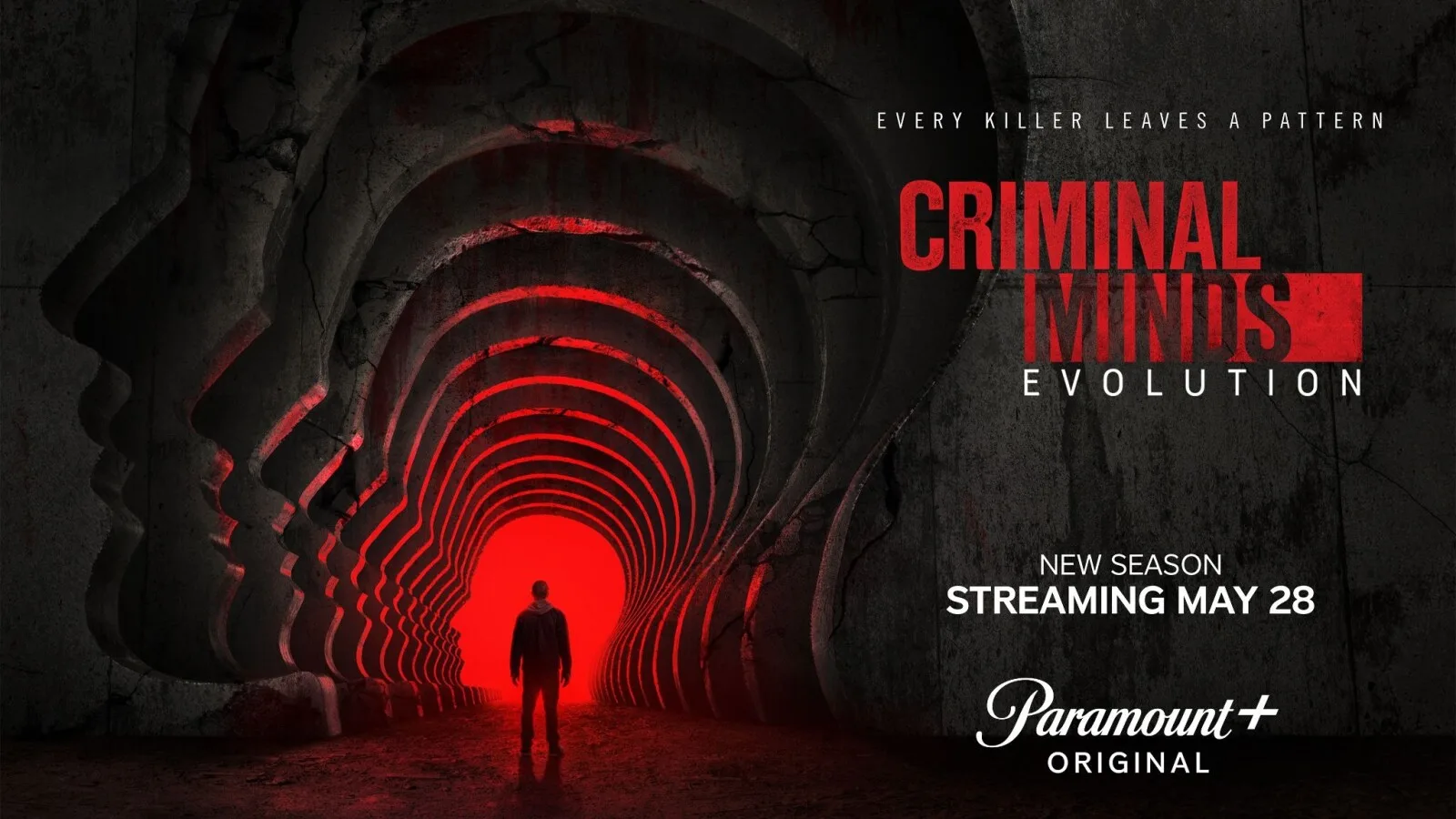

Criminal Minds Season 19 opens like a body trying to breathe after years underwater. The Sicarius Network has been dismantled, the BAU has technically won, and yet victory feels oddly ceremonial, like placing flowers on a grave while hearing something still scratching beneath the soil.
A year has passed, but Elias Voit remains everywhere: in prison, in memory, in the nervous system of the team, in the marketplace of public fascination. The season begins with the BAU pulled between familiar procedural movement and the heavier gravity of serialized psychological damage. Cases arrive. Victims vanish. Agents profile. Doors are kicked open. The machine still works.
Yet the atmosphere has changed.
Season 19 understands that evil no longer stays inside the killer’s basement. It circulates. It becomes a podcast topic, a conspiracy thread, a brand identity, a private fantasy fed by public myth. The show remains grim and bloody, sometimes punishingly so, but these early episodes carry sharper self-awareness. Criminal Minds has always stared into human darkness. This season asks what happens after the darkness learns how to market itself.
Elias Voit and the Myth of Sicarius
Elias Voit’s continued presence is both Season 19’s boldest idea and its most obvious danger. Four seasons of the same killer’s shadow is a lot for any crime drama to sustain, especially one born from case-of-the-week momentum. There are moments where his return feels like the show touching an old bruise to see if it still hurts. It does. The question is whether that pain has meaning.
Season 19 gives him a stronger reason to remain than the previous stretch often managed. Voit is no longer treated simply as the brilliant monster the BAU cannot shake. He has become something stranger and uglier: a cultural infection. Sicarius has escaped the man. The name now belongs to the listeners, obsessives, opportunists, and damaged strangers who need horror to organize their own inner chaos.
That shift gives the season its most potent philosophical charge. The show turns toward true-crime spectacle with a cold, accusatory gaze. Brian Garrity, with his hunger for engagement and narrative control, becomes a grotesque little priest of the attention economy. He does not pursue truth. He packages dread. He turns suffering into a shape his audience can consume, argue over, and identify with.
The season’s critique lands because it does not frame modernity as a gadget problem. The danger is not merely dark web forums or AI fakery or some trendy tech menace. The horror is social. Violence becomes a story, then a lifestyle, then a mirror. People do not simply listen to Sicarius mythology. Some begin to hear themselves inside it.
Voit’s own reaction complicates the matter. His prison scenes with Tara present him as unstable, self-aware, and perhaps sincerely disgusted by his public glamorization. His insistence that he is pathetic rather than special cuts through the theatrical fog around him. For a moment, the killer seems almost desperate to puncture his own legend.
Almost.
That is where the unease lives. Voit’s remorse may be real, but so is his appetite. His fractured psyche, especially through the hallucinated Rossi figure, suggests that Sicarius has not vanished. He has changed rooms. He now speaks from within, sly and patient, like a god the body has tried to stop worshipping.
The copycat thread feels like the inevitable consequence of this mythology. The BAU may have closed the network, yet the idea remains loose in the world. Season 19 seems aware that viewers may be tired of Voit, and that awareness gives the early episodes a certain tension. The show can use him as theme, warning, and residue. If it lets every path lead back to him again, the season may become trapped in the same mythology it wants to criticize.
The BAU After the Wound
The BAU enters Season 19 carrying grief like an unspoken dress code. Everyone looks functional. Almost no one feels whole.
JJ’s story is quiet, which is why it matters. Moving out of the home she shared with Will could have played as a standard grief beat, but the season grounds it in ordinary rituals: boxes, neighbors, bubble wrap, the cruel logistics of surviving someone. Henry preparing for college deepens that sense of time moving with no mercy. Life keeps asking for signatures, keys, tuition forms, and new addresses. Grief gets no veto.
Garcia’s presence during the move gives the show one of its gentler emotional textures. Criminal Minds has always needed that warmth, sometimes desperately. Between the abductions, torture rooms, and autopsy photos, the found-family dynamic keeps the series from becoming pure machinery. Here, friendship is not decorative. It is survival in domestic form.
Still, the strongest personal arc in the opening episodes belongs to Luke Alvez. His grief over Roxy reframes every small gesture: the nail-picking, the withdrawal, the elevator collapse, the refusal to tell the team what is happening inside him. The reveal works because the episode has already placed his pain in the body before naming it. Adam Rodriguez plays Luke as a man trying to hold his shape while the inner structure gives way.
Roxy’s death is not treated as a cheap emotional trigger. She was his tether after war, the living proof that he could return from the edge and remain reachable. Losing her means losing a language of safety. His silence becomes painfully legible. He is not hiding because he feels nothing. He is hiding because the feeling has no manageable size.
The case involving David Graham sharpens this arc. Luke sees a distorted reflection of pain left without rescue. Graham externalizes agony by making others suffer. Luke recognizes the abyss without stepping into it. The episode never equates them morally, which is vital. It studies proximity instead: the terrible knowledge that despair can become either a wound one carries or a weapon one uses.
Rossi, meanwhile, seems spiritually exhausted. Prentiss turns irritation into an art form, especially around true-crime parasites. Tara’s work with Voit carries its own moral fog. Studying him may help. It may also keep the wound open. Season 19 understands recovery as uneven, private, and often humiliating. No one heals in a clean line. Most people simply learn how to work while bleeding.
Procedural Bones, Darker Flesh
The first two episodes return Criminal Minds to a case-based structure, which is a necessary correction. The Sicarius material needs air around it. Without new cases, the show risks becoming a shrine to its own favorite monster.
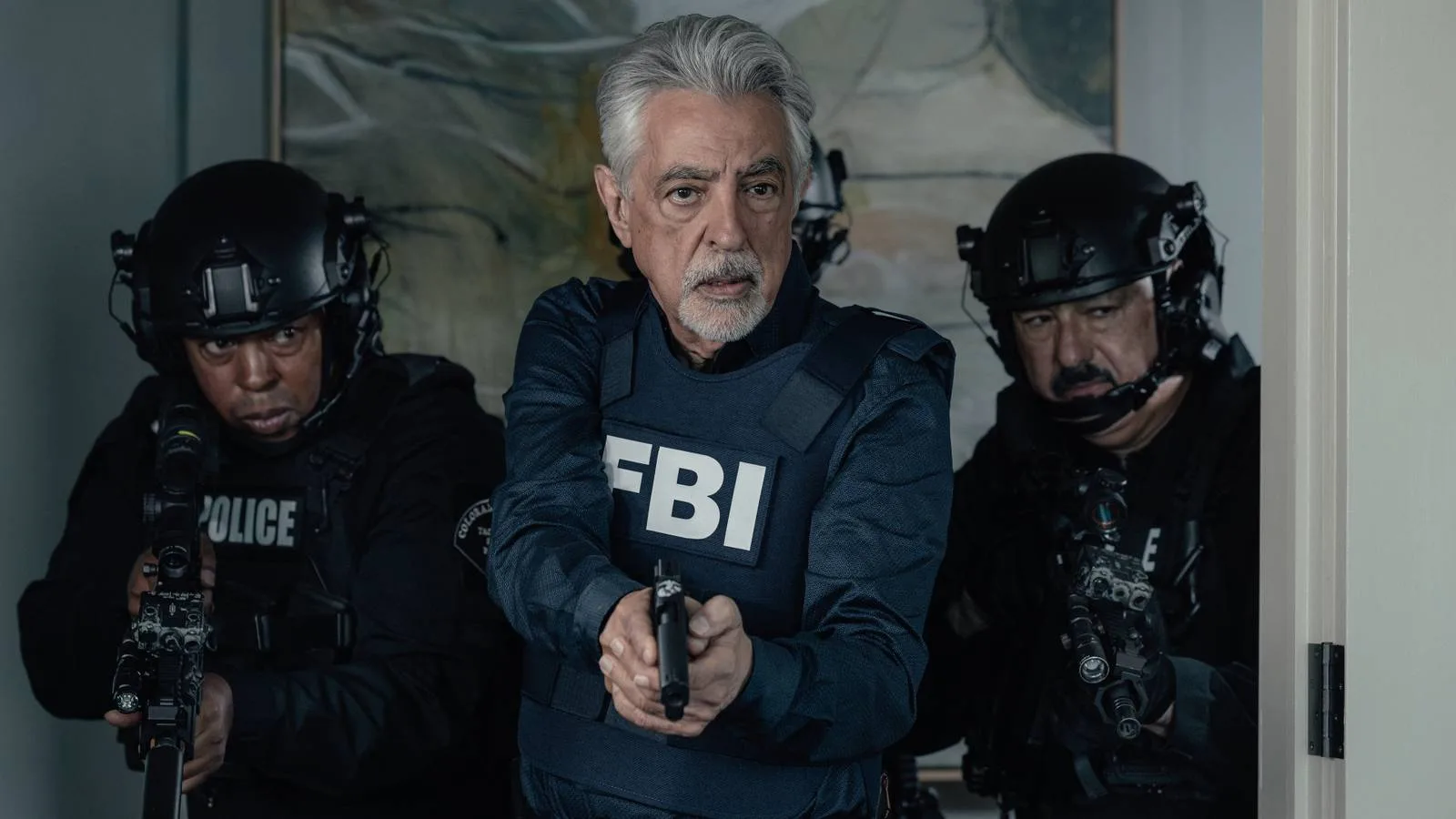
Episode 1, “Now and Then,” begins with isolated highway abductions and tactical-gear killers posing as authority figures. The setup is familiar, perhaps too familiar. There is a faint sense of old machinery grinding back into motion: dark road, frightened victims, men with weapons and a rotten family legacy. The early stretch does not feel especially fresh.
Then Susan enters the hour, and the case finds its pulse.
The cognitive interview sequence gives the episode its strongest formal identity. Memory and present reality blur, creating a visual space where trauma is neither past nor present. It is weather. The camera draws close, the performance tightens, and exposition becomes experience. Susan’s pain gives the story weight that the villains alone cannot provide.
The reveal that the current killers are her twins, filming violence for their dying father, pushes the case into a disturbing form of legacy horror. Evil here becomes inheritance, performance, and family ritual. It is grotesque because it suggests that cruelty can be passed down like a name.
Episode 2, “Cluster,” is stronger. Its investigation into military deaths and the Army Recovery Care Program has a sharper emotional spine. The lobotomy element is horrifying, almost too much, yet the episode ties that brutality to the UnSub’s need to transfer pain outward. He cannot escape suffering, so he exports it into other bodies.
That is a bleak idea, and the episode commits to it.
The procedural work succeeds because it is tied to Luke without feeling mechanically arranged for his benefit. His history, his veteran status, his grief, and his ability to recognize desperation all shape the investigation. The case becomes both external puzzle and internal pressure chamber. Criminal Minds is at its best here, allowing the weekly structure to echo the season’s larger questions: what pain does to identity, how spectacle distorts suffering, and what happens when relief feels unreachable.
Craft, Performance, and the Shape of a Possible Future
Season 19 shows a stronger visual instinct than the franchise often gets credit for. The cognitive interview in “Now and Then” and Luke’s psychological unraveling in “Cluster” suggest a series newly attentive to the body’s relationship with memory. The camera moves with panic, grief, and revelation. Faces are allowed to carry silence. Space tightens when the mind does.
The show now leans toward psychological thriller territory while keeping its procedural skeleton intact. That combination works when the direction trusts atmosphere over noise. It falters when editing grows uneven or when ominous song covers announce dread too loudly. Criminal Minds does not need every moment underlined in black ink. Its horror is already heavy enough.
The ensemble remains one of the season’s chief strengths, even as balance continues to be a problem. A.J. Cook gives JJ’s grief a restrained credibility. Rodriguez receives overdue focus and responds with one of the season’s most affecting performances. Paget Brewster brings dry comic precision to Prentiss, especially in scenes involving Garrity. Joe Mantegna plays Rossi as a man whose patience has curdled into fatigue. Kirsten Vangsness keeps Garcia warm without reducing her to relief from the darkness.
Some characters still hover at the edge, waiting for the story to remember them. That has long been part of the show’s ensemble challenge. Season 19 sets up enough emotional and narrative material for nearly everyone, though follow-through will determine how much of that promise survives.
The early episodes work best when they treat modern horror as cultural rather than technical. True-crime celebrity, public obsession, conspiracy thinking, and killer mythology give the season fresh bite. The copycat thread carries promise because it shifts danger away from a single man and toward the society that keeps making him larger.
Criminal Minds Season 19 is fragile, messy, grim, and sometimes oddly lucid. It sees the old machine beneath its feet and tries to make that machinery speak to a sicker age. The franchise is still investigating monsters, but now it seems equally disturbed by the crowd gathered outside, listening, recording, and waiting for the next episode.
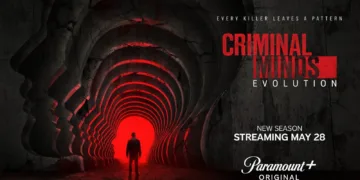
Criminal Minds: Evolution returned for its highly anticipated nineteenth season (historically categorized as Season 3 of the streaming revival format) on May 21, 2026, dropping a two-episode premiere event. The continuous procedural drama picks up with the elite FBI Behavioral Analysis Unit facing a clean wave of psychological threats. Serial killer Elias Voit, portrayed chillingly by Zach Gilford, remains behind bars for life but serves as an uneasy asset to help the team track down a dangerous copycat admirer operating in the wild. Original flagship stars Joe Mantegna, A.J. Cook, Aisha Tyler, Adam Rodriguez, and Paget Brewster anchor the tight-knit profiling unit this season. Viewers can stream new weekly episodes of the crime procedural exclusively on Paramount+.
Where to Watch Criminal Minds Season 19 Online










Full Credits
Title: Criminal Minds: Evolution (Season 19)
Distributor: Paramount+
Release date: May 21, 2026
Rating: TV-MA
Running time: 42–55 minutes per episode
Director: Glenn Kershaw
Writers: Jeff Davis, Erica Messer, Breen Frazier, Christopher Barbour
Producers and Executive Producers: Erica Messer, Mark Gordon, Breen Frazier, Christopher Barbour, Glenn Kershaw
Cast: Joe Mantegna, A.J. Cook, Kirsten Vangsness, Aisha Tyler, Adam Rodriguez, Paget Brewster, Zach Gilford, Connor Storrie
Director of Photography (Cinematographer): Greg St. Johns
Editors: Nina M. Gilberti, Jimmy Gribbin
Composer: Mark Mancina, Steffan Fantini
The Review
Criminal Minds Season 19
Criminal Minds Season 19 finds renewed force by treating violence as contagion, spectacle, and public mythology. Its Voit material still risks repetition, yet the early episodes give him sharper thematic purpose while grounding the BAU in grief, fatigue, and fragile loyalty. Luke’s arc is the strongest emotional thread, and the season’s best moments turn procedural horror into existential unease. Some uneven editing and ensemble imbalance remain, but this is a grim, thoughtful return with real bite.
PROS
- Strong thematic focus on true-crime culture and killer mythology
- Adam Rodriguez delivers a standout performance as Luke
- Sharper visual language in key psychological scenes
- JJ, Garcia, Rossi, Prentiss, and Tara add emotional texture
- Case-of-the-week structure gives the season needed momentum
CONS
- Voit’s continued presence may feel overextended
- Some editing choices are uneven
- Ominous song covers can feel distracting
- Ensemble balance remains inconsistent