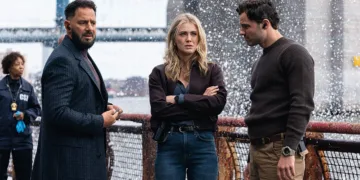




















The Hunting Party Season 2 returns to NBC with its boots already muddy, its secrets already leaking, and its team already one bad decision away from a full internal collapse. The series remains built around Rebecca “Bex” Henderson and her hunt for killers who escaped from The Pit, a secret prison where dangerous inmates were kept, studied, and supposedly treated. That last word does a lot of heavy lifting. In this show, “treatment” often looks suspiciously like science with a badge, a budget, and no adult in the room.
Season 2 picks up with a tighter grip on what makes the premise work. The escaped killer format still gives each episode a clean engine, yet the season feels less like a string of grisly assignments and closer to one ongoing investigation into institutional rot. Oliver’s death hardens Bex. Shane’s past starts pulsing under the floorboards. Morales gets pulled closer to danger. Colonel Lazarus enters like someone who knows where every body is buried because she may have signed the paperwork.
Procedural Comfort With Serialized Pressure
The series keeps its weekly structure, and that is a smart choice. Each episode has a killer, a behavioral profile, a trail of clues, and a sprint toward a confrontation. That setup gives The Hunting Party the old network-TV pleasure of knowing what kind of ride you bought a ticket for. A fugitive is loose. Bex and the team chase. Someone says something ominous near a computer screen. Hassani looks like he has read the entire federal code before breakfast. The machine works.
What makes Season 2 stronger is the way the cases feed the larger story. Ron Simms, Adrian Gallo, Zach Lang, Amanda Weiss, Noah Cyrus, and Lou Kaplan are not random monsters pulled from a cabinet labeled “creepy ideas.” Each one reflects a different failure of The Pit. Some were sharpened by it. Some were misunderstood by it. Some were given language for their damage without any useful path away from violence. The show’s best trick this season is making the killer-of-the-week format feel like a slow autopsy of the system that created the emergency.
The pacing benefits from that connection. Episodes still move fast, often with the clean rhythm of a classic crime procedural, yet there is a stronger pull between chapters. Bex forces the team back into action after Oliver’s death, and that choice hangs over everything. Lazarus replacing Mallory brings a colder kind of threat. She does not need to chase anyone through an alley. She can ruin lives from an office, which is very efficient and very upsetting.
Shane’s link to Lazarus gives the season its most personal pressure point. The longer Bex and the others keep the truth from him, the more the team’s warmth starts to feel unstable. Trust becomes a ticking clock. That is where the season finds real tension, not in asking who the next killer is, but in asking what the team will break to keep itself intact.
The show still has its rough patches. Some twists arrive with a little too much convenience. Adrian Gallo’s resin murders require viewers to politely place science in a drawer for forty minutes. Zach Lang’s motivation has moments that feel blunt, as if the episode wants to make sure no one accidentally feels too much sympathy. Still, the season moves with enough confidence that these stumbles rarely derail the ride.
The Pit Is the Real Monster
The escaped killers are frightening, but Season 2 understands that The Pit is the deeper horror. A serial killer with a method is scary. A government program with no moral brakes is scarier. The Pit did not simply contain evil. It studied it, pushed it, named it, and in several cases made it worse. The season keeps returning to a grim idea: knowing why someone kills does not mean you have helped them stop.

Ron Simms makes for a strong premiere villain because his terror comes from a warped need for connection. His anxiety, childhood trauma, and fixation on affection give him a strange sadness, yet the show never lets that sadness excuse him. His dating scenes are awkward in a way that curdles into dread.
The old horror references, especially his connection to classic monster imagery, make him feel like someone who learned intimacy from shadows on a screen. Eric McCormack and Finnegan McCormack give the character enough continuity across time that his evolution feels tragic and unnerving.
Adrian Gallo pushes the season toward grotesque spectacle, with resin-preserved victims creating one of the show’s most macabre images. The copycat turn involving Erica Burke is messier, but it does serve a purpose. It mirrors Bex’s own proximity to darkness. Spend long enough studying monsters, and the show asks, how much of your own reflection starts to change?
Amanda Weiss gives the season one of its most tense hours. Elizabeth Gillies plays her with a gentleness that makes the danger more unnerving. Bex posing as “Alice” turns the episode into a psychological tightrope act. Every pause matters. Every look feels loaded.
The reveal of Dr. Erikson’s deception inside The Pit makes the institution’s ethics look even uglier. Pretending to be a fellow inmate to manipulate Amanda is the kind of therapy plan that should come with handcuffs for the doctor too.
The later cases push the show into sharper cultural territory. Noah Cyrus, played with chilly charisma by Kelsey Grammer, turns secrecy itself into a weapon. His desire to expose The Pit raises an uncomfortable question: would the truth create chaos, or would secrecy protect the same people who caused the mess?
Lou Kaplan’s AI-driven fake influencer scheme feels especially current. His use of online trust, fabricated identity, and parasocial comfort gives the episode a nasty sting. The scariest part is how plausible it feels. Technology has made stalking scalable. Lovely.
Bex, Shane, Morales, and a Team Under Stress
Melissa Roxburgh gives Bex a harder edge this season. She is still smart, forceful, and capable in the field, but grief has changed her temperature. Oliver’s death does not turn her into a different person. It exposes what was already there: anger, guilt, and a dangerous comfort with bending rules when the mission demands it. Watching Shane and Hassani stop her from killing Ron Simms is one of the season’s clearest character beats. The question is not whether Ron deserves mercy. The question is what killing him would do to Bex.
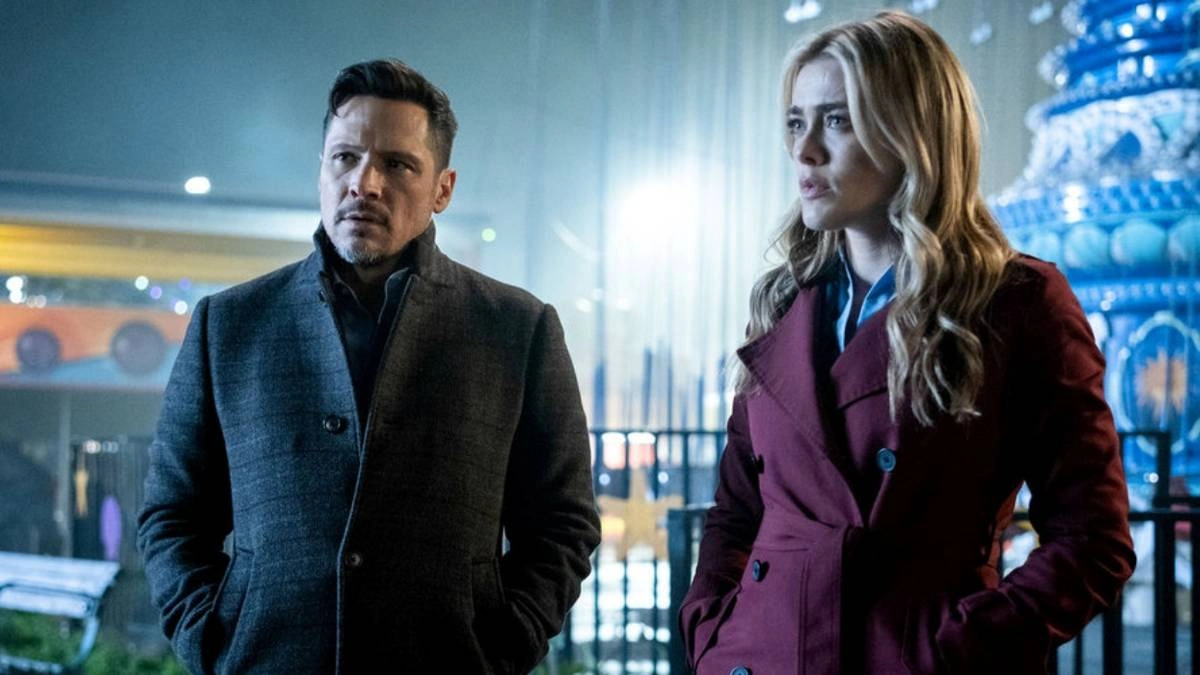
That scene matters because the team has become her emotional guardrail. Bex can profile a killer, bluff a suspect, and push an attorney general into a corner. She can also lie so well that it starts to poison her closest bonds. Her deception during the Amanda Weiss case is thrilling because it saves lives. Her secrecy with Shane is painful because it risks destroying trust. The season understands that the same skill can be heroic in one room and disastrous in another.
Josh McKenzie gives Shane a welcome emotional openness. His search for his mother could have been a simple mystery-box thread, but the performance keeps it human. Shane is warm without seeming naive, wounded without turning fragile. That makes Bex’s silence hurt more. He trusts the team because they have earned it. The problem is that trust, once used as protection, can start looking a lot like control.
Patrick Sabongui’s Hassani remains the show’s stabilizer. His calm, disciplined presence gives the team needed weight, especially as everyone else begins carrying secrets like live wires. Lazarus’s attempt to pin suspicion on him works because Hassani is so defined by order. Watching him shaken by a false trail cuts deeper than a standard frame-up plot.
Morales gets some of the season’s most satisfying growth. She is no longer just the person feeding coordinates into an earpiece. She becomes essential in the field, in the command center, and during the Noah Cyrus bomb crisis. The show wakes up whenever it remembers that Morales is a lead character with her own instincts, courage, and risk. Her connection to Mallory, paired with Lazarus’s rise, places her in a dangerous spot. Being smart in this world is useful. Being smart while a powerful person knows you are watching her is a health hazard.
Kari Matchett’s Colonel Lazarus gives the season its coldest human threat. She does not need theatrical villainy. Her power sits in her stillness, her authority, and her ability to make everyone doubt the room they are standing in. Her identity as Caitlin Taylor and her connection to Shane add a personal charge that makes her scenes feel loaded before she even raises her voice.
A Network Crime Drama With Darker Ambitions
Visually, Season 2 leans into controlled gloom without drowning the screen in mood for mood’s sake. The direction is most effective when it trusts silence, proximity, and behavior. Bex pretending to be Alice with Amanda Weiss works because the camera lets the lie breathe. Ron Simms’s attempts at romance disturb because the scenes sit in the discomfort. Lazarus stepping into Shane’s orbit lands because it feels quiet and invasive, like a threat delivered in a whisper.
The cinematography favors shadowed rooms, sterile institutional spaces, and tense close-ups that make The Pit feel present even when no one is inside it. Editing keeps the procedural engine moving, while the sound design often adds pressure through restraint. The show knows a sudden noise can startle, but a quiet room with the wrong person in it can do worse.
The Hunting Party still belongs to the tradition of team-based network crime shows. You can see the DNA of fugitive procedurals, profiler dramas, and conspiracy thrillers moving through it. Yet Season 2 gives that familiar frame a sharper spine. The best episodes make the weekly case and the mythology feed each other, turning each capture into another reminder that the system behind the killers may be harder to contain than the killers themselves.
Some dialogue still carries the polished bluntness of network television. Some plot turns arrive wearing big shoes. Yet the team chemistry, stronger guest villains, and deeper use of The Pit mythology give the season a firmer identity. The show has learned that the chase is fun, the monsters are marketable, and the real hook is watching people with badges slowly realize they may be working inside the crime scene.
The Hunting Party Season 2 premiered on NBC on January 8, 2026, with the season finale airing on May 7, 2026. The NBC crime procedural follows Rebecca “Bex” Henderson and her team as they track serial killers who escaped from The Pit, a secret prison tied to government experiments and buried institutional secrets. The series was created by JJ Bailey, with JJ Bailey and Jake Coburn serving as co-showrunners, writers, and executive producers. Season 2 airs on NBC and is available to stream on Peacock, with episodes also listed through NBC.com.
Where to Watch The Hunting Party Season 2 Online










Full Credits
- Title: The Hunting Party Season 2
- Distributor: NBC, Peacock
- Release date: January 8, 2026
- Rating: TV-14
- Running time: 42 to 43 minutes per episode
- Director: Thor Freudenthal, Marcus Stokes, Glen Winter, James Bamford, Rob Hardy
- Writers: JJ Bailey, Jake Coburn, Keto Shimizu, Rebecca Bellotto, Vinny Ferris
- Producers and Executive Producers: Jeff Rafner, JJ Bailey, Jake Coburn, Thor Freudenthal, Keto Shimizu, Michael Jones-Morales
- Cast: Melissa Roxburgh, Patrick Sabongui, Josh McKenzie, Sara Garcia, Kari Matchett, Luke Forbes, Quentin Nguyen-Duy, Nick Wechsler
- Director of Photography: Mirza, Mark Chow, Sarah Cawley, Mike Caracciolo, Anastas Michos
- Editors: Benjamin Bumgarner, Meghan Robertson, Marc Pattavina, Todd Desrosiers, Kevin Mock, Matt Lawrence
- Composer: Dan Romer
The Review
The Hunting Party Season 2
The Hunting Party Season 2 sharpens its procedural hook with better pacing, stronger team tension, and a darker use of The Pit mythology. The season still has a few logic leaps and blunt villain motives, yet its cast chemistry, guest performances, and moral unease give the chase real bite. It is slick, tense, and strange in the right ways.
PROS
- Stronger serialized tension
- Better use of The Pit mythology
- Melissa Roxburgh gives Bex sharper emotional weight
- Morales gets welcome development
- Memorable guest villains
- Tight manhunt pacing
CONS
- Some killer motives feel thin
- A few twists are too convenient
- Certain crime methods strain belief
- Some dialogue feels familiar for network TV



I amvery impressed with this review. Not only is the writing very fresh for a “review” style, but so are the deeper perspectives. I love that you took the time to point out camera angles and sound scenarios. You wrote as if you watched the show the way people should watch…paying attention instead of commenting on every single scene in real time (social media). Reading this makes me wish you had written a review for each episode. Well done. Send it to NBC, to remind them why they need to renew the show.
Thank you so much! Our review guidelines actually require us to focus on the technical craft, like camera work and sound design, instead of just recapping the plot. It means a lot that you noticed that effort.
Fingers crossed NBC hears you on the renewal! We’re passing your kind words right along to our critic.
Those are great requirements to have. Keep passing Ben’s review along, as high up as you can. I hope NBC reads it!
If you’re able to, please share the link below around, even if it’s privately. It can’t hurt to try.
https://www.change.org/p/renew-the-hunting-party-for-a-third-season