















Some events resist narrative. They are too raw, too vast, or too immediate to be contained within the clean geometry of a three-act structure. The act of shaping them into a story, with characters and arcs and resolutions, can feel like a diminishment, even a falsehood.
Red Alert, a four-part dramatization of the October 7, 2023 attacks in southern Israel, confronts this problem head-on by largely abandoning conventional narrative architecture. It does not attempt to explain or contextualize the event within a grand historical frame.
Instead, it opts for a radical act of narrative confinement, locking the viewer inside the subjective, terrifying, and profoundly confusing experience of the day itself. The series is constructed as an immersive document of survival, a collection of harrowing present-tense moments where the only goal is to endure the next minute, and the one after that.
The Lens of Immediacy
The central storytelling choice in Red Alert is the aggressive stripping away of all external context, a technique that proves to be its most potent and unsettling device. This is a story told without generals, politicians, or strategists. Key names that define the conflict for the outside world are never uttered. The narrative operates within an informational void, mirroring the profound disorientation of those on the ground.
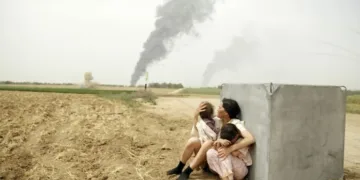
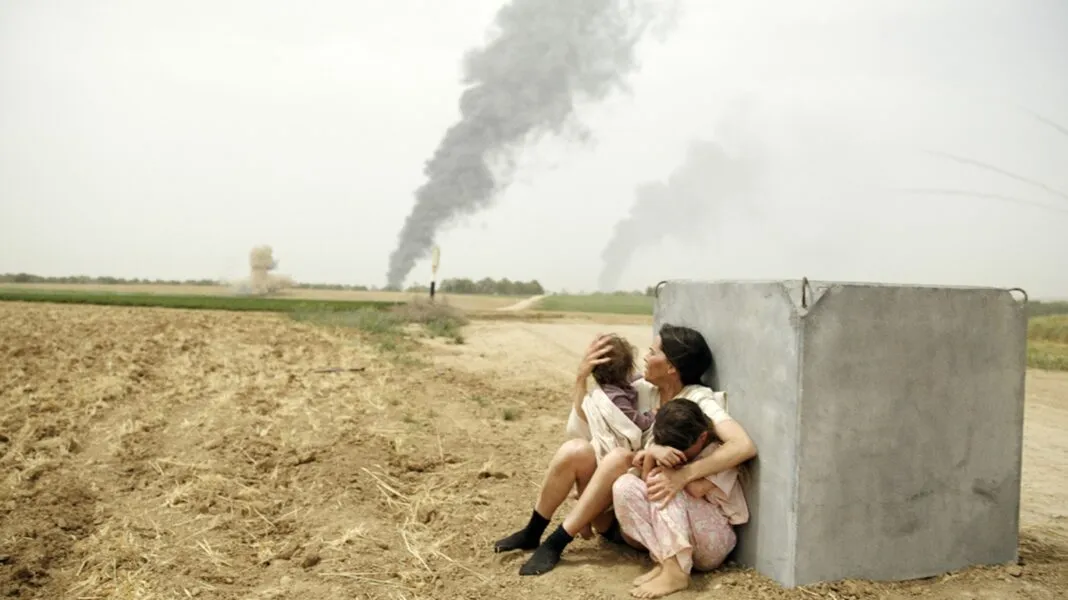
This forces the viewer into the same cognitive position as the characters: a state of pure reaction. The enemy is rendered not as a political entity but as an almost elemental force, perceived only through the sound of gunfire, the sight of a passing pickup truck, or shouts in an unfamiliar language. The effect is one of intense claustrophobia, a feeling that the world has shrunk to the size of a single cramped safe room or the dusty patch of ground behind a concert stage.
This structural decision is reinforced by the show’s relentless, near-real-time pacing. The creators resist the temptation to cut away for exposition or to cross-cut for dramatic irony. Instead, the clock ticks forward with agonizing slowness. This methodically builds tension, but its more profound effect is to dramatize the psychological erosion of hope.
At the outset, characters express an ironclad faith that the army will arrive any moment. It is a baseline assumption of their reality. Across the episodes, we watch that certainty curdle into confusion, then into desperate pleading, and finally into the terrifying realization that no one is coming. This is not presented as an external critique; it is an internal, lived experience.
The failure of the state is not a talking point but a terrifying vacuum that the characters must navigate themselves. Their sense of abandonment becomes palpable, transforming the narrative from a simple depiction of an attack into a harrowing study of institutional collapse at the most personal level.
Portraits of a Crisis
The series weaves together four primary storylines, each a meticulously recreated account based on real survivor experiences. This multi-protagonist structure allows the show to survey the sprawling geography of the attack without ever leaving the ground. The story of Batsheva and Ohad Yahalomi is a domestic horror film in miniature.
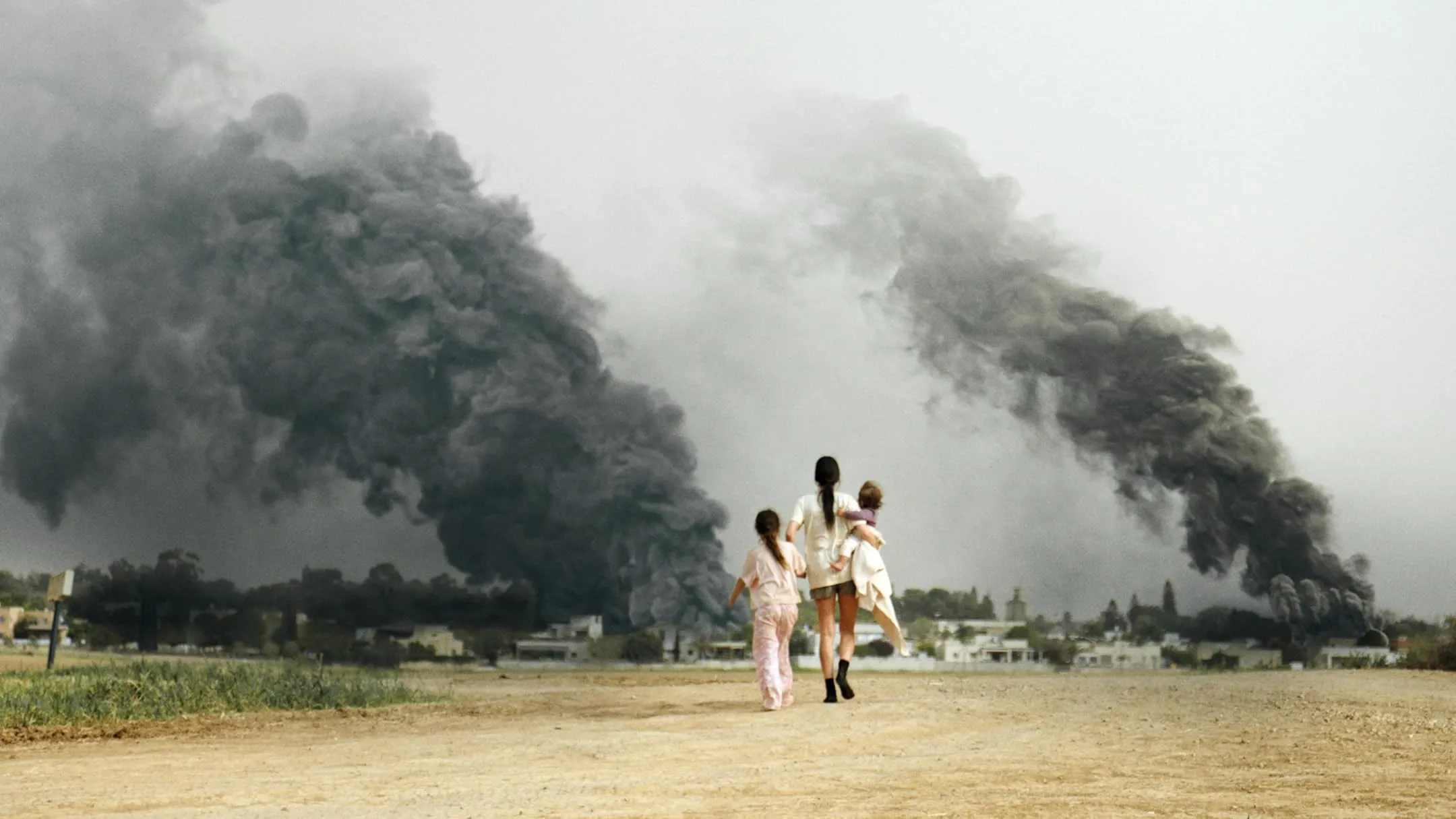
Their home, and specifically its reinforced safe room, becomes the setting for an unbearable siege. The drama here is in the quiet details: the desperate attempts to keep children silent, the silent, terrified glances exchanged between parents, and the chilling moment when the flimsy interior door becomes the only barrier against the violence outside.
Their arc, which culminates in a violent separation and kidnapping, transforms the abstract idea of a cross-border incursion into the concrete reality of a family being torn apart in their own kitchen. The performances, especially from Rotem Sela as Batsheva, are defined by a restrained panic that feels achingly real.
A starkly different form of chaos unfolds at the Nova music festival, seen through the eyes of Nofar, a police officer working the event. Here, the setting is one of wide-open spaces, offering no sanctuary. Nofar’s story becomes one of forced stillness after she is wounded. Her survival hinges on remaining silent and unseen, a passive and terrifying ordeal.
This is contrasted with the frantic activity of her husband, Kobi, a fellow officer fighting in a nearby town. His arc explores the agonizing conflict between professional duty and personal desperation, as he attempts to defy the chain of command to rescue the person he loves. His frustration highlights the breakdown of communication and authority that plagued the initial response.
In the town of Ofakim, Tali Hadad’s journey provides a necessary counter-narrative of civilian agency. What begins as a mother’s focused mission to locate her son, Itamar, broadens into a selfless, impromptu rescue operation. As official responders are pinned down, Tali uses her personal vehicle as an ambulance, driving into active firefights to ferry the wounded to safety. Her transformation from a concerned parent into a frontline rescuer is one of the few instances where a character is able to exert some measure of control over the unfolding catastrophe.
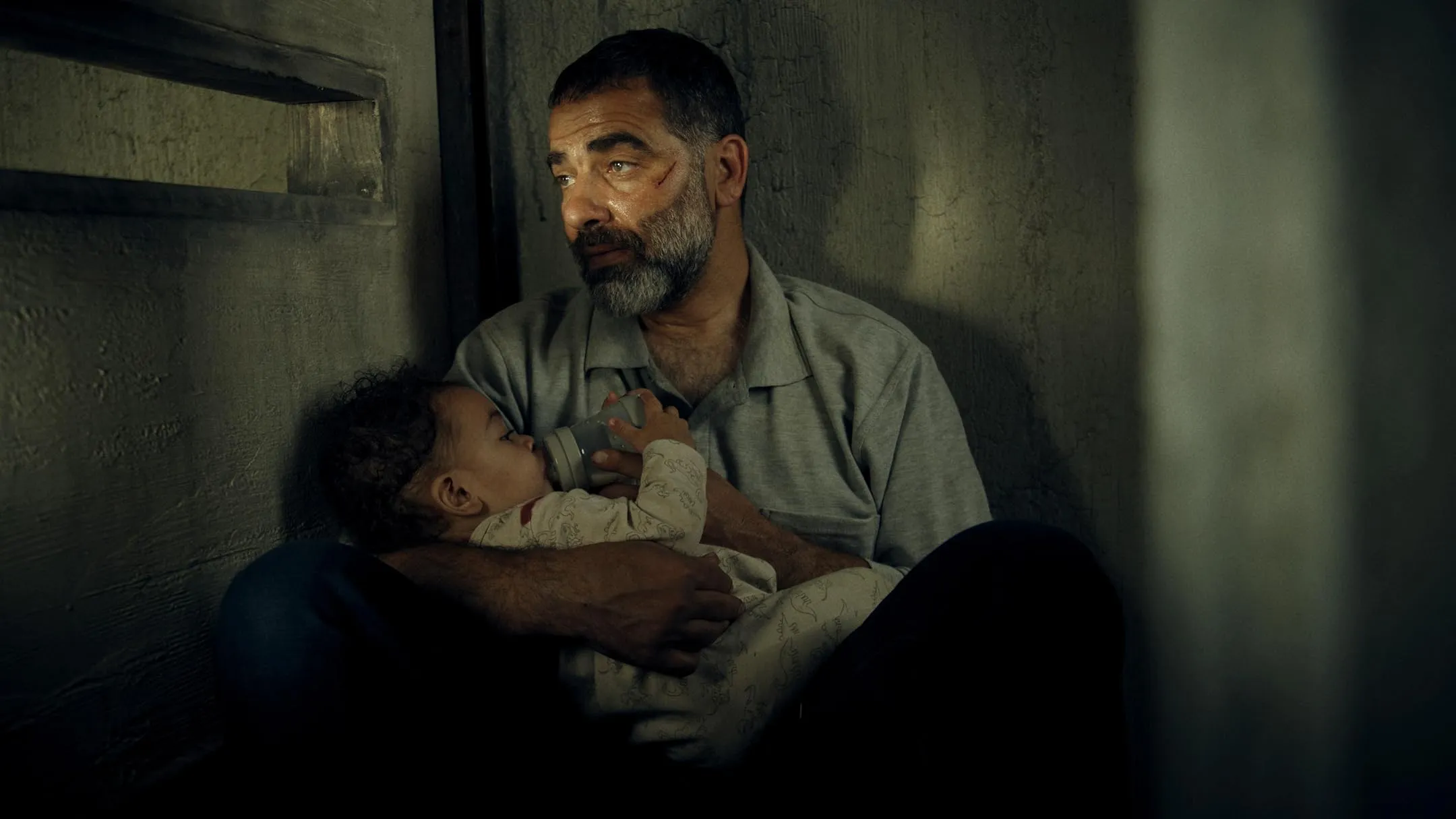
Finally, the story of Ayoub, a Bedouin farmer, serves as the show’s most complex narrative thread. After his wife is killed in an ambush, his ordeal is twofold: first, to survive with his infant son, and second, to navigate the suspicions of the very state he is a citizen of. His tense encounter with the first Israeli soldiers to arrive on the scene is a moment thick with unspoken history.
In that moment, his language and appearance make him a potential threat, and he must prove his loyalty under duress. Including his story is a deliberate choice to resist a simplistic, monolithic narrative of the attack, acknowledging the internal complexities and prejudices of the society that was targeted.
The Documentary Veneer
Aesthetically, Red Alert commits fully to a style that could be termed forensic naturalism. The visual grammar is borrowed directly from documentary filmmaking and citizen journalism. Unsteady handheld cameras place the viewer in the middle of the action, often catching only partial glimpses of events.
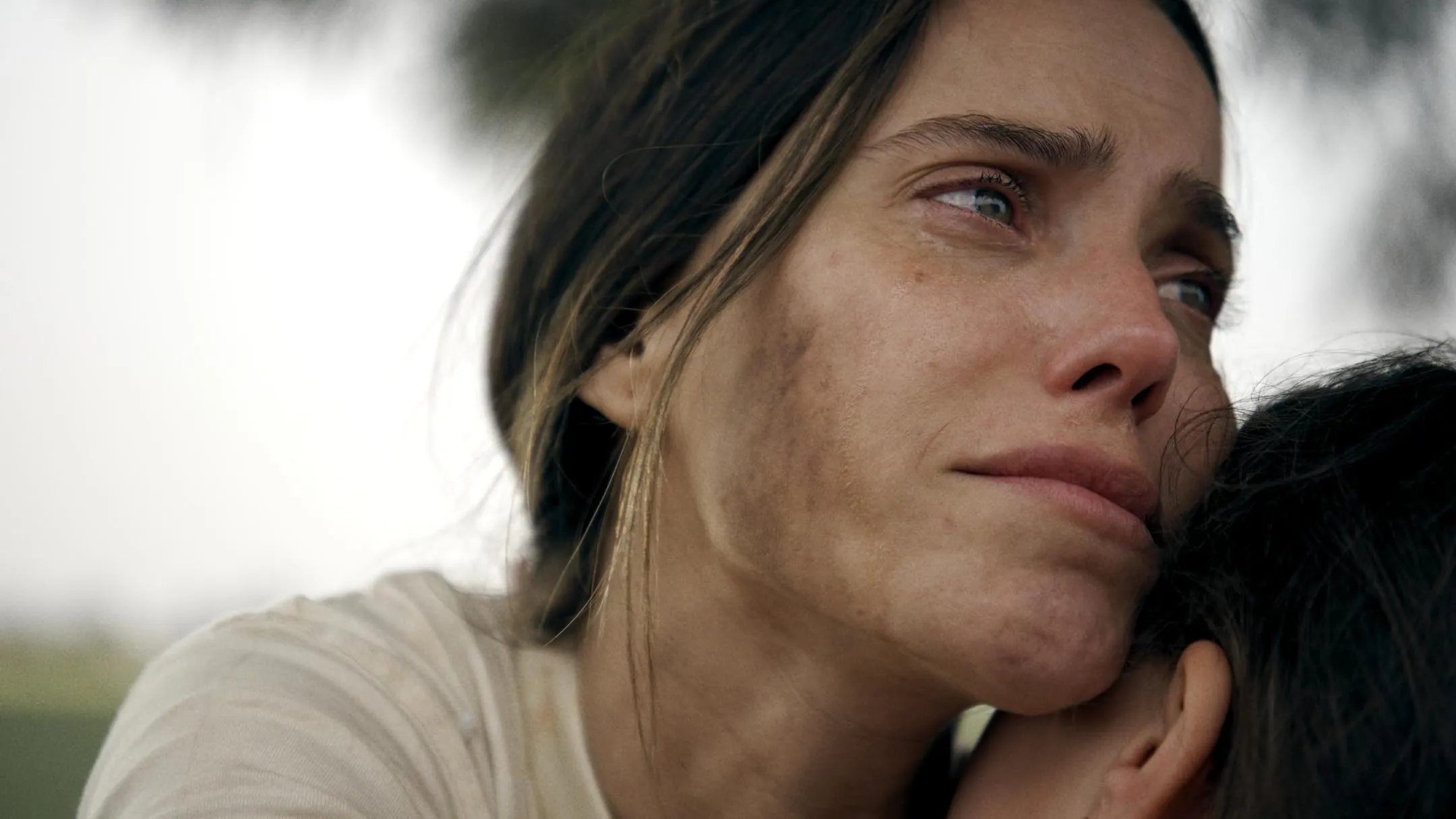
The desaturated color grading gives the images a stark, evidentiary quality, as if they are artifacts being reviewed after the fact. The creators consciously avoid any hint of cinematic polish. The score is used sparingly, if at all, allowing the sound design to carry the tension. The audio landscape is a terrifying mix of distant explosions, close-range automatic weapon fire, and the incessant, eerie voice of the “red alert” warning system.
This pursuit of authenticity is also evident in what the series chooses to omit. The screenplay avoids the most widely reported atrocities, including sexual violence and the methodical killing of children. This is a significant and debatable choice. From one perspective, it is an act of ethical restraint, a refusal to aestheticize or exploit the deepest forms of human degradation for dramatic effect.
It keeps the focus on the emotional and psychological experience of survival rather than the graphic details of death. From another, more critical perspective, one could argue that this sanitization, while perhaps necessary for the victims’ dignity, also makes the horror more palatable for a mainstream international audience, carefully curating the trauma to fit within the bounds of broadcast television.
The line between dramatization and documentation is blurred most explicitly in the series finale. Following a trend in fact-based storytelling, the closing moments feature photographs and video clips of the actual survivors, sometimes standing on set with the actors who portrayed them. The intent is clear: to validate the preceding drama with the stamp of lived experience and to pay tribute to the real people whose stories were told.
Yet, the technique is not without its ethical complications. It retroactively reframes the viewing experience, forcing the audience to confront the real trauma that the actors have just performed. It is a powerful device, but one that walks a fine line between honoring reality and leveraging it for a final, devastating emotional impact.
A Story in a Storm
In its intense focus on the events of a single day, Red Alert is implicitly making an argument about beginnings. It presents the subsequent war not as an event with a long and tangled history, but as a direct result of a singular, unprovoked horror.
The series is an act of creating a foundational memory, an attempt to establish an unambiguous moral starting point for a conflict that would quickly become mired in complexity and competing claims of victimhood. It is a meticulously crafted narrative of origins, designed to remind the world of the shock and pain that served as the catalyst for everything that came after.
But no story is told in a vacuum. A series released in October of 2025 cannot be watched with the innocence of October 6, 2023. An audience viewing these events now does so with the heavy, inescapable knowledge of the brutal two-year war that followed. This external context haunts every frame of the series. We watch characters hide in shelters, knowing the larger story of the hundreds of thousands who would be displaced from their own homes.
We watch a family’s desperate fight for survival, aware of the massive civilian casualties that would define the subsequent conflict. The show’s creators can expertly recreate the past, but they cannot control the present in which it is viewed. The tight, focused narrative of that single, terrible day is inevitably flooded by the tragic, sprawling, and unfinished story of its aftermath.
Red Alert is a limited drama series created, written, and directed by Lior Chefetz and Ruth Efroni. The series dramatizes five true, harrowing stories of mainly civilian characters who became unlikely heroes during the October 7, 2023, Hamas attack on Israel. It premiered in Israel on Channel 12 on October 5, 2025, and was released internationally on Paramount+ on October 7, 2025, exactly two years after the attack, where all four episodes are available to stream. Key production companies involved include Keshet Media Group and Lawrence Bender’s Bender Brown Productions, along with Green Productions and the Israel Entertainment Fund.
Full Credits
Director: Lior Chefetz
Writers: Lior Chefetz, Ruth Efroni
Producers and Executive Producers: Lawrence Bender (Producer), Not publicly listed (Executive Producers)
Cast: Rotem Sela, Israel Atias, Miki Leon, Hisham Sulliman, Chen Amsalem, Rotem Abuhab, Sara Vino, Nevo Katan, Sarit Vino-Elad, Nevo Kimchi, Anat Hadid
The Review
Red Alert
Red Alert is a masterclass in narrative confinement, meticulously recreating the subjective horror of October 7 with harrowing precision. Its ground-level focus and raw, documentary-style aesthetic create an immersive and deeply unsettling viewing experience, anchored by powerful, restrained performances. While its refusal to engage with broader context makes it a potent but incomplete document, the series succeeds undeniably in its mission: to translate a national trauma into a visceral, moment-to-moment story of survival. It is vital, difficult, and expertly crafted television that demands engagement, even as it forces a confrontation with its own limitations.
PROS
- An immersive, ground-level perspective that powerfully conveys the chaos and confusion of the day.
- Relentless, near-real-time pacing that builds unbearable tension and a palpable sense of dread.
- Superb, restrained performances across the ensemble that feel authentic and emotionally resonant.
- Effective documentary-style aesthetic, using handheld cameras and a stark visual style to enhance realism.
- Inclusion of complex storylines that add necessary nuance to the depiction of the attack.
CONS
- The deliberate lack of political and historical context, while a powerful choice, presents an inherently incomplete picture.
- An emotionally grueling and potentially traumatic viewing experience that will be too intense for some.
- The use of real-life footage and survivor images raises ethically complex questions about the line between tribute and exploitation.
- Its tight focus on a single day makes it an unavoidably political statement in the context of the subsequent war.