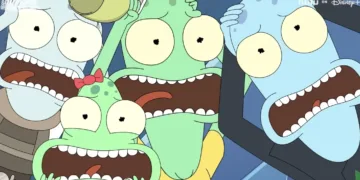















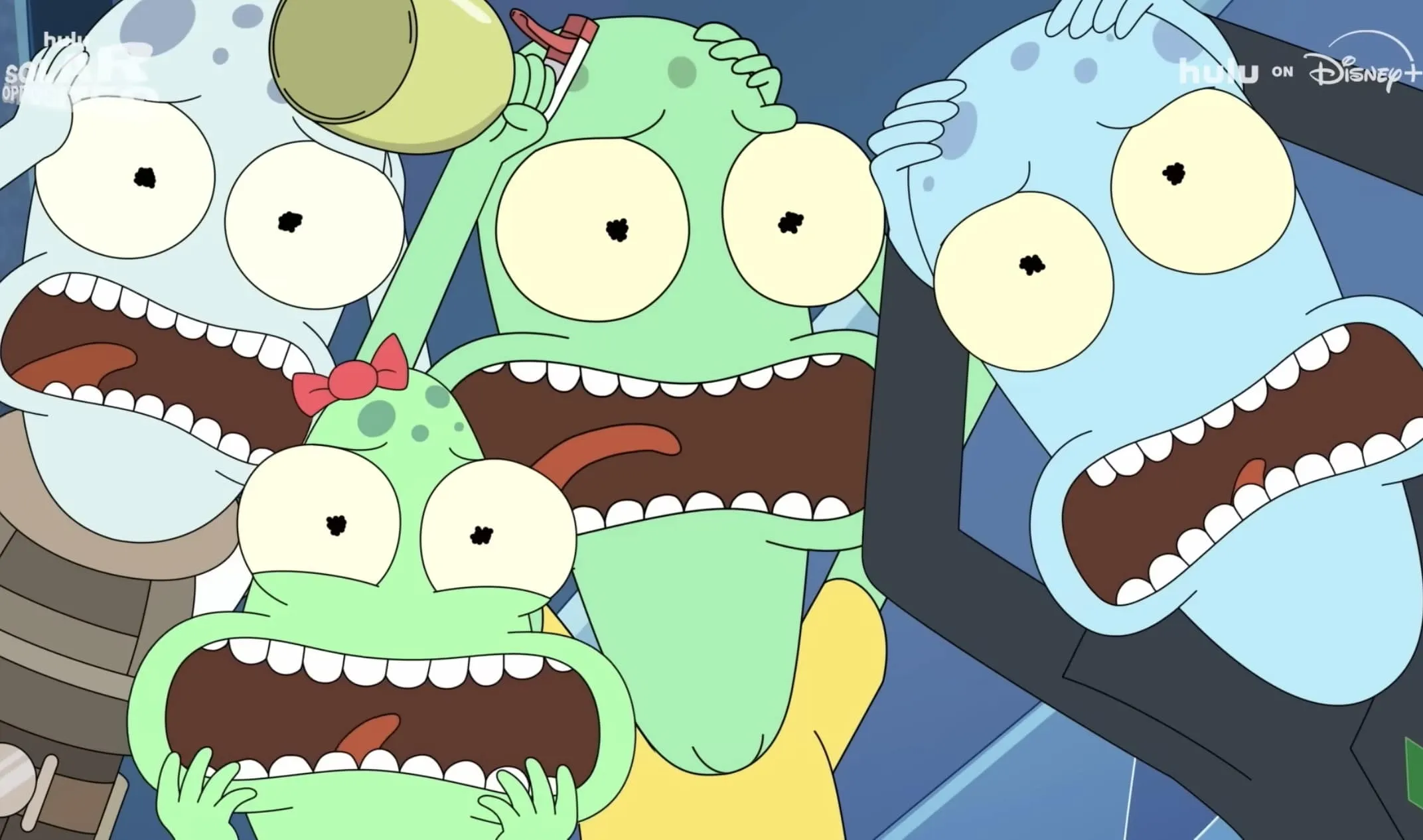

Science fiction has long used the alien as a mirror, a way to dissect human anxieties about belonging, invasion, and cultural difference from a safe distance. Solar Opposites initially seemed to operate comfortably within this tradition, presenting its Schlorpian family as technologically superior beings bemused by our primitive human customs. They were the ultimate outsiders looking in. Yet, in its sixth and final season, the series brilliantly inverts its own premise.
It strips its characters of their advanced technology and financial resources, subjecting them to the most terrifyingly human experience of all: economic precarity. The show’s central question shifts from “What do aliens think of us?” to “What happens when aliens become us?” By crashing their spaceship a second time, this time into the bedrock of Earthly limitations, the series transforms its aliens from detached observers into unwilling participants in the messy, frustrating, and deeply relatable struggle for survival in modern America.
Forced Assimilation and the Comedy of Lost Status
The season’s pivot is launched by a wonderfully grotesque plot device: parasitic creatures called “Beta Nuts” erupt from the family’s bodies, leading to a confrontation that obliterates their resource-generating technology. This event is far more than a simple gross-out gag; it is a hard reset for the series, a narrative catalyst that fundamentally changes the power dynamic between the aliens and their environment.
The security blanket of infinite wealth and technological fixes is gone, and in its place is a stark new reality that forces genuine, painful adaptation. The humor that follows is rooted in this loss of status. Korvo, the self-important mission leader whose identity was built on his intellectual superiority, is humbled in the most profound way. He must navigate the labyrinth of human employment, a system that does not value his advanced scientific knowledge but instead demands conformity and deference. His journey from would-be conqueror to a participant in the gig economy is a sharp critique of meritocracy.
Terry’s transformation is equally telling. His entire personality was an expression of rampant consumerism, a joyful dive into the endless material pleasures Earth had to offer. When the funds are cut off, his identity crumbles. The show uses his arc to explore a culture built on acquisition, asking what is left of a person when they can no longer afford the lifestyle they believe defines them. His fumbling attempts to find meaning outside of material possessions provide some of the season’s most resonant character work. The replicants, Jesse and Yumyulack, are also thrust into a new reality.
Without their gadgets to shield them, they face a more conventional, and therefore more terrifying, adolescence. Their preparations for college are no longer a joke but a real-world necessity, a forced coming-of-age story that mirrors the abrupt push into adulthood many young people experience when their safety nets disappear. This creative choice grounds the show’s final act in a potent, almost uncomfortably relatable human struggle.
Resolving Miniature Societies and Cosmic Conspiracies
For five seasons, the terrarium of miniaturized humans known as The Wall has been the show’s dark, ambitious B-plot, a sprawling political drama playing out in miniature. This season brings that epic to its stunning and morally complex climax. The inhabitants’ desperate escape plan, dubbed “Project Ariana,” is a masterclass in tension, following Queen Cherie as she navigates betrayal, sacrifice, and the brutal necessities of leadership. Its conclusion is not the simple, happy ending one might expect.
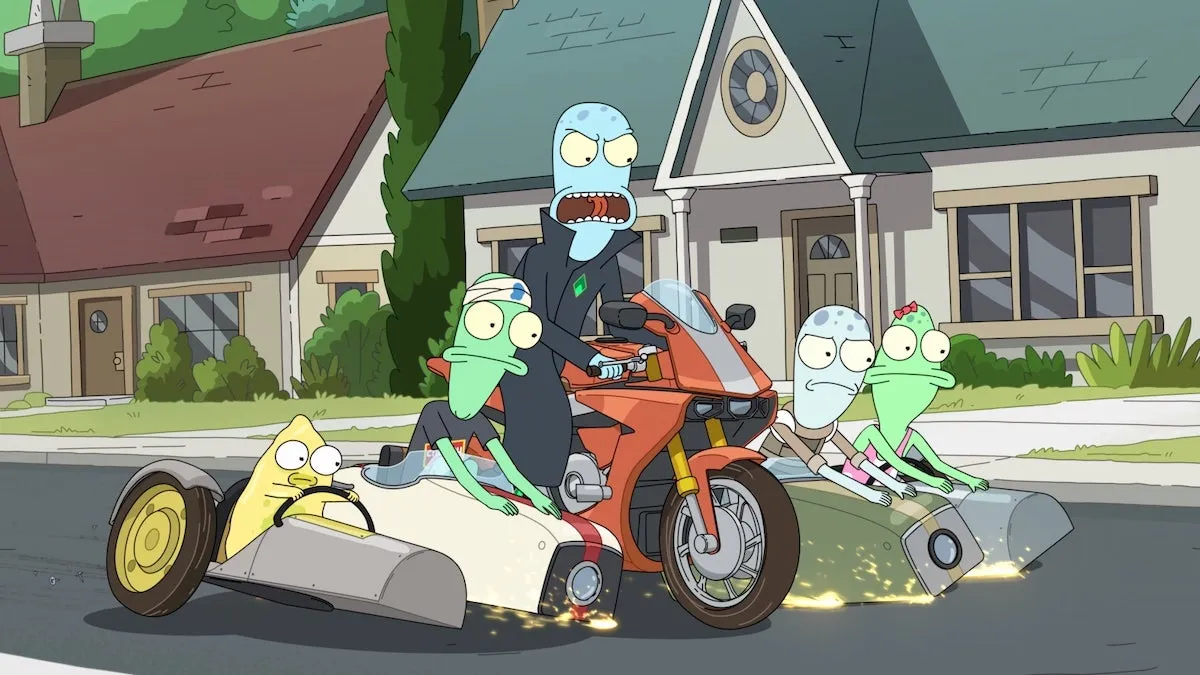
It is a victory tainted by compromise and loss, a nuanced resolution that respects the grim realism the subplot always maintained. The story is capped with a chilling 100-year flash-forward, a bold narrative stroke that serves as a powerful commentary on the cyclical nature of power. It suggests that fascism and societal control are persistent threats that merely change shape, a bleak but resonant message about the endless fight for freedom.
Meanwhile, the show finally integrates its other major side story, the SilverCops, directly into the main narrative with a universe-altering revelation. The finale reveals that the entire Schlorpian mission, the foundational premise of the series, was a lie. Planet Shlorp was not a utopia, and its destruction was part of an elaborate scheme orchestrated by a galactic authority.
This twist does more than just tie up a loose thread; it deconstructs the characters’ entire cultural identity. It is a profound exploration of what happens when a people discover their history is a fabrication and their purpose is a lie.
This reveal liberates the family from their predetermined mission, allowing them to finally choose their own destiny on their own terms. The Pupa’s arc completes this thematic transition. The long-running threat of it terraforming Earth is finally confronted, and the family’s choice to prevent it solidifies their transformation. They choose Earth, with all its flaws, as their home. The Pupa ceases to be a living weapon and becomes what it has truly been all along: the heart of their family.
The Architecture of Absurdity
Even with its deeper thematic explorations, the final season never loses the chaotic, rapid-fire comedic energy that defines it. Terry’s slogan T-shirts (“Dollywood Annual Sass Holder,” “Gyatt Mylk?”) continue to serve as perfectly timed, disposable punchlines that root the show in a specific, extremely online cultural moment.
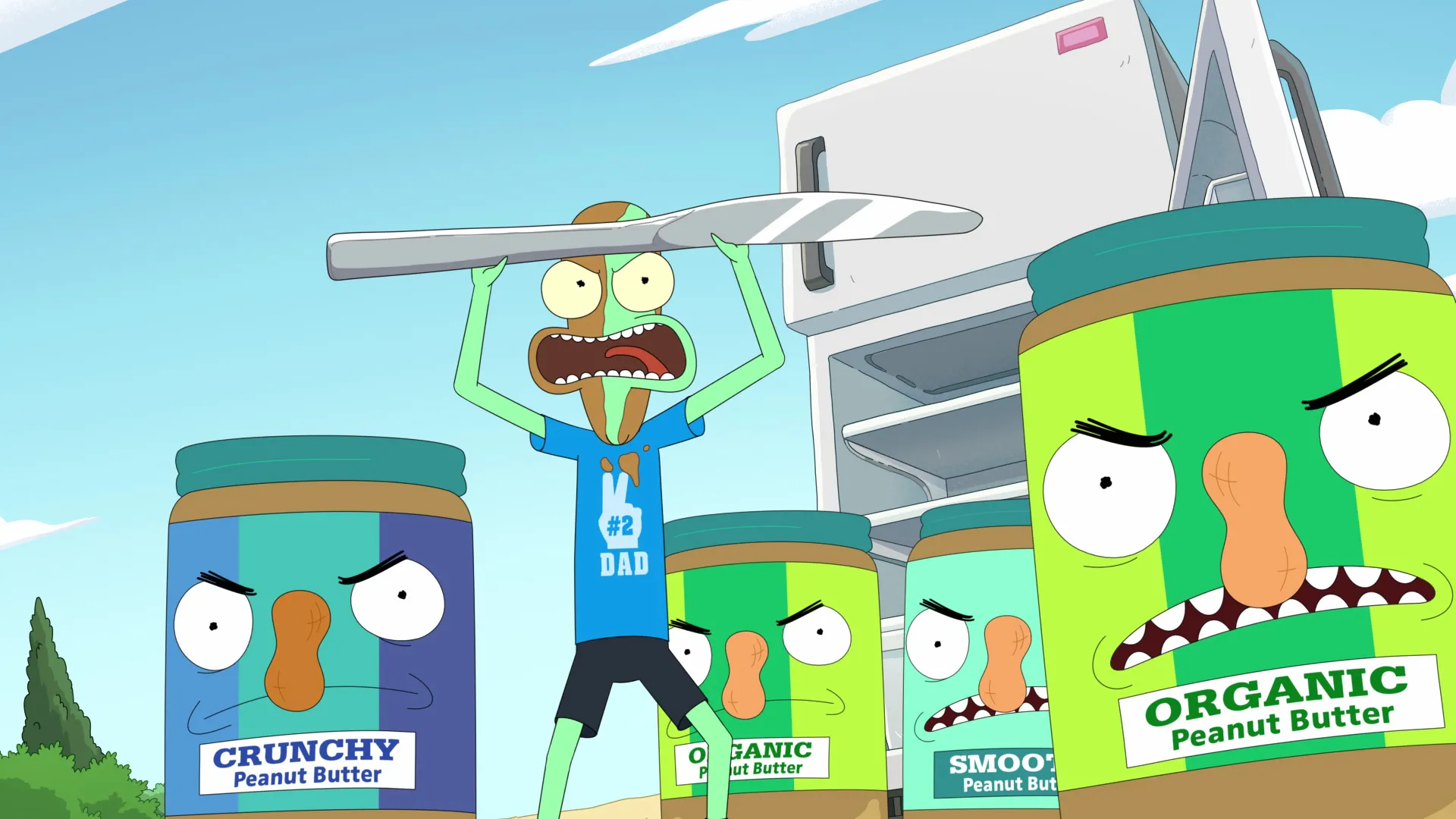
The pop culture references remain dense and unapologetically niche, rewarding viewers with a deep knowledge of everything from obscure science fiction films to reality television. These jokes are not just window dressing; they build the show’s unique texture, creating a world that is both bizarrely alien and intimately familiar.
The season’s formal experimentation reaches its peak in the episode “The Family Memories VHS Mix Tape.” Structured as a series of short, fragmented clips recorded over an old cartoon, the episode is a masterclass in narrative efficiency. It uses the nostalgic aesthetic of a bygone media format to deliver dozens of new jokes while simultaneously building a deeply emotional story about how this dysfunctional family expresses love through conflict.
This clever subversion of the tired “clip show” format is a hallmark of television in the streaming age, where creators can play with structure in ways network television rarely allowed. The episode is a testament to the show’s ability to find genuine heart inside its own madness.
This emotional core is anchored by the stellar voice cast. Thomas Middleditch’s work as Terry is a season highlight, navigating his character’s arc with both hilarity and surprising pathos. The contributions of guest performers like Alfred Molina and Kieran Culkin also elevate the material, lending a certain prestige to the show’s unapologetic silliness.
A Sitcom’s End in the Streaming Age
The finale provides a deeply satisfying sense of closure for its central characters. Having been freed from the weight of their false mission, the family members are allowed to grow into their new lives. Korvo finds a new purpose, Terry finds responsibility, and the replicants find a future. Their individual resolutions feel earned, the culmination of six seasons of chaotic development. The series successfully ties up its most significant narrative arcs, giving its long-running subplots the thoughtful conclusions they deserve.
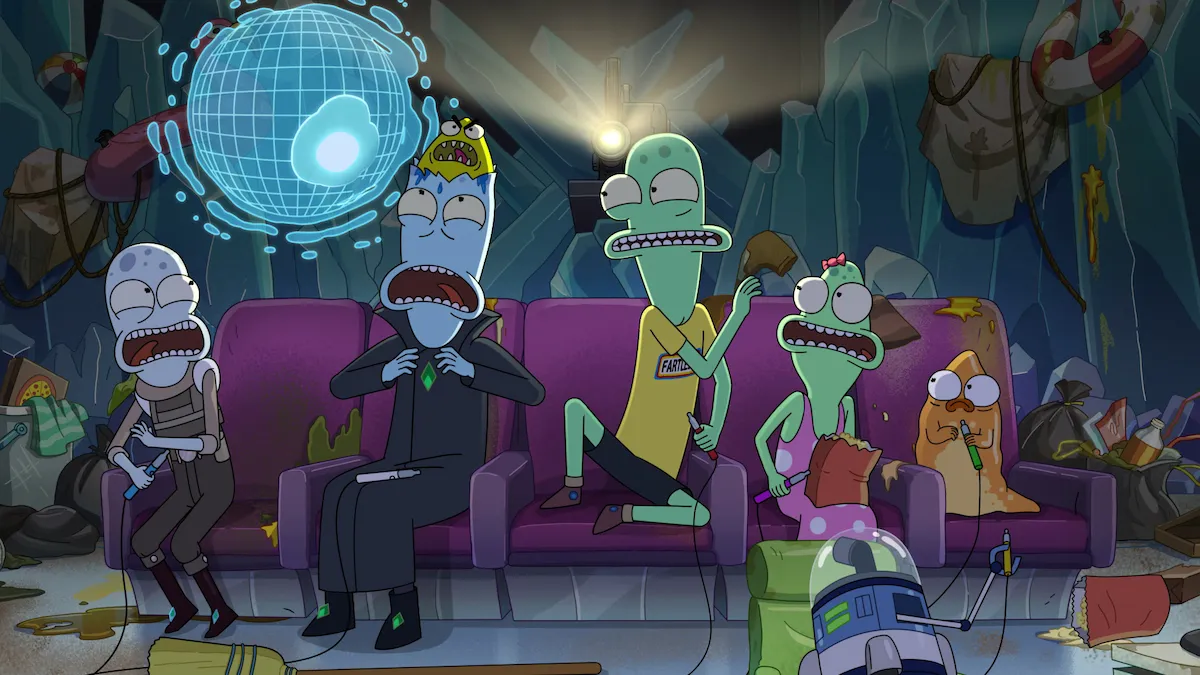
Yet the show resists a definitive, final curtain call. The closing moments feature an epilogue montage that teases the characters’ futures, suggesting their stories continue long after the credits roll. This approach is emblematic of a modern television finale. It provides the emotional finality audiences crave from a concluding season while strategically leaving the door open for future installments, be it a movie or a revival on another platform.
It is an ending born of the streaming era’s fluid landscape, one that acknowledges the value of intellectual property and the desire to keep beloved characters in a state of suspended animation. It is a fitting farewell that respects both the story that was told and the possibility of stories yet to come, leaving us with the comforting sense that the Solar Opposites are still out there, making a mess of our world and their own.
Solar Opposites is an American adult animated science-fiction sitcom created by Justin Roiland and Mike McMahan. The series centers on a family of four aliens—Korvo, Terry, Yumyulack, and Jesse—who escape the destruction of their utopian home planet, Schlorp, only to crash-land in suburban America. The show follows their life on Earth, where they are evenly split on whether the planet is awful or awesome, all while harboring a mysterious alien supercomputer known as the Pupa, which is destined to one day consume them and terraform the planet. The series premiered on May 8, 2020, and is available to stream exclusively on Hulu in the US and on Disney+ in other regions.
Full Credits
Director: Kim Arndt, Teddy O’Connor, Nick Reczynski, Bob Suarez, Marisa Livingston, Anthony Chun, Lucas Gray
Writers: Mike McMahan, Justin Roiland, Jen McCartney, May Darmon, Vidhya Iyer, Garrick Bernard, Ariel Ladensohn, Joe Saunders
Producers and Executive Producers: Mike McMahan, Josh Bycel, Sydney Ryan, Anthony Chun, Dominic Dierkes, Justin Roiland, Scott Marder, Scott Greenberg
Cast: Thomas Middleditch, Sean Giambrone, Mary Mack, Dan Stevens, Tiffany Haddish, Kieran Culkin, Rob Schrab, Ken Marino, Alfred Molina
Editors: Lee Harting, Nick Reczynski, Joe Saunders
Composer: Chris Westlake
The Review
Solar Opposites Season 6
Solar Opposites concludes not by escalating its sci-fi chaos, but by grounding it in a deeply human struggle. By stripping its alien family of their wealth and technology, the final season delivers a sharp, surprisingly resonant satire on assimilation and economic anxiety. It masterfully resolves its most ambitious subplots while pushing its characters toward genuine growth, proving that beneath the grotesque gags and relentless pop-culture references lies a story with a profound and hilarious heart. It’s a brilliant, thoughtfully crafted farewell that cements the show’s legacy as one of modern animation's most innovative comedies.
PROS
- An intelligent premise shift that forces characters into relatable, human-scale problems.
- Provides deeply satisfying and emotionally complex closure to the long-running Wall and SilverCops subplots.
- Achieves significant character growth by removing the technological solutions that defined earlier seasons.
- Maintains its signature rapid-fire, absurdist humor while finding unexpected moments of genuine heart.
- Features formally inventive episodes that push the boundaries of the sitcom format.
CONS
- The dense lore and reliance on callbacks may make it difficult for newcomers to engage with.
- Its chaotic pacing and relentless joke-per-minute style can occasionally feel overwhelming.
- Some of the niche pop culture references might not land with a broader audience.