


















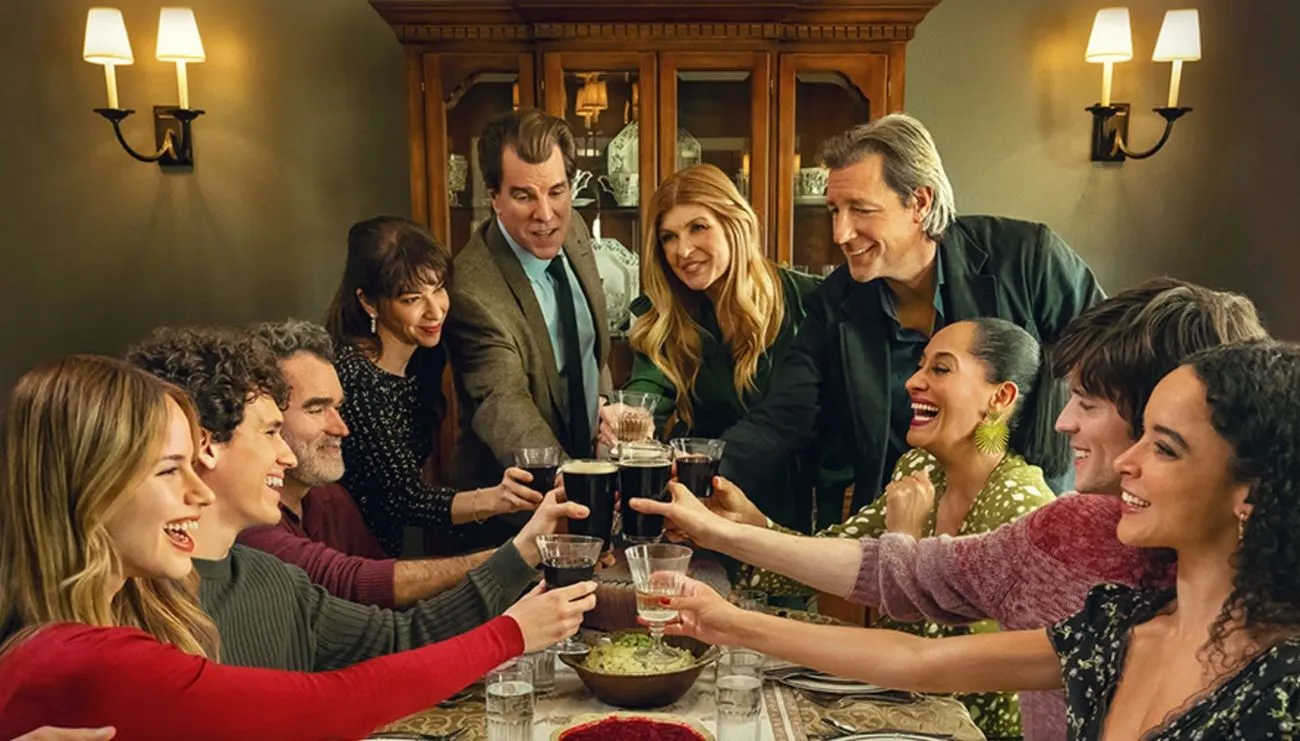

Edward Burns’ career still leans on the lightning strike of 1995, when The Brothers McMullen turned a scrappy indie into a calling card. Three decades on, The Family McMullen returns to the Irish American Catholic clan and tracks the messy drift of their lives. The city is holiday-season New York, anchored in Brooklyn.
The film frames a verbose, wisecracking romantic comedy that begins with Thanksgiving and sets off a chain of romantic entanglements. The central idea circles fate, habit, and the pull of commitment, a pattern that looks like a curse and feels like a need for connection. Free will and impulse enter early, seated beside the pie.
The Repetition of Recklessness
The script presses its weight onto generational dynamics. Legacy characters carry the film’s seasoned perspective. Barry McMullen (Edward Burns), a twice-divorced father in his fifties, embodies repeat impulses in romance. Cynicism sits on him like a good coat, and charm covers a resistance to stillness. Patrick McMullen (Michael McGlone) comes back to New York separated from his wife and measures failure with Catholic guilt.
His sincere devotion provides a counterpoint to the family’s adaptable view of romance, and the contrast often lands with a small comic bite. Molly McMullen (Connie Britton), widowed and processing a difficult marriage, reconnects with Walter, a former high school crush. Her path charts grief, agency, and the hard-earned rhythm of independence.
The younger generation mirrors and refracts these traits. Tommy (Pico Alexander), Barry’s son, is quick with a line and skittish about committing, a reflection of his father’s earlier phase. A neat “meet cute” arrives and punctures his anti-love stance with tidy irony. Patty (Halston Sage) steers toward stability and away from desire, a move that resembles Patrick’s earlier choices.
She enters a trial separation from Terrence Joseph and then reconnects with a past flame, which the film frames with a sense of inevitability. The echoes feel deliberate. In this family, lessons do not pass down like heirlooms. Each McMullen touches the stove for proof. Free will remains on the table, yet habit keeps reaching for seconds. Moral agency exists. So do grooves.
Aesthetics of Sentimentality
Burns’ fast-paced talk drives the picture. Dialogue powers the comedy and supplies the tool kit for introspection. Jokes land. The velocity keeps the eye on the screen and props up places where the plot thins. Rhythm becomes form. Pauses are rare. Banter becomes the cut.
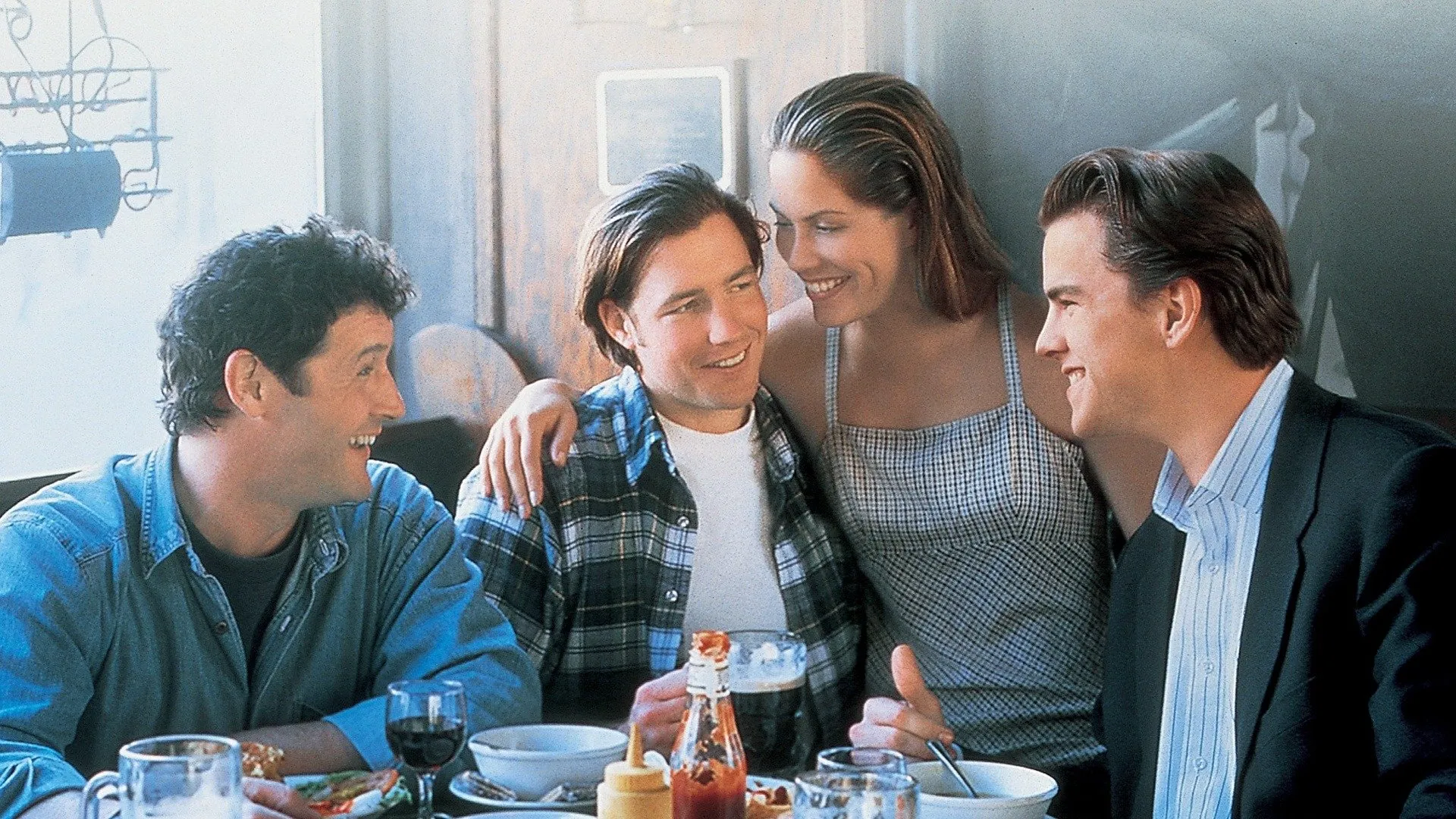
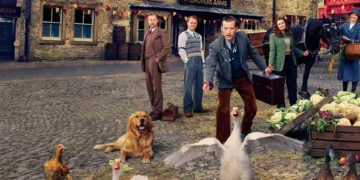
The image departs from the 1995 template. The Brothers McMullen arrived with raw grain and a low-budget texture, a style that flirted with expressionistic framing and youthful urgency. The new film glows with polish. Surfaces read glossy and comfortable.
The sensibility tilts toward studio-seasoned romantic comedy, a trade from a Woody Allen vibe to a Nancy Meyers sensibility. The lighting stays bright and even. Chiaroscuro recedes. Neo-noir shadows that might trace moral ambiguity give way to a reassuring palette. The choice signals thesis and mood. This is a film that prefers the warmth of a kitchen light to the riddle of a streetlamp.
Camera language follows that comfort. The film favors a visual grammar that lets talk breathe and relationships sit inside a safe frame. Shot-making supports conversation rather than jockeying for attention. Space turns hospitable. The effect is simple: characters feel proximate, reachable. A dry aside: the lens would happily accept a cup of cocoa.
Coincidence strains the narrative architecture. The script relies on former high school crushes for nearly every main pairing, across age brackets. The pattern cheapens the frame. The “blast from the past” device functions as a narrative shortcut, and in a city the size of New York it reads like a writing tic. The result can feel overstuffed. Yet the film manages the braid of storylines with a sure hand, parceling attention across arcs and keeping momentum. Pacing behaves like a host who knows every guest by name and keeps the plates moving.
Genre lineage sits in plain view. The first film’s rough texture nodded to handmade American independent cinema and carried traces of noir-adjacent framing. The sequel steps toward the polished lineage of contemporary comfort comedies. The absence of shadow play signals a preference for reassurance over menace, for sentiment over dread. The film does not hunt mystery; it courts glow.
A Cast of Comfort and Charisma
The ensemble stabilizes the piece. The returning actors — Burns, McGlone, Britton — wear the roles with ease and history. Their chemistry carries the quick-fire dialogue and reads as life accrued, not simply lines learned. That lived-in quality radiates warmth and slips straight to the audience.
Among the newcomers, Pico Alexander and Juliana Canfield form the film’s most credible romantic axis. Their energy snaps into place, and their banter feels earned. They sprinkle in playful quotations from crime classics like Goodfellas, a touch that gives their exchanges a sly charge. Tracee Ellis Ross, as Nina Martin, walks away with scenes. The character’s history with Barry supplies comic tension, an amused awkwardness that brightens their moments and ushers in a pleasing layer of complication.
Patty’s material lands with less force. Halston Sage never quite locks into a crisp comic tempo or a deep emotional groove, and the arc loses lift. The film’s chemistry becomes a mixed grid: Tommy and Karen spark, Molly and Walter spark, Patty’s pairings flatten. The imbalance does not sink the structure, although it registers. Audience psychology tracks to this grid. Lively exchanges generate attention and affection. Faltering rhythm loosens grip.
The Value of Sentimental Recklessness
Necessity hovers over the project like a production note. The Family McMullen cannot claim the scrappy originality of its 1995 predecessor, which won the Sundance Grand Jury Prize. The template belongs to a familiar romantic comedy. The surprise sits in watchability and heart. Sentiment pulses through the film and often finds the target. Some passages tilt sweet. The effect still produces clean feeling.
The movie functions as cinematic comfort food and stays honest about that function. The guiding idea remains consistent with Burns’ project: the heart behaves in unpredictable ways, and impulsive leaps often carry their own logic. The film treats that leap with generosity. The McMullens keep choosing love, keep bracing for the spill, keep laughing anyway. Free will looks like repetition; repetition looks like hope.
The craft choices line up with that thesis. Bright lighting softens edges and refuses moral shadowboxing. Dialogue speed keeps doubt moving. Brooklyn in winter folds the family into a warm map. The sound we hear most clearly is talk, and the cut that matters is the cut into the next exchange. Tension arrives through pacing rather than threat. The audience feels guided, teased, reassured. A small grin sneaks in: fate likes leftovers.
The film celebrates this unruly family and the sentimental risks they take. Burns aims for a specific flavor of romantic comedy and serves it without apology. For viewers attuned to that flavor, the plate feels welcome.
The Family McMullen is a comedy-drama film that serves as a sequel to Edward Burns’ 1995 independent hit, The Brothers McMullen. The film had its U.S. theatrical release as a limited, one-day-only event on October 15, 2025, distributed by Warner Bros. Pictures via Fathom Entertainment. The movie revisits the lives of the Irish-American Catholic McMullen clan, now 30 years older, as they grapple with new romantic struggles and generational conflicts. The ensemble comedy centers on Barry McMullen, his brother Patrick, and sister-in-law Molly, alongside a new generation of family members. Information suggests that while its initial theatrical run was brief, the film is expected to find a wider audience through later VOD or streaming options.
Credits
Director: Edward Burns
Writers: Edward Burns
Producers and Executive Producers: Ellen H. Schwartz, Aaron Lubin, Edward Burns, Claudine Marrotte (Executive Producer)
Cast: Edward Burns, Connie Britton, Michael McGlone, Tracee Ellis Ross, Halston Sage, Juliana Canfield, Pico Alexander, Brian d’Arcy James, Stephen Badalamenti, Bryan Fitzgerald
Director of Photography (Cinematographer): William Rexer
Editors: Janet Gaynor
Composer: Séamus Egan
The Review
The Family McMullen
The Family McMullen trades the raw energy of its predecessor for a glossy, seasoned romantic comedy aesthetic. Though the script leans too heavily on improbable coincidences and nostalgic plot devices, the film is redeemed by the cast's lived-in chemistry and Edward Burns' signature, fast-paced dialogue. It poses thoughtful questions about cyclical patterns of impulse and commitment across generations. A warm, witty, if structurally flawed, return to a beloved cinematic family.
PROS
- Burns’ verbose script is highly effective and engaging.
- The returning ensemble (Burns, McGlone, Britton) display comfortable, natural rapport.
- The Tommy/Karen romance is believable and charming.
- The film looks professional, fitting its mature, comfortable tone.
CONS
- Over-reliance on characters dating former high school crushes strains credibility.
- Does not possess the scrappy, groundbreaking feel of the 1995 film.
- Halston Sage’s portrayal of Patty occasionally feels less comfortable than the others.
- The film is burdened by the sheer number of romantic subplots.