



















![Kingdom Hearts Collection [I-III] Review](https://gazettely.com/wp-content/uploads/2026/10/Kingdom-Hearts-Collection-I-III-1-360x180.webp "Kingdom Hearts Collection [I-III] Review: KHII Holds Steady as Newer Entries Fluctuate 37")
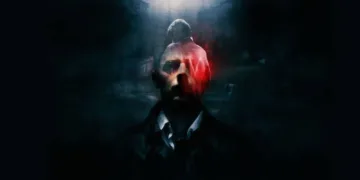


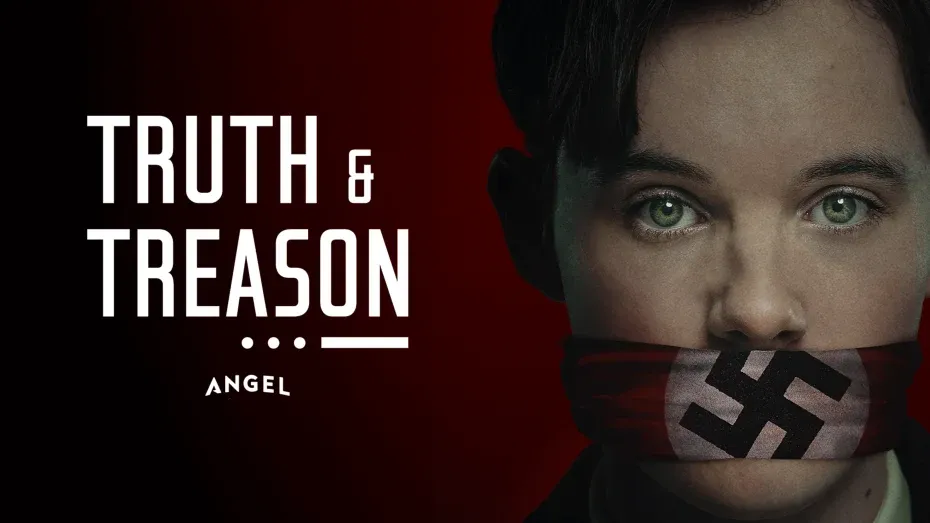

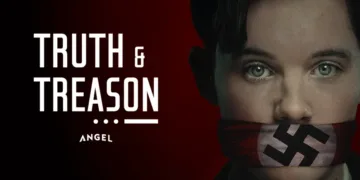
Truth & Treason, directed by Matt Whitaker, unfolds as a somber historical drama about Helmuth Hübener, a German youth in Hamburg during 1941 to 1942. The camera attends to quiet warfare waged by a single adolescent mind against a nation built on lies.
At sixteen, Helmuth begins distributing clandestine anti-Nazi leaflets, an act of intellectual treason aimed at a totalitarian state. The film frames a necessary record of conviction, showing how a small, bright life meets extinction for revealing a dark, shared moral failure. It invites a hard meditation on the solitude of courage.
The Implosion of False Reality
The film charts Helmuth’s break from the comfortable delusion of Nazi Germany with patient steps. We meet a gifted youth who complies with the order around him, serves in the Hitler Youth, and secures an internship at City Hall.
His home life reflects national conformity; a father who consumes propaganda, a brother who serves in the army. An early scene shows Helmuth and friends leaping from a bridge into a river. The carefree plunge foreshadows a leap that carries fatal consequence. This initial compliance reads as an existential default, the path of least resistance inside a crushing system.
A fissure opens through two pressures that pierce the public silence. An illegal shortwave radio arrives and carries BBC broadcasts that speak with dissonant clarity. The Gestapo then targets his Jewish-Mormon friend, Salomon Schwarz, and abstract ideology turns into immediate horror. From his City Hall post, Helmuth gains access to banned books. A mind trained toward inquiry and a conscience newly aflame begin to align. In a bureaucratic basement, a revolutionary takes shape.
His resistance feels painfully tangible. A borrowed typewriter, red paper, and the night air become his tools. He distributes leaflets as an act of faith in the written word. He brings in two friends, Karl-Heinz Schnibbe and Rudi Wobbe, and the work expands while peril gathers.
The film follows the procedure in detail, including distribution during air raids, and the suspense tightens like a noose. His writing quotes forbidden texts and draws the scrutiny of Inspector Erwin Mussener. A clear voice attracts a state trained to crush clarity. A unique “fingerprint” from the typewriter’s text becomes the clue that exposes him and closes the last corridor of freedom.
The Confrontation of Wills
Two performances shape the central drama into an intimate confrontation across a moral chasm. Ewan Horrocks plays Helmuth Hübener with youthful energy fused to granite resolve. His physical intensity during imprisonment and interrogation unsettles the viewer and carries the conviction that drove his actions. Horrocks gives Helmuth a presence that resists the flattening effect of history and keeps defiance alive in the frame.
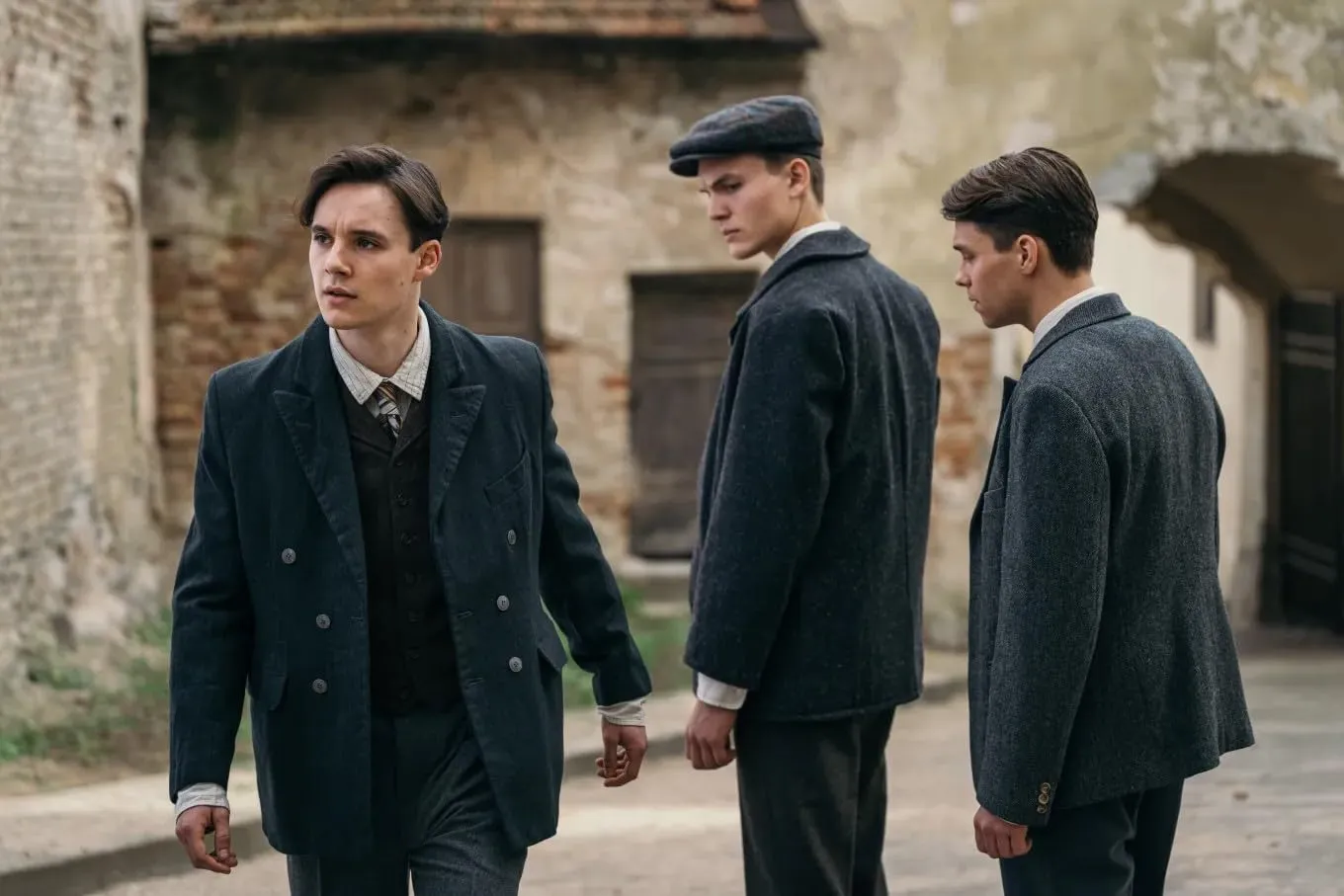
Rupert Evans plays Inspector Erwin Mussener with careful gradation. The role includes a personal loss, the death of his daughter, and this grief informs his emotional field. Evans shows a pursuit that wears down allegiance to a lie and turns toward a reluctant respect.
The inspector even reaches for clemency. Mussener becomes a study in the private cost of intellectual loyalty to a wicked system, a man forced to watch his own complicity surface. Around this core, the supporting cast secures the cost of the story. Friends remain loyal. A brief romance with co-worker Elli Kluge gleams and then recedes. A father rejects a son and chooses national loyalty over the son’s moral clarity.
The Aesthetics of Inevitability
Matt Whitaker builds the film with a straightforward, chronological structure. The early pacing moves slowly to settle the world and then gathers oppressive tension as the end approaches. The design creates a sense of historical inevitability, guiding the viewer through the final year of Helmuth’s life.

Period-piece realism carries the production. At times the images lean on overt symbols. The cinematography often uses soft backlighting to frame Helmuth, a gesture that reaches for visual heroism even as the actions already carry weight. During imprisonment the lens moves to severe extreme closeups, and the effect draws the viewer into raw trauma and steady resolve.
The production value convinces and places the audience in the era, with a cast largely drawn from Britain that remains a curious choice. Investigation sequences work as a low-key procedural, creating suspense from the dull tools of state power. The final movement, within the restraint of a PG-13 rating, communicates horror with clarity. The simple sight of the guillotine states the moral void of the Reich’s judgment.
The Loneliness of Moral Truth
Truth & Treason studies the loneliness that attends moral truth inside a corrupted world. Helmuth’s Latter-day Saint faith operates as a direct catalyst for action and fuels an ethical demand to resist injustice. The film treats this with care. Faith motivates the response without turning the story into a sermon. Authority figures who placate the regime, including a local church elder, expose how profession without courage erodes meaning.

Helmuth carries no steel or fire. He wields intellect, persuasive writing, a simple typewriter, and truth. The film shows how a single voice can threaten a state that relies on lies. The lesson cuts into the tragedy of youthful conviction and the audacity required to believe one person can stand against total power.
The story stares at the price of doing the right thing and speaks in a quiet register about heroism that remains costly, devastating, and solitary. Helmuth Hübener’s sacrifice continues as a question set before each generation. When the hour arrives, what price will silence demand?
Truth & Treason is a historical drama based on the true story of Helmuth Hübener, a 16-year-old German boy who formed a resistance group in Nazi Germany after confronting the regime’s lies. The feature film had its exclusive theatrical release in the U.S. and Canada on October 17, 2025. Distributed by Angel Studios, the movie is rated PG-13 for strong violent content and thematic elements. An extended four-part version, Truth & Treason: Limited Series, which includes never-before-seen footage and new storylines, is available for streaming exclusively on the Angel Studios platform.
Credits
Director: Matt Whitaker
Writers: Ethan Vincent, Matt Whitaker
Producers and Executive Producers: Russ Kendall, John Foss, Matt Whitaker, Adam Thomas Anderegg, Micah W. Merrill, Jon Erwin (Executive Producer)
Cast: Ewan Horrocks, Rupert Evans, Ferdinand McKay, Daf Thomas, Nye Occomore, Joanna Christie, Sean Mahon, Sylvie Varcoe
Director of Photography (Cinematographer): Bianca Cline
Editors: Adam L. Banks
Composer: Aaron Zigman
The Review
Truth & Treason
Truth & Treason is a necessary, albeit often straightforward, historical recounting of one young man’s devastating integrity. The film’s power lies in its unflinching focus on the moral imperative and the crushing cost of intellectual resistance, elevated by strong central performances that explore the complexity of both conviction and complicity. It serves as a somber, enduring testament to the existential burden of choosing truth over convenience.
PROS
- Unearths a vital narrative of resistance against Nazi totalitarianism.
- Ewan Horrocks and Rupert Evans provide complex, compelling characterizations.
- Inspector Mussener is written with complexity, avoiding the standard, one-dimensional villain trope.
- Connects faith, intellect, and moral action without becoming overtly preachy.
- The procedural elements of the investigation create a steady, building sense of dread and risk.
CONS
- The chronological, literal plotting limits spontaneous creative depth.
- The aesthetic choices, including overt backlighting, sometimes lack subtlety.
- The first act is slow, and some subplots (like the romance) are noted as slowing down the action.
- Helmuth is presented as a symbol of defiance rather than a fully complex psychological character.
- Contains some predictable elements common to WWII interrogation dramas.