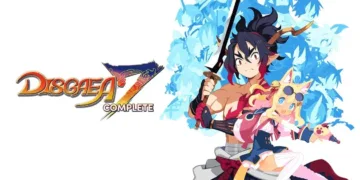
























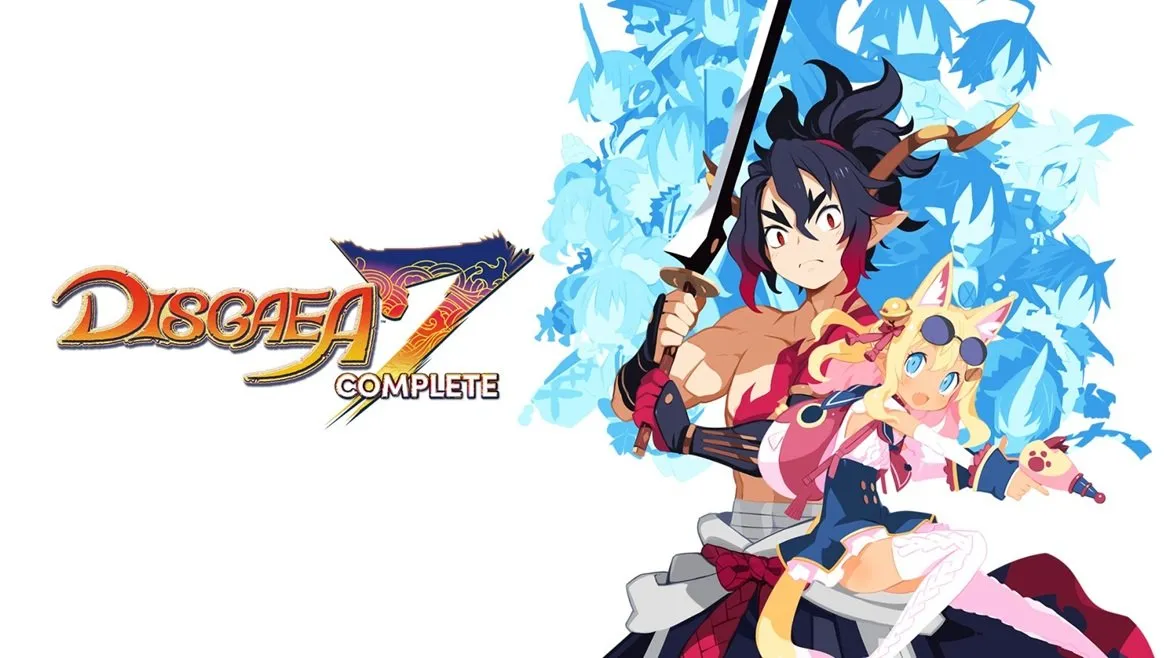

Disgaea 7 Complete arrives as the definitive package for Nippon Ichi Software’s latest entry in their long-running tactical RPG series. This edition bundles the base game, Disgaea 7: Vows of the Virtueless, with its DLC and several new additions into one comprehensive release. The series has built its reputation on removing the typical limiters found in strategy games, letting players push character stats into the hundreds of millions while exploiting every system imaginable to create unstoppable armies.
The game takes place in Hinomoto, a demon-filled Netherworld inspired by feudal Japan where the traditional bushido code has been outlawed. You follow Fuji, a disillusioned samurai who has abandoned the warrior’s path, and Pirilika, a wealthy demon tourist obsessed with bushido culture. Their quest to restore Hinomoto’s honor involves gathering legendary weapons and toppling an oppressive regime, all while recruiting a cast of eccentric demons.
This Complete edition launches exclusively on Switch 2 for Western players, carrying a full-price tag despite the base game releasing years earlier on multiple platforms in Japan. The appeal here is straightforward: if you want the most feature-complete version of Disgaea 7 and you’re willing to sink potentially hundreds of hours into post-game content, this package delivers. For everyone else, the value proposition gets murky fast.
Characters Caught Between Comedy and Sincerity
The narrative begins with sharp comedic tension between its leads. Fuji operates as a self-centered mercenary allergic to empathy, while Pirilika plays the role of an idealistic rich kid confronting a reality that doesn’t match her romanticized expectations. Their dynamic creates genuine friction as they recruit allies like Yeyasu, a womanizing noble with a secretly immature core, Higan, the realm’s most powerful warrior who once mentored Fuji, and Ceefore, a ninja whose solution to every problem involves explosives.
Early chapters thrive on this bickering and conflicting motivations. The characters spend as much time arguing with each other as they do fighting enemies, creating a tone reminiscent of the first Disgaea’s ensemble of antiheroes constantly at each other’s throats. The voice acting sells this chaos well, with everyone delivering their lines at maximum volume to match the series’ signature over-the-top presentation.
The tonal shift happens gradually as chapters progress. What starts as satirical comedy morphs into a more conventional narrative about friendship conquering adversity. That contrasting energy between characters begins to fade, replaced by growing camaraderie that feels less distinctive. While this earnest approach has worked in previous series entries, particularly Disgaea 4, the execution here lacks that same exuberance. The feudal Japan setting provides fresh visual flavor but remains somewhat underexplored thematically, and the main story content includes full voice acting though the bonus crossover episodes disappointingly lack this feature entirely.
Depth That Demands Dedication
Disgaea 7’s tactical combat operates on grid-based maps where turn order, positioning, and elevation all factor into your strategic calculations. The system offers remarkable flexibility. You can approach battles as straightforward affairs or exploit every mechanic the game provides to create absurdly powerful combos. Few tactical RPGs match this level of freedom in letting players break the intended difficulty curve. Combat runs smoothly at 60fps on Switch 2 across both its graphics and performance modes, though maps with varying elevation can make cursor navigation frustrating at times.
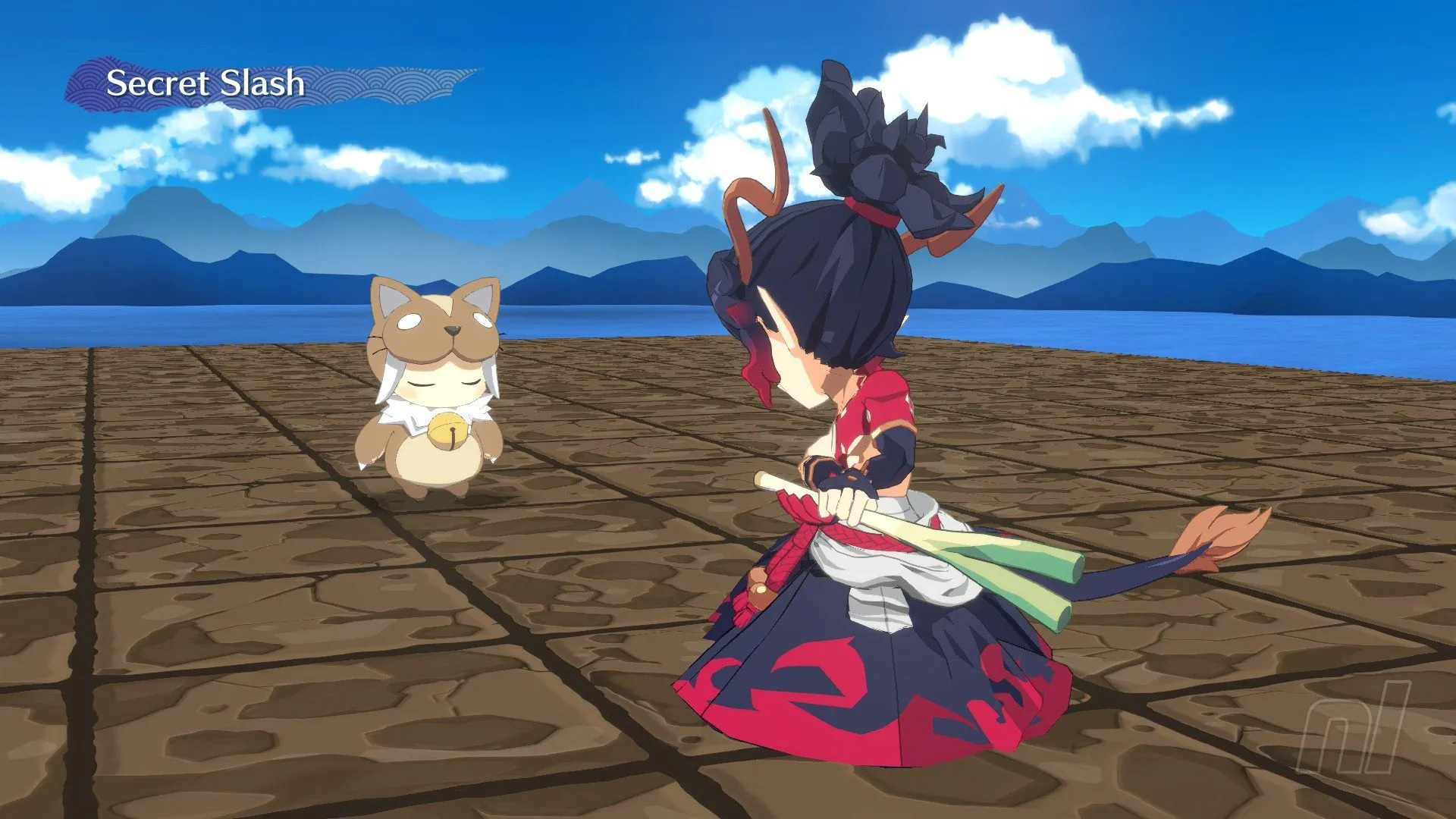
The progression systems form the true heart of any Disgaea game. Character customization spans numerous classes, with all options from Disgaea 5 returning alongside new additions. You can build custom generic units from scratch or focus entirely on story characters, and the game provides tools to make either approach viable for endgame content.
The Item World system remains intact, letting you enter dungeons hidden inside equipment to grind both your gear and characters to greater heights. The Dark Assembly functions as your hub for passing bills that modify game rules, letting you tailor the experience to match your preferences. The gachapon machine in the Netherworld Hospital adds a quality-of-life element, dispensing random bonuses that smooth out some of the grindier aspects.
Jumbification represents the major new mechanical addition. Characters can transform into giant kaiju-like monsters that tower over maps, unleashing area-of-effect attacks and providing passive bonuses to your army. Enemies and bosses use this ability too, often triggering it right before death to extend fights significantly. In practice, the system feels half-baked. Some characters’ passive bonuses far outweigh others, and boss battles frequently devolve into slogs as they repeatedly Jumbify to restore health.
Auto-battle returns from Disgaea 6 but in a heavily restricted form. You can only activate it on stages you’ve already completed, and doing so consumes Poltergas, a resource earned through manual play. This compromise works better than its predecessor’s implementation, allowing some automation for repetitive grinding while ensuring you still engage with combat the first time through any stage.
The tutorial situation presents a real problem for newcomers. Text-heavy explanations run 12 to 15 pages long, with sentences and paragraphs awkwardly splitting across multiple screens. The lack of interactive or video tutorials compounds this accessibility issue. Expect to spend roughly three hours before the systems fully click. Veterans of the series will skip past this friction, but newcomers face a steep wall to climb.
The Complete Package Comes With Caveats
The Complete edition bundles seven bonus story chapters from the original season pass, each unlocking unique characters with stats and abilities unavailable in the base roster. The Nethertime Support Force episode serves as the main new addition, a post-game mini-campaign featuring crossovers with characters from previous Disgaea titles.
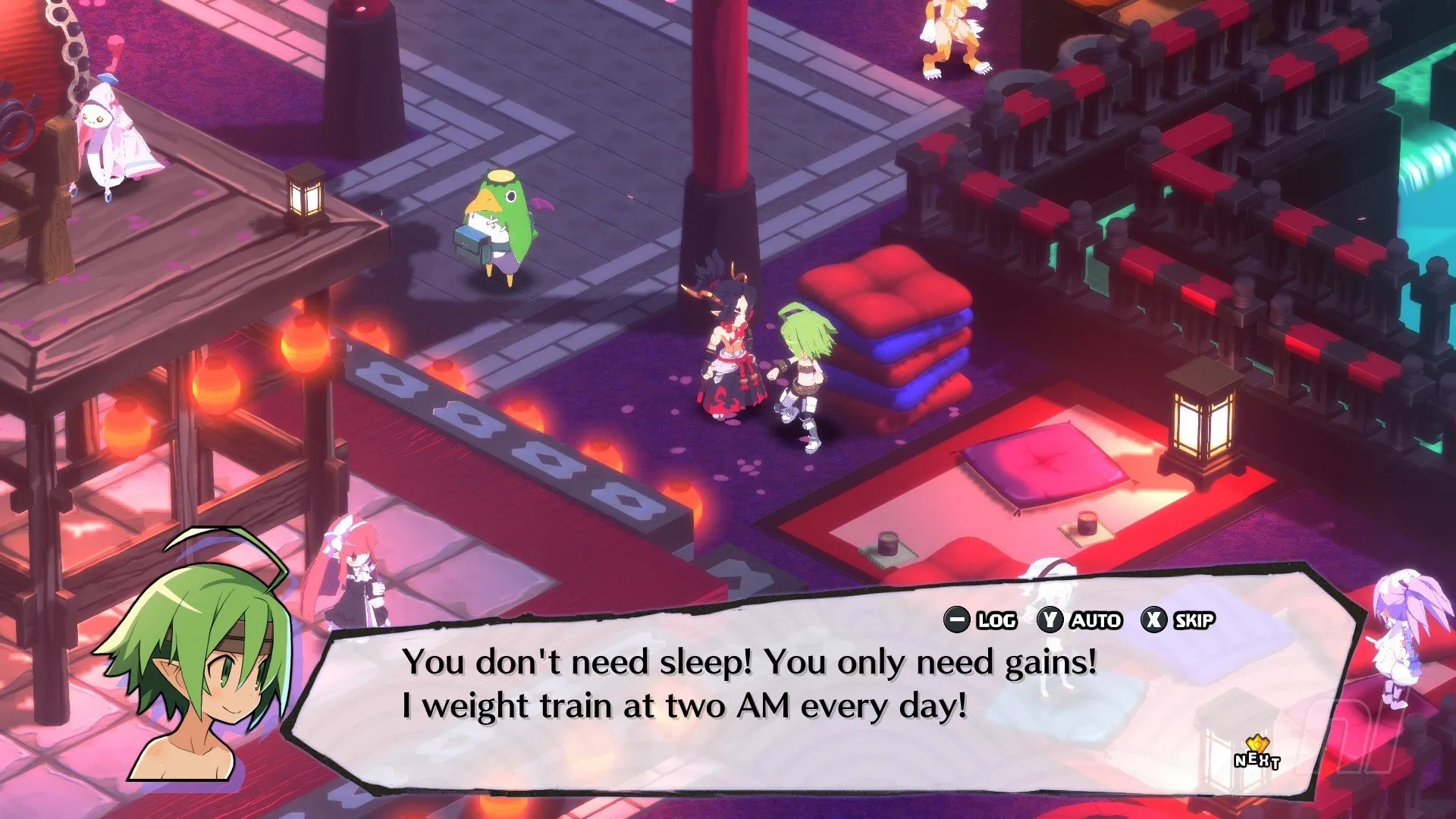
Asagi, a legacy character with appearances across multiple games in the series, becomes playable after clearing this content. The crossover nature provides fanservice for series veterans, though the absence of voice acting diminishes the impact of these reunion moments. Costume sets and weapon packs pad out the package alongside a starter support set containing HL, Mana points, healing items, and a boost ticket.
The gameplay features locked behind post-game progression matter more. The “Freely Use Infernal Treasures!” bill allows any unit to equip special weapons and enter Hell Mode during combat, previously limited to select main characters. The “Take Me Beyond the Limits!” bill removes stat caps entirely, letting you push numbers to 999,999,999. Disgaea has always catered to players who want to see damage counters scroll into the billions, and removing caps provides new mountains to climb for optimization-focused players. DLC characters scale with your current progress, which helps rapidly build a powerful party. Rakshasa Baal joins as a new superboss designed exclusively for players who commit to spending dozens or hundreds of hours maximizing their units.
These additions share a common thread: they’re all post-game content requiring you to complete the main story first. That’s a 20 to 30 hour commitment before accessing anything new. No upgrade path exists between the base game and Complete edition, so returning players start from scratch despite being able to move save data forward.
The business model frustrates. Japanese players who owned the base game received the new features through a free patch, with the story content available as paid DLC. Western players get no such option. You either buy this Complete edition at full price or you don’t get the new content at all. The game still includes purchasable consumable packs despite being marketed as a complete package.
Switch 2 exclusivity raises questions when the game runs perfectly fine on Switch 1 hardware in Japan. No meaningful enhancements justify this platform limitation. There’s no 120fps performance mode, no integration with Switch 2’s mouse controls, and the visual quality docked falls short of the PS5 version. You can only purchase it digitally or through a Game-Key Card, eliminating physical options entirely.
The value calculation splits cleanly based on your relationship with the base game. Newcomers to Disgaea 7 receive the best version available with all content bundled together. For existing owners, paying full price for post-game additions and a new mini-campaign represents a tough sell. The new content specifically targets hardcore fans willing to invest triple-digit hours into stat maximization and superboss challenges.
The Review
Disgaea 7 Complete
Disgaea 7 Complete delivers the definitive version of a solid tactical RPG, packed with the series' trademark depth and absurd power scaling. Newcomers get excellent value with all content bundled together. However, the lack of an upgrade path for existing owners, combined with Switch 2 exclusivity and minimal platform enhancements, creates frustration. The post-game focus of new content limits appeal to hardcore fans willing to invest hundreds of hours. Great for first-timers, questionable for returning players.
PROS
- Exceptional tactical depth and character customization
- Smooth 60fps performance on Switch 2
- All DLC and bonus content included
- Entertaining character dynamics in early chapters
- Refined auto-battle system balances convenience and engagement
CONS
- Tutorial overload alienates newcomers
- No upgrade path for existing owners
- All new content locked behind 20-30 hour story
- Jumbification feels underdeveloped
- Switch 2 exclusivity lacks meaningful enhancements
- No physical release option