
























![Kingdom Hearts Collection [I-III] Review](https://gazettely.com/wp-content/uploads/2026/10/Kingdom-Hearts-Collection-I-III-1-360x180.webp "Kingdom Hearts Collection [I-III] Review: KHII Holds Steady as Newer Entries Fluctuate 37")



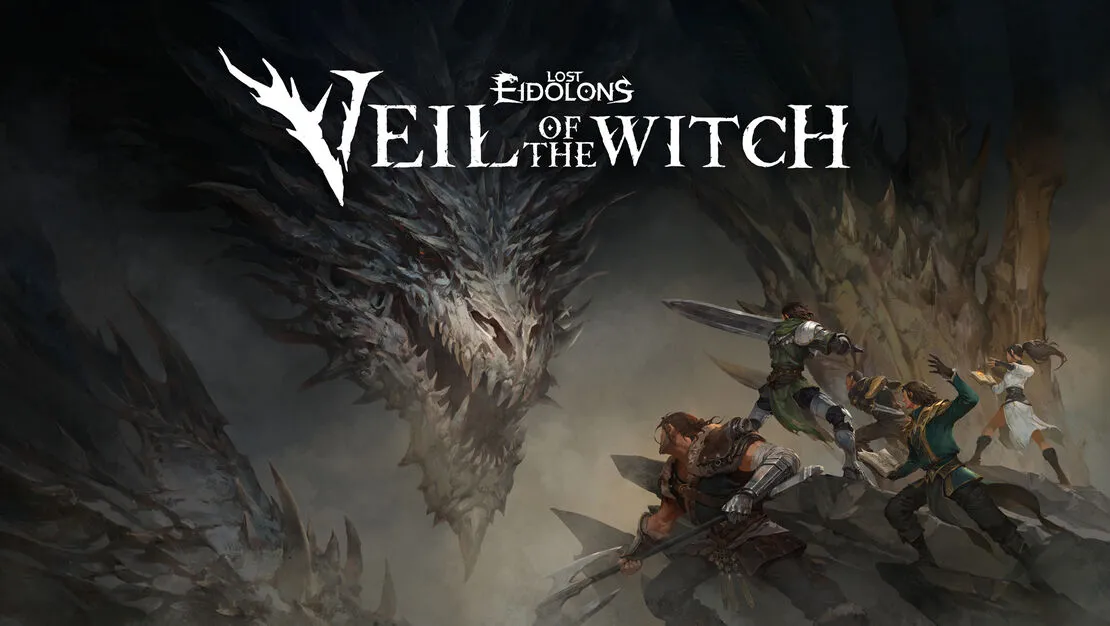

Lost Eidolons: Veil of the Witch arrives from Ocean Drive Studio as a tactical RPG wrapped around roguelite principles, creating a hybrid that speaks to fans of both genres. This standalone sequel lets you wake as an amnesiac on a cursed island suspended between life and death, bound to Sable, the Witch of the Mists, who grants you repeated resurrections. Your goal: recover lost memories while battling Imperial forces and supernatural horrors across an island where all escape routes have been destroyed.
The setup justifies the roguelite structure through narrative framing. Death isn’t failure here—it’s integral to both story and progression. You’ll assemble a team of companions, each with specialized combat roles, and venture out on Expeditions that blend grid-based tactical battles with exploratory decision-making. Between permanent upgrades at your base camp and temporary power gains during runs, the game creates a satisfying loop where each attempt feels both fresh and incrementally rewarding.
Building Bonds Between Deaths
The narrative framework centers on memory and resurrection, themes that resonate throughout the character work. Your protagonist serves as a blank slate who gradually recovers identity through relationships and discoveries. Sable acts as your mysterious patron, hinting at deeper machinations while the Imperial Army serves as the primary antagonistic force. The island itself harbors secrets about the “veil” that blankets it and the Eidolons whose mythology underpins the setting.
Your starting roster—Eevie, Marco, Laurent, and Emile—each brings distinct personality and backstory that unfolds through dialogue. The voice acting elevates these interactions, giving weight to banter and dramatic moments alike. The writing strikes a Young Adult fantasy tone that keeps exposition moving without overwhelming you with lore dumps. You learn about the Eidolons and the preceding war through natural conversation rather than codex entries.
The relationship system adds mechanical teeth to these bonds. Partnership points you earn with characters persist across runs, eventually triggering unique battle effects. This creates emotional investment beyond pure stats—you want to survive fights with specific teammates because those shared experiences translate into tangible combat advantages later. Four additional characters can be recruited through multiple expeditions, while temporary mercenaries join individual runs to add tactical variety.
Character presentation benefits from strong 2D portrait work. Since you’ll see these faces repeatedly during dialogue sequences and battle menus, the art needs to be memorable. Veil of the Witch succeeds here, giving each character distinctive visual design that complements their personality. The voice cast delivers performances that make extended dialogue scenes engaging.
The contrast between character presentation and environmental visuals becomes stark during exploration. While the portraits maintain polish, the 3D environments suffer from muddy textures, flat lighting, and a pervasive grey-brown palette. Stages lack visual distinction, occasionally making it difficult to quickly parse friend from foe during heated battles. This doesn’t ruin the experience, but it represents a missed opportunity to create memorable locations.
Tactical Foundations With Strategic Wrinkles
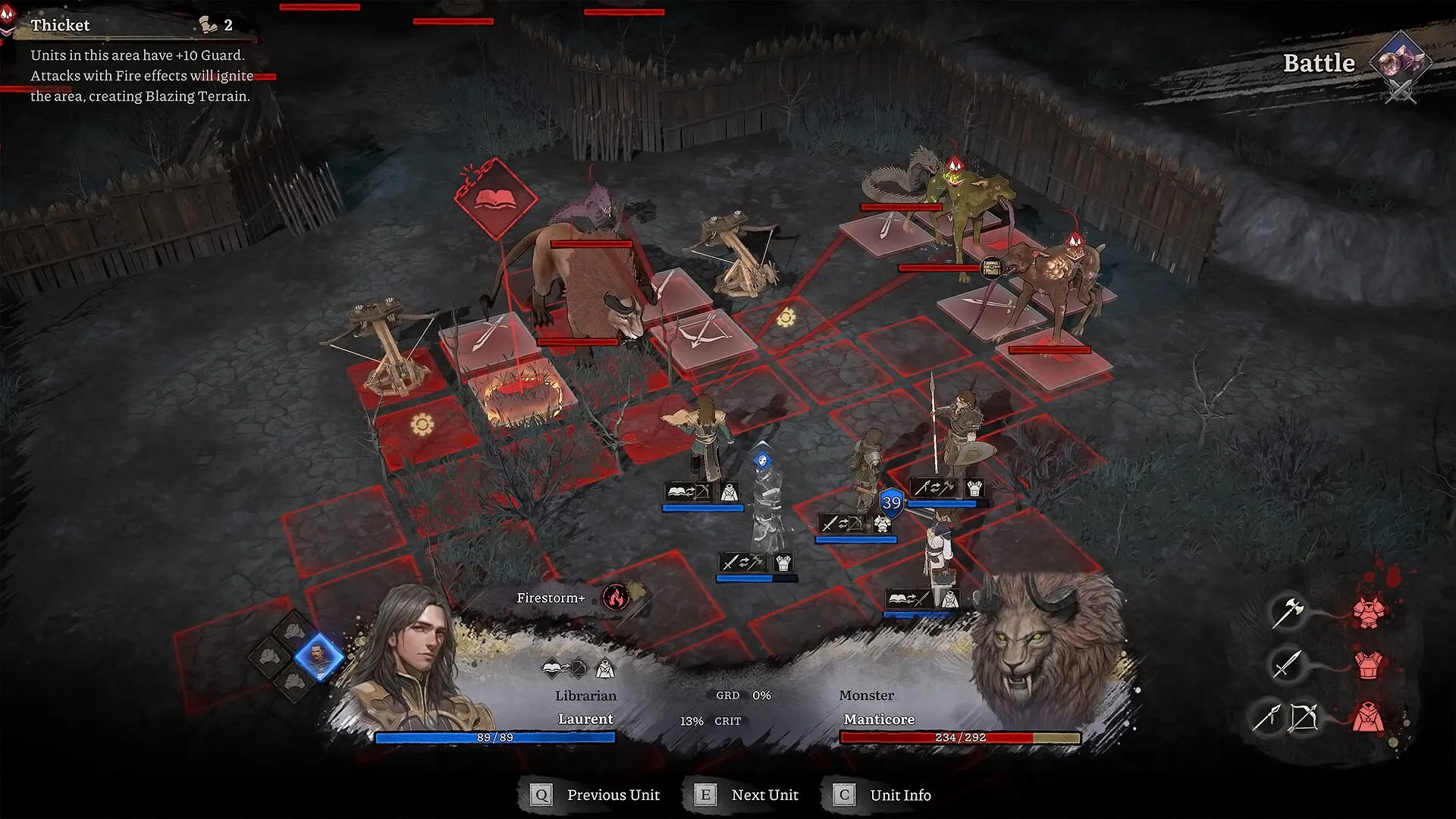
Combat follows traditional tactical RPG structure while introducing enough unique elements to distinguish itself. Battles unfold on gridded maps where you control five units against enemy forces. Each character moves based on their speed stat, performing actions like attacks, skill usage, or support abilities before ending their turn. The core objective typically involves eliminating all opposition, though alternative goals like rescues or escapes provide variety.
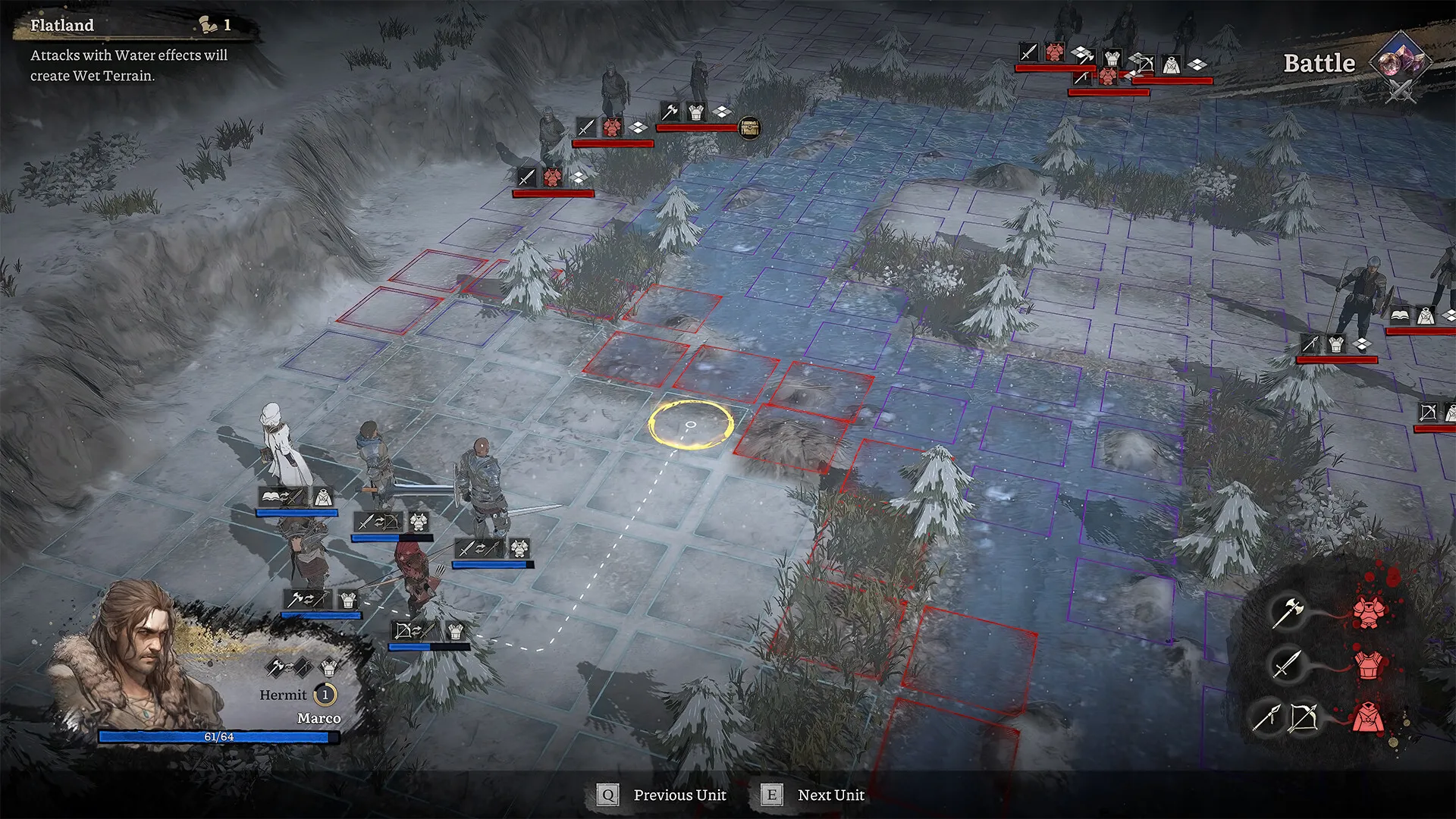
The zone of control system adds friction to movement that forces deliberate positioning. Moving through tiles adjacent to enemies restricts your freedom, preventing casual repositioning once you’ve committed. This makes initial placement decisions critical. You need to consider weapon ranges—bows, swords, axes, and magic each have different effective distances—and how your team’s composition supports various tactical approaches.
Each unit can equip two weapons, giving you flexibility to adapt during encounters. The weapon-versus-armor effectiveness system displays clearly at the bottom of the screen, removing guesswork. Skills and magic operate on turn-based cooldowns rather than mana pools, encouraging aggressive ability usage. This keeps combat dynamic, as you’re constantly evaluating whether to use powerful abilities now or save them for anticipated threats.
Larger enemies introduce interesting wrinkles by occupying multiple grid squares. These threats require coordinated strikes using different weapon types within a single turn to maximize damage and potentially trigger stuns. Enemy infighting occasionally occurs, letting you manipulate encounters by positioning threats to target each other.
Environmental interaction exists through terrain effects like wet tiles amplifying lightning damage, flammable grass, and poison mist hazards. These mechanics add flavor, though they’re underutilized. Maps lack elevation, removing an entire dimension of tactical consideration. Positional advantages beyond basic adjacency bonuses feel limited—there are no side or rear attack bonuses to reward flanking maneuvers.
Quality-of-life features smooth out the experience. An undo mechanic grants three uses per battle, letting you correct mistakes. The autosave system means you can step away mid-battle without losing progress. The tutorial effectively communicates core concepts, and controls feel intuitive. The learning curve manages to be accessible while hiding surprising depth once you start experimenting with advanced tactics.
Progression That Rewards Experimentation
Veil of the Witch structures progression around two parallel systems: temporary run-specific growth and permanent base camp upgrades. During runs, you’ll collect resonance stones that enhance weapons and armor, granting stat increases and unlocking new skills. These choices feel weighty because you must decide which party members receive upgrades. Transform your protagonist into a defensive tank, a high-damage melee specialist, or a precision archer—each path opens different combat approaches. Skill variety impresses: ensnaring arrows that immobilize targets, explosive arrows for area damage, and crowd-control abilities.
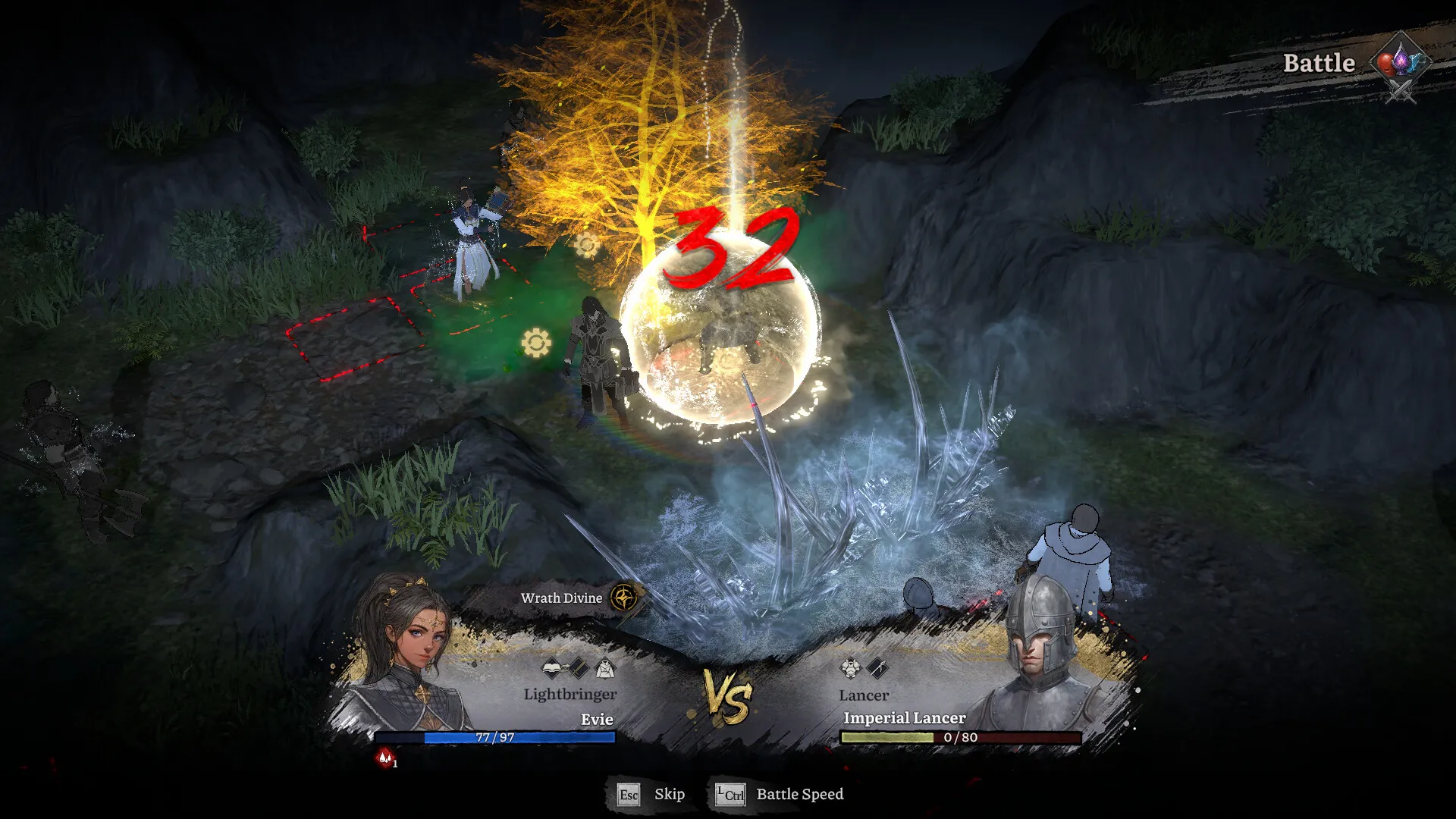
Every character offers multiple viable playstyles through customization of skills, stats, weapons, and armor. You might build Marco as an aggressive damage dealer in one run, then pivot to a support role in the next. This flexibility encourages experimentation since you’re never locked into a single character archetype.
When an expedition ends, your characters return to level one and lose their learned skills and equipment upgrades. This reset liberates you to try fresh builds without commitment anxiety. Each new expedition offers that opportunity without sacrificing long-term progress.
Permanent advancement comes through the Altar of Fire skill tree at your base camp. Purple shards earned from runs unlock persistent stat enhancements that carry across all future expeditions. These upgrades provide tangible power increases that make subsequent runs more survivable. The partnership point system adds another permanent layer—relationship levels persist between expeditions, eventually triggering unique battle effects.
The nine-character roster (five starters plus four unlockables) gives you genuine choice in team composition. With five slots per expedition, you’re constantly making decisions about party balance. Character specializations—barbarian, assassin, healer, mage, archer—offer archetypal roles that combine in various ways.
This progression structure creates a compelling loop where failure never feels wasted. Lose a tough boss fight, return to camp with new purple shards, unlock a key stat upgrade, recruit a new ally, then dive back in with fresh strategic options.
Choices That Shape Your Journey
Expeditions unfold through three Acts, each culminating in a boss encounter. Between your starting point and these battles, you’ll navigate forked paths that force meaningful decisions about how to spend your limited stops. Each choice represents a tradeoff: pursue resonance stones to strengthen equipment, hunt Imperials for gold, or focus on relationship-building encounters.
A talking Raven offers optional side quests that can be accepted or ignored. Dice roll events introduce chance elements where you might gain valuable buffs, suffer debuffs, or recruit temporary allies. These random elements prevent expeditions from feeling too predictable.
The forked path system creates strategic tension outside combat. You can’t visit every location before reaching the boss, so you must evaluate your current party strength and decide what resources you need most. Underprepared teams will get crushed by bosses, making those exploration choices feel consequential.
The Trials system unlocks after completing expeditions, letting you increase difficulty for greater rewards. Multiple difficulty options from the start accommodate different skill levels, while Trials cater to players seeking extreme challenges. This flexibility ensures the game can scale to match player investment.
The roguelite structure generates strong replayability through this combination of path variety, character unlocks, permanent upgrades, and build experimentation. Each expedition feels different based on which routes you take and which tactical approaches you’re exploring. The “one more run” appeal hits hard when you’re close to unlocking that final character or curious how a new build will perform.
What prevents the system from feeling perfect is the sheer number of expeditions required to see all content. Unlocking all characters and maximizing permanent upgrades demands significant time investment.
Where the Experience Stumbles
Repetition becomes the primary friction point. The roguelite structure means you’ll restart from the beginning after each death, encountering identical combat scenarios from previous runs. Early expedition stages that felt engaging initially can become tedious when replaying them for the tenth time. The absence of an auto-play feature for familiar encounters exacerbates this issue.
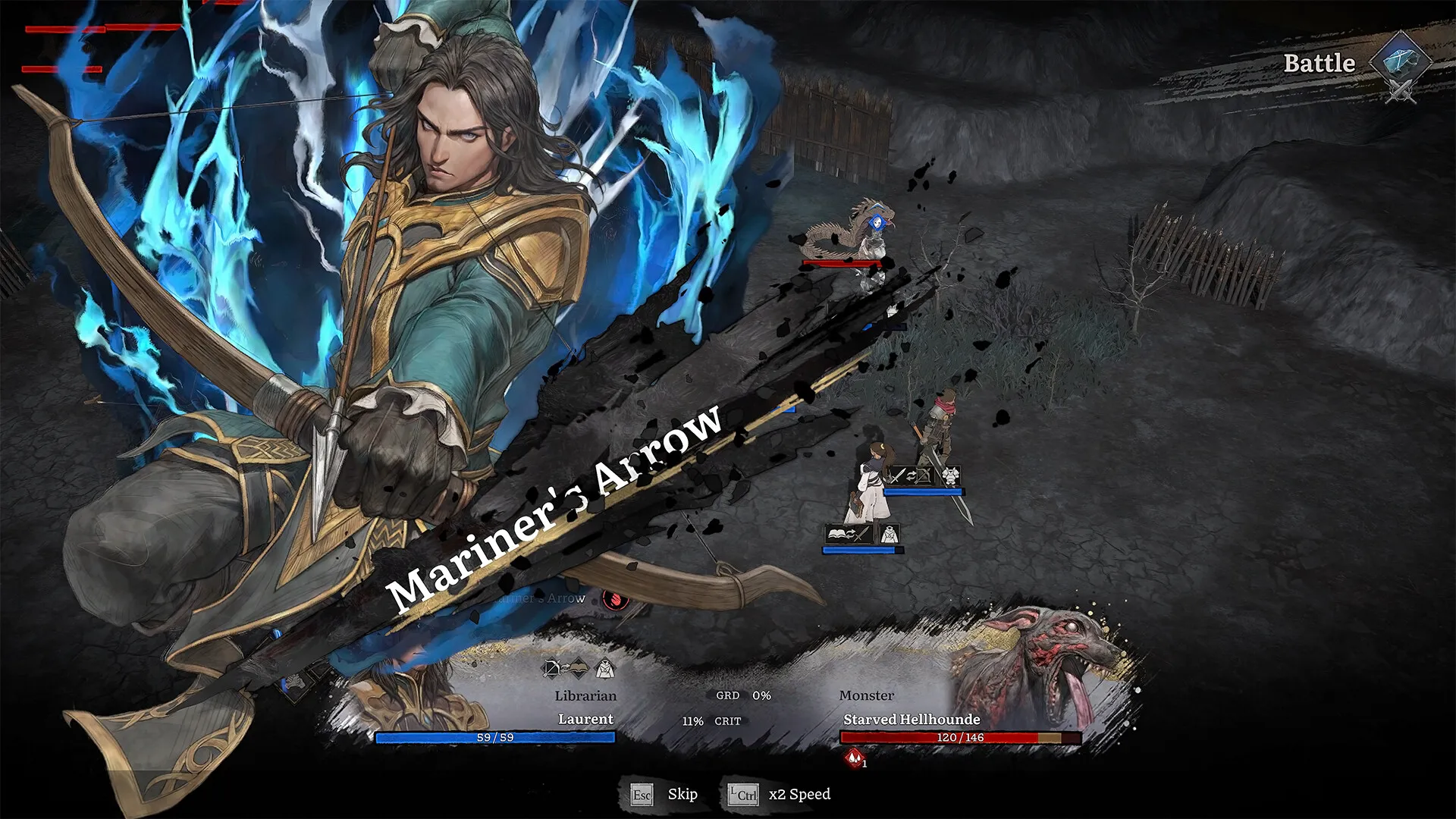
Map design lacks the complexity that would make repeated encounters feel dynamic. Stages blend together visually and mechanically, offering limited tactical variety beyond enemy composition changes. Environmental features like wet tiles and flammable grass exist, but they rarely factor into your tactical decisions enough to create memorable encounters.
The absence of side and rear attack bonuses removes a classic tactical RPG incentive for careful positioning. Flanking maneuvers provide minimal advantages, reducing the importance of unit placement beyond keeping vulnerable characters away from threats.
Visual presentation remains inconsistent. Environmental graphics suffer from muddy textures and flat lighting that creates a generically dull aesthetic. Grey-brown color palettes dominate, making stages visually monotonous. Poor lighting occasionally makes it difficult to quickly distinguish friendly units from enemies during chaotic battles.
The difficulty curve experiences odd flattening as you accumulate permanent upgrades. Early expedition stages that challenged you initially become trivial once your enhancements stack up. The game doesn’t meaningfully scale to match your growing power until you activate Trials, creating a stretch where early content feels like a formality.
These issues don’t break the experience—the core combat remains engaging, progression systems function well, and character work carries emotional weight. They represent missed opportunities where additional polish could have elevated good systems into great ones.
The Verdict
Lost Eidolons: Veil of the Witch merges tactical RPG combat with roguelite progression in a way that honors both genres while creating a cohesive experience. The grid-based battles provide satisfying strategic depth, the character work delivers emotional resonance, and the progression systems ensure you’re always working toward meaningful goals.
The game’s greatest strength lies in how its mechanical systems reinforce its narrative themes. Death and resurrection aren’t just story elements—they’re the foundation of how progression works. Relationships with companions matter because they translate into combat advantages. This cohesion between mechanics and narrative creates an experience that feels purposeful.
Visual inconsistencies and repetitive early expedition content prevent the game from reaching its full potential. Maps could offer tactical complexity, environmental interactions could factor more heavily into combat, and the presentation could match the quality of its character artwork. These shortcomings are noticeable, but they don’t overshadow what the game does well.
For tactical RPG enthusiasts seeking a fresh take on familiar mechanics, Veil of the Witch delivers through its roguelite structure and deep customization options. The game stands confidently as a standalone experience, making it easy to recommend to anyone interested in either genre. What ultimately makes it memorable is how it balances challenge and reward while transforming repeated expeditions into a story about perseverance and companionship forged through shared hardship.
The Review
Lost Eidolons: Veil of the Witch
Lost Eidolons: Veil of the Witch successfully marries tactical RPG combat with roguelite progression, creating an addictive loop of experimentation and growth. Strong character work and meaningful relationship systems elevate the narrative, while deep customization options reward strategic thinking. Visual inconsistencies and repetitive early-game content hold it back from greatness, but the core experience remains compelling. Fans of either genre will find plenty to enjoy in this character-driven tactical adventure that respects your time while challenging your skills.
PROS
- Deep character customization with multiple viable builds per character
- Meaningful permanent progression alongside run-specific growth
- Strong voice acting and character writing
- Engaging tactical combat with accessible learning curve
- Relationship system that creates emotional investment
- Smart roguelite structure that makes failure feel productive
- Forked path decisions create strategic variety
CONS
- Repetitive early expedition content without auto-play option
- Muddy environmental graphics contrast poorly with character art
- Limited elevation and positional mechanics in combat
- Maps lack visual and tactical variety
- Requires significant time investment to unlock all content
- Environmental interactions underutilized
- Difficulty curve flattens before Trials activation