
























![Kingdom Hearts Collection [I-III] Review](https://gazettely.com/wp-content/uploads/2026/10/Kingdom-Hearts-Collection-I-III-1-360x180.webp "Kingdom Hearts Collection [I-III] Review: KHII Holds Steady as Newer Entries Fluctuate 37")




Roald Dahl’s 1980 novella The Twits carved out its place through unfiltered nastiness, a compact study in sustained disgust anchored in a vicious marriage. Phil Johnston’s new Netflix animated adaptation plants that acid bite in a present-day American frame. The setting shifts to Triperot, a city in dire need of renewal.
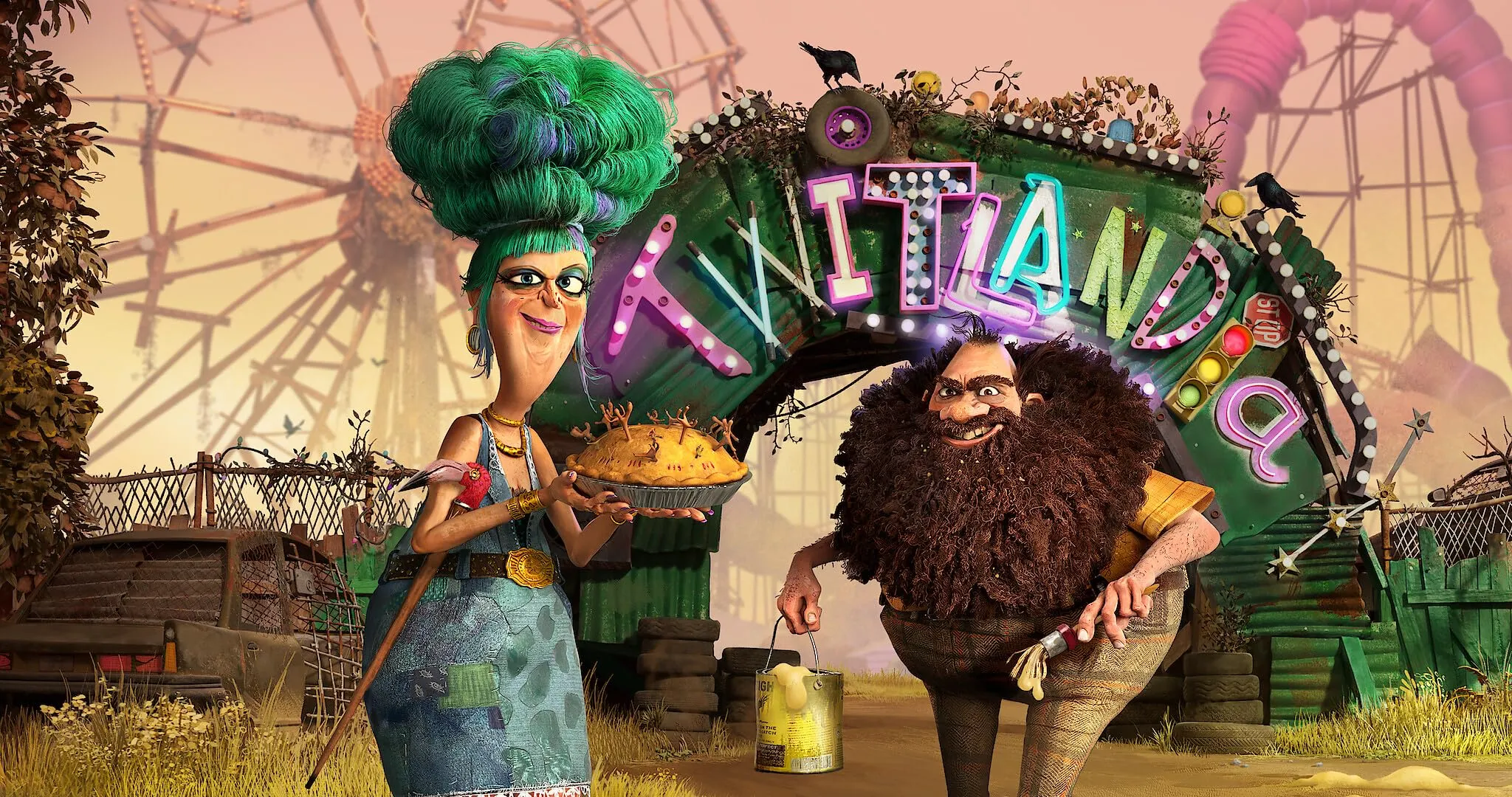
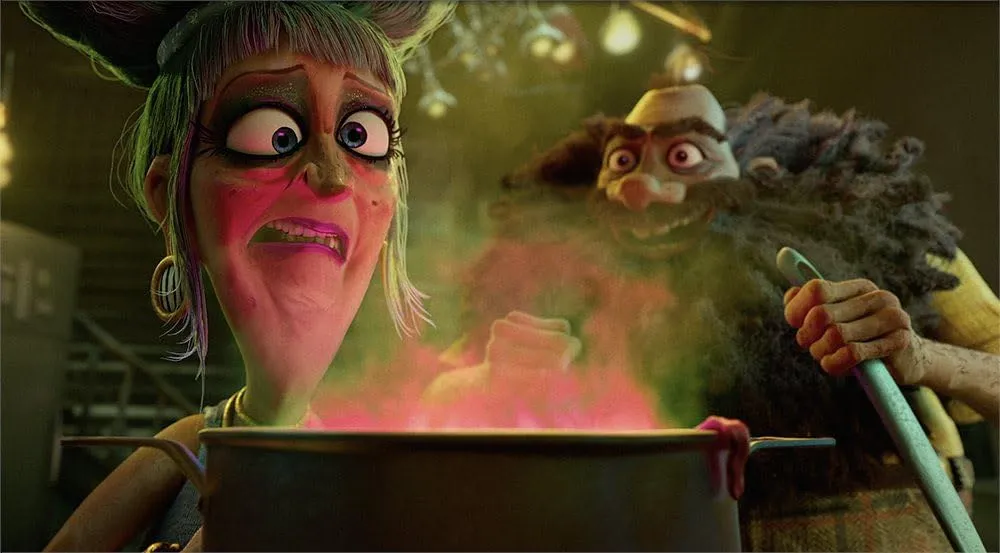
Mr. Twit (Johnny Vegas) and Mrs. Twit (Margo Martindale) run Twitlandia, a theme park cobbled from refuse and broken junk. The attraction runs on the coerced, magical tears of the captive Muggle-Wump monkeys. When health inspectors shut down their tetanus-ready playground, the Twits strike back at the city.
The film widens Dahl’s slender premise. It brings in the resourceful orphans Beesha and Bubsy, who steady the plot as the Twits chase political office to rebuild their toxic operation.
From Pranks to Populism: The Tonal Reckoning
Dahl’s brief book stacks grotesque pranks between two awful adults, a straight line of escalating meanness. The film stretches that line to feature length, a move that risks slackness. New pillars hold it up. The orphans take active roles. The Muggle-Wumps gain prominence. Triperot’s fight against the Twits becomes a city-scale political struggle. The enlarged canvas offers scope and moving parts, and the structure sometimes sags under that size.
Gross-out humor remains the film’s lingua franca, a comic mode that travels across borders because bodies, smells, and sticky textures need no translation. Johnston commits to that register. The insect narrator, Pippa (Emilia Clarke), pipes in from the dank thicket of Mr. Twit’s beard.
Triperot endures a flood of rancid hot dog filling. The look chases squalor with manic fervor, lifting the book’s grime into a kinetic, maximal visual barrage. The question is whether this volume level muffles the book’s smaller, cozier creep that comes from a tighter focus.
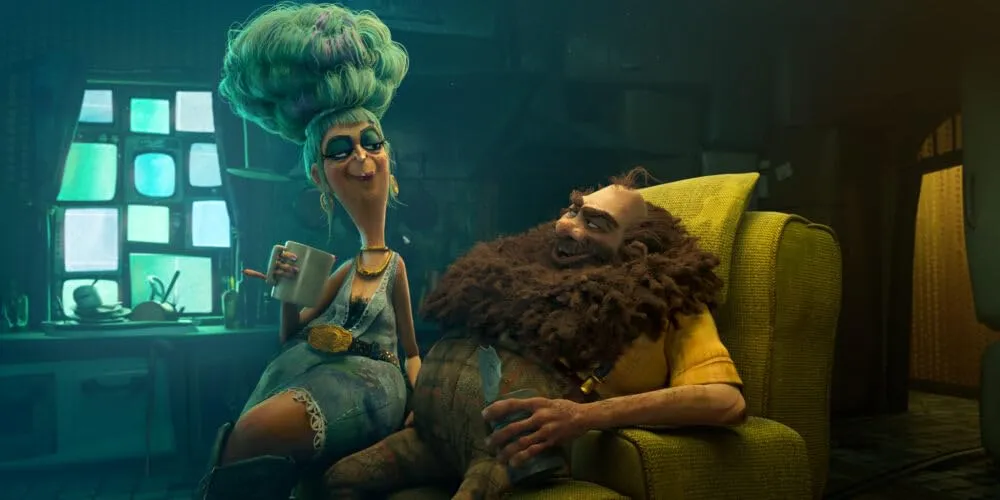
Voices lock in the central marriage. Vegas and Martindale sketch the Twits as a pair whose mutual disgust functions as a perverse bond. The supporting performances slot in with crisp energy. Maitreyi Ramakrishnan and Ryan Lopez give the orphans spark. Alan Tudyk’s backward-talking Sweet Toed Toad lands as a comic signature.
The Ugly Aesthetic of Decay
The film’s design choice forms a clear stance. It rejects the glassy finish of big-ticket animation in favor of wear, mold, and gunk. By global studio yardsticks the look can scan as ugly or below par. Greens and browns dominate. Characters read as chunky and battered. This signals neglect on purpose. The surface suggests older stop-motion textures and the oddball styling seen in certain video games like Psychonauts, a path toward a distinct anti-sleek identity.
Twitlandia makes that philosophy tangible. The park looks like a moral rot made visible, with soiled mattresses, porta-potties, and intestinal roller coasters arranged as attractions.
Production design ties ethics to architecture. Background figures and stray props can appear rougher than the headline Twit models, which yields a lopsided image field. Music arrives with original songs by David Byrne. The presence is clear and the impact is faint, with few hooks that cling after scenes end.
Globalization, Identity, and Political Sickness
The adaptation’s most assertive move takes nastiness from private cruelty to public life. Dahl’s lesson asks readers to avoid becoming jerks. The film argues that communities must stop elevating jerks. The Twits mount a populist run for office, waving a fantasy of past glory. Their malice sits in plain view, and working people in Triperot still gather behind them, swayed by a rigged story of renewal. The sequence reads as satire geared toward crowd psychology and the promotion of harmful figures.
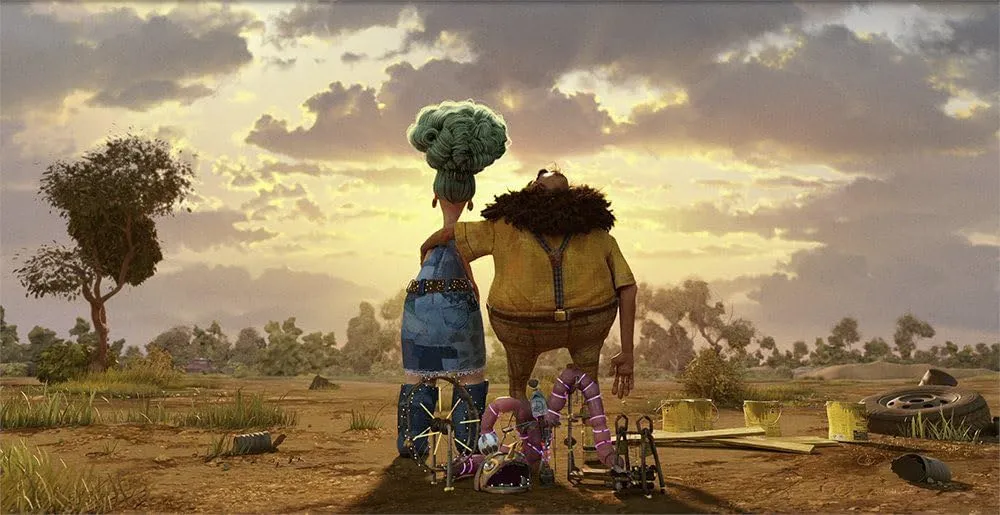
New moral notes thread through Dahl’s mean universe. Found family, empathy, and kindness arrive through Beesha, Bubsy, and the exploited Muggle-Wumps. Here the film’s design cuts against itself. A tale built on gleeful repulsion shares space with a soft center that asks for comfort, and that mix eases the original edge.
The orphans carry a fight for basic decency and aim to reveal the Twits’ hunger for power. The Muggle-Wumps, voiced by Natalie Portman and Timothy Simons, stand for creative innocence pressed into service by those who hoard control. The Twits’ campaign sketches a timely portrait of civic illness that may sit awkwardly beside the target age group. The choice adds weight and risk.
A Verdict in Vile Tastes
The Twits demands attention and dares viewers to turn away. The title performances provide the strongest current, with figures who repel and fascinate at once. The commitment to an anti-polish aesthetic brands the film with a look that refuses the gloss of homogenized global animation. The political satire wraps the simple book chassis in a contemporary frame and gives the piece a sharpened public sting.
The liabilities ride close to those assets. Expanded plotlines fill the runtime and invite tonal whiplash. The rough-hewn style can push away audiences who expect the luxurious finish of major studios, and some shots read as truly unrefined. The added themes of empathy and a warm center sit uneasily with Dahl’s relish for irredeemable grime. Viewers who prize strange family films, relish gross-out humor, and welcome sharp political bite will likely lock in. Seekers of light whimsy may feel that this cup of booger tea tastes foul.
“The Twits” is an animated musical comedy film adapted from Roald Dahl’s classic children’s book. The movie is set to be released on Netflix on October 17, 2025. It tells the story of Mr. and Mrs. Twit, a hideous and spiteful couple who play nasty tricks on each other and mistreat their pet monkeys. The film is a tale of their cruelty and the efforts of two orphans and a family of magical animals to stop them.
Full Credits
The Review
The Twits
The Twits adaptation transforms Dahl's minimal, repulsive tale into an expansive, chaotic sociopolitical allegory. Director Phil Johnston takes a necessary risk by layering timely commentary on populism and mob mentality over the gross-out foundation. While the animation is intentionally rough, and the narrative sometimes feels padded, the film succeeds through its committed voice work and a fearless commitment to being weird. It is a challenging, anti-establishment piece that uses filth to reflect societal decay, appealing to viewers who appreciate unconventional, abrasive animation and sharp thematic material over typical family polish.
PROS
- Effectively uses the Twits' mayoral campaign to comment on populism and mob mentality in contemporary society.
- Johnny Vegas and Margo Martindale capture the truly repulsive nature of the title characters.
- Commitment to a rough, moldy, anti-polished visual style that is distinct from standard studio animation.
- Successfully transforms Dahl's brief series of pranks into a feature-length narrative with high-concept themes.
CONS
- The expanded narrative leads to tonal shifts and structural unevenness.
- The intentionally rough look may be perceived by some audiences as cheap or visually unpleasant.
- The effort to inject messages of empathy and "found family" can clash with the core meanness of the source material.
- The musical numbers, despite David Byrne's involvement, fail to be memorable.







