











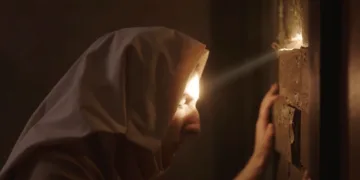
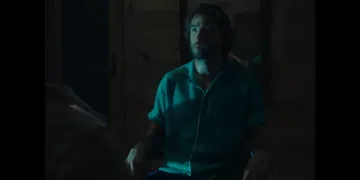






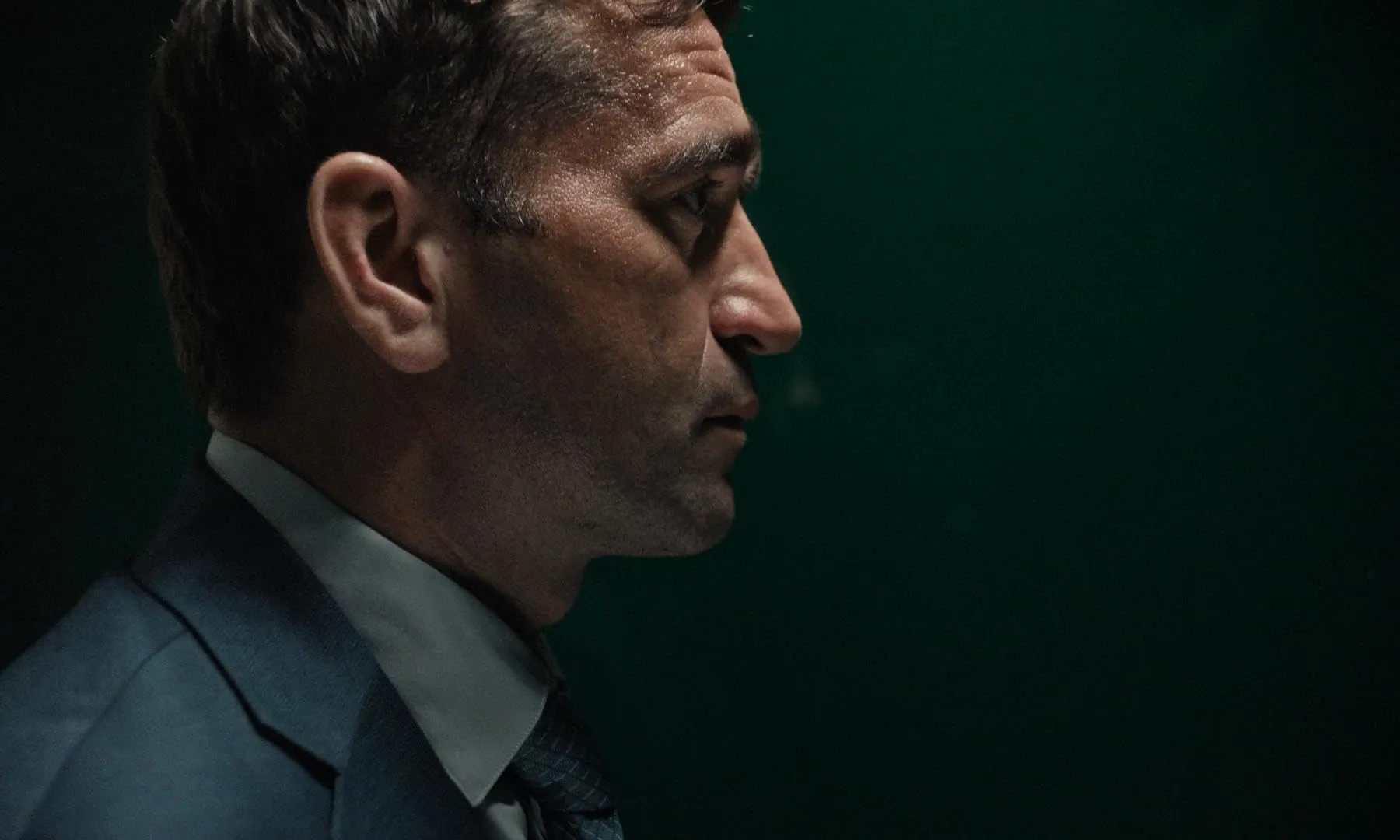

Slovakian director Tereza Nvotová’s Father (Otec) is a stark, physically felt drama rooted in real-life tragedy. The film narrows its gaze to Michal (Milan Ondrík), a family man whose routine collapses after a single lapse of memory. He forgets his young daughter, Dominika, in the car during a scorching heatwave.
The focus stays on the aftermath, on the internal ruin of the protagonist and the fracture of his home. Nvotová studies the crushing weight of parental guilt and the painful reach for self-forgiveness when responsibility cannot be shifted. The film plays like a wake stretched across days, a study in how a life splits apart.
The Architecture of Collapse
The early passages build a world ready to crack. Ordinary domestic details define Michal’s morning: a run, pressure at work, the heatwave. Long, unbroken takes hold the routine in place, drawing the viewer into everyday motions just before they break, which makes the horror land with force.
The structure echoes the pacing of strong survival games, where quiet stretches tune the senses for the scare that follows. When the unthinkable occurs, Michal’s realization arrives as instant psychic wreckage. The camera begins to spin, mapping his interior collapse as he slips toward a catatonic state.
Milan Ondrík’s work anchors the film. He moves from distracted, stressed professional to a figure drained by grief with unvarnished precision. The film reads this as quiet devastation, marked by trembling hands and a spiritual exhaustion that replaces outward rage.
He folds inward, carrying an impossible reality. Zuzka (Dominika Morávková) meets the crisis with restraint and a muted sadness. Her empathy for Michal feels almost superhuman. She steadies the household, a quiet strength that keeps him from total emotional dissolution.
Also Read





Form and the Immersive Hell
Nvotová shapes the material with a precise, understated approach that avoids melodrama or exploitation. She alternates carefully orchestrated staging with a lived-in spontaneity, which lets the film grasp something that resists easy understanding.
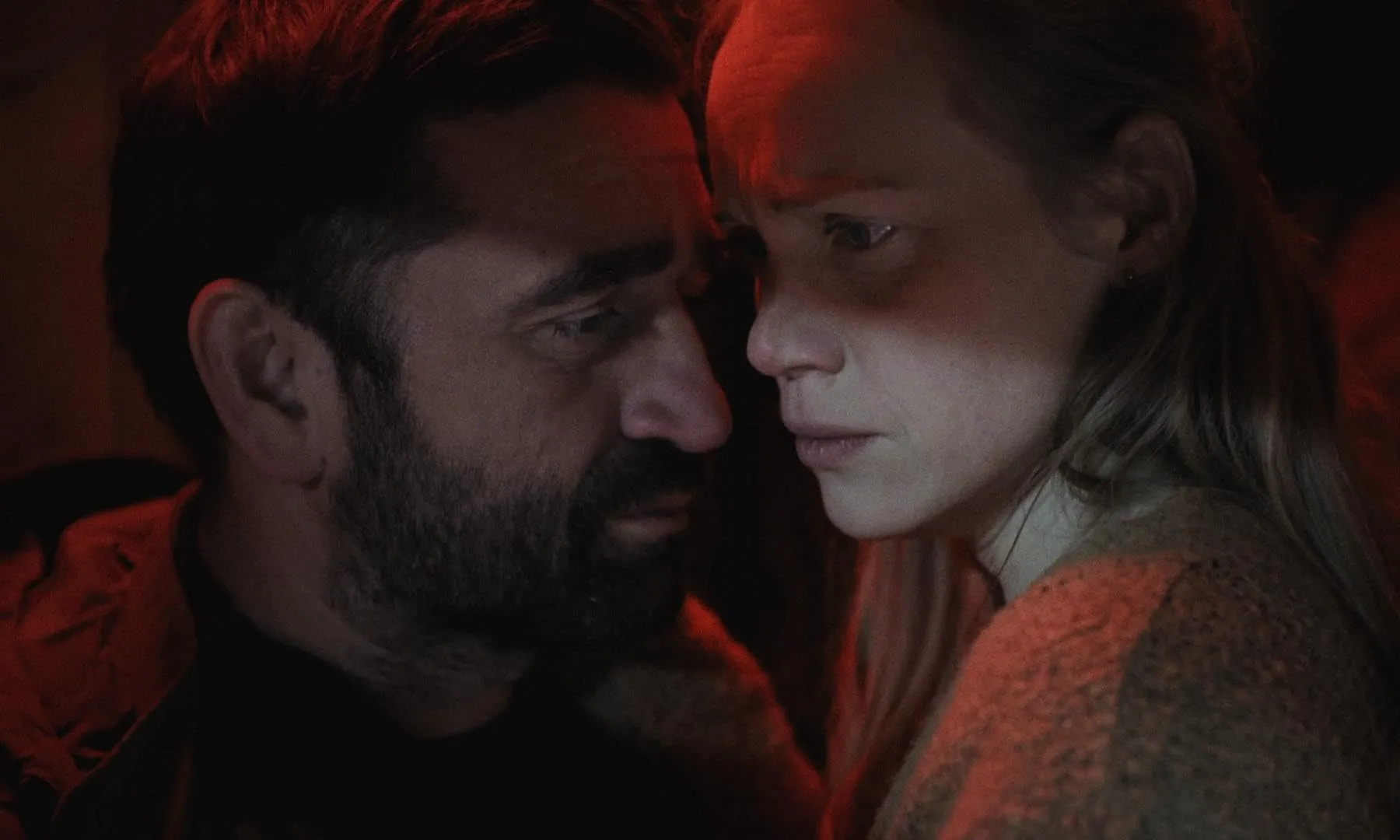
Cinematographer Adam Suzin becomes a quiet partner in this design. Long tracking shots stay close to Michal, pulling the viewer into his anxious headspace. A striking visual choice sends the camera drifting away during the trial to reveal the outside world, where children play without awareness, and the gap between Michal’s private hell and ordinary life appears unbridgeable.
Sound design deepens the trap. Jonatán Pastircák’s buzzing, synth-heavy score and abrasive textures press on the senses, mirroring Michal’s free fall. The track and noise create a sustained atmospheric pressure. As in a well-built survival-horror game that cues dread through sound, form and feeling lock together. The film makes the audience inhabit the tragedy rather than watch from a safe distance, and it refuses easy release.
Enduring the Unforgivable
The story shifts from shock to consequence. The bond between Michal and Zuzka changes in ways that cannot be repaired. Their grief does not move in step. Zuzka’s empathy remains, yet strain fills the space between them. Clearing out Dominika’s belongings becomes a clinical task, a careful attempt to move forward when the marriage has already broken.
External forces close in. The trial and the court of public opinion bear down with blunt judgment, and the world places Michal inside a villain’s frame. He arrives at a hard recognition: legal outcomes do not restore what was lost, and that recognition marks defeat.
The film addresses the rational label of “Forgotten Baby Syndrome” (the brain’s autopilot during routine) and shows that such language offers no comfort. The terror lives in a slow erasure of identity, in the lifelong weight of negligence that came without intent yet cannot be put down. The film’s clear portrait of devastation keeps echoing after any verdict, describing a world that withholds empathy from accidental trauma.
The movie is a Slovak, Czech, and Polish co-production drama titled Father (Otec), which tackles the devastating subject of “Forgotten Baby Syndrome.” It centers on Michal, a devoted father, whose life and marriage are shattered when he accidentally leaves his two-year-old daughter in a hot car, leading to tragedy. The film explores the profound guilt, legal fallout, and societal judgment he faces in the aftermath. Father premiered at the 82nd Venice International Film Festival in the Orizzonti section on August 28, 2025. It was later released theatrically in Slovakia on September 11, 2025, and in the Czech Republic a week later, with both releases distributed by CinemArt.
Credits
Title: Father (Otec)
Distributor: CinemArt (Theatrical release in Slovakia and Czech Republic), Intramovies (International Sales)
Release date: August 28, 2025 (World Premiere at Venice Film Festival)
Running time: 102 minutes, 103 minutes
Director: Tereza Nvotová
Writers: Tereza Nvotová, Dušan Budzak
Producers and Executive Producers: Veronika Paštéková, Anton Škreko, Karel Chvojka, Miloš Lochman, Marta Gmosińska, Mariusz Włodarski
Cast: Milan Ondrík, Dominika Morávková, Dominika Zajcz, Martina Sľúková, Aňa Geislerová, Peter Ondrejička, Peter Bebjak, Ingrid Timková, Roman Polák, Jirí Konvalinka, Jana Bittnerova
Director of Photography (Cinematographer): Adam Suzin
Editors: Nikodem Chabior
Composer: Pjoni
The Review
Father
Father is a harrowing, expertly directed drama that strips away melodrama to confront the raw reality of guilt. Tereza Nvotová uses precise cinematic techniques—immersive cinematography and powerful, subtle performances—to place the viewer directly within Michal’s internal prison. The film is a difficult watch, but its unflinching honesty about human fragility and the unforgiving nature of public judgment makes it a standout. This is a vital, emotionally resonant work that lingers long after viewing.
PROS
- Visceral, unflinching portrayal of consuming guilt and despair.
- Superb, subtle performance by leading actor Milan Ondrík.
- Highly effective, immersive cinematography and sound design that heighten the emotional experience.
- Formally precise direction that avoids exploitation and melodrama.
- Powerful exploration of fractured relationships and external judgment.
CONS
- The film’s intensity makes it a difficult, emotionally overwhelming watch.
- Some viewers may find the final moments of the ending slightly discordant with the preceding realism.