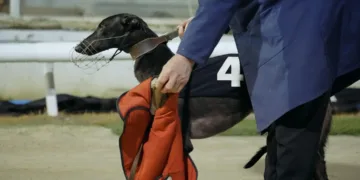
















Going to the Dogs opens in near silence, a hush that feels like the afterglow of a once-loud British pastime. Director Greg Cruttwell’s documentary studies greyhound racing in Britain, a tradition with deep roots and an uncertain horizon. The film sets out with two clear aims.
It traces the culture of the track, especially its ties to working-class life, and it addresses present-day questions about animal welfare. Sensation is off the table. Cruttwell favors an observational approach that lets people speak and images carry meaning. The film’s power lies in mapping a decline while tracking shifts in British social life.
The Last Lap of a Working-Class Tradition
The documentary treats the greyhound track as a cultural artifact. Greyhound racing functioned as a working-class ritual, a shared event that shaped leisure across generations of Britons. The film leans on stark numbers to show the contraction of the sport: from seventy-seven tracks at its peak to twenty licensed today. That shrinkage lines up with mine closures and the wider ebb of familiar working-class recreation.

We spend time with trainers and owners, including Rab and Liz McNair, whose days and nights revolve around their dogs. Their work never really stops, a genuine 24/7 commitment. They describe the rush of a win, and Rab McNair calls it a higher high than any drug.
Their affection for the animals reads plainly on screen. Cruttwell frames the effort to keep the sport alive as a reflection of the effort to hold on to a way of life. For many involved, racing connects to identity and to the history of a community.
Also Read






The Core Contradiction
The film addresses the hardest questions directly. Around the midpoint, it turns toward animal welfare campaigners from groups such as Caged and Animal Rising. They outline specific concerns: the risk of injuries, the conditions in which some dogs are raised, and the culling of racers who no longer turn a profit. These accounts sit next to the bright-eyed dogs we see with trainers, which makes the critique feel pointed.

A response follows. Figures from the racing establishment, including Mark Bird of the GBGB, argue that activists misread the level of care. Some supporters of racing acknowledge that recent exposés have driven meaningful changes to welfare rules over the last decade.
Cruttwell’s restraint shapes the encounter. The film avoids quick answers and keeps conflicting positions in view at the same time. Contradiction becomes a narrative tool that asks the viewer to hold compassion and tradition in the same frame. The design favors inquiry over advocacy and lets the audience do the thinking.
Muted Tones and Measured Pacing
Craft choices give Going to the Dogs a different texture from many recent documentaries. Cinematographer Alex Priestley builds a somber elegance with images washed in muted tones: damp concrete, fog drifting across stadium lights. There is beauty in this decay, and the film resists romanticizing the decline of the sport. The stance feels like a careful record of something passing.
The rhythm stays unhurried. Rapid-fire cutting never flattens the subject. Conversations and images have time to breathe. The structure follows the race cycle itself: a buildup of history and fervor, the strain of the ethical dispute, and a release in the film’s final featured event, the Greyhound Derby.
Sound plays a key role. Little sonic details echo like memory, from the thud of paws to the starting bell. Now and then a jaunty vintage reggae cue slips in and sharpens the melancholy mood. I keep returning to rhythm as the place where a film makes its truest claim, and Cruttwell’s steady tempo gives the questions of progress and tradition a lasting weight. The patient method lets the feeling accumulate, one quiet beat at a time.
Going to the Dogs is a UK feature-length documentary completed in 2024 that examines the controversial world of greyhound racing. The film explores the sport’s working-class history, its decline since the post-war era, and the contemporary debate surrounding animal welfare, hearing from both trainers and activists. The documentary was released theatrically in the UK on November 7, 2025, distributed by Tull Stories.
Credits
Title: Going to the Dogs
Distributor: Tull Stories
Release date: November 7, 2025 (UK Theatrical)
Rating: TBC
Running time: 95 minutes
Director: Greg Cruttwell
Writers: Greg Cruttwell
Producers and Executive Producers: Greg Cruttwell, Jonny Tull
Cast: Rab McNair, Liz McNair, Kevin Hutton, Rosie Tungatt, Claudia Penna Rojas, Nathan McGovern, Rita Jones, Jodie Payne, Kevin Boothby, Mark Bird
Director of Photography (Cinematographer): Peter J Hayes, Nathan Webber, Michael J Travers
Editors: Peter J Hayes
Composer: Northern Flowerhouse
The Review
Going to the Dogs
Going to the Dogs offers a rich, non-judgmental look at a British sport caught between deep tradition and modern morality. Greg Cruttwell’s restrained direction excels at letting contradiction speak louder than conclusion. The film is technically impressive, using muted tones and deliberate pacing to build an atmosphere of quiet reflection. It succeeds as a cultural examination, showing how the decline of greyhound racing reflects broader societal shifts. This is a vital, empathetic documentary that asks necessary questions without demanding easy answers.
PROS
- Balanced, non-judgmental exploration of a controversial subject.
- Strong focus on working-class culture and history.
- Excellent technical execution (cinematography, sound design).
- Provides voice to both enthusiasts and activists.
- Effectively uses the sport's decline as a reflection of societal change.
CONS
- Can feel repetitive in certain sections.
- The deliberate, slow pacing may not appeal to all viewers.
- Avoids a neat conclusion, leaving central questions unanswered.